
Translated material
Why do money leave Russia
Investors are betting on the fact that there will be no reforms
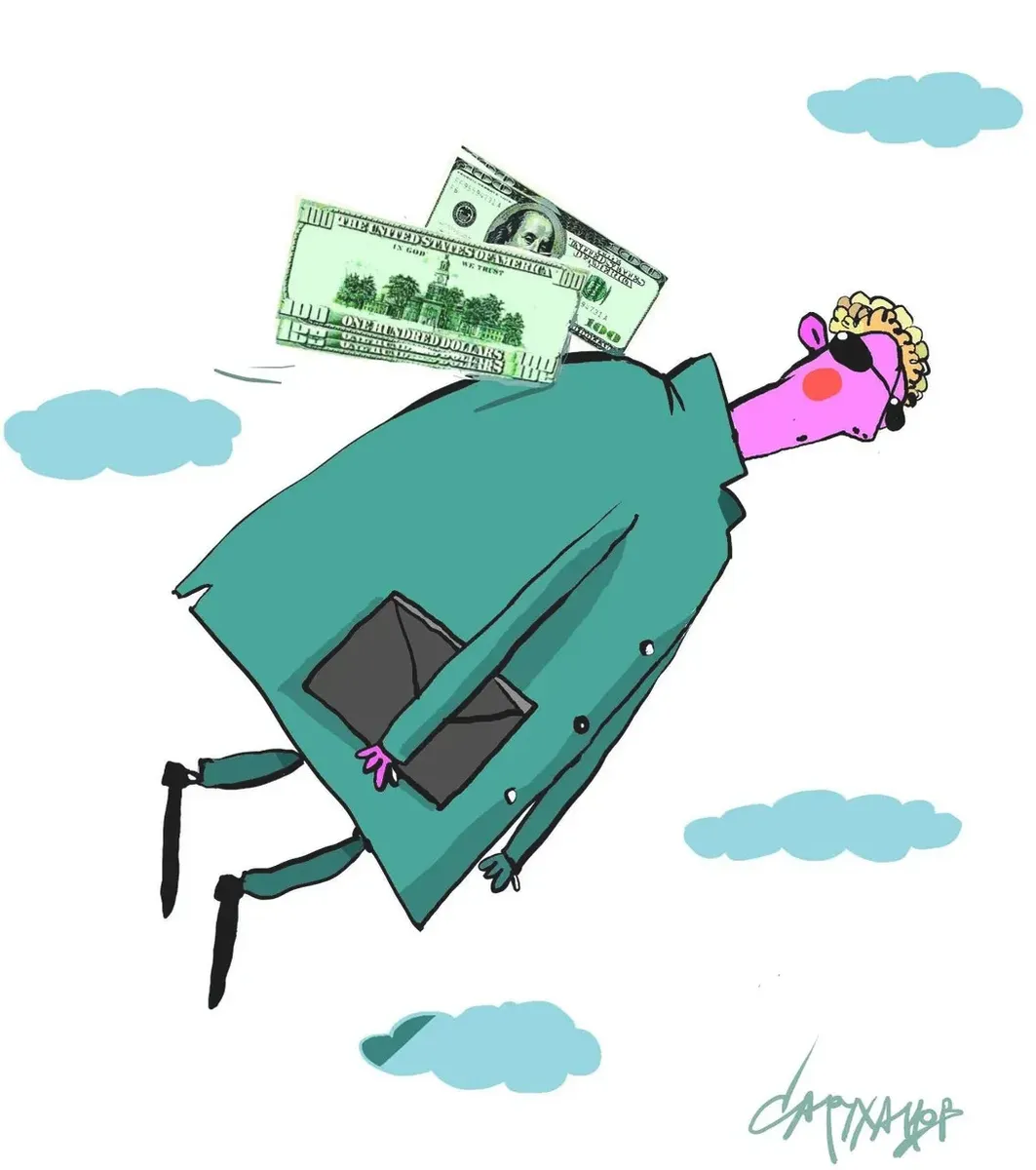
Since the end of February, foreign investors have withdrawn $ 1.6 billion from Russia, according to the analytical center EPFR Global. At the same time, investments in ruble assets have lowered to a minimum in 3.5 years. This happened due to the outflow of capital from funds investing in the shares of Russian companies - over the past week they lost $ 83 million, a week earlier - $ 181 million. Russia turned out to be the only country in Brikst (Brazil, Russia, India, China, South Africa and Turkey), which was faced with a net outflow of capital in its stock market. Presidential spokesman Dmitry Peskov reacted to the EPFR report, calling a record outflow of money from Russia a conjunctural and volatile process.
The last time analysts recorded a similar trend at the end of 2013, but then the nervousness of investors was caused by external factors: the expectation of toughening the US monetary policy and the weak indicators of the economic growth of developing countries. Over the past 4 months, the funds investing in Brikst, together, have managed, on the contrary, to attract $ 28 billion. That is, the assets of Russian origin cause special fears among investors. In the first six months, the Russian stock index of RTS lost 13% - the most of the list of 30 world exchange indexes The Wall Street Journal. This dynamics can hardly be explained by the random market conditions - its reason is associated with the specific problems of the Russian economy.
The most obvious reasons for the decline in interest in ruble assets abroad are negative expectations regarding oil prices and a new round of sanctions war of Russia and the USA. If at the beginning of the year Trump’s arrival and OPEC agreement instilled optimism to investors, today both of these factors, especially the hope of rapprochement with the United States, have depreciated to a noticeable extent. Sharp fluctuations in the ruble course, following oil quotes, also do not contribute to the attractiveness of Russian companies in international markets.
In addition, investors simply do not believe in the prospects of economic growth in the country. According to the Reuters consensus prognosis, the Russian GDP in the year will increase by only 1.4% instead of 2% forecasted by the Ministry of Economic Development. The growth of the economy in the first half of the year, which was recently cheerful in the government, was caused by increasing oil prices and the execution of state defense order - the rest of the industries demonstrated near -headed dynamics. Already in June, the business activity index in the manufacturing industry became the worst in 11 months.
The political leadership of Russia intends not to interfere with the continuation of stagnation. The budget design for 2018-2020, recently approved by the government, consolidates the status quo and do not provide for any reforms or updating economic policy.
For the past two years, foreign money in Russia has been attracted by high accounting rates: you can cheaply get funding in another country and invest here at a good percentage. Therefore, for example, all this time the high demand of Western hedge funds for Russian federal loan bonds has been preserved. Today, the window of opportunities for such investors is gradually closing - the delta between the percentage rates of the Fed and the Russian Central Bank are reduced under the influence of the latest decisions of the regulators. Capital begins to look for other markets, the ruble loses in price.
Much about the prospects of investing in Russian assets is said by a loud conflict between Rosneft and AFK “System”. Now the parties have started a dispute on how the influence of this trial on the investment climate in the country will turn out to be. Representatives of the AFC System in contact with Vladimir Putin warned that the conflict would “significantly increase the level of risk perception”. Dmitry Peskov replied that the Kremlin does not see any connection between the actions of Rosneft and the Invest Climate. The last word remained with Igor Sechin, who took third position, saying that the court would make the behavior of managers and shareholders more “transparent and responsible”.
This year, pure capital outflow from Russia has already accelerated 2.2 times in annual terms - according to the Central Bank, to $ 22.4 billion in the first 6 months of 2017. This is still significantly less than in the midst of the crisis in 2014, when more than $ 150 billion was withdrawn from the Russian markets. This time there are no reasons for a panic flight. But everything goes to the fact that Russia simply will have nothing to offer investors.