
Translated material
Lepage said: "Let's go!"
Ivo Van Hove and Robert Lepage at the XIII Chekhov festival
At the festivals, the scene is not a mirror, but a window. In another world and other experience. Straighten conjugated with ours. In the Great National History - and in Small, Human.
Therefore, the Moscow spectator of the “secret power” Ivo Van Hove and his Toneelgroep Amsterdam Theater, following the history of the Dutch governor on the island of Java of the 1900s, whispers to himself Mandelstam's poems about the Kappelian attack: “Officers of the last embroidery-a gaping groin on the plains.” And he understands that the hero is doomed.
And on the main (along with the “battlefield” of Peter Bruka) the play of the festival, on the “887” of Robert Lepage, the viewer suddenly mutters the Nekrasov “schoolboy”.
And he sees this schoolboy in an all -famous Canadian director.
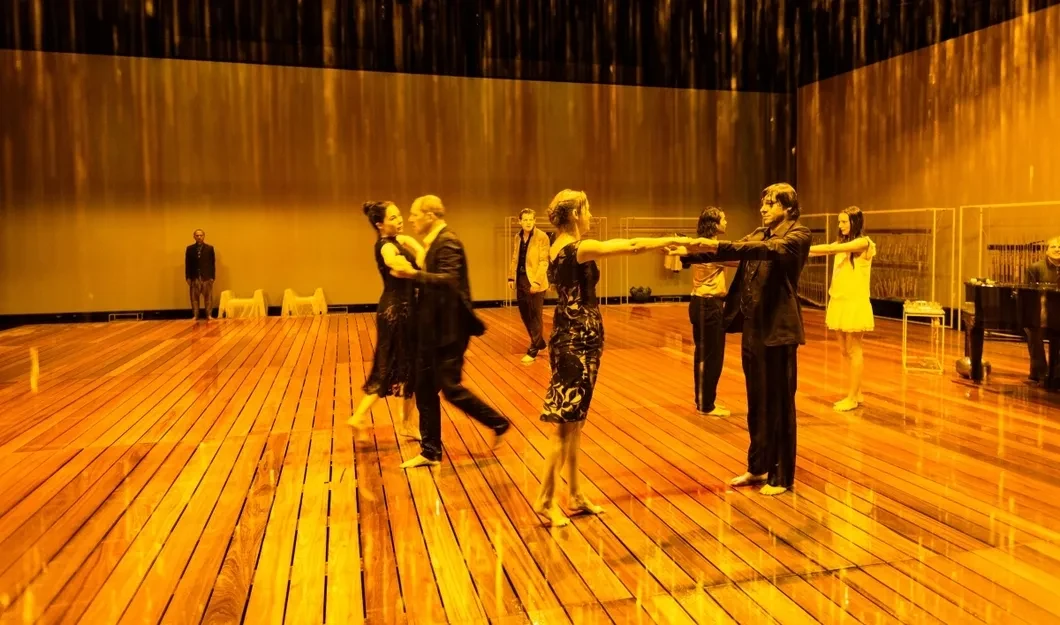
White walls of a colonial mansion. They are video screens. The black and white chronicle of the Royal Family Family in The Hague (hammers, uniforms, limousines, glee of blue-eyed subjects) surrounds the family of Van Audodeik-but it has long seems to be an overseas fairy tale.
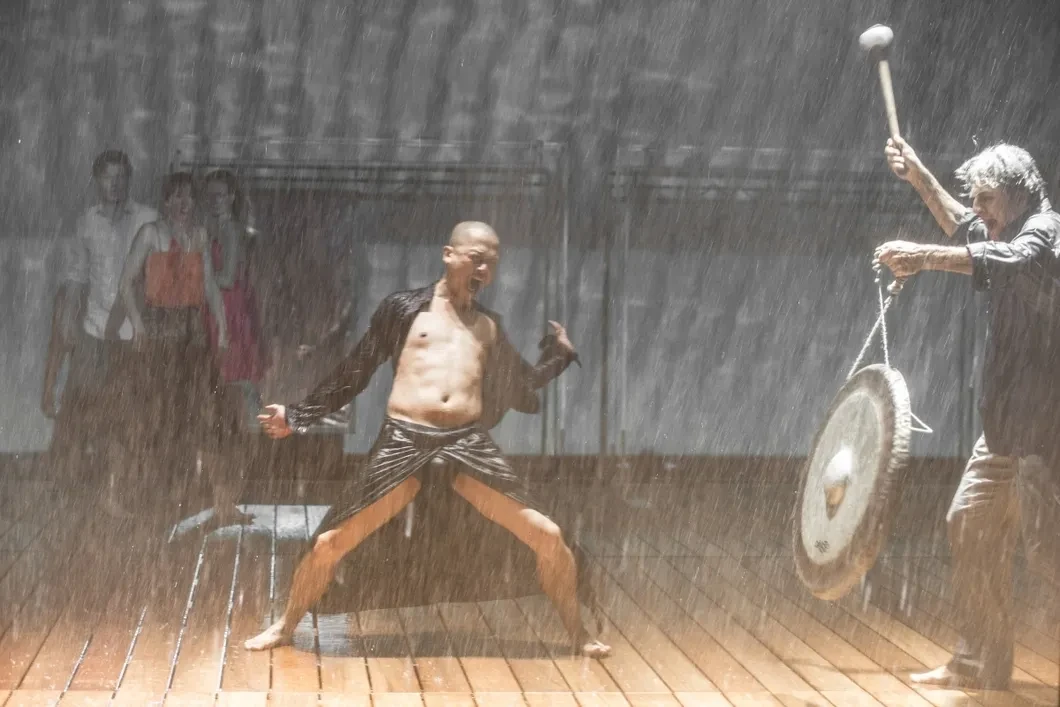
These Dutch people carry the “burden of the White Man” in Indonesia: among fogs, monsoons, rains, tropical gardens, chiseled black figures in bright silk, with an ever -slipping gaze. Royal, copper gongs and bamboo poles are equally natural in the living room of Van Aideikov. Virtuosa Harry de Vit, a regular participant in the performances of Toneelgroep Amsterdam, interprets their sounds with the noise of the rain on the stage. The string rings in the fog: the score of water and scattered light in the performance of Ivo Van Hove is sophisticated. And conveys the infidelity, the unsteadiness of alien nature, leading to the despair of climate, humility of the native princes. They have what to take revenge for.
The most direct statement here is the stone thrown from the garden to the window. Bath mirrors. Blood flows on the white chiseled shoulder FRU van Adeiik. They will not find a rebel or give out.
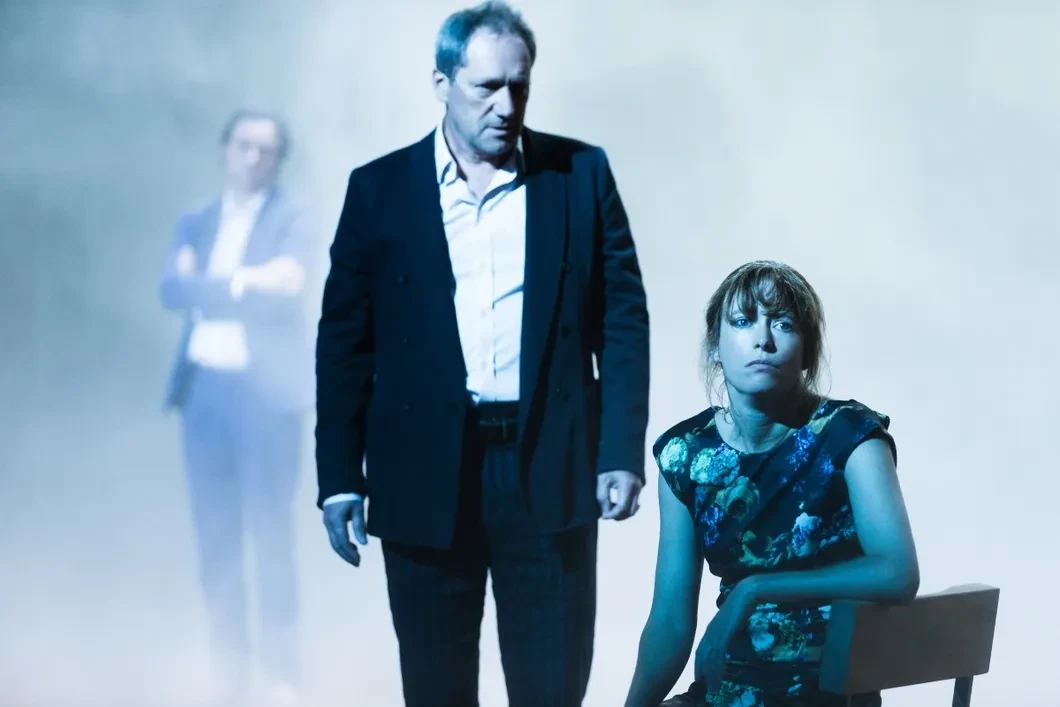
Viceroy Otto Van Aideik (Geis Skholta Van Asat) is an almost tragic hero. The “Mission of the Civilizer”, which is taken by him, the paternal rigidity, truly Protestant persistence, the unbending ministry of the king and the fatherland of this tightened, powerful and tired person, all the miracles of technology and school affairs that he introduces on Java (in exchange for coffee, copper, sugar), will disappear, slowly rot in mousson forests. The “secret power” of an alien world will drag into a hot, soil plowed by the rain of the Viceroy family and the fate of his employees.
The novel by Louis of the 1900 merchant, according to which the performance was staged, is the classic of the Netherlands. Over the century, the text, it seems, only gained the internal power of an alarming prediction about the “battle of cultures”, about the inconspicuous, but inevitable retaliation of the submissive. And the “processed”, almost in the manner of the Russian people of the late 19th century, redeeming the personal sins and sins of the metropolis in front of the colony in the Bamboo hut - Van Audeik, the hermit in the jungle, is almost happy.
He surrendered to rains, fogs, forests. The associates scattered around the light, running from Java. The exact smart game of the actors Toneelgroep Amsterdam (especially the Geisa Scholten van Asat in the main role) makes the history of the 1900 civilizer, an honest and strict ruler of the peoples who are not understood by him (if such an understanding is possible at all) is a strong and sad story about fate. This person is sorry.
And the directing of Ivo Van Hove opens the plot, turning the “secret power” into a parable about the 21st century, Moscow tour - into the news of the context. About the anxieties of the "five sixth" world. We are inscribed in it.
Mono -performance "887" in Moscow was expected . “It seems to us that Robert Lepage is the largest theater artist of our time,” writes about the 59-year-old Canadian, director-scena-actor-playwright, Figaroscope, Parisian Poster. But Moscow itself has known this since 2007, when at the VII Chekhov festival the tour of his “Dragon trilogy”, “back side of the moon”, “Opera of the poor” and “Andersen” thundered. Then the “Lepamemania” was fixed by the tour of the nine -hour epic of the 20th century “Lipsink” and the almost ballet “Eonagata” (Lepage himself played in it - along with Sylvie Gill and Russell Malifant).
In 2013, Lepage placed Hamlet-Collage with Evgeny Mironov at the Hamlet-Collage Theater.
“887” is a monoscope, a sophisticated attraction, an autobiographical story and a political treatise on Canada of the 1960s. Where, according to the calm story of Lepage, there was neither egalith nor fraternet. In Quebec and Montreal, “Blue Collars” spoke French, management in English. There was no question of financial, educational, social parity, equal starting opportunities for children of two communities. The contemptuous Speak White (in English-that is, caused the most different protest: from the night of francophone poetry to the explosion of the monument to the Queen of Victoria. And even to the explosions in supermarkets of rich quarters. In poor quarters of television, the terrorist attacks caused a fierce francophone muttering of the fathers of families: “They are bastards! But ... they are right. "
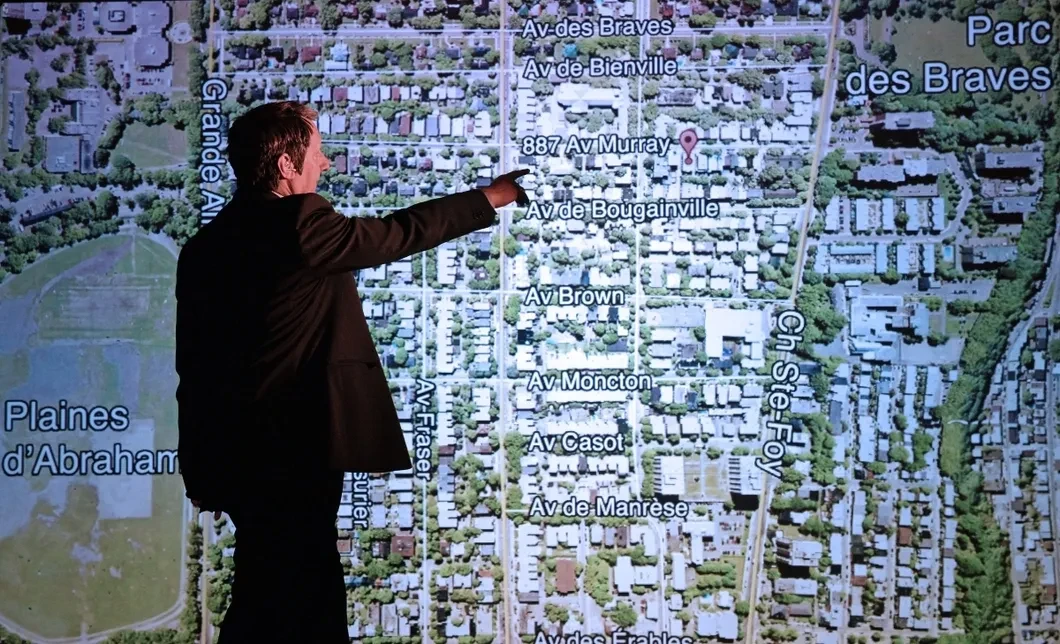
In such a family, Roberte grew up the youngest of four children of the brave-prisoner of the 1940s, taxi driver of the 1960s. In house 887 on Avenue Murray, seven lived in three rooms. Including a grandmother with the progressive Alzheimer, whom the son of Lepage - refused to give to the hospital.
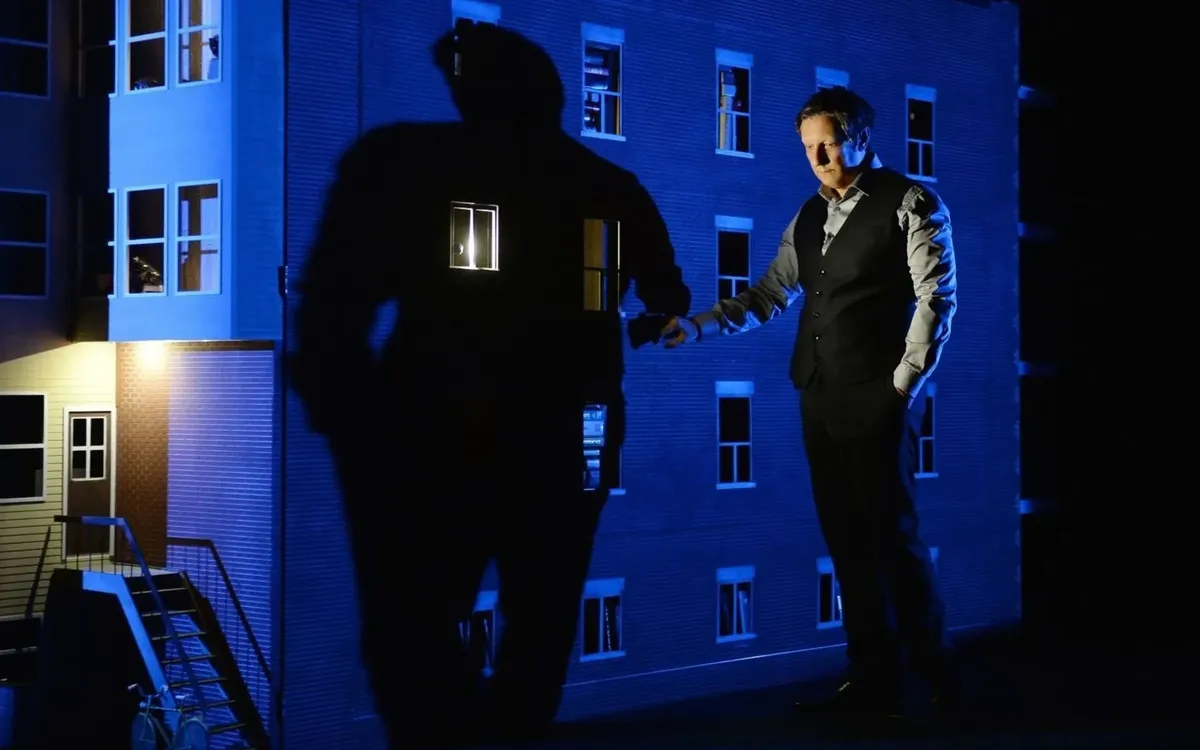
Here is the house 887 - “Puppet House”, almost to the growth of the narrator. Lepage places the dolls-neighboring puppets on the balconies. Monitors flare up: each apartment has its own (and difficult!) 3D life. A father’s taxi is the size of a pedal car for rich children. Tired to ossification (he feeds a family of seven souls), Lepage-Pere for a long time smokes in the garage, listening to Hits Nancy Sinatra.
“ I always try to find the balance between the“ history ”with a small letter and the“ story ”with a capital letter, since one refers to the other,” Lepage said about “887” Le Monde. The building turns, changing the scale: Lepage enters its home library of 2017. Her shelves are advanced like magic caskets: for each-someone's fate on a small monitor. Cabinets merge in a video screen: Curved painful tests of a sick grandmother are replaced by newsreel. The ridiculous doll of General de Gaulle, who visited Quebec in the 1960s, is almost from the pocket of Lepage, a fiery speech is about the mother-franca, pouring oil into the fire of the Canadian. The house turns again, changing the scale, opening the other portal into the past, into a poor apartment on Murray Avenue. On a two-story bed in a children's lamp, it puts its first performance: the shadow of a girl-sister’s shadow plays a teddle classics from behind a sheet.
He tells how he carried newspapers from the age of 12. How was not enrolled in a good college: the taxi driver’s son passed the exams brilliantly, but the solvency of the family raised doubts ... as he was called recently an honorary guest to the theater institute that graduated in the 1980s. The director reported: the level of students has grown. They have better diction. Because all of them are now from solvent families. And there are no “budget places” (he studied Lepage on this). Abolished.
In the final - the phone calls. Grandmother with Alzheimer, who still had to be given to the hospital (the family could no longer withstand the everyday life of quiet madness in three cells), died, without living there for six months. House 887 again turns in the blue night of the 1960s. This is a garage. Lepage in a driver's jacket and a cap of his father, having grown up, crouched, sits behind the wheel. Smokes.
Only the instrument shield shines. The Taxist son is crying about his mother. His son, an all -worldly famous director, is about his father. About grandmother. About the poor - and therefore cruel - life. About the roots that are true.
Lepage quietly turns the steering wheel. The house touches like a car: you have to live ... go your way.
A rare strength and rare human tension scene wakes up family memory in each.
... Before the start of the Lepage tour and his troupe ex Machina, Evgeny Mironov said:
- Robert and I, working together, found coincidences in fate. Both of the fathers were drivers. Robert's father drove a taxi. Mine is the car "Bread".