
Translated material
Why Putin left
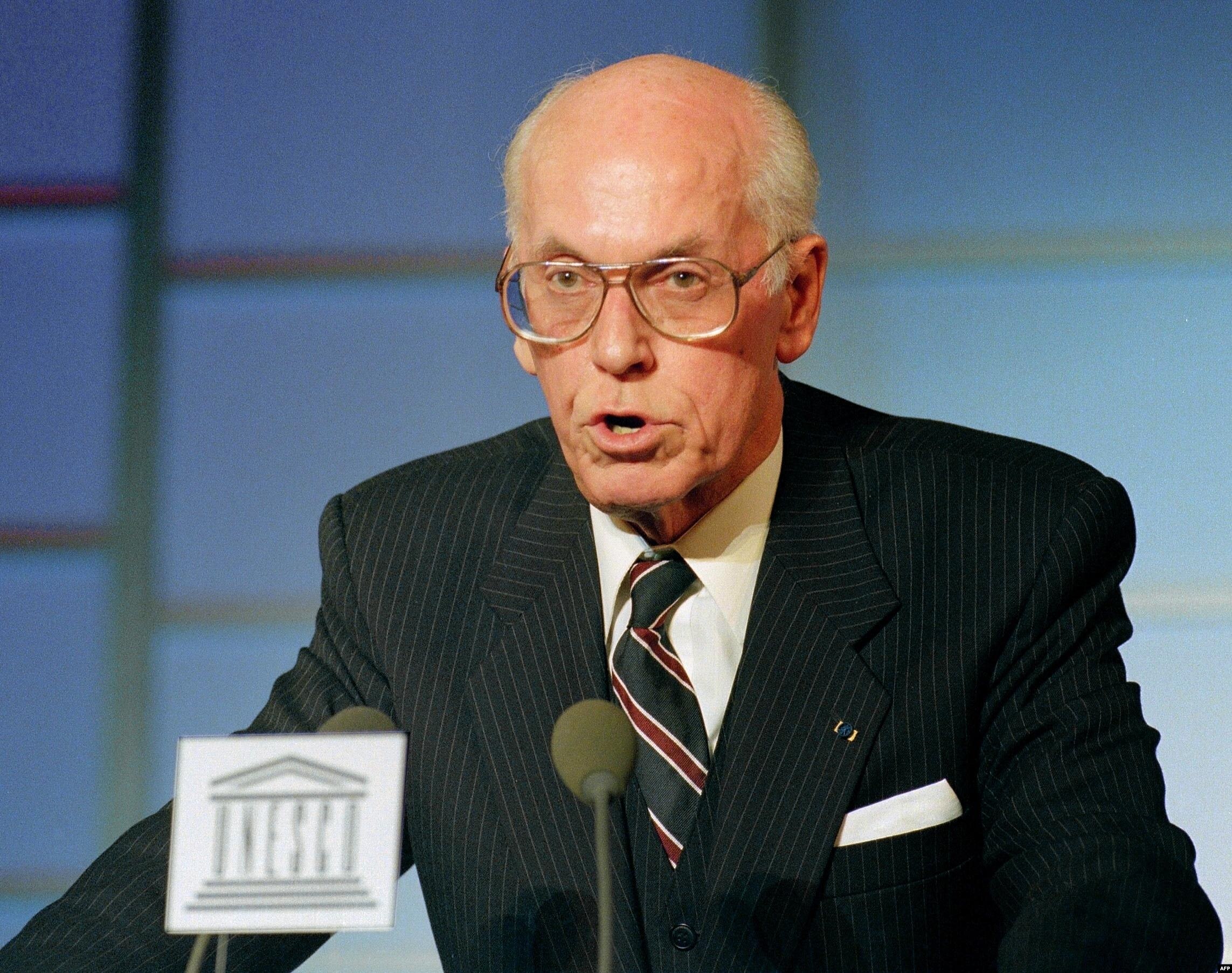
When in 1994, Estonia President Lennart Mary in his speech in Hamburg spoke about the threat of imperial expansion of Russia, this Russian official Vladimir Putin was terribly angry - he left the hall, slamming the door. This is what Mary said in his speech about the ambitions of a neighboring country. His abbreviated translation publishes the TV channel "present ."
One of the oldest city traditions of Hamburg, where the Big Twenty summit was held on July 7–8, is a solemn lunch for high guests (politicians, businessmen, creative elite), which is held annually in the old town hall. A meal, which is called Matthiae-Mahl (Matie Mal), has been holding a diet, Hanseatic city has been spending since 1356.
“This is a very old tradition, the atmosphere there is very solemn and exalted,” says the Hamburg businessman Wolfgang Rosenbauer about Matthia-Mahl. “At this reception, it is customary to behave accordingly, silver dishes from the city treasury are on the tables, people in tailcoats and in better clothes, conversations are conducted at an extremely high level.”
Every year, the organizers choose an honorary guest who appears to the audience with a speech. In 1994, the honorary guest at this dinner was the President of Estonia Lennart Mary (1929–2006), and Vladimir Putin, who was then 42 years old, was present there as vice mayor of St. Petersburg, the chita of Hamburg.
During the performance, Putin did something that no one had never done before him or after Matthiae-Mahl: he got up and left.
This is how the correspondent of Die Zeit correspondent Anna von Munchausen, who was present in the hall, describes this event: “A step is a step, casting a contemptive look at the accepting side, he leaves the hall, every step is accompanied by a creak of the parquet. A whisper is heard behind him. Who was he? What is he?
Eyewitnesses recall that they were shocked.
Lennart Mary - the son of Estonian diplomats who survived the link to Siberia and the repeated arrests of his father, the Soviet dissident and fighter for the Estonian national revival, playwright, prose writer and translator - expressed the idea that Russia, despite the external victory of democracy, did not cease to be an empire and once would definitely capture neighboring lands.
The "present" is published by the abbreviated translation of Lennart Mary's speech at the solemn dinner of Matthiae-Mahl in Hamburg on February 25, 1994.
Speech by Estonia President Lennart Mary
Dear mayor, tall guests, ladies and gentlemen!
I am the president of the Republic of Estonia. Looking at the towers and spiers of the free Hanseatic Hamburg, I feel at home, in the old Hanseatic Revel, Tallinn, on the shores of the Gulf of Finland. Today I have to fulfill an honorary duty, duty that seems extremely important to me: I have to give you a message from my country, which is, in fact, not so far from Hamburg.
The Hanseatic spirit , which even today feel like a number of Estonian cities, not only Tallinn, has always been the spirit of openness and common sense. But at the same time, it is an enterprising and even combat spirit, especially when freedom and its protection are at stake.
In my house, in the old town hall of Tallinn, a German saying flaunts on the wall, perfectly illustrating this Hanseatic spirit: fürchte gott, Rede die Wahrheit, Tue Recht und Scheue Niemand - "Fear God, tell the truth right and not afraid of anyone." I will obey this ancient commandment and openly tell you the truth how it is now seen by me and my people.
<...>
Estonians did not lose faith in freedom even during the years of totalitarianism. <...> Since our people belong to the Western European type of society and since we, unfortunately, live on the territory that is very vulnerable from a geostrategic point of view, we have developed much more acute than Europeans, a flair on problems and external threats nearby. The current world of this flair has almost lost. <...>
I’ll tell you openly, as the old Maxim tells on the wall of our town hall that I and my people with some anxiety watch how little attention is paid to the West that matures in the vast expanses of Russia.
From a subjective point of view, it is clear that the West is considering the collapse of the Soviet Union as a kind of triumph; It is also subjective to the fact that the West concentrated all his hopes and sympathies on the reformist forces operating in Russia. Nevertheless, with this attitude, the West risks quickly being in the grip of self -deception.
All of us, including the Estonian people and other peoples of Central and Eastern Europe, together with the West we want economically and socially stable Russia. But if we recall the achievements of recent years, we can cover us with an alarming feeling that we are moving away from our goal.
What bothers Estonians, and not only Estonians, in today's Europe? We were completely stunned by how the West invites Russian soldiers and Russian tanks to Sarajevo. Since the time of Bismarck and the Berlin Congress of 1878, the West for the sake of preserving the world has done everything possible to keep Russia as far away from the Balkans. After the Second World War, the United States and the countries of Western Europe spent more than $ 80 billion to maintain the Tito regime and prevent the USSR to the banks of the Adriatic.
We ask ourselves: is it possible to entrust the role of a peacekeeper and an intermediary when resolving ethnic conflicts to a state who is not able to cope with its own difficult ethnic and ethical problems? Concern only will grow if we take a closer look at the document not so long ago released by the Russian Foreign Ministry. It states that Russia will solve the problem of ethnic Russian Russians living in neighboring countries not only with diplomatic funds. And this despite the fact that ethnic Russians often appeared in neighboring countries due to their violent occupation and deportation of the local population.
From this Moscow memorandum, it remains only to conclude that, if necessary, Russia will be ready to take other measures. What these measures can be, we, Estonians and other small nations, know too well on the example of our recent history.
I am worried that the top in Russian foreign policy and Russian political philosophy again takes irrationalism. Solzhenitsyn has long urged the Russians to say goodbye to the empire and focus on themselves. He talked about the need to "master the spirit of self -restraint", believed that Russians should solve their own economic, social and intellectual problems. Involving any attention to the call of their great compatriot, Russian politicians suddenly openly spoke about a certain “special role” of their power, about the “peacekeeping” mission, which the new Russia is designed to fulfill in the space of the former USSR. One of the closest advisers to President Yeltsin, Sergei Karaganov, not so long ago expressed this thought in a seemingly modest and unobtrusive form, although in reality it is a rather tough thing: Karaganov said that Russia should be Primus Inter Pares, the first among the entire space of the former Soviet empire. I recall the famous phrase of Orwell, said about the Soviet version of communism: "Everyone is equal, but some are more equal than others."
Why is the new, post-communist Russia, in words, which broke with the vicious heritage of the USSR, stubbornly refuses to admit that the Baltic countries-Estonia, Latvia and Lithuania-were occupied and annexed to the USSR against their will and in violation of international law first in 1940, and then again in 1944, after which the very existence of these nations was threatened with the decades of Sovietization and Russification? Even today, Deputy Minister of Foreign Affairs of Russia, Sergei Krylov, officially declares the Baltic countries that Estonia, Latvia and Lithuania “voluntarily” joined the Soviet Union in 1940. A little more, and he will say that tens of thousands of Estonians, including me personally and my whole family, “voluntarily” allowed the Soviet authorities to deport themselves to Siberia.
Ladies and gentlemen, how can you listen to all this calmly? It is clear that this is a more or less familiar purely Russian irrationalism, which has always turned Russian policy into something completely unpredictable. But there is another alarming trend that Western democracies give out for their own convenience for the manifestation of RealPolitik. I'm talking about a strategy that should be called "the peace of the aggressor." Having accepted this approach, you yourself, without wanting to, become an accomplice of the imperial forces in Russia, where to this day they believe that the most difficult internal problems can be resolved by threats to neighbors and the capture of new territories.
<...>
The socio-economic processes that occur in Russia (it is even more like a supercontinent today than a regular state today), it is impossible to control from outside, no matter how much this would like. <...> If you really want to help Russia and its people, then you need to intelligibly explain to the current Russian leadership that no one will tolerate another imperial capture. Those who do not do this will help the enemies of democracy in Russia and other post -communist countries.
As I said, ladies and gentlemen: Estonia is very close to Germany and Hamburg. The West and above all, Germany faces a fateful choice. Or tolerate the neo-imperial policy of the Great Eastern Power, to maintain it financially and even extract from this some short-term benefit-and this, my dear listeners, will be extremely myopic politics. Or to help the ideas of democracy, freedom, responsibility and the world to prevail throughout the gigantic space from the Baltic Sea to the Pacific Ocean; If you want to achieve this particular, then decisive efforts should be made to the democratic West in order to ensure the stability and safety of small and medium states located east of the German border. I mean the entire territory of Central Europe, which, in my view, extends from Estonian Narva in the Baltic to the Adriatic Sea. This also includes Ukraine.
If we manage to integrate this zone into the democratic world, the example of these countries will positively affect Russia. We want - it is better to even say, we have to - reliably gain a foothold in the West.
<...>
If you abandon all these states, including Estonia, to the mercy of fate and the mercy of Moscow, which at any moment can re -wake up imperial appetites, the price that will have to be paid for this will be unbearable, even if all of Europe will pay.
<...>
We are stubbornly trying to understand your situation. Please: Please try to understand us. Estonia should remain free and democratic. This is in the interests of all Europe, and therefore in the interests of Germany, in the interests of Hamburg.