
Translated material
The iconostasis of the Soviet intellectual
Artist Dmitry Gutov - about the work and ideas of Ilya Glazunov
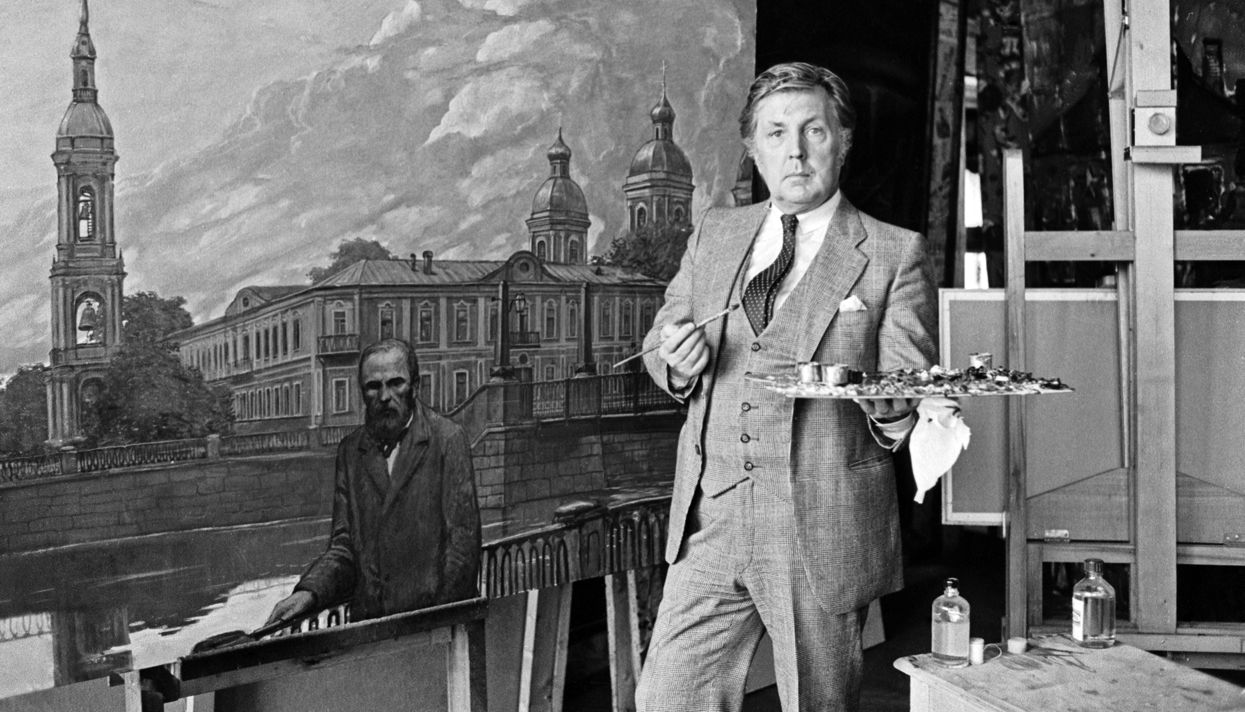
On July 9, in Moscow, at the 88th year of his life, Ilya Glazunov died-People's Artist of the USSR, public figure, thinker, founder and rector of the Russian Academy of Painting, Sculpture and Architecture. At the request of Medusa about Glazunov’s work, his ideas and influence on Russian culture was told by the artist and theorist of art Dmitry Gutov.
Ilya Glazunov turned out to be an artist who filled a huge vacuum field. We can say that, like the gods of Epicurus, he abides in the inter -world spaces. On the one hand, there is a professional environment of art historians who simply did not notice it. A student of the art history of the XX and XXI centuries has to remember dozens of names of artists - Glazunov’s name could never and could never meet. In that community where the letter of academic drawing has been studying for years, the laws of prospects, color harmony, anatomy, compositional construction, the technique of screening, its work is not discussed. The word "realism" here means something else that Glazunov canvas can have anything to have.
The most radical avant-garde circles are more friendly to Ilya Sergeyevich: they see in it an unconscious version of the domestic pop art. Collage work with images of mass intelligent culture, or a variant of what is called Bad Painting (“poor painting”), or a conceptual artist who brought to a logical end the principle: idea - everything, performance does not matter.
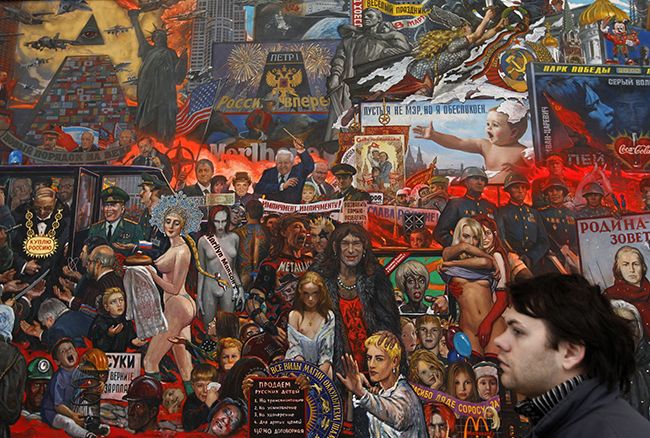
With all the difference between these two approaches that appreciate skill in any sense of the word, there is another pole in nature, where no one cares about all of the listed subtleties. There are an inconspicuous number of people who have not passed the workshop drill and have no idea about the prevailing criteria, wants to see in art a reflection of their life, his ideas about the fate of the world, about the tragedies of history and - wider - about beautiful and exalted. The gap between this wide spectator and narrow art specialists (for the reasons for which there is no place to talk about here) in the twentieth century became colossal. Ilya Glazunov’s painting, tearing with one of the poles, absorbed all the energy of the second.
Its identity is determined by the amazing, transcendental harmony of ideas developed in it and the form of their embodiment. Ilya Sergeyevich gropes his own style in the 1960s, along with his peers-artists, looking for a way to get rid of everything that resembled at least a vague Stalinist socialism. Glazunov brings his findings to the most perfect purity in the 1970s-it is then that his art is finally crystallized, and in this sense he forever remains an artist of those years. What was then captured by the Soviet intelligentsia is cataloged by it with incredible meticulousness. In order to understand both the meaningful and figurative series of his paintings, one must be in a small Moscow apartment of the mid-1970s, where the educated owner holds on the wall the iconostasis from portraits (re-photographed from hard-to-reach books) of people close to him: Stolypin, Nikolai I, Dostoevsky, Leontiev and further along the list. Where the objects of the old peasant life are gathering, brought from distant villages, personifying the "way", lost by the Golden Age. Where photographs of blown up temples are adjacent to the demons carved from the magazines, among which all violators of public calm from the Decembrists to the Bolsheviks could get.
All the deepest realism of Glazunov is to portrait the consciousness of this environment, pulled out by his brush on God's light. For sensitive hearing, it was already clear that it was among these walls that a new ideological future ripens - with its idea of the endless evil of the October Revolution, love for the monarchy, disgust for the rotting of the West and religious searches. It was supposed to go very little on the historical scale of time, so that these ideas become finally dominant.
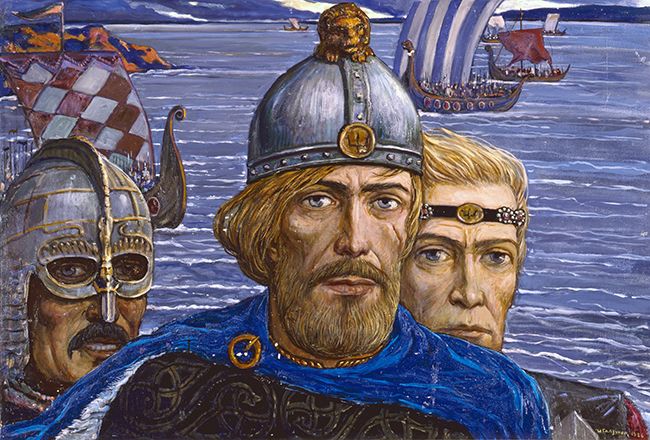
Having combined Lubok to the “world of art”, the huge eyes of the pre-Mongol icon painting with the reflections of expressionistic fires, the immediacy of naive art with the memories of the Soviet art school of the 1950s, and filling all this with a fire of genuine passion, Glazunov developed his unique language; The language is much more understandable than the one that experts love to say - and was heard.
But the world, praised by them with such a wonderful force, is experiencing its zenith today and, it seems, begins to decline.
What awaits in the future the museum of Ilya Sergeyevich Glazunov, who is directly opposite the glow? When all the passions settle, when all the most acute issues that have excited the minds in the mid-1970s will be reformulated, and a completely new generation will come into life, for which the 1990s are already a distant twentieth century, then they will again remember the importance of professional assessments. Then the museum will enter the organic component of the museum quarter, and young art historians will work on its new exposition.
Recorded Sasha Sulim