
Translated material
The Permanent Representative of the Russian Federation at NATO can leave Brussels and become a deputy of Lavrov, they recognized the media
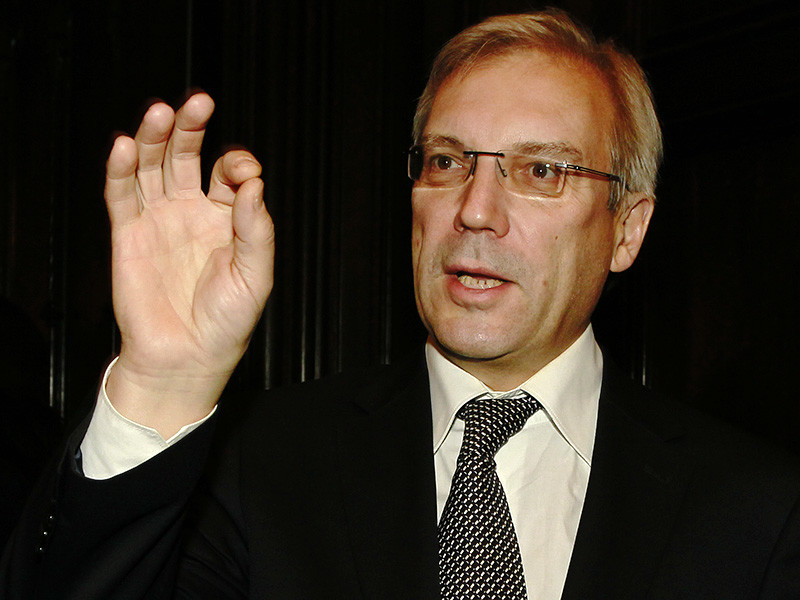
The constant representative of Russia under NATO Alexander Grushko may soon return from Brussels to Moscow, where he will take the position of Deputy Minister of Foreign Affairs, Kommersant writes with reference to sources in the Russian foreign policy. The fact that Grushko will soon leave his post was previously reported by the Izvestia newspaper with reference to a senior source in the Russian Foreign Ministry.
Sources of Kommersant clarify that in Moscow, Alexander Grushko will replace Alexei Meshkov, who holds the post of deputy head of the Ministry of Foreign Affairs of the Russian Federation, but already preparing to send an ambassador to Paris instead of Alexander Orlov. In six months, it will turn 70 years old and, according to the interlocutors of the newspaper, he will most likely retire.
When exactly the return of Grushko will be returned, the media do not specify. According to Izvestia, this step itself is due to the fact that in Moscow it is disappointed with the existing relationship with the alliance, which is believed to be not configured for constructive dialogue with the Russian Federation. In this regard, Russia does not consider it necessary to maintain the current level of the representative office of the Russian Federation at NATO and consider the possibility of lowering it to a temporary attorney. However, preliminary Moscow hopes to still conduct a constructive discussion with NATO at the upcoming meeting on July 13.
Alexander Grushko has been the Permanent Representative of Russia under NATO since October 2012. In 2014, the Alliance interrupted relations with Russia after the annexation of Crimea, which in the West was considered annexation.
The first meeting of the Russia -NATO Council in April 2016 in Brussels in April 2016 and revealed “deep disagreements” in the positions of two sides.
The constant representative of Russia at the NATO headquarters Alexander Grushko then said that the dialogue about strengthening trust is impossible without reducing the presence of NATO among the borders of the Russian Federation. A few months later - in July 2016 - NATO decided to place four additional battalions of the North Atlantic Alliance in Eastern Europe.
In Moscow, they said that such a step does not correspond to the fundamental act of Russia -NATO, and promised to take adequate measures to ensure the security of the Russian Federation.
A few days later, the headquarters of the North Atlantic Alliance in Brussels took place a meeting of the Russian Council - NATO. NATO Secretary General Jens Stoltenberg noted the absence of rapprochement between NATO and Moscow. Grushko, in turn, again stated that the normalization of relations between Russia and NATO requires the cessation of the military activity of the alliance among Russian borders.
In May 2017, it turned 20 since the signing of the fundamental act of Russia -NATO and 15 years since the adoption of the Roman Declaration on a new quality of relations between Russia and NATO.
The Russian Foreign Ministry stated that NATO froze all the projects of cooperation in the field of common interests that were provided for by the mentioned documents, and increases the conflict potential in the Euro Atlantic.
As a result, Russian-NATO relations are in the deepest crisis . And the military deployment with the Alliance on the "Eastern Fank", according to the Ministry of Foreign Affairs of the Russian Federation, lead to a dangerous round of arms race.
Russian Foreign Minister Sergei Lavrov said that, by increasing the military presence and infrastructure in the regions neighboring Russia, NATO is grossly violating the fundamental act of Russia - NATO 1997.