
Translated material
Where and when will it hit the next time?
About half a million cases of stroke are recorded in Russia over a year in Russia, and 99% of people do not know what to do at this moment
We help the Foundation for the fight against the orbi stroke helpWhat is a stroke?
This is when you are 37 years old, you are sitting on the couch, you speak on the phone-and suddenly there is a chop in your head, there is a notorious black tunnel in front of your eyes and you begin to mutterly mutter something like: "No, I do not want ... No, not now ... please do not ..."
It is when you suddenly get fatally tired, for a long, long time you try to dial your wife’s number, not seeing the keys to say to the phone: “Something happened ... yes, I’ll try to open the door ...”, then you slide off the sofa and start a long way to the front door, on the stomach, because in the head, the darkness and legs have ceased to be yours.
This is an ambulance, resuscitation, droppers, a piece of blue sky in the window and acute envy of everyone who can hold vertically.
This is a vigorous voice of the doctor: “You were lucky, if you hit a little to the side, we would not have talked with you. And so - only hemianopsy. "
Hemianopsy is the loss of field fields, one of the consequences of a stroke. Or, as doctors call it in a scientific, acute cerebrovascular disorders. In my case, the ischemic type: this is when the vessel is clogged. And sometimes hemorrhagic - when the vessel breaks. If in the place where he clogged me, he exploded, I would not talk to the doctor either. Lucky twice.
Lucky? I see nothing from the center and right. Imagine: you are driving in the car, and half of the windshield and all the side windows are sketched on one side with black paint. Is it lucky?
Lucky. If the blow fell into another area of the brain, I could lose speech or the ability to move or just die. And I am alive, I say, I’m moving. I just see not everything. And I will not see as before, never.
“This is an ambulance, resuscitation, droppers, a piece of blue sky in the window and acute envy of everyone who can hold vertically.”What happened next? After resuscitation - just a department, three weeks of treatment, then home, VTEK, disability. And the need to somehow accustom to live with a defect, about which others do not suspect. After all, hemianopsy is not visible outside.
A very unpleasant defect: I can fly into someone or something that is right from me. It is very difficult in the crowd, in the subway, in transport. At first I thought that I had to wear black glasses, like a blind man, and take a cane. Type "Caution, I do not see." Then he decided that no, I would study, get used to, invent life hacks. Even the benefit began to extract from his features: you will turn to something unpleasant zone of hemianopsy-and it seems like this unpleasant disappeared. Well, again - go free travel in transport badly?
In fact, the years after the stroke were one of the most saturated in my life. I traveled half the world, went to dance tango, fell in love again and even slightly mad on this basis. So many vivid feelings, it seems to me that I have never worried. Maybe because he remembered that instant chok, tunnel and his own miserable babble: “No, not now ... please, do not ...”.
I re -read the beginning of this paragraph and realized that one important word should be inserted into it: years after the first stroke turned out to be rich. Because the second happened to me. This disease has an unpleasant property of returning. Who when. I have - in six years.
I was at home again. I woke up in the early morning and thought: "Oh, how cool!" I do not see not only on the right, but also in pieces in the remaining left side. Now I was already aware of what it is and what to do.
Again the hospital, droppers, again for months on the ballot. And again lucky. The second stroke hit the same brain area. I go again, I say - I only see reality already in pieces. I can’t read the word - there are some letters, others in darkness. I can't see the cursor on the screen. I can't find a fork on an empty table ...
And I also started depression. Because I did not know (and do not know) the reasons for my stroke. Doctors do not know them, despite the enormous efforts. The number of specialists, tests, research, versions, assumptions and spent on all this I do not even want to summarize. And the certainty is zero. Where and when will it hit the next time? And if I am not at home? And in transport? If I fall on the street? They will bypass me - like a drunk, like a homeless man? And if I die right in the lesson, in front of my students?
I began to be afraid. The world was bored around me by a hopelessly blown bubble. I needed a psychologist, an antidepressants, a smart neurologist, an osteopath and for many months so that I would straighten my shoulders again, sit on the plane, go to the dance floor ...
I was lucky again. I am generally lucky - first of all. I have never left alone. After the first stroke, graduates and students collected a huge amount of money so that I could be treated and live. My family has always been next to me. I live in Moscow, where there are many doctors and medical centers with good equipment. I had a complex operation on my heart, finding an open oval window - a possible source of microtromb into the brain. And all the time people are knocking on me with the questions “How to help?”, “What to do for you?”
“A person who suddenly failed in a disease needs a wide variety of support: therapeutic, rehabilitation, and psychological, and material”But not everyone is lucky. A person who suddenly failed into a disease needs a wide variety of support: therapeutic, rehabilitation, and psychological, and material. And most importantly, his life at full speed flies on a blank wall - and stops. He is knocked out of the saddle, discouraged, crushed, helpless. The surrounding people, those whose turn has not yet come, should know about it.
And they should also know what to do. Where to run, whom to ask, where to get it. They - especially close ones - also need help. They have their own measure of despair and loneliness.
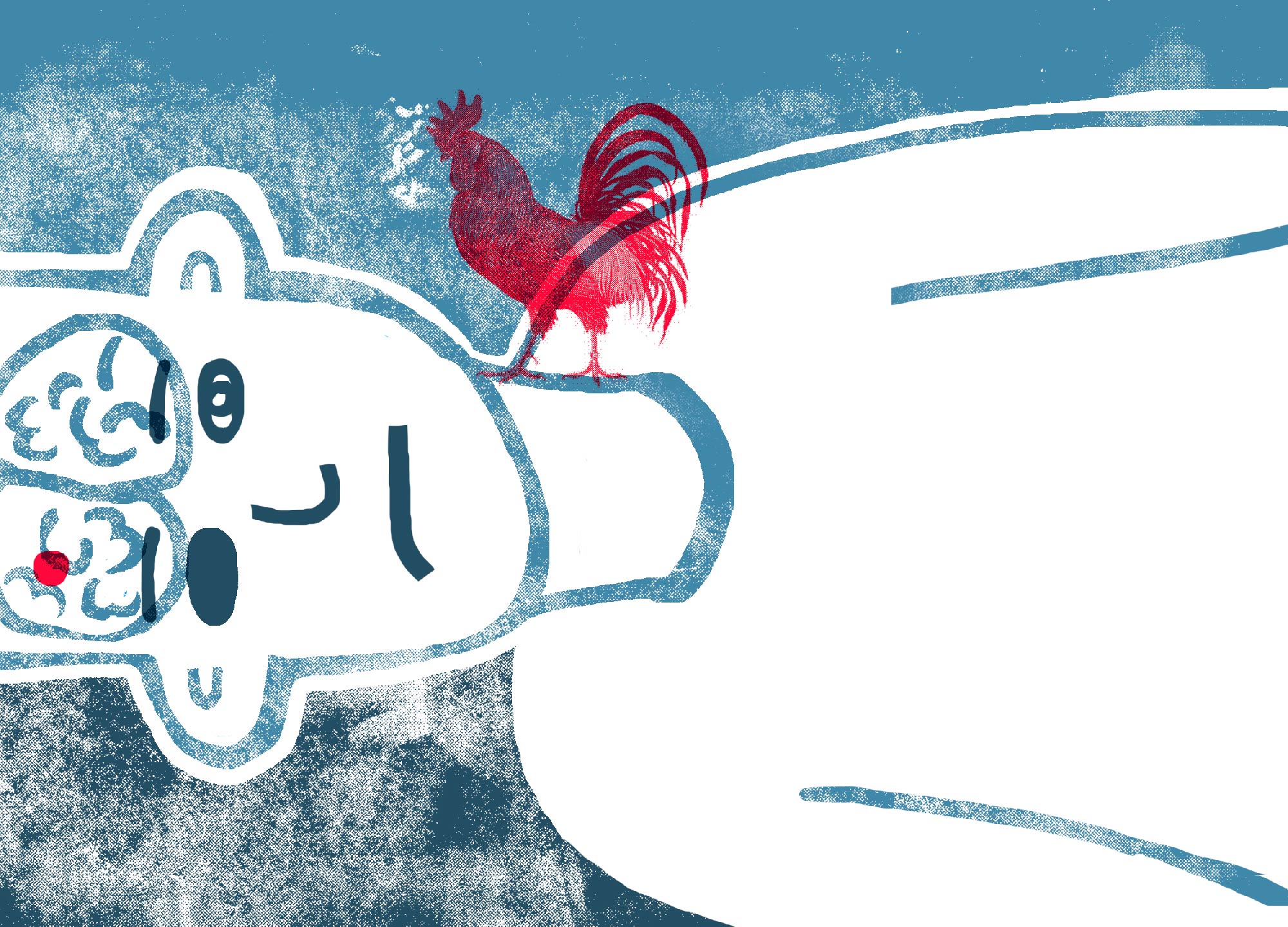
Therefore, by all means it is necessary to welcome the emergence of organizations such as Orbi - the Foundation for the fight against stroke. It is important that a hot line has appeared in our country, where everyone who has encountered this disease can contact. When a stroke comes, often everything solves minutes. Ideally, anyone should know what these minutes should be spent on. But this is ideal - and in reality? We are lazy, unfamiliar and restarted only when we are pecking a fried rooster.
Do not wait for the rooster. Write down the necessary phones now and put them in a wallet, in a passport, in your pocket. Read about the symptoms of a stroke, about first aid rules. And help the fund what you can.
And then he will help you. If, God forbid, you will need it.
The orbi fund must be paid for the training of hotline consultants. We need money for the salaries of four psychologists on the phone, the psychologist of the support group, a supervisor for psychologists, payment of the services of two medical consultants and one lawyer. Funds are needed to pay for telephone costs, technical support of the call center and for administrative expenses of the fund. It is very important to maintain a hot line from month to month: even the smallest regular donation will help thousands of people.