
Translated material
The Nobel laureate Liu Xiaul died
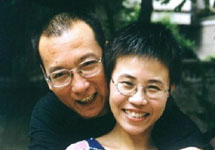
In China, at the age of 61, a dissident, a Nobel laureate Li Xiaviko, died. It is reported by the BBC.
The last month of his life, Li Xiaouviko spent in a hospital in the northeast of China, where the authorities transferred him from prison. In June, the human rights activist was diagnosed with liver cancer, which had passed into the terminal stage.
After it became known about the illness, several Western countries turned to China with a request to release the fir for palliative treatment abroad. However, the country's authorities refused, referring to the fact that the human rights activist could not move over long distances due to his health state. The Nobel Committee was responsible for the death of the dissident in the Chinese government.
Liu Yyavlo was born on December 28, 1955 in the city of Chanchun in the family of a university communist professor. In his youth he was an agricultural -posed worker, a worker at the factory, then entered the University of Girin Province.
After graduation, the young man worked as a teacher of philology. In 1988-1989, Liu Syarovich was on a foreign business trip in China and Norway. In 1988, in an interview with the Hong Kong journalist, he said that China would need "three hundred years of colonialism."
When the protests on Tiananmen Square began in 1989, Liu Yasobra returned to China and began to convince students to stop street performances so that blood did not spill. For supporting protesters, he was first arrested in June 1989, and until January 1995 he was imprisoned.
In May 1995, Liu Xialo was again arrested for criticism of the authorities, but six months later they released when the dissident wrote a repentant letter in which he recognized his mistakes.
Nevertheless, after the next release, Liu Yasovich continued human rights activities, and in 1996 was again arrested, after which he was in a correctional camp until 1999.
In 2003, the human rights activist headed the Chinese Pen-Center.
In 2008, Liu Xiaul signed the Charter -2008 - a manifesto of the Chinese intelligentsia calling for political reform and democratization of the PRC.
Soon after, on December 8, 2008, two days before the planned demonstration of proceedings, Li Xiavo was arrested for the last time. In 2009, the dissident was sentenced to 11 years in prison for "incitement to undermine the state system."
This decision of the Chinese authorities caused protests by the European Union, the USA and the UN High Commissioner for Human Rights.
At the beginning of 2010, Vaclav Gavel, the Dalai Lama XIV and other people put forward the Nobel Peace Award.
On October 8, 2010, the Nobel Committee awarded the human rights activist the award " for a long non -violent struggle for the fundamental human rights in China ." Liu Xiaul was not allowed to come to the award ceremony, at the event the chair of the laureate was empty.
In China itself, the media did not cover this event in any way. The Chinese authorities then stated that they consider the award to the dissident the prize "completely erroneous", and in conclusion he is for violation of the laws of the country.
After Liu Xiaovich was declared a Nobel laureate, the authorities allowed his wife to visit her husband. According to one of the evidence, the human rights activist cried when he learned about the decision of the Nobel Committee. Liu Yasovich wished to devote this award to all those killed in Tiananmen Square.
After the visit to her husband, it was actually placed under house arrest. The human rights activist was not allowed to leave the apartment, they did not allow anyone to come to her, she was disconnected by the phone. In 2013, her brother was sentenced to 11 years in prison on charges of fraud. Only shortly before the death of her husband, they allowed him to reunite.