
Translated material
"Siemens" in Russia was simply inflated
How Europe reacts to a scandal with the supply of German turbines to Crimea
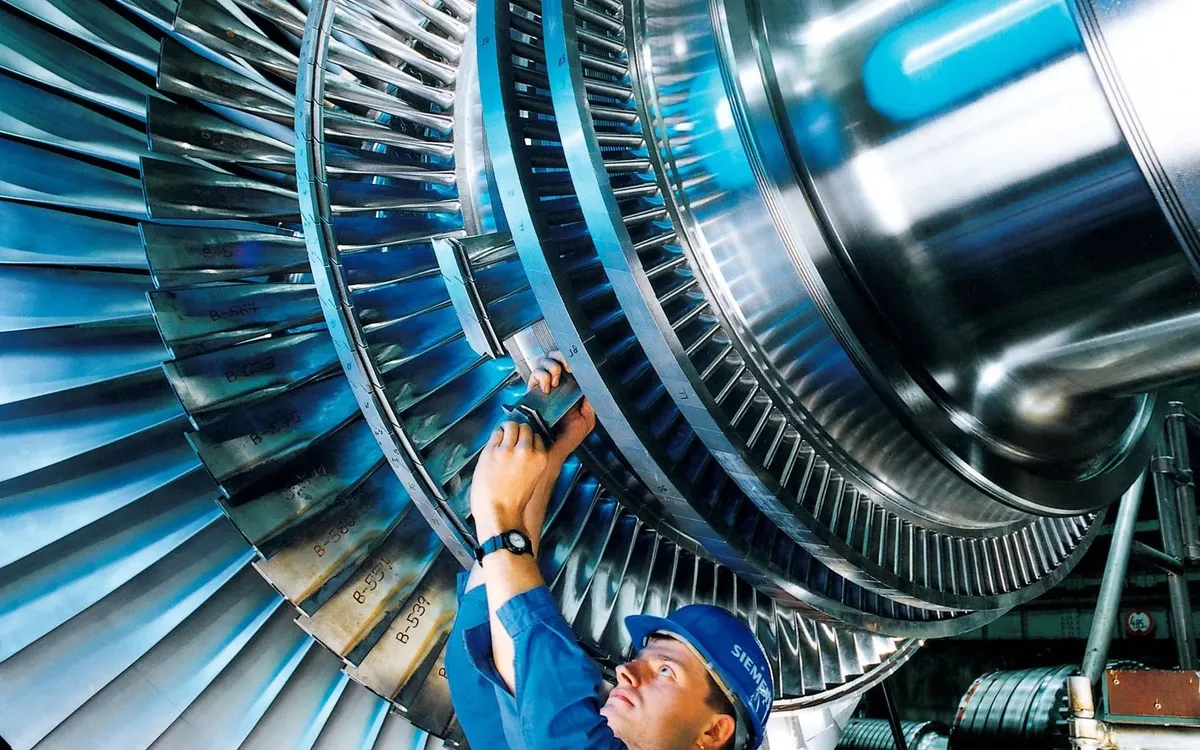
The supply of German equipment to Crimea bypassing sanctions can result in serious economic and political consequences
Siemens was deceived by transporting to Crimea without its knowledge and in violation of European sanctions gas turbines intended for a power plant in Taman. This is how the German Frankfurter Algemain commented by the scandal gaining power with equipment supply to Sevastopol.
The company's leadership, the German press and officials of the European Commission in Brussels are reading serious economic and political consequences to this scandal. The Eastern Committee of the German Economy emphasized that the German side will strictly carry out sanctions. “Not a single German company can afford to be suspected of evading sanctions,” said Michael Harms, General Director of the Committee.
Siemens scored the alarm, whose business reputation was in jeopardy after at least two gas turbines of its development, produced at a Russian enterprise belonging to the German concern, were more than half in the Crimea. Moreover, the management of the company did not learn about this from Russian partners, but from German intelligence officers.
At the beginning of 2015, Siemens concluded with the Technoprom export quite correct from a legal point of view a contract for the supply of turbines for a power plant in Taman, which did not violate the EU sanctions imposed in early 2015. But the German company feels morally responsible for not being able to prevent transportation, and even more so the installation of turbines in the Crimea. At least because she is now accused of violating economic sanctions.
As the German Manager Magazin notes, the irritation of the Siemens leadership is growing as the scandal grows. The company questions the future of its business in Russia: “We cannot talk about business as usual,” said corporate circles on Tuesday. “This, of course, cannot but influence the prevailing connections.”
The leadership of the famous company with headquarters in Munich said that Russian clients repeatedly certified it in writing, that the use of turbines in Crimea was not provided. Now Siemens will demand that the turbines in accordance with the contract be returned to Taman or that the contract be revised entirely.
Siemens created a special working group to investigate the incident and extended its powers to both its units and partners in Russia. The Munich Prosecutor's Office will check whether the leadership of the concern has violated anti -Russian sanctions, which are the EU Law. The European Union allows the export of equipment for power plants to Russia, but not to the Crimea, which is legally recognized in the EU annexed territory.
The Munich concern does not accept the excuses of the Russian side, which considers the installation of turbines in the Crimea legal: they say, they are made at the Russian enterprise and have a Russian certificate. This is the product of Siemens, to which the company has all the rights, wherever these units are made.
The company was not notified of further transportation of turbines to Crimea, they said on Tuesday in corporate circles. The leadership of the concern by Russian partners was given a "guarantee not to do anything illegal."
“This is a clear violation of the contracts concluded with Siemens,” commented the company.
The FAZ observer writes that the company, at least, can prevent the operation of its cars in the Crimea, because for it a lot is put on the map.
The investigation uses all available materials. Svastopol satellite pictures confirm that two gas turbines produced under the Siemens license in Russia are actually located in Crimea. Other units are also visible in the photo, including generators of, apparently, American origin, possibly General Electric. Without them, the power station simply cannot produce current. Presumably, all this equipment was taken out of Sochi, from where the power station built in 2014 for the Winter Olympiad was transferred to the Crimea. Moreover, two more Turbines of Siemens are on the way to the Crimea, where they should be mounted at the second power plant, the German side claims.
If the Crimean case is confirmed in court, it will affect the relationship between Siemens and Russia. Investments in this group in the Russian economy amounted to 1.2 billion euros last year. The consequences of the future joint enterprise Siemens Gas Turbines Technologies with the Russian “Technoprom export” cannot be avoided. “Siemens” belongs to 65% of the shares, the company is managed by the German manager. There are already signals that the partnership that had begun at the end of 2011 may end.
Of course, the basis of trust accumulated over almost 160 years of Siemens in Russia was seriously undermined. Recall the March 2014. Then the Director General of Joseph Kezer almost got into “non -browned”, because after the accession of Crimea to Russia he met with Vladimir Putin and promised new investments in Russia. Three years later, he was forced to recognize himself as a victim of unscrupulous actions of Russian contractors. But now it is not only about violation of the contract, but about the loss of confidence.
In Brussels, officials close to the problem of anti -Russian sanctions believe that the incident can become an argument for those in the EU who insists on their preservation and even tightening.