
Translated material
"Baikal is more important"
When implementing energy projects, Mongolia should adequately evaluate environmental risks: an expert on the hydropower of Arthur Alibekov about the projects of the Mongol hydroelectric power stations in the Selengi basin for an independent newspaper.
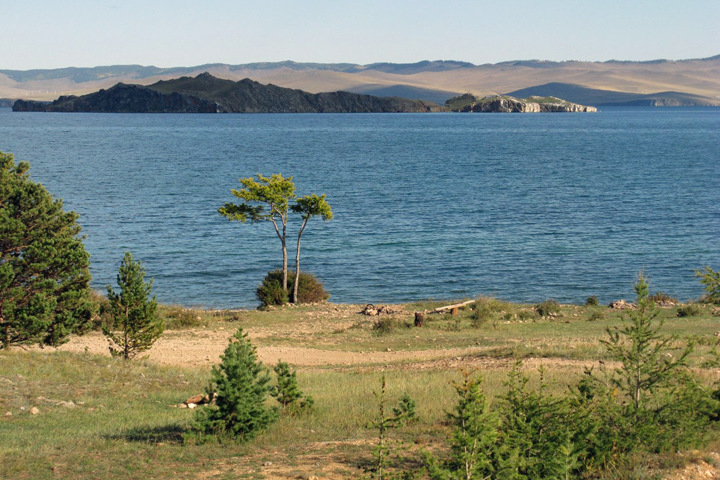
Lake Baikal was in the spotlight of UNESCO - in Polish Krakow there is an annual meeting of the World Heritage Committee. Last year, it was 20 years since the Gloric Sea became a natural object of world significance, and therefore the international community is closely attention to what problems threaten Baikal - both now and in the future. Perhaps to everyone is known about current troubles; But there are troubles, as they say, for the future. One of these can be created by fraternal Mongolia, which, with persistence worthy of better use, wants to build several hydroelectric power stations on the selent and tributaries. The pool of this river, which provides about 50% of the annual water flow to Baikal, is better not to touch, all the more regulated for the solution of current energy problems. Because from the Mongolian hydroelectric power plants Baikal will only be worse.
In March of this year, the Mongolian project of Minis, in which it is planned to build the SUREN hydroelectric power station on the main channel of Selenges and the drain from the Orkhon River to the Gobi Desert (as part of this project, the construction of the hydroelectric power station is also supposed), held public hearings on his projects in Buryatia. In May, similar events were held in the Irkutsk region. We discussed preliminary options for technical specifications for environmental research and plans for the future construction of these facilities. Based on the results of participation in public discussions, only more than 100 fundamental remarks and proposals were sent to my projects in draft technical specifications.
It was largely unique - especially for Mongolia - experience. And in emotional, and in informational, and in technical relations. The experience of conducting public discussions and the participation of a wide delegation of Mongolia demonstrates a good example of the world's practice of open dialogue, and these friendly steps of the Mongol side should be welcomed in every possible way. At the same time, the population of two Baikal regions said unequivocal “no” to any hydraulic projects in the Selengi basin. At the hearing, they asked the question of the fate of another project of the hydroelectric power station-the largest, on the Egine-Gol River. Moreover, the Government of Mongolia literally before events in the Irkutsk region established a new state -owned company to implement this project, which China had already given a loan, but last year it froze. Judging by how our neighbor does not reduce its activity according to these projects in the past couple of years, Mongolia is seriously determined for the construction of hydroelectric power stations. But already now, on the basis of the experience of implementing similar hydropower projects in Russia and abroad, you can formulate why Mongolia is better not to do at all.
First of all, I would like to shift the accents a little. In their speeches at the hearings in Buryatia and the Irkutsk region, representatives of the Mongol delegation made a special emphasis on the fact that the water level in Lake Baikal would not decrease significantly, and if it decreases, then, according to preliminary estimates, about 1 cm (by the way, they previously allegedly calculated the “Egian-Gol”, in the publications in Russian media, Mongol experts called Mongolian experts. Something like 0.2%.) In connection with which possible negative influences for Lake Baikal will be supposedly minimal. If you look at the lake as a reservoir with fresh water, then, probably, it would be possible to agree with colleagues. But for experts, it is obvious that the main ecosystem type of influence from the Mongol hydroelectric power stations will not be the quantity, but the quality of water resources in the Russian Federation. Quality refers to the distribution of water from the time of year. This is the main aspect of influences. The water content of the Selenga changes very much by both years and during the year - this hydrological regime is a key factor on which the state of ecosystems of the Selenga delta and the nearest part of Lake Baikal depends. Now it is natural, natural. And it is on him that the greatest negative impact can be exerted.
Thousands of years of ecosystem of Selenges and Baikal have adapted to the natural regime of the river, which is characterized by stable variety and distribution during the year. The variable regime of the Selenga River with the territories characteristic of the floods is one of the factors that determines the uniqueness of ecosystems and habitats of Selengi and Baikal. The receipt of useful substances in the right quantity and in the necessary periods of time depends on it. It also determines the condition of the Ramsary water-bell lands and habitats of many species, including fish, ground animals, amphibians, birds, etc. However, when implementing the hydroelectric power stations, which is obvious, it is these natural conditions of the river regime, which have formed for millennia, that will be under the threat of changes, which can lead to a significant transformation of unique ecosystems and a change in the initial environmental conditions. And this creates risks for the biological diversity of places located both in the flooding zone of the reservoir and in the lower bieufe.
The appearance of the hydroelectric power station will tempt the temptation to regulate the drain of rivers for energy purposes, and not in the interests of nature. Simply put, the water will go along the channel not as it is determined by nature, but as the demand for electricity will require. Imagine that usually the water in abundance entered the delta during the floods, stirring up territories and carrying with it a feed base for many animals. In winter, the river is minimal, and nature is adapted to this. During the construction of the hydroelectric power station, especially “Egine-Gol” and “Shuren”, the effect of the floods will be level, and the water will enter the delta already in accordance with the discharges of water from the reservoirs, and in winter more water is traditionally discharged, since the consumption of electricity is also higher. Just imagine that birds fly to their usual places of nesting in the spring for several seasons, and flooding of the floodplain did not occur and did not receive a feed base. What will happen? Imagine more, and how in winter the coming water of unnaturally large runoff will spread over the ice. And according to the forecasts of scientists, the excess of winter runoff during the construction of hydroelectric power stations over the natural can be five times more! And this is one of the main questions about the negative influences of the hydroelectric power station.
What are the consequences? Let's see, for example, at the Volga-Akhtuba floodplain. The change in the Volga River regime, among other anthropogenic factors, led to the fact that alien flora and fauna developed in the floodplain, which replaced the native vegetation, the biological productivity and biological diversity fell, and fish productivity fell. And now Rosvodresurs are trying to carry out ecological ecological ethnic groups in the Volga-Akhtuba floodplain and come up with other measures that can stop the degradation process.
Another example is the Samur River. The change in the hydrological regime of the river due to the use of water resources has led to the degradation of the unique relict lyiana forest in the floodplain, the area of which over the past decades has declined four times. Another example is the Rhine River in Europe, after the regulation of which there was a decrease in the biological diversity of species and ecosystems, many species of plants, fish and animals that previously lived in this territory disappeared. Currently, several hundred million euros are invested annually in the restoration of the river ecosystems: in the process of creating the Cascade of the hydroelectric power station, possible environmental consequences have not been adequately considered. An incorrect assessment of environmental risks in the early stages of planning hydraulic structures is much more expensive, at the stage when the object has already been built and when you have to face real negative influences.
Finally, we can recall the River Colorado in the USA. According to official information, the work of the Glen-Canyon hydroelectric power station caused serious changes in the lower reaches of the river. In connection with a change in the hydrological regime, the following negative consequences were recorded: the disappearance of at least two native fish species (five more were threatened by disappearance), the appearance of invasive species, better adapted to the new regime; reducing the number of habitats that are important for the survival of native species of fish; a significant decrease in the volume of transported bottom deposits, as well as a change in the composition and temperature of the water; A decrease in the recreational value of the coastal zone below the hydroelectric complex due to erosion of the coastline and a reduction in the number of beaches. Finally, a decrease in the biological diversity of the plant and animal world. This is how the regime of the river is important, and from the point of view of quality, not quantity!
Almost all reservoirs are multifunctional and multi -purpose objects. It is wrong to believe that they will be used only to solve the problems of electricity generation. Moreover, Mongolia objectively experiences a shortage of water. It is likely that during operation, the Shurenskoye or Estiral reservoirs can be equipped with water intakes, which will inevitably lead to a decrease and volumes of runoff in Baikal. This has already happened-for example, the project of the Victoria hydroelectric power station in Sri Lanka, when the hydroelectric power station was built, and then many water intakes were located in the reservoir, which led to a decrease in electricity production at this station by about 30%, not to mention the regulation of runoff, etc.
To properly assess the degree of impact on the territory of the Selenga and Baikal delta, you need an integrated ecosystem approach, in which you can use methods for evaluating ecosystem services and natural capital. This, by the way, was previously mentioned in the conclusion of UNESCO. Such an approach can be quite simply implemented on a river where in the lower beef of the planned hydroelectric power station there are no objects that are so valuable from an ecological point of view. But in the case of the Mongolian hydroelectric power station, this will require serious costs associated with especially valuable natural objects and the need to preserve them. It is important for the World Bank and the Mongolian lobbyists of the hydroelectric power station that each project in the early stages seems attractive until you begin to approach all the difficulties of its implementation. I do not exclude that in the early stages of substantiating the solution of the energy and watermobile problems of Mongolia, no adequate assessment of environmental risks from the hydroelectric power station was carried out. And compared with other hydroelectric power stations in the world in these projects, they are very high.
Economics or ecology - this choice is facing all hydroelectric power stations in the world. And here this choice of priorities will have to be made. And in this case, it is not even simple, since not a single hydroelectric power station in the Lower Bieff had another country at the same time, the UNESCO World Heritage Service, the Ramsars water-fiber and 25% of freshwater lake ecosystems in the world-Baikal.
What can be done at this stage? First, go to the consistent design process. At the initial stage, there is a strategic ecological assessment (EMEO), including regional environmental assessment (REO), then field studies, then an assessment of environmental impact and social consequences (EIA and SP) and only then, after understanding the scale of the solution of environmental issues and the degree of influence on the technical parameters of the hydroelectric power station, determining the further step-the transition to the stage of technical and economic substantiation (Teo). Jumping a few steps is an unjustified risk for hydroelectric power plants in Mongolia and guarantees of the preservation of Lake Baikal. But, unfortunately, in the technical specifications presented on public discussions, it is precisely the following approach, which provides for a jump through a few steps, and is laid.
Personally, I believe that these projects are not justified to solve the problems of the development of Mongolia and create objective environmental threats. Moreover, I am sure that with an adequate calculation of the costs of compensating for environmental consequences from an economic point of view, these projects will be unjustified to Mongolia itself. And when ignoring the need to preserve nature, they will lead to irreversible processes of degradation of unique ecosystems. So far, it seems that Mongolia aims to build hydroelectric power stations, and not to develop the country's mining industry, for which it seems that these stations are needed. Other alternative options may also be suitable for the needs of the energy of Mongolia. The search for alternatives, including with the participation of Russia, is the most optimal way to cut this Gordian knot, strengthen the good neighborly relations of our two countries and save Baikal.