
Translated material
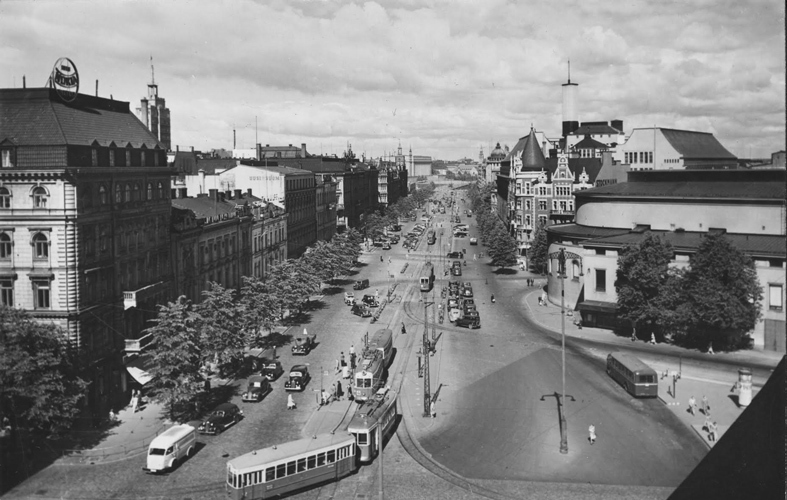
Murder of honor. Helsinki. 1930s
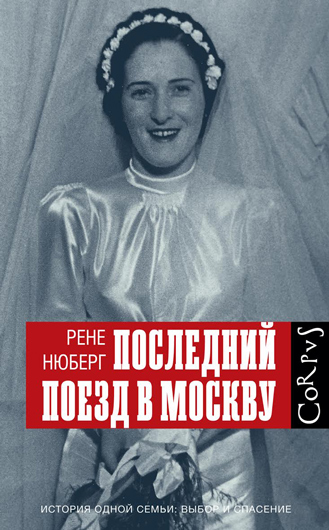
Colta.ru publishes a fragment of the book “The Last Train to Moscow” by Rene Nyberg-a Finnish diplomat who worked in many countries, including in the USSR (1970s) and in the Russian Federation (2000-2004). However, in the Nyberg story, only concerns this side of his life. The main thing for him is something else - the reconstruction of the past. So the story of the mother of Rene Nyberg appeared. And another one was weighed into this story - about how during the Second World War he managed to escape his family - Masha and Joseph Jungmanam. Nyberg’s book is published by Corpus.
My parents Feiga (Feigo, Fanny) Tokacier (from the Finnish branch of tokacuers) and Bruno Nyberg met, apparently back in 1934. On a beautiful ring with Aquamarine, inherited by my wife, the inscription was engraved: “6.1.1935 b”. My wife also has a wedding ring - a platinum with a diamond - with an engraving: "12/3/1936 Bruno." Father was an athlete and first chairman of the Finnish weightlifting Union. In the 1952-1960s, he was the president of the World Cupilty Union. Three brothers of my mother were also involved in sports. The youngest, Jacob, and one of the twins, Meisha (Moses), engaged in heavy athletics. The second twin brother, meme (Abram), was a famous sprinter.
Bruno fell in love with the beautiful sister, and this worried her father, Meyer Tokacier. He sent Feigo to Riga, to his brother Abram Tukacier, in the family of which four daughters were brought up. The eldest, Masha (Maria), was a couple of years younger than my mother, and the cousins were friends for a long time. Mom spent the summer of 1929 in Riga, next summer Masha was visiting her uncle's family in Helsinki.
Since only more than 200 Jewish families lived in Helsinki, it was not easy to find a suitable groom. In Riga, the Jewish population was much larger (for 1940 - about 50 thousand). The calculation was that a potential groom would be found in the musical circles of Riga. Masha graduated in the spring of 1936, the Riga Conservatory in the class of teaching the game on the piano. At a concert on the occasion of the end of the school year, Masha, according to the local Russian-speaking newspaper, was played by the first piano concert of Rachmaninov Fa-Dizh Minor “and was a great success”.
 © Corpus
In the spring of 1937, mom and Masha lived in the same room of a spacious apartment of Tukacuers in Riga. Mom told Masha about her secret engagement with Bruno. Masha gave advice: "If you love Bruno, only listen to your heart." Bruno remembered this and thanked Masha when they met in 1957 in Jurmala.
In Riga, my mother learned German and spoke on it until the end of her life with a charming Baltic accent. “Live Var Gott I Riga” (“Life in Riga was beautiful”), ”she often repeated in old age. However, she did not find a Jewish husband there and returned to Helsinki. In August 1937, he and Bruno got married.
Mom knew what she was doing, but did not assume what the consequences would be.
Mom collected things, left the house on Lenrotinkata and sent a telegram to her father: she married Bruno and went on a wedding trip to Stockholm. Meyer immediately attributed a statement to the police that his daughter escaped, kidnapping from the cash desk that the family business belonging to the family business.
The police detained my mother in a pier in Turku when she sat on a ferry. The wedding trip did not even have time to begin. The Gemini brought the PACCAND PACTSIAN PACTICE at the disposal of the police, and Mom was brought back to Helsinki in the middle of the night. Despite the protests of the brothers, the father also went with them. In Helsinki, the fugitive was detained.
The atmosphere during a police interrogation, which was the next day, was more than tense. It follows from the protocol that he was especially poured with insults of Abram, saying that he would better kill his sister than to see her married to Bruno. Subsequently, in court, he denied this. The sister of the mother, Rico (Rivke), who was also present during interrogation, called the Sister a whore and added: “It would be better if you died and never born,” after which she was ordered to leave the site.
Abram threatened my father with physical reprisal. From the protocol it follows that the employee of the threat of Wihyter, having heard the threats of Abram, advised my father to get weapons. Such words from the lips of a policeman in today's Finland are difficult to understand. Father followed the Council - the Mauser of 1914, which he acquired, is still stored in me, however, in a non -working state.
Already at the pier in Turku, the hot Abram waved his hand at the allegedly abducted money and confirmed that it was most important to "bring Feigo back to Helsinki."
When the case was considered in the city court, the false accusation evaporated, and everything turned against the prosecutors. Meyer was accused of illegal deprivation of liberty and sentenced to seven months of conditional imprisonment. The process went to four meetings. The Court of Appeal to Turku in July 1940 replaced the suspended sentence, which was confirmed by the Supreme Court in May 1941.
When on August 22, 1937, on Sunday, Feigo was released from the police, Abram called the station and lied that Meyer had a heart attack and he was dying. Feigo was brought together with the criminal police inspector at Lenrotinkata for cross -examination (father and daughter). But due to the state of health, the plan failed. As fixed in the protocol, Feigo cried, held her father lying in the bed by the hand. He repeated: “You won’t go anywhere,” and Feigo answered with consent.
Meyer's motives were clear, and he openly announced them in a statement. He wanted to warn his daughter against a “fateful” mistake in any way. He accused his daughter of disgracing him. Feigo in his statement confirms that his father resorted to a deliberately false denunciation to prevent a marriage, which, in his opinion, not only led to a break with faith, but also promised his daughter in the future only misfortune. According to Feigo, the police were misleading with the aim of "separating me with my husband and against my desire to force me to return home." She adds that the statements of theft, if this was discussed, the police were not made.
Meyer's prosperous men's clothing store was a typical Jewish family business. It is impossible, Feigo claimed in court, to consider intra -family conflicts in court. The theft was invented only to involve the police in business. “All my crime was marriage with a Christian,” my mother said.
According to the protocol, Feigo for more than a month was in his father’s house on Lenrotinkata, where the other four adult children lived. Father denied the accusation of his daughter of holding her at home besides her will. Unanimously, the father and daughter claim that Feigo left Lenrotinkata on November 3, 1937 and went to Bruno at Merimiyenkat. What happened over these five weeks, it will not be possible to find out. What in reality was the “imprisonment”, imputed by Meyer, also remains unclear. Nothing indicates that physical violence is applied to the daughter, but there was enough psychological, if you think about it. Feigo claims in the statement that she was held in her parental house and threats until she gained courage and escaped.
If Feigo wanted to divorce Bruno after all of the above, it would be easy to understand. But 27-year-old Feigo was true to her decision. She left her father’s house to her husband’s house. Before that, they were secretly engaged to two years. It was a final break with the family and the old world. And Feigo never looked around.
My mother survived her brothers and sisters. During the winter war, she once met her father in a bomb shelter. Meyer looked at his daughter and said: “So that you are killed by the first bomb!”
Have you pardoned Meyer or was the verdict executed? I heard from my parents that Meyer was pardoned by the president of the republic.
Under old age, my mother often recalled her mother and rarely - about brothers and sisters. Already at a very advanced age, she once admitted that she forgave her father, because he could not do otherwise. He was a prisoner of his faith. It often comes to me that my father and daughter were largely worth each other: both had a strong and unyielding character.
When my mother was already over 90, I brought to her to visit her nephew, Ben Grasse. Her vision was weakened by that time, but still she saw Ben because of the darkened glasses and immediately went to the point, she asked in Swedish: “Ben, did you marry a Christian? And how did your mother react to this? It’s the same as spitting in your own glass. ” At the same time, my mother, of course, knew that Ben's wife went into Judaism and raised their three children in the Jewish faith. Ben, in the past, the executive director of a large enterprise, as a boy, sat on the edge of the chair and agreed with everything. This visit was important because Ben wanted reconciliation. With his arrival to the aunt, he confirmed this.
The mother’s family approved Bruno until he was a friend of the brothers. But as soon as he became Feigo’s husband, he immediately turned into an enemy. Meyer claimed in court that he was not even familiar with Bruno.
It is also interesting that only one of the twins, Abram, as well as a sister, Rico, showed aggression. Investigators, of course, mention both twins in their records, but Moses, according to the court protocols, remained indifferent. Feigo, however, in his statement mentions pressure from both brothers - that is, the twins, since the youngest of the brothers, Jacob, is never mentioned in the papers.
Feigo and the family rupture was similar to the murder of honor, although it did not reach the real murder, despite the threats. The family declared Feigo the deceased and completely excluded from her life.
In fact, the marriage of a Jewish girl with a foreigner was not something exceptional, rather, on the contrary, it was a common story, and all her participants knew firmly how in this case should be done. In the appeal addressed to the Supreme Court in the fall of 1940, Meyer believes that the marriage concluded by his daughter with a Christian brings his shame on him, puts him in the most bad light and is a mistake. Based on what I heard, Meyer would recognize my father, "if he were even a janitor, the main thing was a Jew."
The marriage of a Jewish with non -Jews means from the point of view of orthodox Judaism "an irreversible loss of immunity and holiness." It also leads to excommunication from religion, a break in ties and symbolic death.
Meyer’s statement and, especially the daughter presented to her daughter, the accusation that she disgraced her father is almost the word word of the protagonist of the protagonist “violin on the roof”, Tevye-little worker. His daughter Hava also married a Christian, but, unlike Feigo, tried to return to her father. When her sister asks her father to condescending to her, her father says: “And the pain, which to this day squeezes my heart when I remember what she did with us, who exchanged us!”
The Tevye-Younger "Sholom Aleicham is known mainly thanks to the Broadway musical" Violinist on the roof ", in which the plot has changed and became more optimistic. The book written on Yiddish remarkably testifies to the tragic moment from the life of the Shtetla, a Jewish place in pre -revolutionary Russia. One of Tevye's daughters married a revolutionary, the second - the poor tailor, the third was carried away by Donjuan, became pregnant and committed suicide, the fourth surrendered to the speculator, who, having lost everything, went to America. The fifth daughter, Hava, married a Russian, that is, a Christian, and his father renounced her. The family served Shiva prescribed by the tradition - for seven days mourned for a living child.
The same thing happened in a family of currents in Helsinki in 1937. Father read in the synagogue Kadish grieving - a memorial prayer, the family served Shiva. Shiva’s seat also involves taking condolences and words of comfort from friends and relatives. I wonder who in the fall of 1937 came to express condolences to the tocacials in connection with the death of a living daughter?
Journalist Roni Smolar justifies the decision of the family from the point of view of orthodox Judaism: “For the family of orthodox Jew, the child’s marriage with non -Jew is equal to his death. As well as for the deceased, it must be grieved for 11 months: to wear merciless, read the corresponding prayers in the synagogue; Such a child who changed faith is taken beyond the family limits. It simply does not exist anymore. ”
Finnish laws nevertheless do not recognize excommunication from the inheritance. When drawing up the inheritance of Meyer Tokacier in May 1966, my mother was included in the number of heirs, although her interests had to defend the lawyer.
The film “We always say goodbye” shot in 1986 ”tells about the fate of the American military pilot (he is played by Tom Hanks). He is injured in North Africa, he is sent to be treated to Jerusalem, where he meets a girl from the Ladino clan. Ladino-Orthodox Jews, who left Spain in the 16th century and retained the language, the so-called Jewish-Spanish. The connection of the young leads to the gap of the girl with the family. The mother is especially stern, and the brothers are literally eager for a fight. True, one of the brothers defends his sister and ironically offers the brothers: well, let's now throw her with stones? The father shows more understanding, but he calmly declares: "If you marry a Christian, you are no longer a daughter for me." I told my mother about this film, then it’s already quite elderly. After listening, she noticed: "This is a movie about me."
Translated from Finnish Evgenia Tinovitsky