
Translated material
Corruption fighters

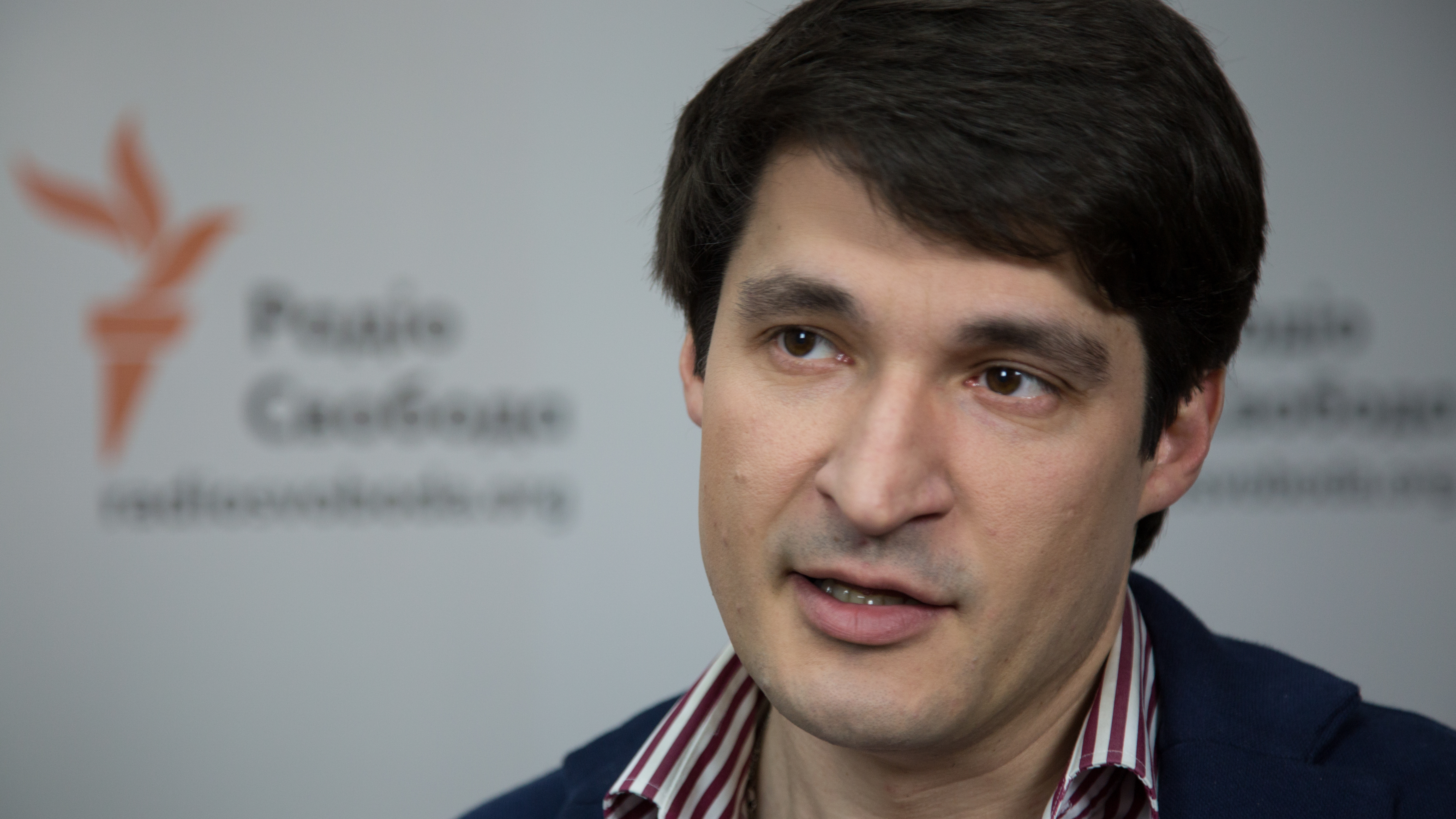
The guest of the program is the chairman of the Ukrainian Supervisory Board of the National Agency for the Prevention of Corruption Viktor Taran
Vitaly Portnikov: The fight against corruption in Ukraine, new anti -corruption structures and their prospects are the topic of our program today. In the studio - the chairman of the Supervisory Board of the National Agency for the Prevention of Corruption (NAPK) Viktor Taran .
These structures have been working for more than a month, you can already summarize certain results. And when there are so many structures, then there should not be corruption, in theory, in theory?
From positive, key points are the launch of electronic declarations and the fact that they began to check the financing of political parties
Victor Taran: Ideally. For some reason, we believe that if there is a lot of garbage, then you can put a vacuum cleaner, a broom and a broom nearby, and this garbage will disappear. It will not disappear. If it is wrong to use the tools, you can not only not remove the room, but also arrange an even greater disorder. The same thing happens with new anti -corruption organs. They were created, but their leaders have not yet fully learned how to manage them. NAPK was formally created in March last year, and fully launched only in July.
What did the agency happen now, and what did not work out? From positive, key points are the launch of electronic declarations and the fact that they, at the very least, began to verify the financing of political parties (effectively, inefficiently-this is another question). What did not work out? First of all, to gain a full -fledged team. Now the staff recruitment is about 40%, and in some departments - up to 50, that is, it is clear that there will be no full work. It was not possible to create a single team. We see constant conflicts between four members of the agency, each of which has its own vision, and as a result of the vote two by two, and the decision is not made. We see problems with the electronic declaration system that has been created, but now does not function very well. These are not the problems that cannot be solved, this is the same as the problems of a newborn child.
In NABU ( National Anti -Corruption Bureau ), the situation is slightly different - he is two years old, and we must already demand specific results from him. What do we see from the results over these two years? We see the preparation of cases for several corrupt officials - by Nasirov , we have cases according to Martynenko , for other figures. They are transferred to the courts, and so far nothing moves.
As for the SAP ( specialized anti-corruption prosecutor’s office ), the situation is different there, we have scandals around the CAP, there are already accusations to Mr. Kholodnitsky that he sees something and does not see something. There are scandals around management, which is tied with the business of Mr. Firtash . Some activists believe that he created the case so that it crumbled. In my opinion, there are other problems there is that the personnel were not always systematic. Why is the case scattered in the courts? The judges with whom we talked, say that the case is not completely written out correctly, that is, the guys are just still studying.
We see constant conflicts between four members of the agency
There was also a problem of deputies. SAP prepared the submission of documents, but the Prosecutor General returned them. When we talked with some colleagues, they said: no politics, let SAP write his accusations better, otherwise those accusations that we bring to court will simply be scattered. I believe that this is a growth problem, but there will still be no result.
Often we set as an example the work of the Romanian analogue of the TBA, but for some reason everyone forgets that this structure has fully earned only five to six years after the creation, and the first effective results were only seven years later.
Vitaliy Portnikov: To some extent, an enchanted circle is so convenient for everyone. Part of the society says: let's not take all these specialists who themselves participated in corruption schemes, they themselves cannot bring anyone to clean water, they will simply compromise all these new organs. Those who are not interested in working these organs say: yes, of course, we will not take them, they are all corruptions, let's take new good guys, boys and girls who are clean and never participated in anything, they will work. And then it turns out that to take, for example, a patrol policeman from the street and to take the anti -corruption prosecutor from the street - this is not the same thing.
Indeed, one can expect for a long time while these young people learn (or maybe they will not learn). After all, it often happens that many who come to such institutions cannot learn. Or, let's say, there is no someone upstairs who already hold this system in their hands. Then everyone is satisfied: the society is enough that there are new people, corrupt officials are satisfied, that there are no mocks, and everyone lives in harmony.
Victor Taran: Over time, they will learn, because they are now trained. Specialists come from abroad, personnel detectives come, teach them, they give access to all bases, to Interpol, to the bases created by the Ministry of Justice. The only problem is that society has very high expectations. It seems that the topic of the fight against corruption has replaced everything, we do not see other positive changes, because there is only the fight against corruption. As you remember, in that joke: wherever we look, Putin is everywhere - I'm already afraid to open canned food. For some reason, we believe that - once, and corruption will disappear. But we are not in a fairy tale, it does not happen.
Vitaly Portnikov: How can you change the system, changing only part of it and creating some new organs next to the system that itself reproduces corruption? So you said that you are talking to the judges, and in society there is a huge distrust to these very judges, and I would not say that it is always justified. There is simply a distrust of the entire judicial system, and no matter what decisions the court makes, there are always doubts that these decisions are honest, especially when it comes to resonant matters. The court granted the requirement of new anti -corruption bodies - it is clear that he is in collusion with them.
Take the anti -corruption prosecutor from the street from the street from the street - this is not the same
By the way, there really were cases: you mentioned different names, and by all these figures the decisions were made by judges against whom the National Anti -Corruption Bureau itself initiated accusations. This is a strange story, anywhere there was never so that the judge was under suspicion, worked and was forced to consider the applications of the bodies that investigate his own business.
Victor Taran: Yes, this is a direct conflict of interests, this could not be allowed. A strange coincidence when our system is anonymous, and the judge is known. This really undermines trust, and this is a problem. I do not believe in changes through people, because each person is weak, I believe in changes only through the construction of systems, and those that will have counterweights. Until we build this system, we will not succeed. There are still questions to the most good person. Moreover, the best person alone cannot change the system, because the system will always be stronger. This is where now you need to concentrate attention.
Let's look at the election to the Supreme Court. Why did a certain distrust go now? Because there were clearly set blockages - how to prevent judges who had a bad reputation. There was a system of points that the judges should score in order to go to the first, to the second round. On the day when the results were taken between the first and second round, the competition commission decided to sharply lower the competitive points by 20 points, and most of the judges who have 9 apartments that lost in the European Court of Human Rights remained in their posts. It is clear that there is no confidence in the elections of judges now. And there are a lot of such examples. In my opinion, NABU and SAP should work in such a way that there is no yota of mistrust.
Vitaly Portnikov: This is an ideal option, it does not happen.
Victor Taran: But if these bodies lose confidence in society, then they will be swept away. They should be more holy of the pope and more honestly of the wife of Caesar.
Vitaly Portnikov: Conflicts that arise between the anti -corruption structures themselves or between anti -corruption structures and the General Prosecutor's Office also clearly do not contribute to strengthening confidence. We see that people who should be in the same boat are ready to drown this boat.
I do not believe in changes through people, because each person is weak, I believe in changes only through the construction of systems
Victor Taran: I am philosophical about these conflicts. After all, if you see how law enforcement agencies in Europe and America are “friends” “friends”, then we will see exactly the same picture. These are normal conflicts, because there is a struggle for power, for influence, for money. The more you are effective, the more money from the budget is normal. The most important thing is that in this struggle for the world we do not destroy the whole world. Remember, when last year there was the first such conflict between the General Prosecutor's Office and NABU, Lutsenko was able to extinguish this conflict, and after that there were no obvious conflicts, and I hope, there will be no more.
Vitaliy Portnikov: Observation councils where activists came, people who are independent of the state, can really affect the work of anti -corruption structures, or are they for beauty?
Viktor Taran: The idea of supervisory advice was that the public through those people that she trusts was observing what is happening in the work of the anti -corruption structure, and this would be a litmus piece of paper, an indicator of how honest work it is. That is why separate norms were created for these two observational councils. We do not regulate the 966th resolution.
Vitaly Portnikov: What is this resolution?
Victor Taran: It regulates the creation of supervisory councils with all authorities: under ministries, under regional administrations - they are created according to this decree. We have a different election system and other powers.
If we take us specifically our powers, then they are very wide. I will name the five main ones. First: we approve the annual report that they prepare us. This is very important, because it is the public who should evaluate their work. Second: we study all the draft decisions that are made to the agency’s meeting, and give our recommendations, we say that this decision is good or bad. Third: our representative, together with members of the agency, votes for each decision with the right of an advisory voice. The public evaluates how legally the decision is. Fourth, very important: our representatives are part of the disciplinary and competitive commissions. Thus, we influence who is elected to the agency.
Our powers are very wide
When conflicts arise, we also give a public assessment of events. This is very important. I came from such a council, we considered some decisions on the conflict of interests at one state -owned enterprise. There, an acute discussion flared up between the members of the agency. It was the position of our lawyers who announced the results that influenced, among other things, to a positive decision. And there are a lot of such examples.
Vitaly Portnikov: The powers that have these observation councils ... They, it turns out, in themselves - is also a nutritious environment for corruption?
Victor Taran: Yes. Therefore, when scandalous norms for electronic declarations were adopted, I advocated that members of the supervisory boards should submit electronic declarations. This is my fundamental position. I am against the electronic declarations of members of other supervisory boards. Give: a city with 15 thousand people, the Public Council of some local organizations, and they must also submit electronic declarations. For what? But in organizations that work in the field of increased corruption, it is necessary to submit electronic declarations. By the way, I handed over mine, she is on the site.
Vitaly Portnikov: As I understand it, such an increase in the number of people who pass electronic declarations is just an occasion to increase all this system to the impossibility.
Victor Taran: Kill the system ... Now in the base of electronic declarations the first wave, which was 200 thousand until October 1 last year, then the wave that ended on April 1, another million, and until May 1, these were new declarations - another 200 thousand. Thus, now in the database one and a half million declarations. The system of electronic declaration, for which there are many questions, the very least, it, thank God, has withstood, but it cannot now do an automatic verification of declarations, because it has not been connected to registers.
In organizations that work in the field of high corruption, it is necessary to submit electronic declarations
A long discussion between the Ministry of Justice and the NAC in matters of formulation ... Honestly, I do not understand why they could not agree. The problem is how the system should have worked: you have a million declarations in the database, the system mathematically processes each declaration, and where the logistics and arithmetic approaches do not coincide, this declaration is shone and thrown into the Phinaagentism. For example, you earned 200 thousand and 200 thousand last year on a trip to the Maldives - sorry, and what did you live on? Then the request to the Ministry of Justice should automatically go to other bases, and from there an automatic answer should come.
As they work now: first, declarations of top officials, ministers, deputies are moved manually. Then the agency makes a written request that goes to the Ministry of Justice. The Ministry of Justice receives a written request, for 10-15 days an answer is given. Got, looked - further. As a result of such a correspondence, the declarations of only members of the Cabinet of Ministers were checked for 4 months, although it was allocated for this 90 days. And members of the cabin are 25 people. There is another million four hundred.
Vitaly Portnikov: That is, there are practically people whom no one will ever come to.
The reform of political finance takes an average of five to seven years after two or three parliamentary cycles
Victor Taran: If they are not illuminated.
Vitaliy Portnikov: Specially.
Victor Taran: When we say “specially”, we must understand that a positive and negative connotation is possible here: positive - activists looked, negative - “let's make an order”.
Vitaly Portnikov: It’s absolutely true if this is part of the political struggle, and I want to deal with someone, having access to the base, then I say: look at his declaration, I know that he was resting in the Maldives and spent all his officials of the official in one week - let's just look at it. If I have no interest in him, then he, one of a million two hundred, will live so calmly until retirement. Is there a statute of limitations for these declarations?
Most of all we have requests from either deputies or from political parties to each other, on political opponents
Victor Taran: Within 90 days from the time of receipt, you need to make a check. You are absolutely right: we analyzed the first wave of requests, and it turned out that we have the most requests from the deputies or from political parties to each other, to political opponents.
Vitaly Portnikov: And if, for example, to establish the control of the president, the Prime Minister over this system, then it turns out that this person holds in his hands all, a million two hundred officials?
Victor Taran: We confuse two things - influence and power. When you are given the information, make a decision, then transfer it to NABU, make an investigation and transfer it to court, only then we will have the final result. Only owning the base does not give anything.
Vitaly Portnikov: Can we expect that interest in tax returns will decrease or increase - for example, increase before the presidential or parliamentary elections?
We confuse two things - influence and power
Victor Taran: Definitely. Interest in the electronic declarations of officials, deputies and political parties will increase, because the parties are key subjects of the political game. Today we see violations in the reports of political parties-somewhere more, somewhere less. I will not call the party (it is not parliamentary), but here is a classic example: it had support in one region of central Ukraine, candidates ran for, and there were violations of financing. It was in July last year. Now the party has been fined very largely.
Vitaly Portnikov: The other day I had a strange discussion: the audience began to ask the deputy: when, finally, we will finally begin to live when the party will express our folk interests? He said: when you finance the parties, because now they are financed by the oligarchs. The parties are on the balance of the oligarchs and express their interests, and they will express your interests when they can exist at the expense of citizens. And the citizens were very unhappy with this answer: we are poor people, we should not spend money on some parties. And we perfectly understand that almost all of these parties that submit reports depend on sponsors with large wallets.
Victor Taran: I only partially agree with you. Until October last year, it was. С 1 октября ситуация изменилась, пошло государственное финансирование, по крайней мере, на те партии, которые представлены в парламенте. Мы увидели по отчетам, как резко увеличились расходы партий на заработные платы, на содержание офиса, на часть работы. Они вывели из тени то, что получали «черным» кэшем. Это означает, что теперь финансовые обязательства не полностью, но частично исчезли.
Мы говорим сейчас не о полном, а о частичном избавлении от зависимости. This is the first step. Реформа политических финансов занимает в среднем пять-семь лет после двух-трех парламентских циклов, так что это нормально.
Перед выборами будет увеличиваться интерес к электронным декларациям чиновников, депутатов и политических партий
Теперь мы убиваем второй миф – о том, что партии финансируют граждане: это неправда. Если смотреть на структуры финансирования всех партий Европы… Я давно занимаюсь этим вопросом, я - один из авторов закона о финансировании партий, я объясню вам структуру этого: люди платят 5-10%, не больше, 30-40% - это делают физические и юридические особы, это нормально, а все остальное перекрывает государственное финансирование. В Америке вообще все финансируется бизнесом, и это тоже нормально. Поэтому если вы хотите иметь честные партии, то идите, занимайтесь партийным строительством, ищите спонсоров. Если вы не будете этого делать, тогда не надо рассказывать, что что-то не так, потому что за вас это делают другие.
Виталий Портников: У вас есть какие-то временные рамки, после которых вы можете сказать: да, все это сработало, коррупция ослабла? Сколько для этого нужно лет? Вы говорили, что в Румынии это пять-семь лет. В Украине можно рассчитывать, что через семь лет мы с вами встретимся, и вы мне скажете: вот, все уже работает.
Виктор Таран: Индикатором должно быть не количество лет, а решения судов. Как только у нас начнутся решения судов, к которым мы не будем иметь претензий, только тогда мы скажем, что была реальная борьба с коррупцией. До этого времени будет то, о чем мы с вами говорили. И есть большой риск того, что новые инструменты будет использовать власть или другие политики для сведения счетов между собой.