
Translated material
"From cultural figures require an ignore of reality"
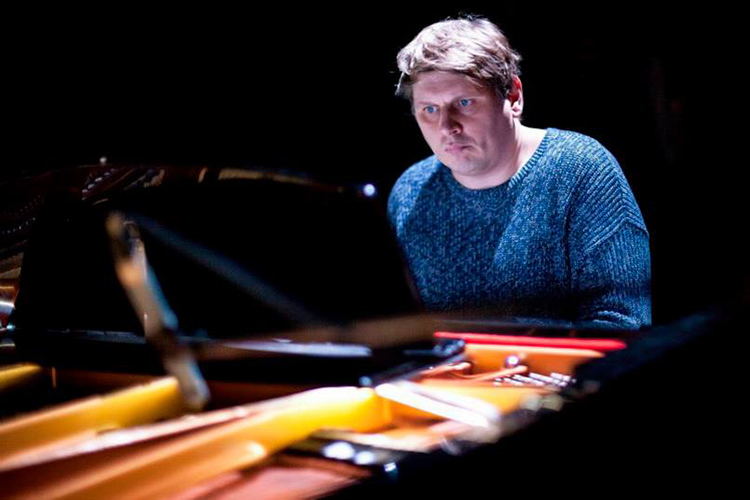
- Sergey, on June 21, you were in the Presnensky court at the election of a preventive measure to Alexei Malobrodsky. Is there a clicked wording “What did you feel?”, But can I ask you to really tell you about your feelings and feelings from the presence at this meeting and a short period before and after? Because everyone thinks (I mean the understandable circle of people) on this subject is about the same thing.
- Pain. Empathy. Recognition. The feeling of insecurity when you see how the prosecution and prosecutors ignore the iron logic of protection. The feeling of absurdity when you meet in the waiting room literally the whole theatrical Moscow. At the first meeting, as the stop, I met with Sergey Vasilievich Zhenovach, with whom I had never intersected in life before. And the third sensation - this was formulated by the artist and curator Katya Bochavar, whom I also met in court - the everyday life of horror. That is, you get used to the fact that the same people that you used to meet at receptions and festivals, you now meet in the courtroom. And what is your friends behind bars. Previously, this concerned only business and political activists, now it seems to be applied by everyone.
-After the trial, we sat in the lobby of the electric power theater, Alexander Zeldovich approached you and began to tell you what he was thinking about this, translating some very hazardous version about intimidation of the intelligentsia, which was sucked before that, among other people similar to Echo of Moscow. It sounded partly naive, and then I thought that the modern Russian creative environment was spent from the experience of politicization through language. In video statements in the framework of the campaign to protect Malobrodsky and others, one could most often hear “We hope for an honest and fair investigation”, “We would like to contact our president”-and this, of course, is a separate song, but in general there is a great awkwardness in situations of the release of the creative workshop in a socio-political communicative field; Political autism, if you want, - as Svetlana Sorokina formulated in the video that you threw me. Bogomolov at the rain even more sharply formulated: the theater-artistic community does not have a sufficient mind for talking with this Kafkian reality. Firstly, how would you comment on this, and secondly, how to the politicization of a creative party is the situation in Germany, if you can generalize it at all?
- The mind here, I'm afraid, is useless. Because people simply do not know to whom or what to appeal to them. There is no certain conditional carrier of common sense that could be addressed. There is no single coordinate system in conditions of total nihilism, and this causes the uncertainty of intonation. Therefore, artists turn to the president, because to depict common sense and impartiality - part of his image. Well, because they hope that he can order something to someone. I doubt that there is some special program for intimidation of the intelligentsia: it would be a very difficult operational modus for the current government. There is a chaotic all -consuming evil that has reached the authorities and does not meet any opposition. Custom processes flourish at all levels - from family showdowns to leaving large corporations. Whether media attention and professional work of lawyers innocently convicted help - yes, of course. Should you look for logic in the actions of a repressive machine and see some kind of message of the intelligentsia for criminal cases? It is unlikely.
I remember participating in the discussion about censorship at the 2014 Moscow Cultural Forum, where he was in an absolutely surreal company from Yukhanov, Tatyana Tolstoy, Khlebnikov, Mikhalkov and Ernst.
- At the same “Eche”, any invited artistic figure is necessarily asked variable questions on the topic “Artist and Power”. It all went, but it seems to you, in what direction are the relations of the modern art producer (person or institution) and the state develop? If such a ligament, in your opinion, is generally in modern times. Well, how relevant is it for you personally?
-As far as I know, from the late 90s before the beginning of the third Putin term there was a rather branched feedback mechanism between artists and government representatives. There were the Presidential Council on Culture and quite sane expert councils under the Ministry and the Moscow Department of Culture. There were different slightly ambiguous events like a 2020 strategy, where they called directors and producers to formulate some principles of cultural policy. There was a wonderful story with the cultural revolution in Perm, the positive consequences of which are still tangible. Of course, many of these institutions exist to this day, but I do not know at all what is happening there. And I think that the less they know about me, the better.
Of course, the ligament that you are talking about was relevant for me only until 2014, while Avdeev was in charge of the federal cultural policy, and the capital - Kapkov. Everyone remembers that the activities of the Seventh Studio and the Platform project began thanks to the support of the then President Medvedev. I remember how at a press conference on the opening of the “platform”, I accidentally found myself nearby with the Minister of Culture Avdeev, completely not understanding who it was. He seemed to me a very intelligent and attentive person. I also remember participating in the discussion about censorship at the 2014 Moscow Cultural Forum, where he was at the invitation of Sergei Kapkov in an absolutely surreal company from Yukhananov, Tatyana Tolstoy, Khlebnikov, Mikhalkov and Ernst.
In general, until some point there was an illusion of the possibility of interaction between different positions in a single cultural space and the relative neutrality of the state in matters of culture. Today, when such illusions have been a thing of the past, the collection of opinions in the field of art with a position different from the official, it seems that only the Center for Strategic Development Alexei Kudrin is engaged. But I absolutely do not know how influential it is.
-In the early 2010s, you took part in various kinds of educational initiatives and projects to attract and form an audience for serious art: there is the “Opermroup”, the Academy of Young Composers, and the Platform, and the composer laboratory in Tsim, and so on, and so on. How does your inner cultural worker feel now and does he even find any external expression? If not, when did it stop?
-At the moment, I am making a music program of the large exhibition “Notes from the Underground” , dedicated to the Eastern European avant-garde of the 60s and 90s, in the Berlin Academy of Arts. Not so long ago, I did a similar job at the exhibition "Thaw" at the Moscow Museum. Actually, Kirill Serebrennikov involved me in cultural power, who suggested that I make a music program for the first one and a half season of the “Platform” at the Vincuration in 2011. Then I had two motivations: to show in good performance music that never sounded in Russia, and give orders to young composers. We tried to re -create an environment, to create a listener and ideally - to create a kind of western festival industry, which everyone scolds and which feeds everyone.
Gradually, under projects related to modern music (well, or with my last name), they stopped giving money in Russia, and in parallel with this I have grown a very increased number of composer orders in Germany, and, I must admit, organize sounds more interesting to me than festivals. So today I simply would not have time to engage in a project similar to the “platform”, even if we assume that such a project could be interesting to someone in today's Russia. In the "Opermroup", I myself was the object of curatorial activity of Vasily Barkhatov, for which I am infinitely grateful to him and the then director of the Bolshoi Theater Anatoly Iksanov.
The modern Russian opera, as we know it, was invented in September 2007 in the kitchen of Theodore Krentzis.
-Again, at the beginning of the tenths, as I can judge by some texts, in Russia, somehow unexpectedly intensively, interest in modern opera began to develop, then still expressed in the questions: is a modern opera, and what to do with it? Now, it seems, no one has such questions and everyone except Capitolina Kokeneva wants to be more than new operas. How do you yourself feel about this genre and what, in your opinion, is now happening with the modern opera in Russia and the world? By “modern” I propose to keep in mind not only the opera written in the Contemporary Music paradigm, but in general any opera written by the modern composer: some “Nothing” David Bruce is also in a sense-a modern opera.
- The modern Russian opera, as we know her, perhaps invented in September 2007 in the kitchen of Theodore Krentzis: then at the same party they were formulated and offered to us two projects at once - the “Nosferata” of Courland and my Francis. This is the property of the genius of Curentsis - to come up with absolutely complete concepts from nothing. Later, they added the “station” of Sumak, which was somewhat echoing with its later “cantos”, and the “goddess from the car” of Andreas Mustukis-both were implemented as part of the Territory festival at the Vincuration in 2008. Apparently, Theodore also wanted to build a modern opera from scratch, not relying on either the tradition or on the conservative performing apparatus of ordinary opera theaters. So that the opera is not a simulacrum, the reproduction of recognizable conventions with cosmetic changes, but really something relevant in language. Then it was possible. “Operapopa” by Barchatov tried to introduce quite radical projects to the sites of ordinary opera theaters. It suffered two or three years, then everything returned to their own circles: a truly modern opera was exiled to factories, experimental sites and small scenes.
But in general, interest in opera as a synthetic genre is international. I think that the opera, like the film, makes it possible to tell in modern language some archetypal things. To arouse interest and empathy in the figures on stage. Empathy. This incredibly flexible medium is open to interaction with other forms of art. Now I have two opera projects in my work, both in Germany.
- At a lecture in Nekrasovka, you mentioned that, unlike many modern composers, you use the traditional notate of the score, edit it with your hand. In this regard, I would like to ask you: how important it is (and why), in your opinion, modernity in art - in all its parts, including production. For example, I am painfully focused on the modern theater and in texts about fresh productions I always nervously emphasize the techniques or forms that are seen by me non -modern, that is, non -working in the current context. How adequate in relation to music and theater do you think this state of permanent pursuit of new ones seems to you?
- The mystery of music, like the theater, consists in the fact that the continuous updating of the language, technical means here gets along with things that do not change 1000 years. It's about the proportion, for example. About certain rhetoric mechanisms. Figures of the beginning, end. About a certain proportionality of the part and the whole, about conscious work over time, perception. The update of the musical language is also one of these constants, this is an integral part of a written tradition.
- I'm not sure that such a question is legitimate, but what does modern academic music are talking about, what does it reflect? I would even expand this into two questions - what is it about and why it is? And I would be grateful for the answer to any or both.
“Modern I will call such an art that uses its small technique, as Didro would say, in order to imagine that there is something unconvinable.” In my opinion, over the past 30 years, this statement of Lyotar has not lost its relevance at all.
Respect for the complexity of another, for the freedom of another, to his right to be different is an unchanging condition for understanding modern music.
“In an interview with private correspondent in 2009, you said:“ Unlike visual art, professionalism is needed in music. ” After eight years, do you think the same?
- I would say - we need the accuracy of the wording, the accuracy of setting tasks. Even if we are talking about improvisation, electronics or text scores. Especially in them.
-What, in your opinion, is the main problems of modern academic music-both as a type of art and as a complex of creative-production activities?
- It develops faster than the society inside which it is created. Much faster. In order to perceive complex contents, doubt should be developed in society, dissatisfaction with simple paintings of the world that ideology or the market for us. This doubt is respect for the complexity of another, for the freedom of another, to his right to be different - an unchanging condition for understanding modern music. In conditions of ideological or economic dictate, simple concepts often win - absolutely independently whether these concepts are affirmative or subversive, whether they support the existing order of things or try to build utopian alternative reality. The exception is eclecticism, which in a changing society usually indicates a gap between the facade and reality, and in the company totalitarian simulates the complexity in non -freedom conditions, but more on that later. The complexity is always a product of dialogue (with society, musicians, criticism), simplicity - a product of isolation.
- A multilayer question about criticism: what, in your opinion, is happening to her in today's Russia - with musical and theatrical? What is the difference between the situation in Western Europe? You personally need criticism - and if so, for what? What is this position - a person who is criticizing modern academic music? After all, they do not exist, they do something else adjacent? Why so?
- It seems to me that criticism in Russia is in a very difficult situation. It is difficult to maintain objectivity in conditions of ideological pressure from the state, which gradually becomes aesthetic too. The question always arises, with whom you are. It is impossible to scold friends when this unites you with absolutely crazy reactionaries. It is difficult and unethical, for example, to criticize the music of the forbidden ballet, even if you do not like it. It is difficult to criticize the products of theaters if they pay for the arrival of criticism for premieres.
The free statement zone today is very, very small. At the discussion of the recently released three-volume, dedicated to musical criticism of the 90s-the beginning of the zero , this increased lack of freedom was one of the main topics. Plus, the most important thing, criticism in Russia has no place to print, the area allocated by any editions under the discussion of art is melting rapidly.
In Western Europe, in Germany, where I work most of my time, the opposite is true. And special musical criticism flourishes, and, moreover, the critic is often an employer of the composer, often the editor of the radio station is also the director of the music festival. This omnipotence of journalists and curators also seems quite problematic to me.
For me personally, work criticism is a very important feedback. Although I notice that it is even more difficult to explain my music to anyone than myself, but for me it is always quite painful.
- In conversations about complex art, one way or another, the question of the unpreparedness of the audience is raised. The media, in essence, have two work strategies - to fall to the reader’s level or pull it to its level. Sorry to bring the conversation in such a near -Transgumanist track, but it does not seem to you that in the future of the upcoming civilizational gap this type of involving relationships with the audience disappears by itself and the need remains only with those people who have the ability to aggressive adaptability, great curiosity for life and complex art as its most accurate exponent?
- I don't think. Just atomization of society makes it possible to find a target audience of complex art absolutely everywhere. It is important to create a situation and a place where it could come for a potential audience. And this, too, is the accuracy of setting the task, only curatorial. When I worked on the “platform” or on the “difficulties of translation” (the festival held in the “workshop” cafe. - Ed. ) Or wrote articles explaining modern music, I always found confirmation of this. Another thing is that looking for an audience, lifting it and educating it is the task of the curator and partly criticism. But not a composer.
It is difficult and unethical to criticize the music of the forbidden ballet, even if you do not like it.
- The question related to this: in what condition is the field of communication of modern composers/performers and in general, sorry for the vulgar formulation, art manufacturers? In an interview with Afisha in 2016, you said with chagrin that no one communicates with anyone-is it still or worse?
— Лично у меня за последний год появилось несколько новых чудесных опытов взаимодействия с самыми разными музыкантами и коллегами. Это и оркестр MusicAeterna , и замечательная Лена Ревич, благодаря которой возникли два моих скрипичных концерта (второй из них мы только что исполнили с Q uesta M usica и Филиппом Чижевским в рамках проекта «Галилей»), и музыканты фестиваля «Возвращение», которые всегда казались мне такими немного язвительными небожителями. Если честно, я их боялся.
Меня вообще всегда трогает снисходительность хороших академических музыкантов к моей музыке с учетом того, что им приходится продираться через лес условных обозначений и осваивать необычные приемы игры. Особенно когда я нахожу на репетициях в своей партитуре ошибки в динамике, балансе или что-то похожее. В Германии музыканты за забытый динамический нюанс и разорвать могут, а в России все очень тепло и коллегиально. При этом мне кажется, что в Германии мою музыку по-прежнему лучше понимают и чувствуют, чем в России, но нельзя иметь все сразу.
С коллегами самыми разными у меня тоже очень теплые, дружеские отношения, несмотря на тотальное различие эстетических привязанностей. Меня очень тронуло, когда на премьере моей оперы «Pazifik Exil» в Берлине я столкнулся с 86-летним классиком авангарда Дитером Шнебелем и несколькими композиторами моего поколения, о которых я точно знаю, что у них практически нет свободного времени. В общем, я могу назвать себя счастливым композитором.
— Я не могу ответственно говорить про музыку, но если оглядывать количественно российский театр, то неизбежно приходишь к выводу, что российское искусство последние пять-семь лет стремительно провинциализируется. На этом фоне страшно легко поддаться карикатурно-демшизовому настроению и кричать на улицах: а у них там Фритш есть, и Кригенбург, и еще, и еще, а у нас классический режиссер Тимофей Кулябин ставит скучное, чтобы в ПТЖ хвалили, и вот еще Дмитрий Волкострелов без претензии. Ты чувствуешь в себе трезвый взгляд, способный сопоставить уровни «живости» арт-процесса в России и в Европе (хотя бы Западной)? Что он тебе подсказывает?
— Мне кажется, не надо поддаваться демшизовому настроению. Говорить о театре не в моей компетенции, но молодая российская музыка вполне конкурентоспособна, интегрирована в общеевропейский процесс и вполне может считаться его частью. Другое дело, что такая оценка касается тридцатилетних, а у совсем молодых композиторов — имею в виду поколение 20—25-летних — куда меньше возможностей, опыта такой интеграции и, главное, веры в то, что их музыка может быть кому-то нужна в мире.
Они не застали бум современной музыки в России 2005—2013 годов и связанный с ним интенсивный обмен с Западной Европой. И делать карьеру им куда сложнее. В лучшем случае им уготована второстепенная роль — например, участника мультимедийного события, звукового оформителя спектакля или инсталляции. В худшем — работа в кино и в рекламе, как в начале 90-х, ну или полная маргинальность и прозябание.
Поэтому нынешняя русская музыка резко делится на тех, кто выступает на западноевропейских фестивалях и платформах и конкурирует (весьма успешно) с местными авторами, и тех, кто остается в России, старается выстроить тут некую обособленную реальность и адаптируется к непростой ситуации. Я всей душой стараюсь мотивировать моих коллег выходить на контакт с западноевропейскими институциями и музыкантами, потому что особых возможностей внутри страны для современной музыки в нынешнем культурном и политическом контексте я не вижу.
— Не хотелось бы саморазоблачаться, но в том типе музыки, который мы обсуждаем, я — тотальный идиот, поэтому не могу у тебя ничего внятного спросить собственно про твои работы. Но у тебя есть значительный опыт написания текстов и чтения лекций, а отсюда у меня два вопроса: не мог бы ты сам сформулировать что-то генерализующее про музыку, которую ты пишешь? И что вообще для тебя такое опыт написания текстов, зачем он нужен тебе и зачем может быть нужен композитору?
— Мой коллега Дмитрий Курляндский однажды сказал мне, что тенор моей музыки — критическая рефлексия в отношении к себе самому и к тому контексту, в котором я работаю. Короче — артикулированное недовольство собой, неуверенность в себе. Наверное, специфика моей работы состоит в том, чтобы облечь это недовольство в форму, способную увлечь других. А потом разрушить эти формы (в силу недовольства, в силу их герметичности). Наверное, это бесконечный процесс.
Что касается текстов — они все написаны на заказ и в какой-то мере, наверное, компенсируют замороченность моей музыки, помогают объяснить публике и музыку, которую я пишу, и ее автора.
Меня вообще всегда трогает снисходительность хороших академических музыкантов к моей музыке.
— Мы оба знаем примеры, когда композиторы выступали одновременно режиссерами своих или даже чужих произведений; тебе не хотелось бы ничего поставить? На что был бы похож театр, который делал бы Сергей Невский?
— У меня был забавный опыт постановки получасового вокального перформанса с импровизационными музыкантами на тексты Кирилла Медведева и Хармони Корина в подвале Берлинской Штаатсопер в 2003 году, где я делал абсолютно все: от декораций и света до собственно режиссуры. Музыка была наполовину импровизационная — я определял только материал и временную структуру — и дополнялась шестиканальной электроникой.
Было весело. Помню, что певица Наташа Пшеничникова вылезала в ночной рубашке с ножом из стога сена (который покрывали специальным раствором, чтобы он не загорелся), вырезая себе дорогу в полиэтиленовой пленке. Еще был стол, на котором лежала очень натуралистично сделанная мужская фигура, одетая, но без головы. Наташа вспарывала ей живот, доставала оттуда апельсины и с чавканьем ела, декламируя тексты Хармони Корина, а потом снова исчезала в стогу сена, внутрь которого я положил красивые неоновые лампы. Потом она мне призналась, что у нее сильная аллергия на две вещи: сено и апельсины.
В общем, для нее этот проект был большим испытанием, а для меня хорошей школой, и больше я на территорию режиссуры заходить не отваживаюсь. Но понятно, что примеры любимых коллег Гёббельса или Раннева, которые сами придумывают сценические решения своих опер и делают их частью музыкальной структуры, меня восхищают.
— Что тебе кажется самым важным в современном искусстве, что его определяет? Ты бы мог ответить «разнообразие», и это был бы, наверное, хороший ответ, но я его уже озвучил, поэтому тебе придется сказать что-то еще. Лично мне импонирует та постоянно увеличивающаяся сложность, которую, например, манифестирует Юхананов. Но, я думаю, ты найдешь в этом элемент спекуляции. Так вот что?
— Я глубоко благодарен Борису Юрьевичу Юхананову за все, что он делает для современной музыки в России, и за всю его театральную и продюсерскую деятельность, но, если честно, его театр не кажется мне сложным. Скорее, это эклектика, механическое соединение разных, порой трудносовместимых, топосов или сюжетов. Тот же Лиотар называл эклектику нулевым уровнем потребления культуры, объяснял ее как норму нашей жизни и восприятия.
Понятно, что стиль Юхананова — результат очень индивидуального выбора, это осмысленное художественное решение. В то же время у меня есть опасение, что эклектика — и его тоже — потому так и популярна в России сегодня, что она абсолютно безопасна. Это игра, которая не ставит под сомнение существующий порядок вещей.
Когда мы оказываемся в разомкнутом волшебном пространстве, например, «Золотого осла» и видим, как, образно говоря, Ирина Понаровская в декорациях «Песни-89» поет логико-философский трактат Витгенштейна в сопровождении оркестра японских балалаек, то, разумеется, мы испытываем эстетическое наслаждение. И, разумеется, находиться на этом празднике постмодерна, который к тому же обычно реализуется на невероятно высоком техническом уровне, очень и очень приятно.
Лично я все это очень люблю, но, никак не умаляя ценности эстетики Электротеатра, я думаю, что, возможно, сложность — это все-таки немного иное. Мне кажется, что современность искусства невозможна без анализа и деконструкции им некоторых заданных условий его существования. Условий как эстетических, так и общественных.
Поэтому «Театр. doc », нищий, преследуемый и лишенный всего этого технического великолепия, иногда кажется мне более современным и интересным. И поэтому «Тартюф», поставленный Филиппом Григорьяном в том же Электротеатре, — спектакль, от которого реально ужас охватывает, — тоже бесконечно важен для театрального процесса. Или некоторые проекты в Центре Мейерхольда. Или инсталляция «Eternal Russia» Марины Давыдовой, Веры Мартынов и Владимира Раннева, которую многие упрекали в плакатности и дидактике, — она тоже кажется мне абсолютно необходимой. Потому что тут игра и дерзость политического высказывания находятся в синтезе с дерзостью эстетической, политическое высказывание находит точный эстетический эквивалент, который, в свою очередь, обретает самостоятельную ценность.
В общем, ты видишь, что для меня сложность высказывания неотделима от свободы. А свобода — от смелости говорить неудобные вещи. Не потому, что уровень искусства измеряется его социальностью. А потому, что в условиях, когда публичное обсуждение некоторых вопросов запрещено, продолжение этих запретов на территории искусства, вытеснение их, самоцензура, какой бы радостью постмодернистской игры она ни прикрывалась, неизбежно приводят к деградации языка. Я не знаю, почему так происходит, но это так.
Мне кажется, что в холодной гражданской войне, которая сейчас идет в России, споры ведутся вообще не про эстетику.
— Как тебе кажется, сложное искусство играет свою роль в углублении гражданского разрыва, который сейчас в России очевиднее некуда?
— Опять вопрос: что есть сложность? В любом случае это не орнаментальность некоей условной new complexity , не обилие деталей и не сложность понимания и реализации. Может быть, это неожиданность, неординарность сформулированного взгляда на вещи? Возможность множества толкований? Смена перспективы у зрителя, возникающая прямо во время нашего контакта с произведением?
Гройс говорил, что смысл существования современного искусства — указывать на проблему. Общественную, эстетическую, языковую. Стало быть, современно (и сложно) то искусство, которое пытается этим заняться (независимо от его языка) и которое берет на себя смелость вывести наблюдателя из привычной системы координат.
Имеет ли это отношение к эстетике? Только косвенное. Мне кажется, что в холодной гражданской войне, которая сейчас идет в России, споры ведутся вообще не про эстетику. Ненависть у тех, кто выстраивает в России культурную, да и прочую политику, вызывают само наличие рефлексии и дружба с реальностью. Потому что власть, кажется, все больше апеллирует к иррациональному.
Чтобы поддерживать нынешнюю политику России, надо осознанно закрывать глаза на ее неизбежные последствия. А именно этого игнора реальности и требуют от деятелей культуры в качестве доказательства лояльности. Именно поэтому наш министр культуры и рассматривает историю как поле конкурирующих пиар-стратегий. Люди, взывающие к обычным законам логики, сегодня неизбежно оказываются врагами режима, при этом сложность их мышления или высказывания не имеет значения.
Ярость, с которой пытаются расправиться с «Гоголь-центром» и Серебренниковым, связана не со сложностью его языка, а, напротив, с тем, что независимое, свободное высказывание у него облечено в форму совершенного и в хорошем смысле коммерчески успешного продукта. Бесит не оппозиционность, а именно успешность. Потому что в системе координат этих людей Серебренников должен быть маргиналом. А он, наоборот, законодатель мод, практически мейнстрим, как писала та же Марина Давыдова.
Поэтому гражданский разрыв, если он и случится, будет происходить не между сторонниками простого и сложного, а между теми, кто еще способен самостоятельно анализировать события и артикулировать свое суждение о них, и теми, кто вытесняет, умалчивает, старается выдавать желаемое за действительное. Ну или просто думает, что в Россию можно только верить.