
Translated material
Godmother
Thomas Ventzlova - about Lyudmila Alekseeva and how the Lithuanian Helsinki group was created
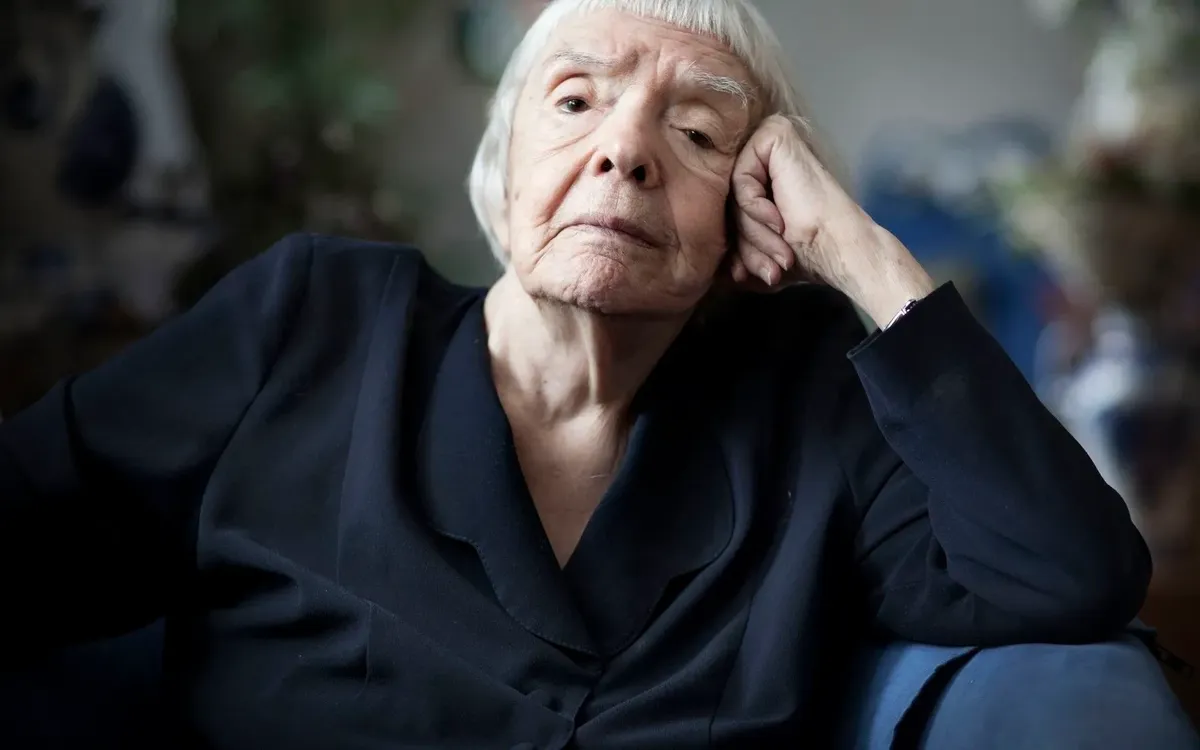
We are familiar - I dare to say, friendly - with Lyudmila Mikhailovna Alekseeva, whom I, in the old memory, call Luda, for more than forty years. She can be called the godfather of the Lithuanian Helsinki group.
Times are long -standing, not everyone understands all their difficulties and turns, not everyone remembers their details, and even the spirit itself. Before I start talking about our acquaintance and the role of Lyudmila Mikhailovna in Lithuanian affairs, I will have to say two or three introductory words.
By the mid -seventies, it was, in general, it was obvious that the Soviet Union would fall apart, but it is not clear when. And economically and politically, the country was on the verge of bankruptcy. The system that sought to isolate from the world, to control every word and thought, cracking at the seams. In different republics, it was felt differently.
Lithuania, like the whole of the Baltic states, was an obviously alien body in the Union. From its very occurrence, it was not guided by Moscow, but to the West, it was annexed to the union and sought to restore independence (this desire was by no means alien to most Lithuanian communists, although in words, and even in fact, they retained complete loyalty). There was an extensive Lithuanian Samizdat, primarily a chronicle of the Lithuanian Catholic Church (the Catholics were in Lithuania with a significant political force, because the majority of the population belonged to them). The chronicle penetrated west, with the help of Russian dissidents. This was done by Lyudmila Mikhailovna.
In 1974, Sergey Kovalev was arrested-precisely for the support of Lithuanian Catholics. They decided to judge him in Vilnius, away from foreign diplomats and journalists, but somewhat miscalculated, since it was by the time of the court that academician Sakharov, the most famous participant in Dissent, received the Nobel Prize of the world. Instead of Oslo, where he was not allowed, Sakharov was in the Lithuanian capital, at the door of the court (where, of course, he was also not allowed, but the resonance turned out to be large). In his conversations with the Lithuanian dissidents who were on duty at the same doors, the idea arose of creating a group in Lithuania, following the implementation of the Helsinki agreements, which the USSR signed shortly before, as it turned out, signed for his misfortune, but then it was not yet clear.
In May 1976, the Helsinki group formed in Moscow. She had a lot of affairs, although the USSR government publicly promised to observe human rights, it, according to the old Stalinist habit, considered this to be words that had no reason for reality. The group informed the world about violations of national, religious rights, the rights to free movement and so on, and did it open without hiding the names of its members and emphasizing that it acts within the framework of the law. It was a simple, but brilliant discovery like Columbov's eggs. The authorities, put up with a new dissident strategy, did not react for six months, although it was more or less obvious that they would react, and with double anger.
The Ukrainian group arose behind the Moscow group, behind it Lithuanian - according to one diplomat at that time, and a “social medal between the republics” began. The initiator of the Lithuanian group was one of the Vilnius interlocutors of Sakharov, Viktoras Pyatkus, a long -term political prisoner - a calm, even phlegmatic, but very stubborn person. He created unofficial youth mugs, which he taught Lithuania’s stories and the beginning of the Catholic faith. Several guys, participants in such a circle, were “exposed” and deducted with a bang from the last grade of secondary school (which meant a draft in the army with its grandfature and other pleasures). The expulsion from the final class, and without observing any formalities, was an exceptional fact even in the USSR. Victoras Pyatkus and several of his friends decided that this violation of human rights should be recorded in the first document of the Lithuanian Helsinki group, which will thereby declare its existence. But the Moscow group wanted to understand the case (they decided to make the first document to be general). Almost the most active participant - Lyudmila Mikhailovna arrived in Vilnius.
I was already a little familiar with her and was among the meters. Together with Luda, as we immediately began to call her, went to find out the situation for the then Minister of Education of the Lithuanian SSR Antanas Rimkus. He decided that the guest from Moscow was a representative of some high circles and that the Helsinki groups are a party-government undertaking. Therefore, he accepted us with excellent politeness, even with servility, and sent us to understand high school. There we heard a lot from the director, which served as an excellent material for our document. True, half an hour later the director called: obviously, the minister made inquiries and realized who we were. The director turned pale and immediately made it clear that the conversation was over, but it was too late.
The next day was even more interesting. The theme of the second document was the situation of two Lithuanian Catholic bishops: one was called Julionas Stayaponavichyus, the other was Vincentas Swekyvichyus. Without getting along with the authorities, both were exiled into deaf villages, where they could not fulfill their pastoral duties - in a clear violation of the law on the separation of the church from the state. We decided to meet with them and talk. We left Vilnius along with Lyudmila Mikhailovna half past over the morning (according to Pyatkus, and he was a connoisseur in such matters: the KGB did not start work so early). We returned exactly one day later, also half the hundredth, apparently, our trip remained unfortunate. There were three of us, future members of the group, we led the car and managed not only to visit both bishops who lived at the opposite ends of Lithuania, but also to discuss many things with them. When Lyudmila Mikhailovna left for Moscow, the Lithuanian Helsinki group was already a fact. The group announced its existence, and published the documents after about two months.
These stories resemble a common journalistic investigation, but in Soviet times it was fraught with obvious risk (such a risk, in any case in Russia, sometimes exists now - but still, probably less). The Lithuanian group, like Moscow, soon suffered heavy repressions. Victoras Pyatkus received fifteen years, of which he served eleven: however, he was ready for this, and after the prison he was almost before the death adviser to the president of independent Lithuania for Human Rights. And Lyudmila Mikhailovna Alekseeva was awarded the Lithuanian Order and became in my country (which she visited more than once) a famous and loved one.
Today, remembering these long -standing affairs, I want to congratulate Lyudmila Alekseev on the anniversary! I think, not only on my own behalf, but also on behalf of the democratic Lithuania.
Thomas Ventzlova - especially for "New"
REFERENCE
Thomas Ventzlova
- Lithuanian poet, translator, literary critic, essayist, dissident, one of the creators of the Lithuanian Helsinki group (founded on December 1, 1976).
In 1977 he left the Soviet Union at the invitation of the Berkeley University. By a decree of the Presidium of the Supreme Soviet of the USSR of June 14, 1977, it is deprived of Soviet citizenship. Professor of Slavic languages and literature at Yale University (USA).