
Translated material
Along seams and breaks
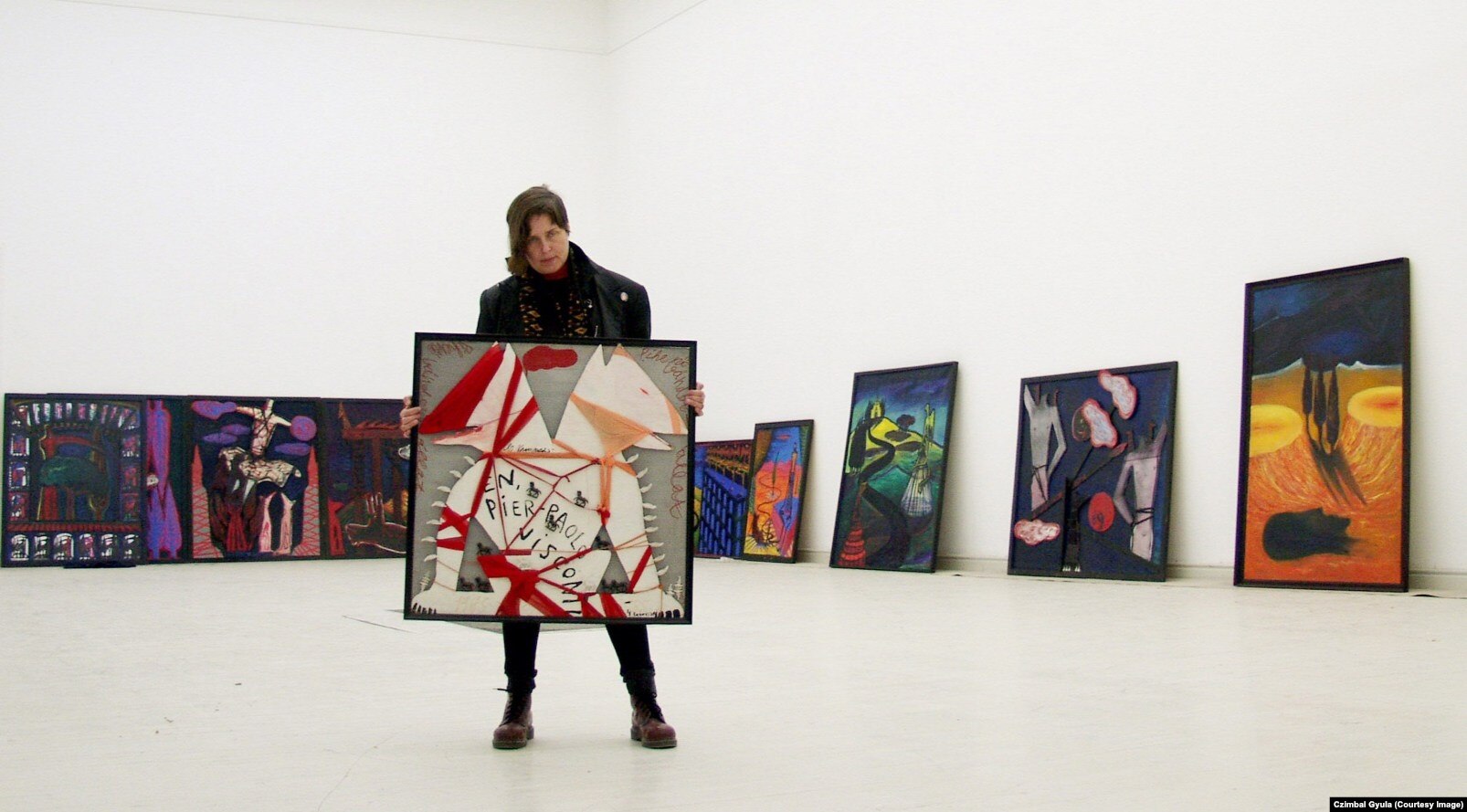
Treatment of vision: conversations with Al Kazovsky / Per. with Hungarian. O. Yakimenko. - St. Petersburg: Publishing House of Ivan Limbakha, 2017. - 192 p., Ill.
Perhaps the Russian reader would still have to see how to see Ela Kazovsky (1948–2008), and then read this book of conversations with him, as difficult, saturated and bright. Yes, Kazovsky’s answers to questions from correspondents of different publications are completely self -value, non -accident, non -saturative texts that go beyond the circumstances in which these conversations were carried out. But to feel what tension, what emotional and figurative-non-western-the background stands behind these words, is still worth it. (Moreover, for the people of Russian culture, these interviews are in a sense-yes, very substantial, intense-in the fields of the book that they have not read. And it, unread, will have to reconstruct these notes to a large extent.)
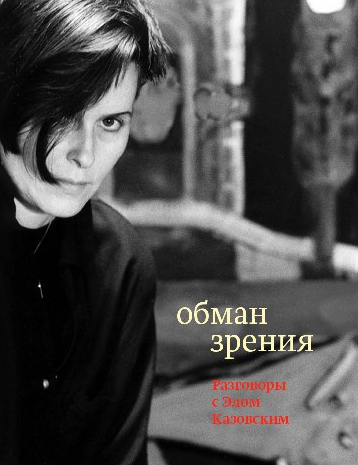
And the tension here is an extremely high, demiuric force. At the same time, mythologic - and animal htoniki (the "animal" here is almost not a metaphor: the beast - unknown, painfully anthropomorphic, rather a dog, but maybe a bear and a wild large cat, and all this at once - he saw himself and portrayed himself and such a beast - either crying, or a bleeding eye and from the fourth page of the cover, and from the fourth page of the cover, and from the fourth page from many of his paintings). What Kazovsky did with lines and paints was a painful anatomy of being, tracing his seams and ruptures, working with his primary meters, with a constant feeling of their resistance to a person, almost toxicity of them - but also plasticity too. Fortunately, some idea of this is given by reproductions on colored gluing and photographs of the CAZ performances on the valves of the cover arranged by KazAs.
All his interlocutors-interviewers in the book are Hungarians. None of the Russian compatriots El speaks to him here (did they speak at all?). How much did Kazovsky noticed his first, Russian culture?
Kazovsky always wrote poems exclusively in Russian
It seems not very. At least Kazovsky was not here as an event. Although in 2005, even during the lifetime of El, his personal exhibition was held in his native Petersburg, where work was presented in two decades, starting from the eighties. (In the Hungarian artistic space, Kazovsky was present from the second half of the seventies.) And in 2011 the Moscow publishing house "Three Squares", almost the only one in Russia paying special attention to Hungarian culture in general and literature in particular, published the poetic collection of Kazan, "The Book of Jan" [1] (and it, together with the preface to it, it makes sense to read the one who wants to understand Heroi who wants to understand Heroi "Fraud of vision"). But here the translation was not required: Kazovsky always wrote poetry exclusively in his original Russian language. What almost no one of his Hungarian environment knew. It was a whole inner business. The drawers of the desk where these verses were stored, he locked the key. The posthumous publication in the "Three Squares" became the first and only for the KazAzovsky-poet. It seems that she was not quite noticeable: these verses written outside the contexts were lacked in the context in order to be read by Kazovsky’s brothers in linguistic consciousness. The preface to his Russian poetic collection - thoughtful, understanding, but not analyzing the texts of Kazovsky, but introducing the Russian reader with an unknown personality of the author and his work in the visual arts - wrote Hungarian, Geza Presetsky.
"I do not flow in my veins, but my tongue," he admitted
Kazovsky, who was remembered by contemporaries as an artist, was a verbal person. He would probably become a Russian writer (and he was going to! - “I didn’t flow in my veins, but the tongue,” he admitted), when, for fourteen years old, he did not happen to move along with his mother, who married Hungarian, to another language environment. In principle, nothing interfered, raised, leave, but Kazovsky - in a completely conscious choice - remained. Actually, we must be grateful to the same choice-and the primordial of the loss of the native language-for the existence of the Kazovsky-artist. The resettlement to another culture was a kind of disaster for him - but it was a creative disaster. And the word "creating" here is the main thing.
“I got to Hungary at the age of fourteen,” says Kazovsky, “and the loss of my native language has become a terrible shock, I turned into a stump. From early childhood, language and only he was my means of expression; I was so confident in the language that I didn’t even have to study at school, and suddenly I was deprived of my strongest weapons.”
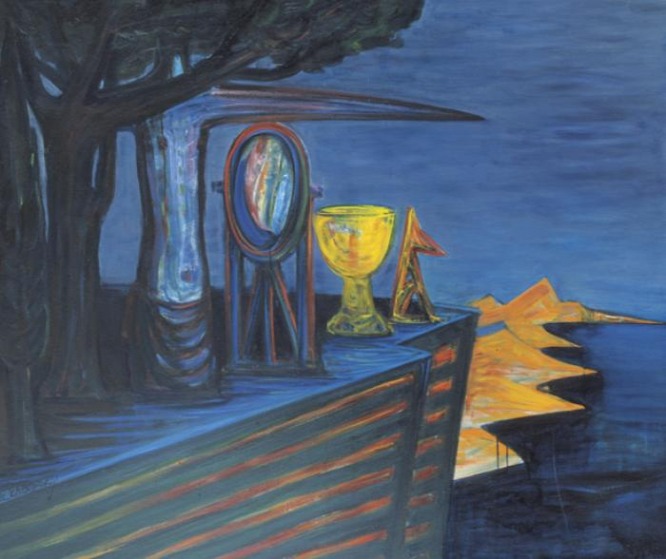
Counting that in a non-native language he is unlikely to write something worthy of attention, El thought about the possibilities of non-western self-realization. He decided to become an artist - and became him, having graduated from the Hungarian Higher School of Fine Arts with a degree in painting. In the new language environment, he, however, was mastered brilliantly, at the level and his rights - in this sense there is no question of alienness and immature (one of the Kazovsky interviewers, Attila Krishtof from the Magyar Nemzet newspaper, testifies: “There is nothing foreign in his speech”). In his veins - is it mixed? - Two languages flowed for some time now. “It is possible, however, that in the end I will write,” said almost forty-year-old El in the late eighties. “Prose-in Vienger, but I write poetry only in my native language, in Russian.” (I wonder if it became? And what happened in the end?)
Alien and non -profit, in the case of an al, they chose a different medium, much more difficult: his own body.
I longed to be a "normal" homosexual man, and it was impossible to do this with this body
"It turns out that I will have to live all this life in an absolutely alien body with which I can’t identify myself. How to look at myself-I fall into a stupor ... I do not like to undress naked. Not because my own body embarrasses me as such, but because it alienates me. That is, I don’t see myself, and with this invisible to me, but still I will have to live up to the end One single life. "
It seems that for the Hungarian culture of his time, El Kazovsky - a two -cultural, double -legged person - was one of the most important points of intensity and anxiety. This can already be understood at least by how often the correspondents of different publications asked him about art and life (in the book - nine interviews, and that is not all); Four years after the death of Kazovsky, these conversations - without losing, means relevant - were collected in a book, which Oksana Yakimenko now translated into Russian. The Hungarians about Kazovsky have at least two books, one of which came out during his lifetime [2] . In Russian, it was not possible to find articles, except for the review of Viktor Leonidov, the “book of Jan” [3] , an obituary to the artist published by Nina Popova in the newspaper “Russian Courier of Central Europe”, [4] , in the same publication, a short note about the post-end exhibition of Kazovsky in the national gallery [5] and dedicated to the same The exhibition - and at the same time the personality of the artist - records in the "Live Journal" of the Russian -speaking guide on Budapest Lyudmila century [6] . With all the undoubted sympathy and interest of the authors in your hero, these texts cannot be called research.
He did a lot, except for paintings and poems. He worked as a theatrical costumer and a decorator, staged performances that he called “panopmies” - “something between costumed performance and opera”, as the author of the preface to the “book of Jan” writes, created installations, made sculptures from wax; Finally, as the same author writes, "with persistence he transformed into a work of art and himself." He was generally a man - in terms of attention - universal, huge. “The most painful,” he admitted, “that you are not placed in the skin of time.” "I have little that I have one life." "I am interested in everything. Except for sports. I will not even name such an aspect that would not interest me." And he - attentive to breaks - was extremely whole and extremely constant. Understanding people write that his art is not divided into periods.
And yes, indeed, Kazovsky had its own mythology, with sustainable images and topics, not only strongly felt, but also carefully thought out. In everything: in the paintings and graphics, not in need of a word, in performances, it was she who pronounced in verses.
El in his masculinity - contrary to the fact that the strange will of circumstances was born in a female body - did not doubt
EL (in another Russian version, that was adopted in the collection of "three squares"-El, by analogy, must be with El Lisitsky. "El", it seems, is nevertheless closer to phonetic truth, although the Hungarian [l] is softer of the Russian) Kazovsky, he is Elena Kazovskaya ... Here the Russian "Wikipedia" will be confused : in the female gend He will choose a strange version of “he (she)” ... El himself never got confused in his masculinity - contrary to the fact that he was born in a female body with a strange will - he had no doubt. (And here belonging to Hungarian culture - chosen by Al, is completely consciously - turned into an extremely successful circumstance, since without a category of the Hungarian language it is happy.)
"If I had problems with self -identification, then until the age of three. I do not know anything about this. Then the search for identity was no longer important."
“I grew up,” he argued, “with a stylized consciousness of a man from the last century.”
Moreover, and more difficult than that: he perceived himself as a homosexual man. He was attracted to men, but in no way in a female role - not in the possibility of which gave him his own body. Which completely excluded him from the corresponding area of life.
"<...> I longed to be a" normal "homosexual man, and it was impossible to do this with this body." "<...> what I longed for, a deeply feminine, supple, soft creature, something between a teenage-girl and a young woman, a malleable hole, a maternal bosom, should have been embodied in the boy’s body, in youthful beauty. It is complete happiness, then fuses burn out, then consciousness is turned off. But I could achieve such happiness, I could survive it, I could survive it, I could survive it, I could survive it. Only finding the impossible: then, I don’t know that, a glove for a seven -fledged hand ... "" <...> not a single behavioral norm was suitable for me. "
At first you feel a protest: why, damn it, they ask him all the time? There is not a single correspondent who would not ask his gender and sexual, forgive the Lord, by self -identification. (And Kazovsky, by the way, answers - quite willingly with merciless frankness.) Why is it necessary at all, ”the reader is angry,“ to climb into a person’s personal life, into his relationship with his body, why, in principle, talk about it? Why out of intimate circumstances of this kind, whether they are no trivial, in general, do a public text? Is the artist interesting and important this? What, it cannot be understood besides this? What, painting does not speak for itself? (Yes, this painting - shouts simply. Moreover, about the most root: about life and death.)
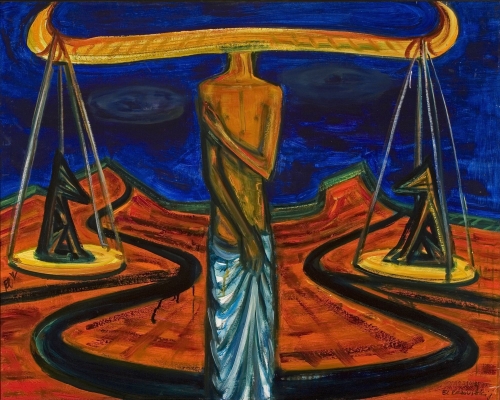
Thank God, about painting, about working in art with Him, too, and a lot. But these conversations always always have two poles, equal to tense and, so to speak, equally saturated with material: artistic and biographical.
The paradox (or not a paradox) is that in the case of KazAZ, biographical is just significant. Because his non -trivial gender situation has become an incentive for him to problematize, comprehend, in general, to see the human nature and the fate of a person in the world in general. His own biographical circumstances for him are the subject of anthropological attention and a kind of existential work: from the inside of this situation, in theory, it is completely hopeless, he - not for a moment losing sight of either her trauma or its uniformity - studied - and learned to be happy. Awareness of himself doomed to life in someone else's, alien, "unproved" body became for him again creating disaster. And the word "creating" here is again the main thing.
"The action itself is impossible, but in my soul I still survived mutual love when I get everything that radiates this young, gentle female consciousness, complete acceptance, and I feel that I have reached a real deep hole, where I am completely placed, because I actually do not fit anywhere ... but now I’m fitting, and my caddy hand finally finds a seven-fed peppy and I can keep my palms in my palms A face that always longed ... to touch such a person-even if nothing is happening more! After all, this image was always somewhere in the depths of the subconscious ... I should see it sixty percent, I already fell in love with death, and then I came across ninety-nine percent! .. And it doesn’t matter at all, in reality, everything is happening in the shower He had already experienced his soul that the other completely sacrificed his life to me, that he exists for me, for me was born ... Here he is - heaven, here it is - true happiness. "
For some reason, the interlocutors refuse Kazovsky a tendency to philosophizing, to “abstract reasoning”: “... after all, you are not showing any tendency to abstract reasoning,” the correspondent of Nappali Ház magazine Rudolf Ungvari does not even ask, and Kazovsky seems to agree, and not, and this is not necessary? They are trying to ask him, using the established, hardened categories such as opposite to each other, “spirit” and “sensuality”: “It turns out, through this idol, which, in its inaccessibility for feelings, is a pure abstraction, expresses an inaccessible sensual. And the sensual being of the animal, which embodies a pure experience and reach, expresses your spirit, and it answers again - and it again answers. No, without denying anything, but almost evasive: "So it is. For another person, this can mean something else."
Because it is more complicated and voluminous than such oppositions.
In general, here we have to admit (and, I think, it will be fair) that thinking and feeling about the essence and fate of a person are not “abstract” reasoning, but maximum attracted and involved. In the case of Kazovsky - for sure. What he says here, including biographical details, is philosophy itself. And Kazovsky, who is sensitively followed by attention along the seams and ruptures of being, is a philosopher. By the way, he perfectly operates with “abstract” categories: “impression”, “experience,” he explains to the next interlocutor, in my opinion, some strange expressions. After all, being itself is already sufficient experience in the human and inhuman universe. Throughout your life, you will not get a greater impression. Everything else is only small details. "He, a verbal person, is not in words, the words here are only a consequence - but in general in everything, whatever he does. Including the answers to the questions of the interviewers. The system of views of Casovsky on art, on the structure of culture, on human nature - the semantic world, which in itself is worthy of a solid study. Maybe he will wait for it?
[1] El Kazovsky. Dzhan Book / Comp. I.S. Putolova. - M.: Three squares, 2011.
[2] Forgács éva. El Kazovszkij. - Bp.: Új művészet kiadó, 1996; El Kazovszkij Kegyetlen Taszínháza / El Kazovszkij's Cruel Theater of the Body. Bp.: Jaffa Kiadó, 2008.
[3] http://www.ng.ru/ng_exlibris/2011-05-19/6_darkness.html
[4] Nina Popova [So!] Memory of the artist // http://www.kurier.hu/index.php?option=com_k2&view=item&id=214
[5] Nina Popova. Planet El Kazovsky // http://www.kurier.hu/item/2498-3123-475-planeta-el-kazovskij