
Translated material
Crimea and law
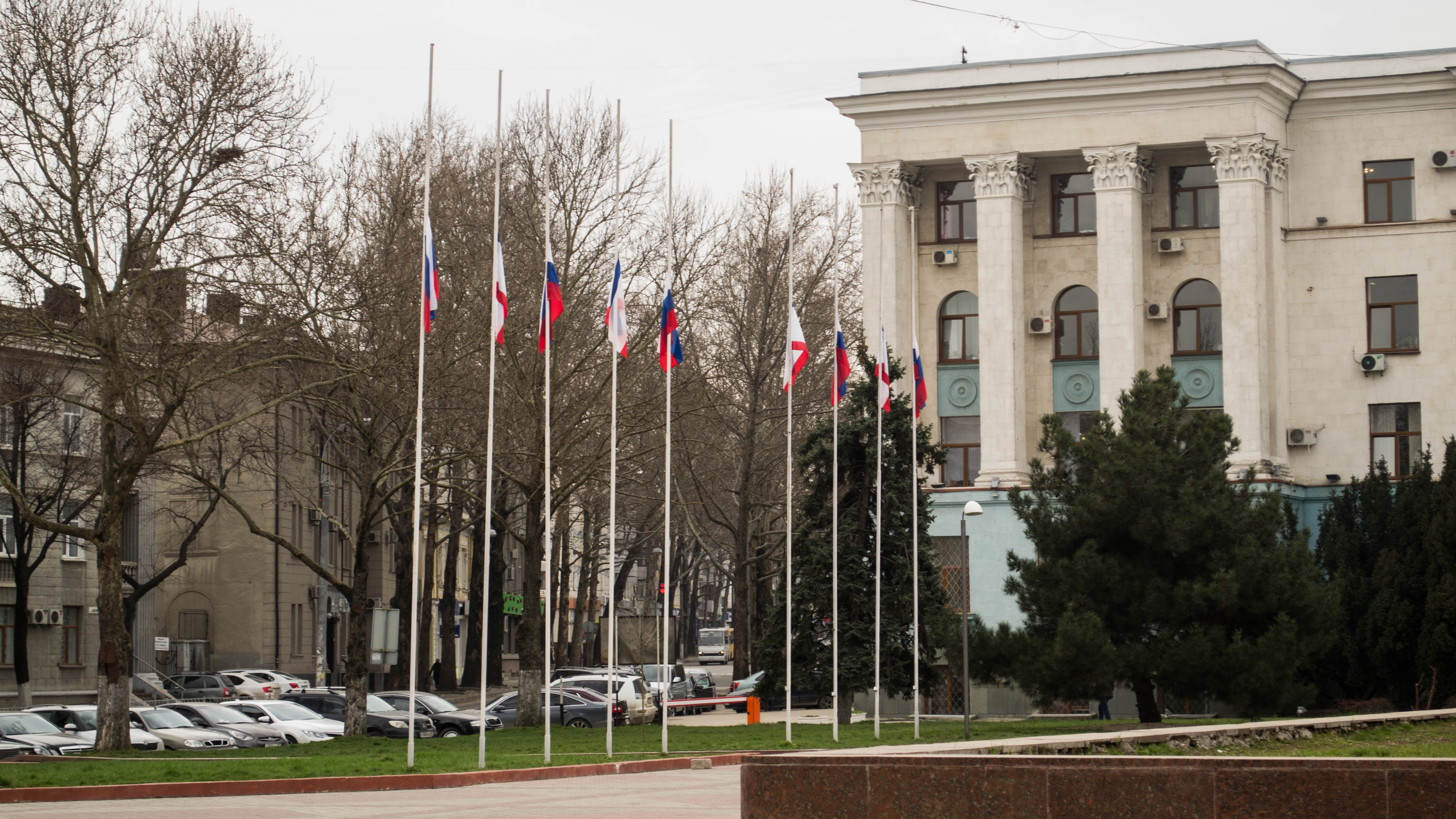
Chairman of the organization "Power of Law" Andrei Senchenko to protect the rights of citizens who suffered from the annexation of Crimea
Vitaly Portnikov: How does Ukrainian civil society try to resist the annexation of Crimea? What are more important tools - internal legal mechanisms or international? Is it possible to act using levers of Russian justice? We will talk about all this with the chairman of the All-Ukrainian movement "Power of Law" , the former Deputy Prime Minister of the Autonomous Republic of Crimea Andrei Senchenko .
What can really make your movement if we understand that from the point of view of Russian law Crimea is the territory of the Russian Federation?
Andrei Senchenko: We confess this point of view: the latter that Ukraine should pay for its independence is the life of a soldier. Therefore, everything that can be done not by military methods should be used as much as possible. I mean economic, diplomatic pressure and what we do: legal pressure on the aggressor state.
In this sense, there are three directions. The first is the presentation of claims related to the damage caused by the Ukrainian state in the Crimea and in the Donbass. The second is claims related to the damage caused by business. And the third is Ukrainian citizens who suffered as a result of Russian aggression, the occupation of part of the territory of our country. We are subject to the third direction, help Ukrainian citizens who suffered both in Crimea and the Donbass.
Vitaly Portnikov: Can you give some examples when you can say that there really is a result?
The last thing Ukraine should pay for its independence is the life of a soldier
Andrei Senchenko: This was a new topic for our justice system and for our team, since we have never encountered problems related to military conflicts. About six months have gone to the development of a legal strategy. We raised almost the entire judicial practice, starting from the First World War and to this day, related to military conflicts in different countries, with the laws that regulate these opportunities, have developed this strategy. It is based on the world -famous concept of functional immunity of the state.
There are two very important principles. The first sounds like this: if one country in its actions in relation to another has gone beyond the limits of sovereign powers (and the warfare, the seizure of our territory is an obvious exit beyond the sovereign powers of the Russian Federation), then the guilty party in this kind of actions does not enjoy immunity in the courts of the state in which these actions were taken.
The second principle directly concerns citizens and sounds in this way: if, as a result of the actions of one state committed in the territory of another, citizens of another state were killed, or damage was caused to their health or personal property, then in this case the guilty party does not have judicial immunity in the courts of the state in whose territory these actions were performed.
Thus, now not only Ukraine and Ukrainian justice are acting - this is a well -known principle in the world. I can give as an example the British law on the 1978 judicial immunity, which records exactly what I called. If, relatively speaking, there would be aggression against the UK, then no one would send British citizens to some international courts, they would go to their British court and received a decision. How to fulfill it is the second question.
Vitaly Portnikov: This is the most important question.
The Russian Federation does not recognize the supremacy of international law in relation to national, although the whole world is in force differently
Andrei Senchenko: The most important based on the fact that the Russian Federation does not recognize the supremacy of international law in relation to the national, although the whole world is acting differently. It is absurd to rely on Russian justice, especially when it comes to our, but occupied territory.
I can give examples when Ukrainian business, which suffered in the occupied territory of Crimea, tried to sue first in occupation ships in the occupied territory, but many reached the Supreme Court of the Russian Federation, and they said: this is normal, the nationalization of your property in Crimea does not violate your substantive rights.
We opened and substantiated the possibility of filing claims with Ukrainian citizens to Ukrainian courts. Citizens are not deprived of the opportunity to file claims to the European Court of Human Rights . The problem is that, according to our modest estimates, about two million people affected in the Crimea and the Donbass of Russian aggression. These are families of the dead military and civilian, these are wounded and crippled military and civilian, these are our military personnel who were captured by this undeclared war, these are civilians who are illegally deprived of freedom that have been tortured. These are also citizens who have lost personal property, and forced immigrants. Here are about two million such victims only in the free territory of Ukraine.
I think no one can submit two million claims to the European Court of Human Rights, we understand that this court is not able to consider such a shaft, and each victim has the right. Therefore, the country's judicial system should assume this load, and it accepts it.
Vitaly Portnikov: What is she doing later?
Andrei Senchenko: The execution of decisions of the Ukrainian court in this sense is no more complicated than the execution of decisions of the ECHR or the International Court of the UN. We do not count on the goodwill of the aggressor, which is why we managed to arrest the right to demand the right to demand three billion dollars of a loan in the Ukrainian court as a measure of the claims of our citizens, which is called Yanukovych's loan. This is a loan issued by the Putin regime of Yanukovych's regime in 2013. This is the amount of the dispute between the two states in the London court. Until the point is set there, we consider this as an opportunity. But if, God forbid, the state of Ukraine will lose the London court, then the requirements of citizens recognized by the Ukrainian court begin to work, accordingly, our arrest imposed by the court works, and we have repeatedly duplicated it in many courts. That is, the Russian Federation will have to pay.
Vitaly Portnikov: But in this case, you take money from not from the Russian Federation, but from Ukraine.
Citizens are not deprived of the opportunity to file claims to the European Court of Human Rights
Andrey Senchenko: This is a game of words. If the state of Ukraine loses the court in London, then the court will confirm the right to claim the Russian Federation for this amount. That is, the dilemma of the Ukrainian state will be the following: either give money to the aggressor state, or to take counting oncoming claims and pay all this by court decisions to Ukrainian citizens. There will be no third option.
In the process of consideration, we have more than seven thousand statements of citizens today. There are already decisions that have entered into legal force, there are already more than a hundred of them. Tens of thousands of statements in Ukrainian courts are being prepared. It is clear that decisions on them will go out gradually, and the Ukrainian state will gradually pay money.
For example, the Goloseevsky court of Kyiv decided on the statement of the forced migrant from the Donbass, and the amount of compensation for moral and material damage amounted to about 40 thousand euros. This amount is not for a campaign in a gastronon, but so that a person, as a result of Russian armed aggression, has lost housing and forced to leave his small homeland, acquired housing, and he got the opportunity for a new start in life. This is fair.
But this Russian loan will be enough by about 3-3.5% of Ukrainian victims, based on the real correct assessment of damage. Therefore, we are working on the arrest of other Russian assets in Ukraine and abroad.
We, unlike the invaders, do not touch the property of Russian citizens. If they are guilty of something, then they can become an object of sanctions. We do not affect the property rights of Russian companies in Ukraine. Again, if they are guilty of something, then they can fall under sanctions, but not under the expropriation of property. But where there is a share of the state, in the part of the state of the state, we will arrest property and, thus, put pressure and force to pay.
Vitaly Portnikov: Have you lost something in the Crimea as a result of all these events?
We managed to arrest the right to claim the Russian Federation for three billion dollars of a loan, which is called by the loan of Yanukovych
Andrei Senchenko: I am exactly the same forced migrant as several tens of thousands of Crimeans, more than one and a half million Ukrainian citizens, residents of Donbass and Crimea. All my property, which was listed in my deputy declaration (and I was very correct in this matter, indicated everything), the invaders declared the property of the so -called Republic of Crimea. For example, in the building in the center of Simferopol, where my deputy office was located, which belonged to me as an individual, now is one of the FSB and Sevastopol Office departments.
Vitaly Portnikov: Why began to nationalize private property in Crimea?
Andrei Senchenko: These are political will, corruption interests that determine what and how to do. The fact that the Kremlin and the Supreme Court of the Russian Federation agree with what happened in Crimea means that they absolutely share such a line of behavior. By the way, when we talk about the behavior of looters in Crimea, they largely copy Putin's behavior. They, together with Berlusconi, illegally arrived in the occupied Crimea, went to our Massandra and arranged a gylyanka there, on which they drank a bottle of a sherry of 1775 roslice, an auction value of more than a million euros.
Vitaliy Portnikov: This is a question for the Massandra administration, how she can serve at such events the fault of this cost.
Andrei Senchenko: I’ll give another example: the Aivazovsky sanatorium, belonging to a rather famous Ukrainian entrepreneur. He walked this sanatorium for a very long time, cherished, licked, made a pearl out of it. He was declared the property of the Republic of Crimea, then transferred to the management of the President of the Russian Federation, and the top of the Russian authorities considers it not shameful to stop there, coming on business trips.
Vitaly Portnikov: When, relatively speaking, they carry out all the procedures that in Moscow call procedures in the framework of international law: the decision of the Supreme Council of the Autonomous Republic of Crimea, a referendum - and record all this in Russian legislation, for me this is an understandable logic of actions. This is in order to say later: you see, the people voted, created an independent state, we admitted this state to the Russian Federation. We are not discussing the quality of these decisions now, but they are understood logically. But when there is the right of ownership, and in fact the Republic of Crimea, as part of the Russian Federation, is recognized as the successor of the Autonomous Republic of Crimea, everyone says: before this day there was such a status, and from this day it has become such, therefore the ownership’s right remains sacred. From some people they take this property, while others do not, and this is really inexplicable for me.
Andrei Senchenko: They, under the guise of leaving some strategically important objects, actually taken away that each of them is clear and close from their past. If Aksenov, having a crime nickname Goblin in the past, included the markets in lists for nationalization, this is understandable from his youth. Moreover, this was done despite the fact that these markets belonged to consumer cooperation, that is, they have thousands and thousands of co -owners, but all this was taken away. They were close to the spirit of the gas station. Konstantinov, the speaker of the occupation parliament, announced the property of the Republic of Crimea by the Crimean Zabiton enterprise-this is a leading manufacturer of building materials in the Crimea (there were 800 workers, more than 600 minority shareholders), put management from his business structure, and this is all working for it, although it is now listed as a state unitary enterprise. That is, they robbed, not embarrassed, and did not even very much try to wrap all this in a beautiful wrapper.
In some people they take property, while others do not, and this is inexplicably for me
Vitaliy Portnikov: You are not confused by such an option when, after it moved to another state, the same people and elites who carried out the leadership there, including the leadership of financial flows?
Andrei Senchenko: In fact, now in Crimea the same thing is not quite. They left as a screen of these named characters (Aksenov, Konstantinov), but, in fact, they are furnished mainly with roots in Russian special services. I remind you: for a long time, the representative of the President of the Russian Federation in the so -called Crimean Federal District was Mr. Belaventsev , who was also known in the scandalous Russian structure called "Slavyanka", which at one time robbed the Russian army. This Belaventsev, being in the Crimea, in fact, inspected, decided what to do with this property. The Kremlin elite, the top of the special services and the Russian armed forces shared what was more affected by each other, and the local goblins left some crumbs from the table for formalizing all this with their decisions.
Vitaly Portnikov: Do you expect that all Ukrainian court decisions will ever become the property of Russian law? Will such a moment come or not?
Andrei Senchenko: We cannot repeat the actions of the invaders, our main task is to be as correct as possible from the point of view of all procedural nuances. Therefore, we do not have a single court session for the consideration of such statements without confirmation that the Russian Federation is notified of the time and place, and the Russian side in one hundred percent of cases receives the entire set of documents provided for by Ukrainian legislation. The fact that they still ignore these trials and do not enjoy their right to file an appeal is their right, but they are participants in the process. And no matter what they say, we are very scrupulous in these actions, because we understand that at a certain moment they still have to join these processes, and we are absolutely ready for this.
Vitaly Portnikov: Now a huge number of citizens of the Russian Federation are coming to the Crimea, they buy property there (often, by the way, with dubious roots or vice versa, nationalized and sold). These people have never been citizens of Ukraine, have never participated in the Ukrainian legal process. The question arises, which is now asked to politicians in Kyiv: if suddenly the Crimea once again becomes part of Ukraine, what will be the fate of these people and their property?
We cannot repeat the actions of the invaders, and we must be as correct as possible from the point of view of all procedural nuances
Andrey Senchenko: This is not only a matter of property. All those who arrived on the shoulders of the invaders, that is, after February 20, 2014, will have to go home in a very short time, according to a hard Croatian scheme. And then, if these people have not committed crimes in our territory, they, as tourists, can remain there as much as a non -resident to stay in the territory of a neighboring state is no more. But about any rights that they have gained, it is not a question.
Of course, life is going on, someone sold some property objects, someone went to the continent, sold their apartment, and if there are no complaints from those who sold, and the calculations occurred correctly, then the ownership of the person will remain. But he will not be able to become a resident there simply because he arrived with the invaders.
There is a very important question: what to do with two passports in two million people when we return Crimea.
Vitaly Portnikov: Ukraine does not recognize the Russian passport.
Andrei Senchenko: There should be a certain term - let's say, a year, and during this year every Ukrainian citizen who lived in the Crimea before the beginning of the occupation must voluntarily declare, a citizen of which country he wants to be.
On the territory of Crimea there is a certain layer of deeply elderly people (for example, the widows of the military), for whom Crimea is a place of residence, but not their homeland. They simply demobilized from the Northern Front, from Kamchatka. These grandmothers do not need to torment if the grandmother says that he wants to die a Russian woman, for God's sake. In this case, she fills out the declaration, refuses Ukrainian citizenship, leaves her Russian passport, automatically receives a lifelong residence permit, and her property rights are not affected, but Moscow pays a pension, and it does not vote. This is fair.
No one is going to plant people or arrange atrocities
Если она сказала, что порвала или потеряла свой украинский паспорт, но он остался в заднем кармане и всплывает, то должен быть жесткий административный штраф. Аналогичным образом если те, кто декларирует, что они были вынуждены получить оккупационный аусвайс, пропуск по оккупированной территории, подтверждают свой статус как украинские граждане, сдают аусвайс, утверждают, что они отказались от российского гражданства, в этом случае эти люди пользуются всеми правами, включая избирательные права, пенсионное обеспечение и так далее. Но, опять-таки, если человек начнет говорить, что не получал российский паспорт или порвал, выкинул его, а потом он у него где-то всплывет, то должна быть жесткая административная ответственность в виде огромного штрафа, которая отбила бы желание манипулировать двумя паспортами.
Виталий Портников : Где механизмы контроля? Ведь среди ваших коллег по Верховной Раде Украины, с которыми вы работали многие годы, тоже было немало людей, у которых в заднем кармане был российский паспорт.
Андрей Сенченко: Должно быть введено законодательство, в том числе, очень жесткий штраф. Сажать людей или устраивать зверства точно никто не собирается, все эти страшилки ни к чему. Но если ты сказал: "Я хочу быть украинским гражданином, пользоваться всеми правами и нести определенную ответственность как гражданин", – тогда это вот так. Если ты проживал в Крыму до оккупации и хочешь быть российским гражданином, тоже не будет никакого насилия. Если после оккупации – тоже без насилия, но в короткий срок – до свидания, на историческую родину.
Виталий Портников: На мой взгляд, сравнение с хорватской схемой не очень корректно. Ведь люди, которых выселяли или которые уезжали с тех территорий, над которыми Хорватия восстановила свой суверенитет, жили там десятилетиями, имели собственность, были и до этого гражданами Социалистической республики Хорватия, были сербами. Это, скорее, в какой-то мере балтийская схема. Мы восстанавливаем правовой статус, который был до момента аннексии, и люди, которые жили там до аннексии, имеют все права, вне зависимости от того, какое гражданство они захотят оставить, а люди, которые жили после аннексии, не признаются законными жителями.
Граждане каждой страны соглашаются с определенным лидером, терпят его поведение, но когда-то за это надо расплачиваться
Андрей Сенченко: Я хотел бы вернуться к теме судов против государства-агрессора. На мой взгляд, это возможное начало внедрения цивилизованного механизма предостережения от агрессии.
В свое время был военный конфликт между Ираком и Кувейтом. Тогда война длилась двое суток, а после этого было семь месяцев оккупации. Общая сумма претензий, предъявленных Кувейтом Ираку, составила 462 миллиарда долларов. Если два миллиона украинских граждан, пострадавших от российской агрессии, от захвата нашей территории, подадут иски против Российской Федерации, и если расчет ущерба будет проведен корректно, исходя из практики Европейского суда по правам человека, то в этом случае общая сумма претензий составит сто миллиардов долларов. На примере Хусейна, которого уже больше десятка лет нет в живых, иракские граждане, выплачивая налоги своему государству, понимают, что значительная часть этих средств не вернется им в виде каких-то социальных благ, новых дорог, больниц и так далее, а будет выплачена соседнему государству, в отношении которого был этот акт агрессии.
Я думаю, это не единственный, но, может быть, эффективный механизм воздействия на мозги. Граждане каждой страны соглашаются с определенным выбором, с определенным лидером, наверное, терпят его поведение. Но когда-то за это надо расплачиваться.