
Translated material
President of Poland promised to impose a veto on two of three scandalous laws on the reform of the judicial system
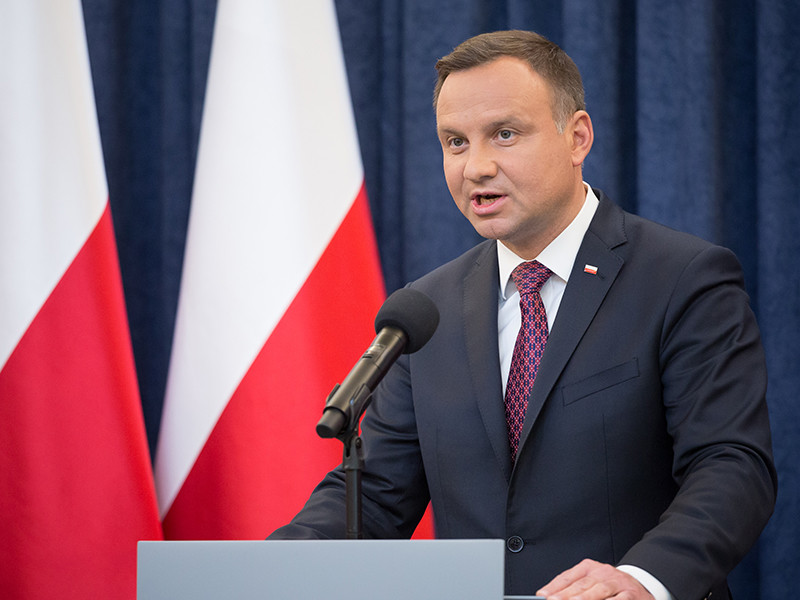
President of Poland Andrzej Duda on Monday, July 24, announced his intention to impose a veto on two out of three bills on judicial reform, which were approved by the Senate last week and caused thousands of protests .
“As a president, I do not feel that these laws will serve to strengthen justice. These laws should be changed,” the BBC quotes the president’s statement, which was broadcast on central television.
As Fakt clarifies, Duda put a veto on the laws on the Supreme Court and the National Judicial Council. At the same time, he signed the third law, which gives the Minister of Justice the right to appoint leaders of lower Polish courts.
In his speech, the president raised the question of judicial ethics and that judges should be "crystal honest." He admitted that "justice needs to be repaired," but he said that the changes should be carried out in such a way as to avoid the separation of the people and the state.
Duda said that the whole weekend continued numerous consultations between scientists, lawyers, politicians and philosophers working on judicial reform. He admitted that the argument about the threat of returning to the communist regime was decisive for him.
Recall that the concept of reform assumed the vesting of deputies and Minister of Justice to appoint judges without consulting with representatives of the judicial system. Representatives of the ruling party claim that reform is necessary due to the corruption of the existing system. The opposition indicates that innovations violate the basic constitutional principle of separation of powers.
Last Thursday, the bill was approved by the majority of the deputies of the Sejm - the lower house of parliament. Voting caused the protests of the gathered in front of the Senate building. The leaders of the European Union criticized this bill and called it the threat of the rule of law. Prime Minister Beata Shidlo rejected the EU criticism, saying that the legislation is the internal affair of Poland and the government will not be inclined to any foreign pressure.
One of the most resonant norms of the new law was the granting of the Parliament of the right to dismiss the current judges of the Supreme Court, with the exception of approved by the president. The head of state also receives the right to regulate the composition of the courts.