
Translated material
1917 - century later
Alexander Genis: On the air - a new release of our cultural and historical cycle:
1917 - century later:
Paradoxes and parallels
Faulkner said: "The past is never dead. It has not even passed."
Having taken the famous aphorism into the epigraphs of the cycle, we plunge in the eternally living time of the past, which has reached us in the form of historical events, artistic movements, musical directions, fateful books and an important part of each transmission, which, perhaps, are best able to convey the spirit of time.
Looking into the past, we are not looking for escapism, allowing us to relax in the long -past, but lessons that allow you to better understand the present and look into the future.
The traditional questions that these transfers ask the past sound like this:
What happened?
What happened?
What could be?
(Music)
Alexander Genis: In connection with the centenary of the October Revolution, historians of all countries and interestingly write about this truly historical event. Including American scientists who have released several books on the revolution to the date. From this, I propose to start today's release of our cultural and historical cycle.
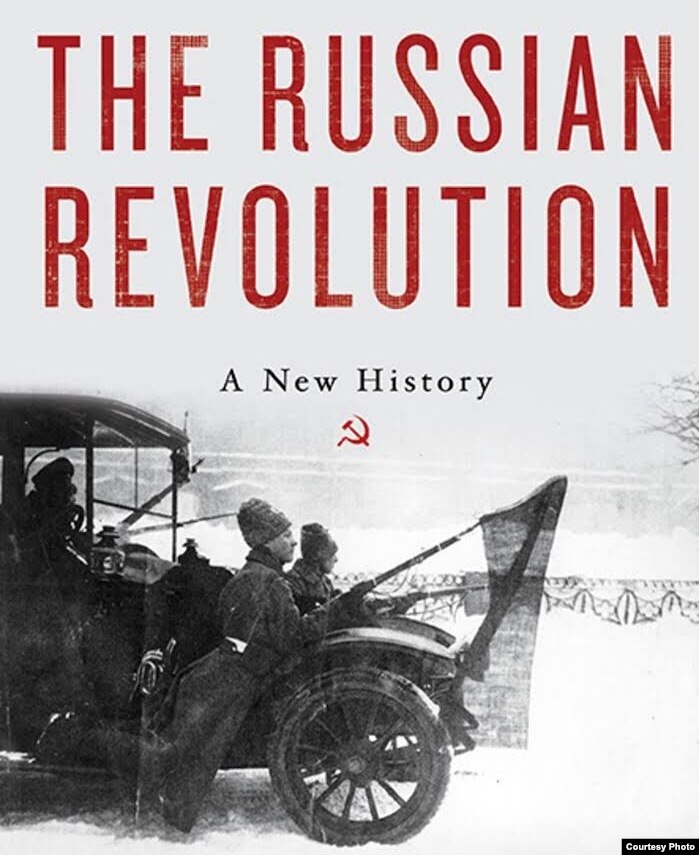
One of these books is called the “Russian Revolution. New History ". It was written by historian Shen Makmiking. This book is curious in that it is trying to reconsider the history of the revolution and pre -revolutionary years. In particular, the author writes that Russia was always represented by an extremely backward country, which entered the First World War as a weak link in the West. But at the same time they forget that pre -revolutionary Russia developed at an extreme speed, although the lag from the West also grew. And here our historian makes a very interesting comparison. He says that Russia in the first years of the twentieth century resembles China of the first years of the XXI century. The speed of economic development was very large and was 10% per year - this is a gigantic figure. And this is what does not allow us to correctly understand the motives of the revolution. How do you feel about this theory, to this hypothesis, let's say?
Solomon Volkov: In general, as you rightly said, a dozen and a half appeared, or maybe two new books related to the revolution, in my opinion, more in the West than in Russia itself.
Alexander Genis: Because in Russia itself they do not know how to treat it.
Solomon Volkov: precisely because they do not know, it would be necessary to engage in these research.
Alexander Genis: Of course, but this could be done in a free country.
Solomon Volkov: I attribute this due to inertia, unfortunately, which takes place. Because in the end, what to talk about the revolution, we still have no definitive biography of Pushkin, we do not have a definitive biography of Dostoevsky, written by Russian scientists. A very recent example, to the shame and shame of Russian writers, the bestseller in Russia was the novel of the English writer Barnes about Shostakovich. There is no novel about Shostakovich in Russian. This, too, do you think, because they don’t know what to write? Yes, the authors do not know what to write about Shostakovich, because they do not understand anything in music, they have not heard a single symphony of Shostakovich in their lives. That's all the reasons.
Alexander Genis: You sharply dispersed the artists-sophisticates. Let's get back to American historians then.
Solomon Volkov: American historians: their books can be divided, relatively speaking, into two camps, into two schools. Representatives of one camp, the most prominent of them were the founder of this idea Richard Pipe, a famous American historian, extremely conservative views - he served in the Reagan administration. Pipes and his supporters believe that the Bolshevik revolution of 1917 was an accident. Something happened somehow wrong, and the Bolsheviks eventually seized power. It was such a completely random coup that could be avoided, because Russia was going along the right track. As the American historian, whom you now quoted, says, the country developed violently economically, everything was fine, but misfortune happened.
Another school, it is conditionally called revisionists, it blossomed in the late 1970s and early 1980s. Just when I arrived in the United States and became a witness to fierce disputes between these two schools. The school of revisionists proved that no, all this is natural, it was impossible to avoid the revolution. The revolution reflected the existing tremendous gap between the ruling elite and the masses: the masses were unhappy, wanted to change their conditions and went to such extreme revolutionary steps. And the Bolsheviks simply took advantage of the mass movement, and they managed to lead it. These two schools.
When I began to reflect on this problem, I thought about this: good, I would live, suppose, in Petrograd 1917. I would like my friend professor of the economy, I don’t know whether they existed in 1917 in Petrograd, I would say: you look at how our country is developing remarkably, here is 10% of the increase of annuals, everything is in order, everything is fine. And I would say: yes, everything is fine, everything is in order, but for some reason I don’t feel it in my own skin. I see that the lines are in the bread store, I see that interruptions in the supply, I see that the manufacturers are trying to squeeze out more labor from workers for less wages and so on. That is, one thing is abstract numbers that historians later learn about and bring them in their writings, another thing is a sense of reality and what we now call slogans, those slogans that at that moment throw politics, and talented and energetic politicians, which turned out to be, first of all, of course, Lenin, who headed the Bolsheviks. He quickly managed to adopt all the popular slogans of that time: factories - workers, land - peasants, peace - peoples. Everything was formulated. In fact, these were Socialist -Revolutionary slogans, not at all Bolshevik. Lenin did not expect the victory of the February Revolution. Lenin himself, when he arrived in Petrograd, returning from emigration, he also did not immediately orient himself in the situation, but when he was oriented, he did what the genius politician should do. He expropriated other people's slogans and threw them into the masses, began to promote, voice them with much greater energy and pressure than those parties that came up with these slogans than the same Socialist Revolutionaries and intercepted the initiative. That's all.
Alexander Genis: In this regard, one should shit about another new book, which is called Lenin by train. This is a book by historian Katherine Meridil, who in detail talks about the very train that brought Lenin to Russia. You are talking about pattern or accident. Both that and the other. Of course, there was a revolutionary situation, but, of course, there was an accident. The idea of the story that obeys some kind of law that is acting, as the laws of physics, is what we have grown up at school, is not related to reality, because there is always freedom in history, the very freedom that allows the case to intervene in the course of the matter. This same train with Lenin was the same case. Do you know how Churchill said about him? That on this train the most dangerous weapon came to Russia, which was brought from Switzerland to Russia, it was worse than Bacilla Chum. This bacillus of plague led to the revolution. Not only she, of course, but this was the same case that could not have been. But he was, and this led to the fact that 25 million people were killed as a result of a revolution and civil war.
Solomon Volkov: In such cases, I always recall Ray Bradbury’s wonderful story about how they established a journey into the past at some point on Earth. Excursions pass and all warn that you can only go along a narrow path, you can not stumble in any way, since this can somehow affect the future, change the situation in the past. One person, nevertheless, is stumbled and crushes a butterfly. He came on an excursion to the past of prosperous democracy, but after he crushed the butterfly, he returns to the dictatorship, terrible tyranny. Because the entire course of world history has changed because of this crushed butterfly.
A wonderful story and a wonderful idea. But we don’t know where and how these same butterflies arise, we do not know what, where and how to advance. I completely agree with you when we talk about the role of chance, and for me this accident is always personified in some specific personalities. I always say: yes, I could not be born. Vladimir Ilyich could not be born, and then it may very well have not happened to the October Revolution. But when such a person had already appeared, he managed to saddle the wave of the story that went without him. It may well be that instead of him a person who would saddle, would be Trotsky or the same Stalin.
Alexander Genis: Stalin is unlikely. But with Lenin, of course, it was simple. His party was the only one that opposed the war from the very beginning to the end. And this determined the whole new history of Russia. Because all historians, no matter what line they adhere to, say one thing: the roots of the Russian revolution must be sought in the First World War.
(Music)
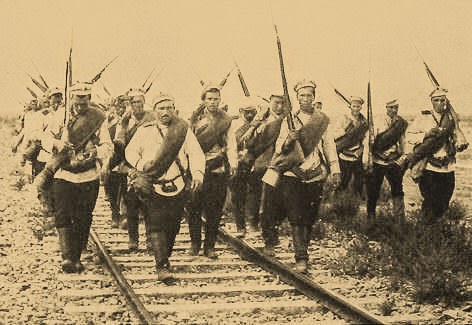
Alexander Genis: Today I propose to talk about how the First World War was reflected in literature, and it is precisely in prose, because we will talk about the verses of the First World War another time and separately, because this is a big and interesting topic. But the prose of the First World War was an extremely important event for Western European and American literature. It is characteristic that it was for Western literature that the First World War became a great topic. Who are our favorite writers? These are people who wrote about the First World War. This is primarily Hemingway, "goodbye, weapons." Schweik, a comic epic about the First World War, a book that we knew by heart. This is a remark, "on Western T without change." And many others, Oldington, Barbus, and also Robert Graves. Unfortunately, his book is very little known in Russia, only a few chapters are translated. But his memoirs about the First World War “with all this are over” are considered in the West the best model of battal prose. This is the same Robert Graves, who was so seriously wounded that he no longer hoped to survive. He lived for 90 years and wrote a library of works, including a very famous historical novel from the life of Ancient Rome “I, Claudius”.
It is important to snake that all these authors were pacifists, they all cursed the war. Probably the most amazing book “Farewell, Weapon” Hemingway. Because this is the first book about deserter, glorifying the deserter. I do not know another book that would heroize such a figure. By the way, his next novel “Fiesta” is a book about the lover -impotent, because this was also not there before. The charm of Hemingway's prose is so great that we forget that, in fact, it happens in the book. We follow the fabric of the compositions, but not his plot, we forget about the main sources of these books, and they all hide on the fronts of the First World War. This is a lost generation that found itself in prose.
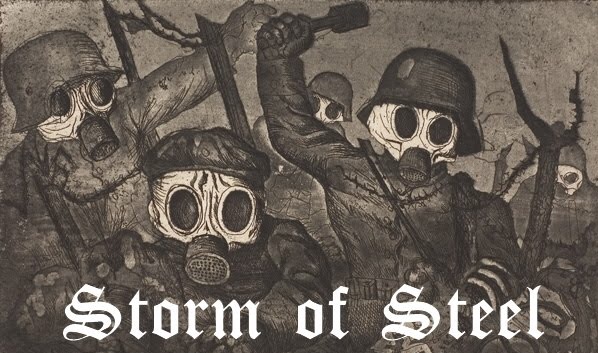
But there is one book that is sharply knocked out of all this series, because it cannot be attributed to pacifist. This is the book of Ernst Junger “In Steel Thunderstorms”. I did not even know that there was a Russian translation, but it turns out that there is already, it came out only in 2008. Samyai read it in English. It has not been translated into Russian for a very long time, because she was a favorite book of German conservatives, including Hitler, the Nazis loved it very much, although they really did not like Junger, like him. In steel thunderstorms withstood an incredible number of publications. The first came out in 1920, since then it was reprinted endlessly.
The book is extremely strange. This is a novel about the joys of war. And this is not some beautiful chivalrous war, no this very First World War, which is all in blood and guts. Junger was one of the main characters of Germany, he received all the highest awards, was wounded 14 times, he was mutilated by this war and was delighted with it. He described the war honestly, directly, but with enthusiasm. Let me read a few lines from Junger in order to demonstrate the whole complexity of this book.
“I made one observation here, and in the whole war, perhaps only in this battle: there is such a kind of fear that fascinates, like an unexplored land. So, in these moments, I experienced not fear, but an elevating and almost demonic lightness; The unexpected bouts of laughter attacked me, which could not be calm down. ”
The book ends with the fact that the hero is once again injured, he falls into the infirmary and says that the war has ended for me. He takes out from the satchel what comforted him in the war - his favorite book, namely, the comic novel by Lawrence Stern “Tristam Sheny”.
Solomon Volkov: I thought he would get a bottle of vodka.
Alexander Genis: I think that with vodka they were all right. Although Junger was a very young and by no means a cynical soldier, he was an attack aircraft, he was the same elite warrior, who was the pride of the German army.
After the war, Junger, as you know, became a very large philosopher and a very interesting writer. Yunger's diaries are an amazingly curious reading. But his most famous book remained, the one that is dedicated to the First World War - "In Steel Thunderstorms."
Solomon, and now let's talk about how the First World War was reflected in Russian novels. I know three big novels that are dedicated to the First World War, and, pay attention, all three writers of the Nobel laureates. This is “Quiet Don”, “Dr. Zhivago” and “August of the 14th”. Moreover, the first two begin with the First World War, but they quickly forget about it. And when we are talking about the First World War, we do not recall Sholokhov and Pasternak, as the authors of the Epo of the First World War, because the civil war overshadowed her. But “August of the 14th” is devoted to this particular problem.
Solomon Volkov: I recently re-reading my beloved Russian literary critic Dmitry Svyatopolk-Mirsky, he has an amazing essay about Babel prose, which begins with the thought that Russian literature, unlike the literature of the French, English and German, did not create anything remarkable about the First World War. This is a note of 1925, then this remark was completely fair. Yes, by 1925, when brilliant works about the Civil War had already appeared, nothing appeared about the First World War. You talked about why they do not write about the revolution, do not know what to write, modern Russian historians. And what happened to Russian writers in the post -revolutionary years, why did they not write anything?
Alexander Genis: Because the Civil War overshadowed the First World War.
Solomon Volkov: This is actually complex circumstances. I never thought about it before I read this note. In my house in New York, as you know, a rather extensive library, in it I found a book that I forgot about, but which I brought from the Soviet Union-this is the “war” of Vsevolod Vishnevsky, the novel is called “War”. Tolstoy is pretty much, on which Vishnevsky worked for several decades and never finished. Many dogs are now hung on Vsevolod Vishnevsky, probably many of these dogs were worthy of them. But he was a very gifted and innovative author. In particular, he tried to experiment with prose. He, of course, is primarily interesting as a wonderful playwright and film score, but this novel is also very curious. It is very interestingly built: a combination of documentary material, expressionist prose. But all this, unfortunately, is not very important quality prose, the book did not work. It was published only after his death in the posthumous collected works of Vishnevsky.
So, indeed, I had to wait for Russian prose before the appearance of Solzhenitsyn’s “August 14”. With this novel Solzhenitsyn, I think, was also unlucky. I think I don’t know if you agree with me that Solzhenitsyn still remains an underestimated and incomprehensible writer. With all the fact that almost every competent person in Russia knows about him, his works are now even taking place at school, the “Gulag Archipelago” is included in school programs, he is infinitely reprinted, everyone, as I said, is heard, but still they don’t read it.
Alexander Genis: It seems to me that this is the fault of Solzhenitsyn himself. There were three stages in his work. The first stage is the most beloved by many “in the first circle”, “one day of Ivan Denisovich”, novels that are written simply and exciting. The second stage, in which, I believe, the mature Solzhenitsyn showed his genius to Russian literature is associated with the book “The Gulag Archipelago”. It seems to me one of the most important books of the twentieth century. And the third stage is the time of the experiment. We always forget that Solzhenitsyn constantly experimented with the style. The Gulag Archipelago is also experimental, it resembles a postmodern rhizom. These words do not fit with Solzhenitsyn, but in vain. For example, such a bully ours as Konstantin Kuzminsky very highly appreciated the “Gulag Archipelago” precisely as a stylistically innovative work. The third stage in the life and work of Solzhenitsyn is connected with his work on the “red wheel”. “Red Wheel” is a purely avant -garde book, it is simultaneously conservative and avant -garde. There is no contradiction in this, Khlebnikov was both the avant -garde and the conservative in the language.
Solomon Volkov: Archaeist.
Alexander Genis: Archaeist certainly. It seems to me that this experiment was largely associated with the study of the experience of literature of the twentieth century. The American writer Dos Passos had a huge impact on Solzhenitsyn. The method of installation of newspapers, documentary materials, their inclusion in the novel goes, in my opinion, from the DOS of the Passos. But the language that this book is written is invented, it was specially created in order to compose this book. It seems to me that this is exactly what destroyed her for readers: the book became unbearable. I know very little people who like the “red wheel”. One of them, by the way, was our common friend Lev Losev, who greatly appreciated this composition.
Соломон Волков: На меня рассуждения Лосева, в частности, об «Августе 14-го», оказали большое влияние в моем восприятии Солженицына. На сегодняшний день писания Лосева о Солженицыне мне представляются одним из самых здравых и точных. Это типично для Лосева - здравость, трезвость оценок, и эти оценки всегда выражены прекрасным внятным русским языком. Одна из главных его идей, заключалась в том, что мы все привыкли видеть в Солженицыне не только политического, но также и эстетического консерватора, каковым он никоим образом не являлся. Наоборот, как вы правильно заметили, на этом всегда настаивал и Лосев, Солженицын всю жизнь экспериментировал. Да, для него был образцом американский писатель Дос Пассос, но так же для него была образцом русская авангардная проза того времени - Замятин.
Александр Генис: Замятин был одним из его любимых писателей. И Цветаеву он любил.
Соломон Волков: Андрей Белый своей модернистской прозой, романом «Петербург» и другими прозаическими произведениями оказал колоссальное влияние на Солженицына.
Александр Генис: Соломон, ну и как же, по-вашему, война описана у Солженицына?
Соломон Волков: Когда читаешь «Август 14-го», то тебя охватывают противоречивые чувства. Это, безусловно, не легкое чтение, безусловно, нужно подойти к нему с доверием, это то, что Прокофьев называл “нужно верить фирме”. Но если ты веришь фирме и преодолеваешь сложности в постижении этого произведения, то ты получаешь настоящее эстетическое удовольствие, потому что, как тоже справедливо отмечал в свое время Лосев, Солженицын не халтурит. Все эти словечки, описания, все продумано, все взвешено, это все есть результат огромного творческого труда.
Александр Генис: Наш коллега Борис Парамонов был в гостях у Солженицына, один из немногих, он рассказывал, что у него было четыре письменных стола, он переходил от одного к другому, чтобы собирать и разбирать огромный свод материалов.
Соломон Волков: Чтобы не быть голословным, я прочту небольшой отрывок из «Августа 14-го», необычайно ярко написанный фрагмент, который описывает бытовую фронтовую сцену: артиллерийских коней поют водой из колодца. Смотрите, как это звучит замечательно:
«Колодец был обетонирован и с шеломком наверху, от него уже длинная тень. С гульным грохотом в бетонной трубе одно и то же прицепленное ведро быстро спускали и поднимали сильные солдатские руки, крутя валик и выбирая цепь. Тут же переливали в котелки, в другие вёдра, торопя друг друга, браня расхлебаями и безрукими, подталкивая и наплескивая грязи вокруг, а уже опорожненные выпитые котелки снова со звяком совались, ища себе струи. Наполненные артиллерийские вёдра бегом, но без росплеска, относились разнузданным крупным нежным лошадиным губам. Рычали на артиллеристов, что по таким бидонам никакого колодца не хватит, впрок не наливать! Эй, впрок не наливать, пей здесь, сколько брюхо терпит! И на головы не лить, э, вы, охломоны – вон, в озеро беги, суйся по шею!».
Это же стихи.
Александр Генис: Не знаю, по-моему, это все очень тяжело читается, все эти словечки, которыми переполнено это описание, все эти “звяки, расхлебаи и росплески” мне кажется, излишни, почти пародийны. У Льва Толстого в “Войне и мир” есть такая же сцена. Подходит отряд к колодцу, но все, что там написано сводится к одной фразе: «Солдаты выпили колодец до грязи». Это уже бабелевская фраза, а не солженицынская.
Соломон Волков: Не стану спорить, а лучше прочту еще один маленький отрывочек, который демонстрирует связь и подражание в известной степени, влияние Дос Пассоса на Солженицына в плане монтажа. Это очень смешно, забавно, по-моему, очень легко читается, отрывки из газет того времени, как их превосходно смонтировал Солженицын. Это называется «Вскользь по газетам»:
ЖИВОЙ ТРУП тот, кто не знает волшебного действия лециталя… Стимулол от МУЖСКОЙ НЕВРАСТЕНИИ …
Московская касса ВЗАИМОПОМОЩИ НЕВЕСТ…
Кокосовые гамаки для дам…
И Лондонские духи клик-клик, эсс-букет…
СЧАСТЬЕ И СЛУЧАЙ ДАЮТ БОГАТСТВО! Участвуйте в лотерее…
… этический идеализм в общественных делах, которым так богата славянская душа, но обеднел просвещённый Запад…
На встречу ПРЕЗИДЕНТА ФРАНЦУЗСКОЙ РЕСПУБЛИКИ 7 июля устраивается морская прогулка с оркестром музыки на большом первоклассном пароходе “Русь”, исключительно для фешенебельной публики.
… безразличие французской демократии к внешней безопасности страны… торжество антипатриотических партий во французском парламенте…
ПОКУШЕНИЕ НА ГРИГОРИЯ РАСПУТИНА… На все расспросы отвечала: “Он – антихрист”… Оказалась крестьянкой Симбирской губ. Хионией Кузьминичной Гусевой… Жизнь Распутина вне опасности…».
And so on and the like. По-моему, это очень забавный монтаж.
Александр Генис: Мне кажется, этот монтаж цитат из газет создает панораму того времени, вернее, такую панораму, какой она видится читателям газет. Газеты не передают духа времени, как стихи, но что-то они все же рассказывают нам. И вот это «что-то» и составляет контекст для романа «Август 14-го».
Но вы знаете, если говорить честно, мне кажется, эта книга никогда не останется той самой книгой о Первой мировой, как, скажем, «Война и мир» оказалась главной книгой об Отечественной войне 1812 года. Думаю, что такая книга еще не написана.
(Music)