
Translated material
Beach Boyz
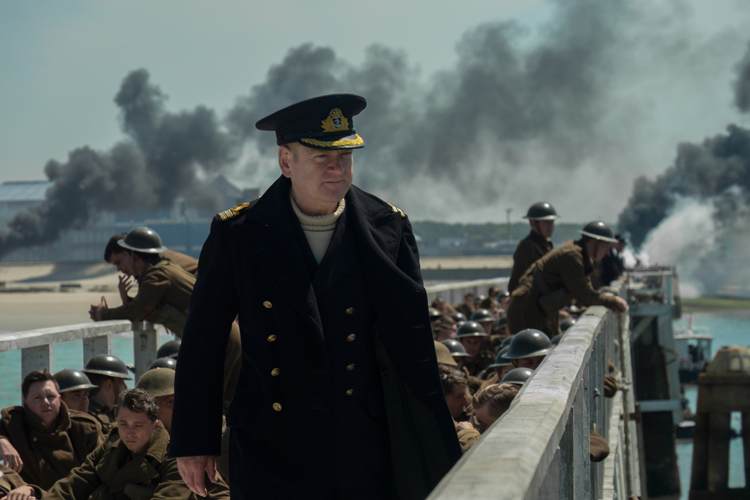
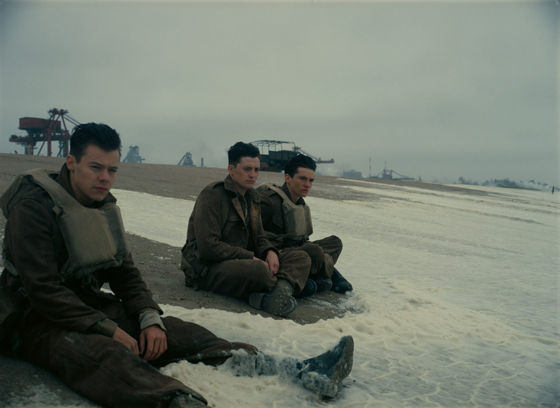
Late spring 1940. The Wehrmacht’s troops took the French port of Dunkirk into the ring, and it is compressed every hour. Belgium capitulates, the French are fighting off with the frenzy of the doomed and morally decompose (they have their own film with Belmondo “Whikend on the ocean” (1964)), the British are preparing for evacuation - Churchill foresees that they will soon have to protect their own island. The British units are waiting for sending to the DUVR, having placed on the beach, but the large ships do not approach the shore in shallow water, the beach continuously ironic artillery, and German messemitts circle over the sea, like vultures, and all living things are heated.
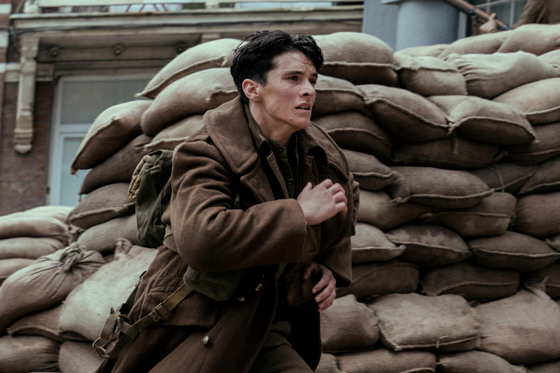
The curtain of darkness grows and grows stronger. In a deserted city, blocked by the barricades, a young British soldier runs under continuous shelling - not a character even, but a symbol, function, sign whose “survival”. The same doomed Frenchmen take refuge behind the barricade, one of them, scanning, escorts the running Englishman with a contemptuous “Orea!”
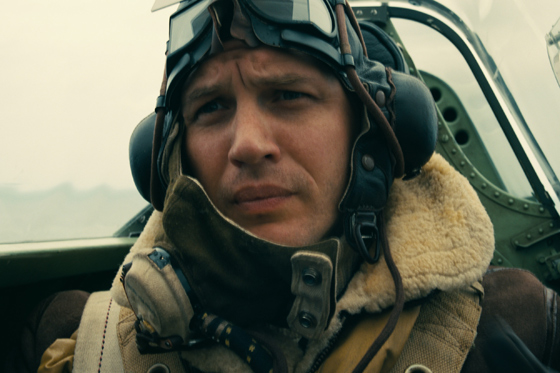
The British soldier (Fionn Whitehead) will try to escape by hook or by crook-to bury in the sand, crawl out from under the shelling, trying to climb onto the ship, where only the wounded are loaded, get out of the hold to the bottom of the trag, sinking and emerging again. A certain angry force constantly throws him back, checking for strength-the plot with a “running person” is played out of Nolan, and if you could stick to this character with a soul, identify with his fear and will to life ... But no, Nolan has stolen the five more functions of the same functions, and one soul will not be enough to love them all, and there is no time for it, and there is no time for it and not for this. Allotted. This is a villain (Harry Stiles), who saves his skin at all costs, a wise old sailor (Mark Raylens), a courageous officer (Kenneth Bran), a heroic pilot (Tom Hardy) and who lost the will of the soldiers (Killian Murphy). Some kind of dramaturgy of the screen action suggests that the hero changes throughout the film and leaves the frame in the final not quite what he entered at the beginning-otherwise what was the story about? There is nothing like this here. Each character is only a derivative of the actions performed, a stroke, devoid of individual traits, development, biography, none of them throws shadows into the sand.
 © Warner Bros.
A miracle will occur in Dunkirka due to a combination of historical circumstances: Goering promises to defeat the Luftwaffe with the British army, and Hitler will stop the tanks on the approaches to the city. Churchill will operation Dynamo - saving the military destroyers for the future defense of Britain, mobilizes small civilian vessels to help them. In total, more than 300 thousand military people, including French and Belgians, are evacuated from Dunkirk - the latter is important in the context of the film of Nolan, where the Frenchman, dumbfounded with horror, try to shove off the saving ship. This is a subtle moment: the French defended themselves on their land and left the Dunkirk last, later German propaganda will trim that the British allegedly “abandoned the allies” - no, did not abandon, but Nolan considered it necessary to highlight this story.
But in general, the director Nolan, telling this story, seems to have been not confident in himself for once. The sign of this uncertainty is not silent for a minute the soundtrack Hans Zimmer. With such an annoying sound, failures are usually masked in dramaturgy and sagging the plot. Why did Nolan need this, in which the film rushes forward, not slowing down for a second, like a frantic bus from the film “Speed” (one of the sources of inspiration for Dunkirk) is not quite understandable. The Hollywood mastodont of the sound of Zimmer did not receive an academic musical education, but it is unlikely that he is unknown one of the key techniques of Wagner - to injure the tension of the musical theme, preventing it from being resolved with a harmonious code for a long time. Zimmer abuses this technique in full - simply put, pulls the veins. Apparently, not trusting the current viewer in terms of the ability to empathy, both-Nolan and Zimmer-prefer to philosophize with a hammer.
 © Warner Bros.
It is curious to compare the Nolanovsky Dunkirk with the film of the same name by the oldest British studio "Iling", released in 1958. There are two main characters: the conscientious journalist Forman - in the rear, he is trying to convince the civilians that the war in Europe has ceased to be "strange" ( Phonyy War ) and turned into the present, and Corporal Bins (John Mills), who, after the death of the senior officer, leads his small detachment from the encirclement straight to the terrible and saving beach of Dunkirk. Forman is one of those civilians who come to the aid of the soldiers, equipping a boat for their salvation. Here the thought sounding in the finale is curious. For the time being, fragmented citizens of one country - quiet inhabitants who are not a terrible position of the strangers fighting on the other side of the strait, and the soldiers who die on the beach of Dunkirk - become a single nation after the Dunkirk operation.
 © Warner Bros.
Nolan, this old film, of course, knows, cannot but know. But he does not recognize his influence on his own, calling, among the sources of inspiration, another military cinema with John Mills - “Daughter of Ryan”. What is his new film about, what a noble message in him is contained instead of the idea of unity of the nation? And it is quite simple: to survive in such an hell of a meat grinder is already heroism. And here you can’t argue. Each one -dimensional hero of the Nolanovsky “Dunkirk” is invested in the mouth appropriate punchline, a shock phrase. The heroic senior officer who does not leave the mall, at the sight of the "small ships of the Dunker" who came to the aid of the military, says: "This is the homeland!" - And in the final, he says: “I remain to help the French” (a worthy answer to the long -standing contemptive “OREVAR”). The old sailor, who risks life under the shelling of the sake of saving the military, drops an even more valuable thought: "My peers untied this war, and now the boys are pushed for us." And, finally, a notebook, trying to shove off the Frenchman’s ship and saved himself, at the sight of civilians who meet a train with evacuated soldiers, says: “They will spit in our face.” They will not. Because after a miraculous salvation, the next fight is coming. In Nolan, this thought is also felt, but barely, he pedals to another: heroism is already concluded in the survival itself. This is a suitable ideology for a computer game, which looks like his movie: a functional-function should pass the proper number of levels in order to survive, using different strategies for this. Is it a good movie? Perhaps excellent. If you place it in the corresponding niche, closer to computer shooters.