
Translated material
Dmitry Bykov and a streaming stream method
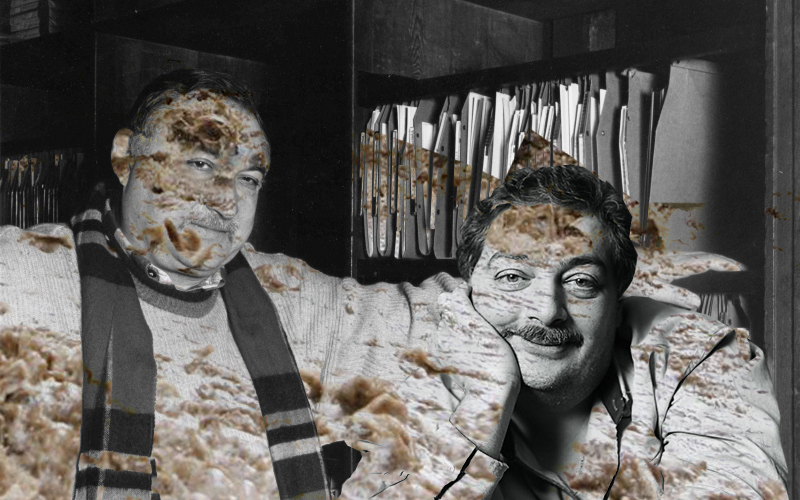
The writer, poet, publicist, critic, journalist, literary critic, television and radio host, teacher, lecturer- all this is he, multifaceted Dmitry Bykov. And all the faces shine brightly and shimmerly shimmering - this is the nature of his great talent and indefatigable temperament. His erudition causes respect, or even envy. Hardwork is amazing - new texts appear almost every day, and no signs of fatigue are visible. He is famous, and rightfully - thousands know and love him, if not millions, readers, spectators and listeners. Even colleagues-writers (a rare case!) Will favor his work: he is a laureate of many literary awards, among which the main ones are the “national bestseller” (twice) and “Big Book”. Moreover, he is also a politician - he was a member of the opposition coordination council. In a word, it is a whole phenomenon - let's call it dB - an inexhaustible stormy stream in the vastness of Russian culture.
But this stream, alas, is a nonsense. Otherwise, however, it cannot be. The depth of the flow, as the school textbook of physics teaches, the less, the larger its surface, that is, in the case of DB, the larger the number of reasons that are used for self -expression. The choice is great - from the poetry of courteous mannerism to fantastic prose, from popular literary criticism to political feuilletons in verses. If the flow ceased to expand, its depth, perhaps, would have increased; But the trends in self -restraint in DB are not yet noticeable. On the contrary, he constantly masters new areas - for example, lectures on Russian literature at American universities. Which, of course, brings him even more - and quite well -deserved - fame.
It would seem that everything is fine: the books of DB are coming out and buying off, lectures are read, viewers are looking, listeners listen, poetic feuilletons mix the audience and diverge on the Internet - what, in fact, is the problem? Just think - the flow is small. But wide, but more/wider - this is better, right? Doesn't the amount go into quality anymore?
An attempt to object to this point of view “as a whole” will be too general, which means unconvincing. Instead, we’ll try to figure out on a private example why the streaming flow method sometimes fails. Poetry, prose and in general art should not touch - here all opinions are equal: who like the watermelon, and to whom the pork is cartilage. But in literary criticism-whatever is, and science-a more or less objective discussion is still possible. Therefore, we turn to the literary activities of DB, and even more specifically - to his judgments about the writer Friedrich Gorenstein.
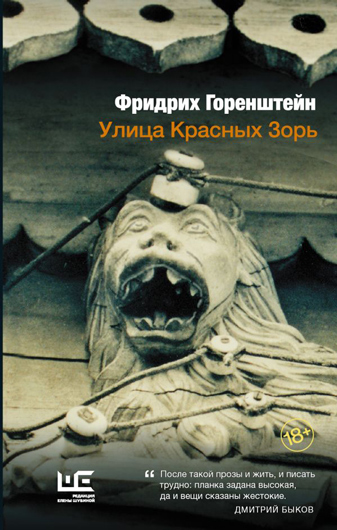 © Elena Shubina editors
The literary fate of Friedrich Gorenstein (1932, Kyiv - 2002, Berlin) developed so that in the USSR he was little known: only one of his story - “House with a Tower” - published “Youth” in 1964. All other works (among them - two large novels “Place” and “Psalm”), under the Soviet regime, remained lying under the back. The exception was the story "Steps", given to them to the unquested almanac of 1979 "Metropol". But he successfully worked in the cinema: he wrote for Andrei Tarkovsky the script of the film "Solaris", and for Nikita Mikhalkov - the film "Slave of Love". Since 1980, Gorenstein lived in Germany; His books were published in Russian in emigrant magazines and publishers and-repeatedly-in German, French and English translations. In the early nineties in Russia, Gorenstein was finally released, and his works appeared on the pages of Russian magazines. Then several theaters staged his play of the "Detaibus". Then Gorenstein in Russia was again forgotten (two or three publications did not count), and only twenty years later his return began: eight large books of prose, three films on his works (“near the river” and “House with a Tower”), performances of the plays “Berdichev”, Volmirir and theatrical staging on the house with the house with the house with the house with the house were released. tower ". The work of Friedrich Gorenstein became the subject of literary research in Russia and abroad - in Germany, the USA (including the author of these lines), France, Switzerland, Hungary, Poland, Latvia. He is recognized by many of the last Russian writer of the last third of the twentieth century; Some connoisseurs put Gorenstein a member of Dostoevsky, Chekhov and Bunin.
Gorenstein and DB are greatly respected: “He is one of many who very strongly influenced the system of phrases, especially the“ excuse ”. Thank God that no one notices this, because few people read Gorenstein. ” This statement dates back to 2015, when Gorenstein has already begun to read in Russia. Since then, there has been not so much about Gorenstein DB (or said on the air). These are mainly fragments of the “One” program on the Radio “Echo of Moscow” (the mini-lecture “Gorenstein. Punishment of mankind”) and the preface to the newly released collection “Reds Street” (M., AST, Elena Shubina, 2017).
As adopted, the DB begins with the writer’s biography: “... Gorenstein was taken from the father, arrested, his mother died on the way to the evacuation, he lived with strangers, worked as an engineer at the mine or the lifter. He was able to engage in literature more or less professionally from the age of 4. ” The listener believes the narrator unconditionally; Meanwhile, Gorenstein's mother died not on the way to evacuation; He did not live with a teenager with strangers, but with his mother’s sisters; After working at the mine, Frederick worked as a foreman, and not a fellow; The story “House with a turret” was printed when the writer was 32 years old. (Subsequently, in the preface, DB nevertheless clarified: “... Mother, director of the orphanage, died in 1943 on the road from evacuation.” ) Of course, these are trifles, but they are characteristic of the method discussed-the stream is running, and there are simply no time to check the details.
Or still little things that are no longer a biography, but to bibliography. DB reports: “... He made his debut in the underground literature, in Samizdat with the huge novel of 1974“ Place ”,” but Gorenstein never gave anything to Samizdat, he generally showed few manuscripts, which is, in particular, legends about his inferenianess, also picked up by DB later. Gorenstein DB tells his listeners about other works: “... a cycle of stories written in Soviet times:“ with a wallet ”,“ spark ”... He has a very good story (forgot what it is called) about the elderly mother and daughter. In my opinion, “old women” ... Yes, “old women” is called that. “Champagne with bile”, “Last summer on the Volga”, “Yakov Porridge”, “Steps” and generally all the stories and novels of Gorenstein of the 70s-early 80s. ” The names are true, and the dating is correct (except for the “old women” - this is 1964), but all of the above was written at least formally and in Soviet times , but already in exile, in Berlin, at large; And such a circumstance, you see, changes literary accents. But this is just annoying reservations, isn't it?
Let's go further-see how DB reads the text of Gorenstein “Chok-Cchok”: “There is really such an accurate metaphor that when a teenager peeps for copulating parents, he sees something dirty, disgusting, something like a champing meat.” The metaphor is quite Freudian, and if such a scene existed, the line of the teenage character (and he is the main character of the story) would be, it must be assumed, at least partially based on the reminiscences of the Oedipus complex-Gorenstein would not miss this opportunity. But in fact, a teenager Seryozha accidentally sees the intercourse of half -digit people, and, accordingly, his further perception of sexual problems with the image of parents is in no way connected. On the part of the literary critic, such negligence is no longer a trifle - it can significantly distort the idea of the story. (By the way, in the preface to the collection-and the “chok-chok” includes it-about the “metaphor” of no sound.)
The novel "Psalm", as DB correctly notes, is a key in Gorenstein's work. But here is how he is interpreted: “The world of Gorenstein is hell. In this world, the Dan, Aspid, Antichrist from his novel “Psalm” rules. This is a punisher. The punisher walks on the ground, and punishes humanity, and destroys everything in its path. ” That hell is permissible; That in this hell is the Dan-Antihrist rules-with difficulty, but it may seem like that. But a given punisher?
Dan, the brother of Jesus, sent by the Lord to Russia, subject to the executions of the Lord, not to judge (although his name means “judge”), but to bring salvation to persecuted, persecuted. He is struggling to remain an observer and intervenes in the affairs of people only when he cannot restrain himself. The unnamed anti -Semite from the city of Rzhev slides and breaks the head; Two bears who came out of the forest stop the rapist Pavlov - from fright, he becomes impotent; The German security company, rushing at Dana at the station near the village of Brusyan, is emanating with a bloody diarrhea - here, perhaps, all the punishments that the Dan imposed on humanity, destroying everything in its path . Full, did DB read the novel? Or was there once again?
Hurry and negligence are punishable in any science, even in literary criticism, since they often lead to dubious conclusions - especially if they are supported by gullibility. This is how it turns out. Many years ago, in one literary company, DB showed a mask of Gorenstein, interrupted from papier-mash: “Everyone laughed and slammed: for sure! The “Paper Gorenstein” had a grown expression and even, perhaps, evil, but at the same time mournful, almost imploring. ” Earlier, DB did not know how the writer looks, and the exaggerated image was preserved in memory - after all, others confirmed: for sure. He also believed the stories (gossip?) That Gorenstein “... was an unpleasant person, unpleasant even physically. The repulsive was his manner, to say, his aggression, his terrible resentment. " In addition, Gorenstein was an orphan, and, according to DB, “one should not think that orphans are necessarily poor and kind. They are predatory, otherwise they cannot survive; They are memorable and vengeful ... ” Such an associative row-a grimacy, unpleasant, touchy, predatory, vengeful-naturally leads to a very unflattering characteristic of the Gorenstein-House: “ In the gorenstein, too, this eternal complex of unsatisfied patient of vanity, ambitions, the desire to be “one of”, which was one of the, was so unbearable in the case. communication " . And when this is established, you can proceed to the characterization of Gorenstein-writer: “Gorenstein is a person from nowhere, and his biography-with external standard-is atypical. All his life he existed not only outside the generation, outside of any institutions, but also outside the Russian literary tradition, which is commonly called humanistic ... "
Here I must say that Gorenstein really stated: “My position is certainly different from the position of humanists. I believe that the basis of a person is not good, but evil. The basis of a person, despite God's plan, lies satanosis, devilry, and therefore it is necessary to make such great efforts to keep a person from evil . ” However, such a view cannot be considered completely contradictory traditions of Russian literature. Isn't it more than good than good in Hermann, or in Arbenin (and in Pechorin), or in Gorodnich, or in Petrush Verkhovensky with Stavrogin, or in the characters of the “foundation pit” and “Konarmia”? Their creators loves one of these characters, someone does not-but they all continue to live in Russian classical literature because writers-from Pushkin to Babel-do not consider them from the outside, but reincarnate in them. This tradition Gorenstein just continues. “I am as given to the same extent as the girl Sasha in“ Atonement ”. <...> This is a reincarnation. At the same time, I disappear as a person, ”he said about his heroes.
Hurry and negligence are punishable in any science, even in literary criticism, since they often lead to dubious conclusions - especially if they are supported by gullibility.
But the method of stormy stream continues to refuse Frederick Gorenstein in the literary genealogy: “It is difficult to answer at all who influenced him, he is like a writer without a root, without a predecessor, because no one was in his place and went through his hellish circles; Perhaps he, along with Okudzhava - whose predecessors are also not obvious - could call his teacher folklore. " About Okudzhava is not talking about now; As for Gorenstein's predecessors, it is truly surprising that DB did not notice at least two - Chekhov and Dostoevsky. Gorenstein has an early essay “My Chekhov Autumn and Winter of 1968”, in which he writes: “... Chekhov never allowed himself to sacrifice the truth, albeit in the name of the desired and beloved, because he had courage to the forbidden, to not want to take his heart and refused to understand the mind.” The same observation is true in relation to Gorenstein's own work; Already one it could reveal a close connection between the two writers and even a certain dependence of the writer Gorenstein on the writer Chekhov. It could - but for this you need to stop and think, and the stream needs to run on.
The influence of Dostoevsky on Gorenstein was written so often - Efim Etkind, Vyach. Sun. Ivanov, Georges Niva, Leo Anninsky and others - that this statement can already be considered a common place. Gorenstein himself called Fedor Mikhailovich his “opponent” and wrote a whole play “Disputes about Dostoevsky”, where a certain literary critic is trying to defend the dissertation about Dostoevsky’s atheism. The play knows this DB and notes about it: “Worse, in my opinion” (compared to other Gorenstein plays), but he does not say a word about the continuity between Dostoevsky and Gorenstein. It is enough, however, to compare the exclamation of the great inquisitor addressed to Christ - “Why did you come to interfere with us? For you came to interfere with us and you know this yourself ” - and the phrase from the novel“ Psalm ” -“ So the plot of the apostles against Christ turned into a conspiracy of Christianity against Christ ”in order to at least suspect this continuity.
For Dostoevsky, the Gospel was the main book in the Bible; For Gorenstein, apparently, the Old Testament. He said in an interview: “... I have been reading the Bible for a long time, I read it carefully and learn a lot from her: not only style, but also that merciless courage in revealing human vices and self -expression, in self -expression. There is no such courage in any folklore. In part, because the folklore of the Jewish people has become a Bible, I think. ” Whether this folklore had in mind DB and whether he knew about this recognition of Gorenstein is unknown; But in his dictionary, the adjective “Old Testament” has a definitely negative connotation: “Gorenstein is a man of the Old Testament, cruel, vengeful consciousness, but this is the dilapidability without the homeland, without roots; He is a doomed and lonely representative of the great tribe, a lawyer and a prophet worn by the wind, a Jew after the Holocaust and after Soviet experience, a Black-Eastern Jew, a guest of dormitories, a Jewish-living man. ” And from here it’s not far from another stigma: “Friedrich Gorenstein also most sincerely believed that all Russians are secret anti -Semites, and the Jew living in Russia gives the blood of the patriarchs, in it the current one.” Comments on this conclusion, we must hope, be too.
But about the guests of the hostels and others - small and flawed people - will have to talk. Russian life, described by Gorenstein, is especially post -war - difficult and sometimes disgusting. The mother of Sasha’s girl is forced to steal products to feed this girl, and carries them through the entrance, hidden in boots. The “food old woman” by Avdotyushka sees the whole meaning of life in the running running around in search of “what to throw away today” - in lines she is pushed, offended, and beat (the story “with a wallet”). The guest of the hostel Gosha Zvibyshev from the novel “Place” ( “This is a disgusting character,” DB believes) even the cat, consisting of a watchman. People live very difficult - hungry, dirty, uncomfortable, they are humiliated and offended no less than Dostoevsky’s heroes. And Gorenstein, like Dostoevsky, pity his heroes and sympathizes with him (recall - he transforms in them); True, unlike Dostoevsky, he does not forgive them sins without atonement.
But for DB (as before for Victor Erofeev), a description of life obscures the characters of people, and it seems not to be repulsive, but the people themselves: “... there is a rather disgusting old woman who, who with this wallet (Gorenstein is generally a great master in the description of the disgusting) walks and will bite a piece of the ball there, there-fish, there are eggs, curds. <...> Look with what kind of disgust these bugs are described there, which crawl along Sasha, this smelly disabled person who has become a disabled person, who is a good person, but how disgusting everyone there! A mother who pulls some food, taking it out of the food base. That is, Gorenstein’s disgust to the flesh of the world and, in general, to everything material, simply does not know the boundaries. And I think that it was his aversion to himself. "
Such a misunderstanding can no longer be explained by negligence or inattention to the details - no, the trouble is that the stream is not a shallow. In the proposed interpretation of Gorenstein’s work, the main component is not enough - sympathy for his heroes. The literary critic, of course, has the right to such an approach; но тогда он обречен видеть мир Горенштейна не изнутри, а только снаружи. Да, ДБ, как и большинству писателей и читателей его поколения, не пришлось, по счастью, ни голодать, ни мерзнуть в шахте или в строительном котловане, ни унижаться перед холуями начальства за койко-место. Но ведь и читатели Достоевского сами не носили кандалы в Мертвом доме и не отправляли своих дочерей на панель — и все же они были способны сочувствовать несчастьям людей, изображенных писателем. «Писать очень трудно», — говорили когда-то друг другу Серапионовы братья; читать, особенно таких писателей, как Горенштейн или Достоевский, тоже нелегко. Как честно признается ДБ, «Аксёнова читать и перечитывать приятно, а Горенштейна — нет» . Что ж, и это его право. Еще и времени, как всегда, не хватает — а Горенштейна нужно читать медленно.
В результате портрет Фридриха Горенштейна, нарисованный методом бурного потока, выглядит так: человек, неприятный даже физически, с комплексом неудовлетворенного тщеславия; писатель без рода без племени в русской литературе и в самой России; отрицатель гуманизма; любитель описывать омерзительную плоть мира; брезгливый человеконенавистник; но зато писатель, по изобразительной силе не имеющий себе равных в поколении . Этот портрет нельзя даже назвать карикатурой — скорее, он напоминает описание той самой шутовской маски, виденной однажды в литературных гостях.
Разумеется, любой литературовед или литературный критик имеет полное право воссоздать образ писателя так, как он его видит. Горенштейн в статьях, скажем, Вяч. Sun. Иванова не похож на Горенштейна в работах Льва Аннинского или Корин Амашер, и невозможно сказать, какой из них «более правильный», — каждый автор приводит убедительные доводы в пользу своей точки зрения. Но в том-то и дело, что у метода бурного потока таких доводов нет, а те, которые есть, недостоверны в силу слишком уж поверхностного и поспешного знакомства с предметом. Этого недостаточно даже для того, чтобы судить о писателях теперешних — не будем называть имен, — не говоря уже о Горенштейне.
Пятьдесят лет тому назад, как раз в год рождения Дмитрия Быкова, на шестнадцатой странице «Литературной газеты» начал печататься «роман века» — слегка завуалированная насмешка над изделиями литературы соцреализма. Назывался он «Бурный поток» и пользовался огромной популярностью среди творческой интеллигенции. Тот «Бурный поток» был пародией; нынешний поток как метод литературоведческого исследования, похоже, воспринимается всерьез. В случае Фридриха Горенштейна он явно не сработал.