
Translated material
Horseman Gustav Mannerheim
The Sunday evening, turning on a white night, in the kitchen I am sweepingly gesticulating-I retell the impressions of the “Mannerheim line”-a documentary study by Eleanor Ioffe, the biography of the Finnish marshal, reprinted a month ago to its 150th birthday. I turn off the light, a layering candlestick remains on the table.
- Nast, tell me honestly, is this a spiritual session? Will Mannerheim fly now?
- In vain you laugh. It seems to me that Mannerheim - the figure is larger than Lenin and Stalin.
- I would not say that. At least on the basis of how many Stalin molested ...
- And I do not think that the scale of the personality is measured by the number of diluted people. Or how much a man is a tyrant and tyrant.
The figure of Gustav Mannerheim is convenient and deftly bypassed as part of the school program on history. Especially if it is limited by the history of Russia, which, as Vladimir Medinsky recorded, is “subjective and mediated” and composed “in interests”. Only preparing for the profile Olympiad in the seventh grade, I suddenly noticed how many threads of the 20th century were connected with this long -liver of the military and political arena. Even then, intuition suggested that you can compile a puzzle for centuries only by looking out of the comfort zone - outside the covers of school textbooks.
Mannerheima is known mainly in the context of the Mannerheim Line-defensive structures on the Soviet-Finnish border, which the Red Army barely overcame in the winter war. That is, it was not customary to scold or praise in domestic textbooks - it was simply such a white Finnish officer who was able to repulse the Russian army. But this is because he himself served in it under the king. And a high school student must feel a bit of pride in the empire, and a little longing, and Mikhalkov’s sentimentality “threw Russia-s”. More acutely in Mannerheim react in the north-west, in Karelia, and even more so in their native Finland. The main street of Helsinki is named after Mannerheim, in the same place - a peppy horse monument to Marshal. A middle -aged, a tightened mustachioed man in a earflaps on a dense, like plasticine, horse. True, the inconsistent red Finland still makes itself felt by provocations, but officially Mannerheim is a national hero. In Russia, of course, everything is ambiguous, and with our pace of rewriting history, it is difficult to develop a “official” position on a person whose activities extend for more than 50 years and covers the most important pain points of historiographers.
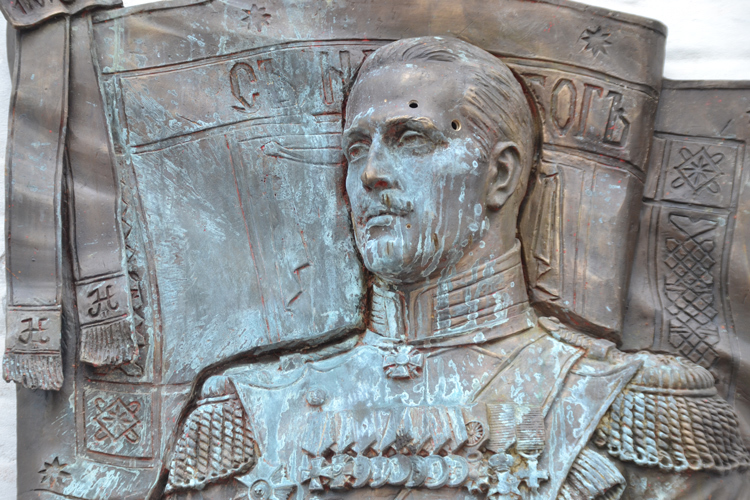
Therefore, it is unclear how the Russian monument to Mannerheim should look (and whether we need it). In the summer of 2016, they tried to establish a memorable sign from the submission of the Russian Military Historical Society in St. Petersburg on Zakharyevskaya Street. Before the revolution in the building, there was a regimental church of the Holy Zachariah and Elizabeth of the Life Guards of the Cavalier Guard Her Majesty Empress Maria Fedorovna Regiment, where Mannerheim served. The board was opened by Vladimir Medinsky (head of the RVIO), the head of the presidential administration Sergey Ivanov, the former head of the CEC Vladimir Churov and the vice-governor of the northern capital. Many people notice the glaring inaccuracy: the monument states that Gustav Karlovich (Russified version of the name) served in the Russian army until 1918. But in 1918, the active baron was already fought with red compatriots.
A high school student must feel a bit of pride in the empire, and a little longing, and Mikhalkov’s sentimentality “sprinkled Russia-s”.
The board was officially motivated by the merits of the “Russian” period of Mannerheim. But, as historians rightly note, there were many generals in the tsarist army, like those who distinguished themselves in the First World War. You won’t attack all the boards. The monument on Zakharyevskaya was watered with paint and acid, chopped with an ax, for some reason they even shot at the marshal. The indignant comments came down to the following fact: the Finnish troops under the command of Mannerheim in the Great Patriotic War were part of the blockade ring. Replicas sounded in defense of the board and Marshal that the Finns did not fire Leningrad, and the Soviet-Finnish war with the rejection of 10% of the Finnish lands provoked insidious Moscow. As a result, the October night was removed from the eye - to Tsarskoye Selo, to the Museum of the First World War.
The author of the Mannerheim Lines Eleanor Ioffe, in response to my question about the feasibility of the monument, said: “I will answer the question: why should Mannerheim’s name should be perpetuated in Russia? When he was his Russian military, general of the tsarist army, he was not an outstanding military leader, but simply well fulfilled his duty to the military. There were dozens of people like him in the Russian army - then it is necessary to perpetuate the names of many generals. I don’t know if there are monuments or memorial boards of generals Alekseev, Denikin, Kornilov, Wrangel-and many, many others who participated in the First World War and then tried to stop the course of events and defend the former, pre-war Russia, which was close to Mannerheim. ”
And here it is time to clarify. The offspring of the impoverished Finnish branch of the Swedish Baron clan Mannerheim went to the Russian army. Only there were prospects to build a career and get financial independence relatively soon. Little and proud Finland autonomy did not give prospects. The Great Mannerheim family, of course, was worried that Gustav could have a broth, especially when he married Anastasia Arapova, a wealthy girl from the military family. From the side it seems that the fears of relatives came true - in the fall of 1917, Mannerheim returned to his native Finland with a convinced monarchist, a tough white general with imperial thinking and a supporter of strong power. But one cannot but notice that the Finnish cadet organically joined the tsarist army, that the imperial system did not have to “break” a foreigner at all and in general she needed such people. In turn, Mannerheim sincerely attracted the scale and self -sufficiency of Russia, which could never be among little Finland. And he knew exactly what to do in order to prevent the revolution in the Russian scenario in the homeland of the revolution. In May 1918, Mannerheim in the status of the regent already took the Belofinn Victory Parade, having dealt with the Red Forces in a few months. But back to the glorified military-historical society of the "Russian" period. Until the fall of 1917, Gustav Mannerheim was in the rank of Svitian general of the Russian army. A participant in several wars, co-author of the Brusilovsky breakthrough, in the summer of 1917, a 50-year-old general was traveling from the front to Odessa to treat a knee injury.
Museum employees admit that the exhibit is most of interest to groups from St. Petersburg and Finland, and Finns excites the ideological moment.
And this is what episode this vague period decorates. After some time, Mannerheim receives the news that he was sent to the reserve “on political”. In letters to his relatives, he somewhat ironically adds that for six months he has not felt “suitable”. Therefore, he decides to wait for official papers, and then go to Petrograd to submit an application for leaving the Russian army to the General Staff. In the fall of 1917, Mannerheim by train got from Odessa to the capital for a week. It was not possible to find a decent civilian costume (all and everyone’s strikes, including haberdashers), and Gustav Mannerheim goes through the country covered by the revolution in the uniform of the Svitsky general. The title of General Svita gave the right to enter the imperial palace and a number of useless privileges. The imperial monogram flaunted in such an approximate person, that in the fall of 1917 on the railway was, to put it mildly, risky. The officers on the way usually torn epaulets, and the fact that the tsarist general was traveling with a full parade speaks not about the bulk dare or the desperate courage of Mannerheim. Such romantic gestures are not about him at all. This is, firstly, a giant endurance (in March of that year, Mannerheim, being a short-lived vacation in the capital, believed that in Petrograd it was quite calm, and was happy that he managed to get tickets to the Mariinsky Theater), and secondly, absolute self-confidence. Not self-confidence, but a calculation that a professional military man with 30 years will outplay “comrades”. So it, in general, happened. Already realizing that in Finland the civil war is also brewing, Mannerheim once again goes to Petrograd - supposedly to find out if everything is completely lost. Perhaps this episode could be read as a sentimental impulse in the Russian spirit, but we will leave it to a military-historical society. We only note that Mannerheim retained some kind of affection for the lifestyle and culture of tsarist Russia and even to St. Petersburg society until old age.
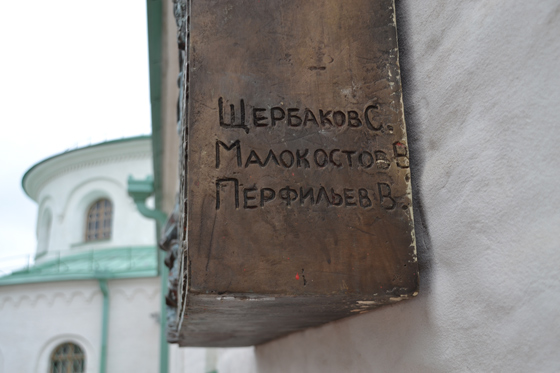
I’m going to look at Mannerheim’s board in Tsarskoye Selo - there, behind the Alexander Palace, sideways from crowds of tourists, there is a white -stone military chamber, the Museum of the First World War. The monument was moved here for obvious reasons - in the context of the First World War, Bronze Mannerheim is quite logical. The board hangs fortiously in the yard, on metal - scratches from blows, traces of acid etching, on the forehead of the marshal - a bullet “wound”. Museum employees admit that the exhibit is most of interest to groups from St. Petersburg and Finland, and Finns excites the ideological moment. They ask in what light Mannerheim is presented to Russian tourists. Moreover, Finnish journalists call the museum with the question of how many guests from Finland were interested in the board. “Now there is practically no disputes,” says Nikolai Onoprienko, the keeper of the Russia in the Great War. - The board is located in a museum dedicated to the First World War, it is here as an exhibit, not a city monument. As for the restoration, this is a modern work performed as a memorable sign for installation in the city. This is an exhibit with the traces of the incidents that he survived. We keep the board in the form in which it received it. After all, there are other controversial characters of the First World War, not only Mannerheim. In addition, this board is in its place. Mannerheim served for many years at the stable department, having two state -owned apartments: one in St. Petersburg, the other here, here in Tsarskoye Selo, where there was a constant residence of the imperial family since 1905. He lived here not far, and we are almost sure that he saw this building. When handed over the board, this was taken into account. There were no attempts to provocation here in the museum. And, I hope, there will be no. "
What would you look like an actual, not provocative memorial sign to Gustav Mannerheim in Russia? The board, shockingly “lit up” in the center of St. Petersburg and discredited the authors with incorrect dating, will go away as a museum exhibit, but is unacceptable in the urban environment. The grandfather of the St. Petersburg sculptor Pavel Ignatiev Patvakan Grigoryants was almost the only artist who sketched the Mannerheim line during the Winter War, Vyborg immediately after joining the USSR in May 1940 and the sea base in Khanko. His graphics are exhibited in Finland. Pavel himself is the author of a number of key modern monuments in the city. “The history of the winter war is close and familiar to me. And I think that Mannerheim does not need any monument in our usual sense - on a horse, in an overcoat, or there is a thoughtful coat, ”Paul believes. - Simply text signs. If some artist arises by itself, without ordering, some beautiful image-for a good work you can always find a good place, and it can be anywhere: in the Montrepo Park in the area of the old Russian-Finnish border, in the ruins of the forte-as a sign of the meaninglessness of the First World War, at the Institute of Oriental Studies or somewhere else. Now, in the era of digital technologies, it may not necessarily be granite or bronze, or maybe on the contrary - it is granite and copper as archaic materials from “Kalevala”. ”
 © Anastasia Semenovich
By the way, about the old Russian-Finnish border. It is possible to feel the spirit of the place during a not quite legal, but desperately spectacular tour of the Ladoga sabers-the islands-scalars scattered through a deep, cold northern Ladoga. The local guide shows the distant Valaam and jokes on the topic of frequent visits of the first persons to the pilgrimage. All this northern luxury until 1944 remained with Finland, moreover, the Finns still consider Russian Karelia a little of their own. Here, for example, is the largest Karelian Lutheran Kirkh. At the beginning of the zero, a huge basil was burning, the roof collapsed. Finnish restorers quickly preserved the remaining ruins (the Russian side, of course, was doing nothing, trying to “divorce” neighbors for a full restoration). Not to mention the fact that in all tourist centers of Finland the colorful postcards “ VIIPURI , Finland ” are replicated with a border Vyborg and a castle tower called in Finnish.
- And here, look, you can see the remains of the Finnish borderPst. There was the border itself, the barracks, and this post was extreme. Valaam remained Soviet.
- Why is the post and barracks here? (On an inaccessible rock, away from the inhabited areas.)
- Why? If you put the guns here, in both directions there will be an excellent shot, two fairways on the sortaval can be kept. In general, if not for Mannerheim, Leningrad would not have been long ago. He went here and took his, Finnish land. It didn’t go further, no matter how Hitler asked him, ”the guide suddenly ends the story about the Finnish border guards. - Then even Stalin said that he would not be touched.
“Well, you know, he is such a figure that you are not very“ touched ”.
Indeed, since 1918, Mannerheim has repeatedly organized attempts. Knowing the intention of the White General to free Petrograd from the Bolsheviks and his ability to organize, the nascent Soviet government could not help him death. In one of the attempts, the communist with a manual bomb approached the baron at 10 meters, but did not abandon the explosives. “Lost self -control,” as the resident of the Special Department of the Cheka in Finland dated April 20, 1920 said in a statement of the resident [1] . At the same time, positions formally occupied by Gustav Mannerheim do not give ideas about the scale of this figure. About its breadth of thinking, far beyond the borders of the "small ultra -democratic Finland", as he himself ironically called his homeland in letters. By the way, the nobleman and holder of fair capital, Mannerheim, except for Finland, had no property and bank accounts. It seems that it was by virtue of the old -fashioned aristocratic education of Mannerheim that it was not able to accept Soviet Russia and was not deceived, as many Finns allowed themselves, about Hitler: “In the north, there are also all reasons for concern. The peoples of Europe strive to turn simply into white blacks serving the Third Reich ... Is it possible to imagine something more disgusting than the head of state traveling to Berlin and after a night interview of the surrendering the country and the people whose first servant he is. Or a nation that, without making a shot - even in the mentioned bandit, is submitting to such a decision. Starting from the World War I, I despised Chekhov, especially after they are for the gold of the Russian Empire - the very gold that was now transported to Berlin - they sold the commander in chief of Admiral Kolchak to the Bolsheviks. It is not their fate that is outraged, but the violence and the methods used. Here we were indignant at the Russian policies of oppression and were indignant at this, but they were only children's toys compared to Adolfus and its oversholic with meek henchmen. The end of the world is coming here ” [2] .
- Unfortunately, now it is not known what is better: Russia Bolshevik or New Russia: both will be equal to neighbors, especially small ones.
I have never been impressed by the "people of culture", spraying poison in the Minister of Medinsky. As they say, an ordinary minister is no better and no worse than others. Like everyone, in public speeches it imitates the manner of first -person speech. As adopted in our country, the profile minister is an undisguised and completely defenseless ignorance in matters in his direct competence. Ineptly reads the “signals”, broadcasts a parody of the “party line”. But for some reason this most ordinary minister began to publicly speak out about Gustav Mannerheim (whom he calls Karl. Karl, Karl!), Straightly mentioning both George IV degree, and the oath of Nicholas II, and the photograph of the emperor, always standing on the desktop of our hero. Either because Vladimir Putin once raised flowers to the Mannerheim Memorial in Helsinki, or why, Medinsky began to replicate opinions on the topic, provoking a sharp denial. To the Mannerheim, whom the minister tried to "sell", it is quite natural.
The official seems to want to squeeze out superficial sentiments from Russians in relation to Mannerheim, to which such emotions do not want to pester. In general, a positive view of the marshal among the conditional intelligentsia is often based on the statement that Russia still loved Russia. I am surprised to find a criterion of love or dislike for our country in the comments of the most respected specialists. That is, the question of whether or not the historical character in the Russian textbook will be, is decided on the basis of whether he loved Russia. And this approach no longer meets resistance, moreover, it seems natural. Здесь можно развести знатную демагогию на тему, кого еще под предлогом «нелюбви» можно вырезать из учебников, но оставим эту радость соцсетям. Куда важнее, что, пока «не любящих» Россию стирают со страниц истории отечества, его сыны не способны к адекватному самосознанию. Без крайностей в виде полного неприятия с навязчивой идеей эмиграции или, напротив, добровольного порабощения голубым экраном. Пресловутую матрицу все тот же Маннергейм емко очертил в 1919 году: «К сожалению, сейчас неизвестно, что лучше: Россия большевистская или новая Россия (возможное «белое» государство. — А.С .): обе будут равно неудобны соседям, особенно маленьким. Русские ничему не научились и ничего не забыли, несмотря на то, что они пережили, и я предвижу, что мы скоро должны будем считаться с Россией еще более империалистической и националистической, чем когда-либо, которая захочет соединить массы и заставить забыть внутренние неурядицы ради великой идеи реставрации старой Руси» [3] .
«В России, к сожалению, отсутствует традиция полемики — я имею в виду уважительное отношение к чужому мнению, способность выслушать противную сторону и вежливо изложить собственные аргументы. Не хватаясь за топор, — продолжает Элеонора Иоффе. — Несмотря на все его заслуги перед отечеством, о маршале Маннергейме не поют песен и не снимают художественных фильмов. Создавать себе кумиров вообще не в характере финнов. К тому же отношение к нему менялось на протяжении десятилетий в зависимости от политической ситуации в стране. В последнее время некоторые финские историки заново пересматривают биографию и деятельность Маннергейма и пишут не только о достижениях, но и об отрицательных сторонах личности и ошибках. Что касается “любви” маршала Маннергейма к России — он любил ту Россию, которая ушла. Он всю жизнь поддерживал отношения с русскими эмигрантами — однополчанами, бывшими подчиненными, светскими знакомыми. Помогал деньгами, протекциями, просто добрым словом. Для него Россия и Советская Россия были понятиями противоположными, как белое и черное».
Получается, вопрос о том, готовы ли мы принять Маннергейма в русло официальной истории, — это традиционная дилемма: оставаться ли историографии в коконе «своего пути» или принять как факт, что наша огромная страна не может не быть частью всеобщего исторического (экономического, социального) процесса. И многогранная, неоднозначная фигура Густава Маннергейма очень метко в этот глобальный ландшафт вписывается. С одной стороны, это сильная, по европейским меркам авторитарная, личность, каких хорошо принимает наша история. С другой стороны, Маннергейм, по сути, создал и сохранил независимое государство, которое имело наглость, простите, «подняться с колен» на виду у грозной империи. И министр Мединский ухитряется такого удачного русско-интернационального Густава Маннергейма впрячь в местечковую изоляционную риторику. Поневоле хочется и правда организовать спиритический сеанс.
[1] Э. Иоффе. Линии Маннергейма. Ed. Пушкинского фонда. — Санкт-Петербург, 2017. Стр. 215.
[2] Из письма Еве Маннергейм, возможно, 1939 г. Публикуется по: Э. Иоффе. Линии Маннергейма. Ed. Пушкинского фонда. — Санкт-Петербург, 2017. Стр. 292.
[3] Густав Маннергейм — Марии Любомирской, Париж, отель «Регина», 28 октября 1919 г. Публикуется по: Э. Иоффе. Линии Маннергейма. Ed. Пушкинского фонда. — Санкт-Петербург, 2017. Стр. 210.