
Translated material
In the State Duma commented on the deforestation "Vidov Park" in Volgograd - this is "falsification of history"
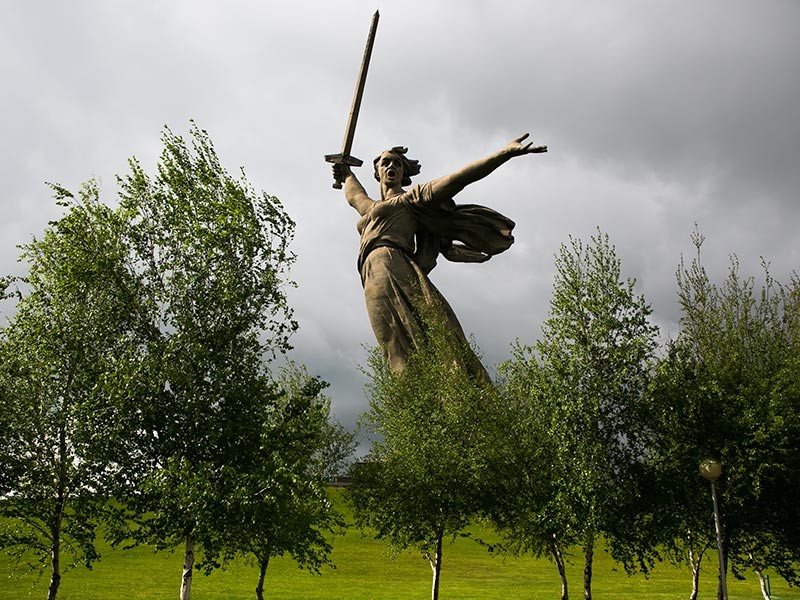
The State Duma commented on the situation with the cutting of the so -called "Widow Park" at Mamaev Kurgan in Volgograd. According to RIA Novosti , a member of the State Duma Committee on Housing Policy and Housing and Public Utilities Tatyana Tsybizova called the situation an example of falsification of history.
According to local media, the head of the region Andrei Bocharov ordered to cut down the park, partially updating it, and partially turning it into a parking lot. He called him an unpresentable appearance. Civil activists, including the head of the Volgograd regional branch of the All -Russian Society for the Protection of History and Culture Monuments Valery Kotelnikov, opposed the felling of the park and the construction of the parking lot, but their efforts did not lead to anything. The trees were destroyed by the morning of June 24. Heavy equipment is now working on this site.
The discontent of the activists caused not only the destruction of "memorial trees", but also the fact that the green array separated the residential zone of the Oktyabrsky district from the industrial zone and performed an environmental function.
The Widow Park, or the “Stalingrad Widow Park”, is the unofficial name for the park at the foot of Mamaev Kurgan, created before the opening of the memorial in 1965 (the memorial was opened in 1967). The first tree in this park was planted by an employee of a tractor factory named Plastic in honor of her husband, heroically who died during the defense of Stalingrad. Following her, in memory of the dead husbands, wives, sons, hundreds of citizens began to plant trees.
According to the director of the Stalingrad Battle museum in the Volgograd region, Alexei Vasin, not a single documentary certificate of the existence of the Widow Park is not even in the archives, and the territory that someone “called the park” is outside the watering zone and she has an “unsightly” species.
As Vladimir Sidorenko, deputy head of the Volgograd administration, explained to reporters, "this city territory did not receive due attention and care for many years, there was no watering water supply, and therefore most of the shrubs and trees dried up during the arid years."