
Translated material
United Russia science
Key news from the world of scientists in Russia: Academicians are scared by special services, and financing will be given to the Higher Party School

Preparations for the new school year have started in a peculiar way - several high -profile stories from the field of science and education came together. The first and, perhaps, the most amazing of them is that the Federation Council asks the FSB and the Prosecutor General’s Office to check the publishing activities of the Academy of Sciences for “transparency”-due to its inconsistency with “national interests”. Formally, the claims of Senator Viktor Kondrashin are related to the work of the Maik Publishing House Group “Science/Interperiodic”, which distribute the magazines of the Russian Academy of Sciences in English. Kondrashin states that the activities of the American company violate Russian laws on personal data and copyright. At the same time, we are talking about “putting things in order” in all the magazines of the Russian Academy of Sciences, having dealt with financing schemes.
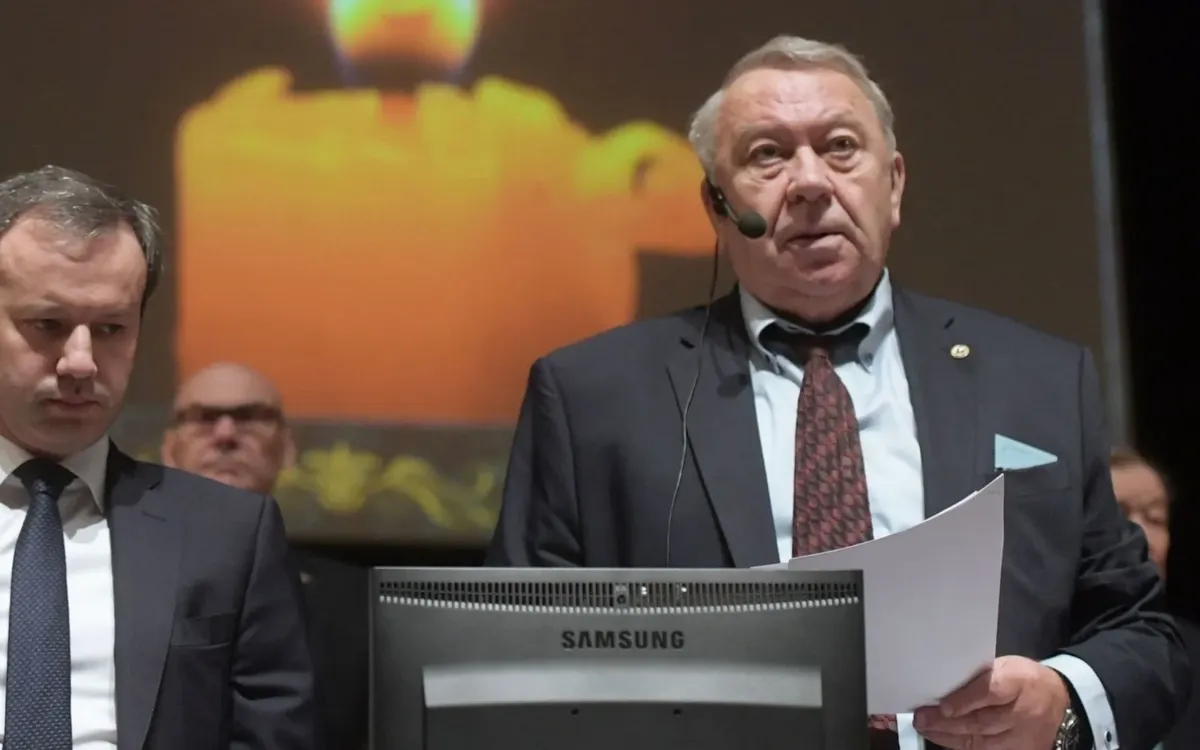
In case of accidental coincidence, Kondrashin’s acute interest in the scientific literature coincided with the end of the registration of candidates for the post of head of the Russian Academy of Sciences. The election of the head of the Academy of Sciences should be held on September 25, on the second attempt-the first vote in March was torn due to the self-discharge of candidates. Now there will be as many as seven names in the ballots, this is a record for the wounds. But the main contender for victory Vladimir Fortov, who acted as the president of the Academy of Sciences since 2013 and, according to rumors, “uncomfortable candidate” for the authorities, is no longer involved in the elections. In the absence of Fortov, the director of the Institute of Problems of Laser and Information Technologies, Vladislav Panchenko, is considered a favorite, who is considered close to the Kovalchuk brothers. In this light, Kondrashin’s patriotic initiative looks like an attempt to help academics make the right decision.
After all, as you know, at the sight of people in uniform coming with searches, even the most fundamental scientists become more conspiracy.
The second story is connected with the fate of the team of the Institute of Scientific Information on Social Sciences (INION), whose building burned out in early 2015 - together with part of one of the largest libraries in the country. While the former director of the Institute of Academician Yuri Pivovarov is under two criminal cases, his employees received an order to leave the building of the former Academy of Agricultural Sciences within a week, where they were located after a fire. The official reason for eviction is an emergency state and the need for repair. At the same time, the instructions received by the team from Fano do not say anything about where to evict - the remains of the institute are evicted to the void.
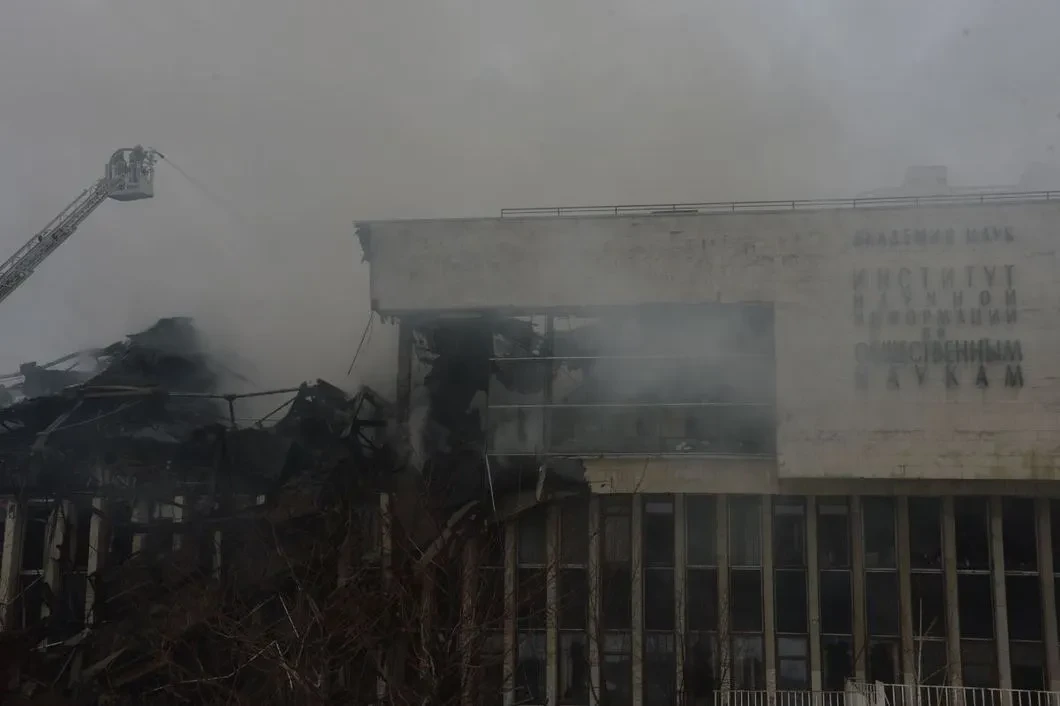
The fate of the burnt building, meanwhile, develops more well - in June, the chief architect of Moscow Sergey Kuznetsov stated that it would be restored with the preservation of the external appearance and the use of a cage made of monolithic reinforced concrete. True, who gets a restored building is unclear.
But there is no need to think that education and science in Russia are cheating. There are obvious successes, growth points. For example, the party project of the University University, presented by the party chairman Dmitry Medvedev in March of this year and led by deputy Vyacheslav Nikonov, was recently turned into a full -fledged training center, which will issue state diplomas. Demand will be high, party members believe, so over time it will be possible to think about commercial programs. Although the scope of the training center on the basis of the United Russia CEC building is not the same yet, observers are already comparing it with the highest party school that existed in the USSR.
However, these are only the first steps. You can not worry about the staff and leadership of the party school. For political information and agitation - in contrast to fundamental science - the authorities will always have money.