
Translated material
Saluable questions about 1937
What is a large terror? What were repressions for? Stalin personally gave orders for executions?
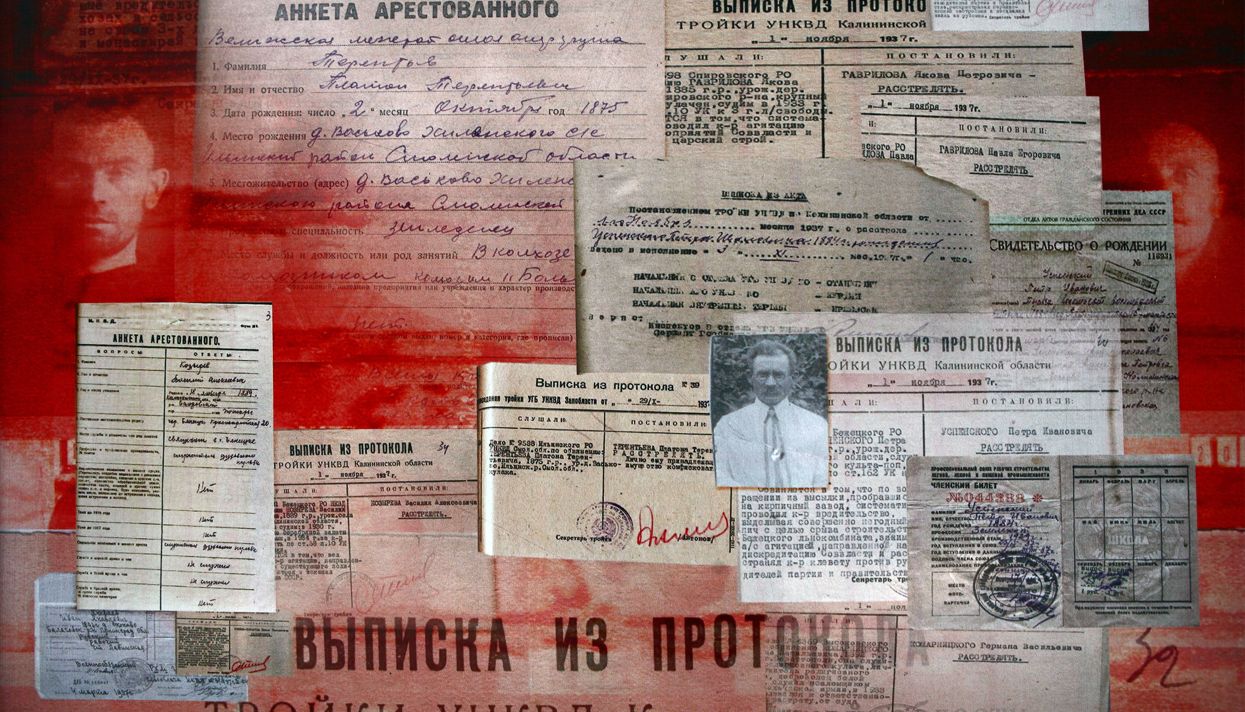
30 июля 1937 года был подписан секретный приказ НКВД № 00447. Этот день считается началом Большого террора — периода политических репрессий, во время которого в 1937-1938 годах в СССР было арестовано не менее 1,7 миллиона человек (более 700 тысяч из них были казнены): «враги народа», «контрреволюционеры», «вредители», а также их родные и Close. On the anniversary of the Great Terror, Medusa asked the historian, an employee of the Memorial Center, Sergei Bondarenko, answer the shameful questions about the Stalinist repressions of 1937-1938.
What exactly happened in 1937?
In the summer of 1937, a whole series of state repressive campaigns, which we now know under the general name “Big Terror” (this name, proposed in the late 1960s, British historian Robert Conquest began, after perestroika, the term was widespread in Russia). By order of the NKVD No. 00447, the “Kulak operation” was announced, in which the peasants, priests, former nobles, as well as people who were suspected in relations with white movement or opposition political parties were arrested. Almost in parallel with this, “national” operations were carried out - on pre -compiled lists, Germans, Poles, Latvians and many other foreigners and citizens of the USSR were arrested. With the arrests of several large military leaders, cleaning in the army began. Thousands of people got to the camps on charges of relations with the enemies of the people - these were the so -called Chsir, "members of the families of traitors of the Motherland."
Why was it needed? And why exactly in 1937?
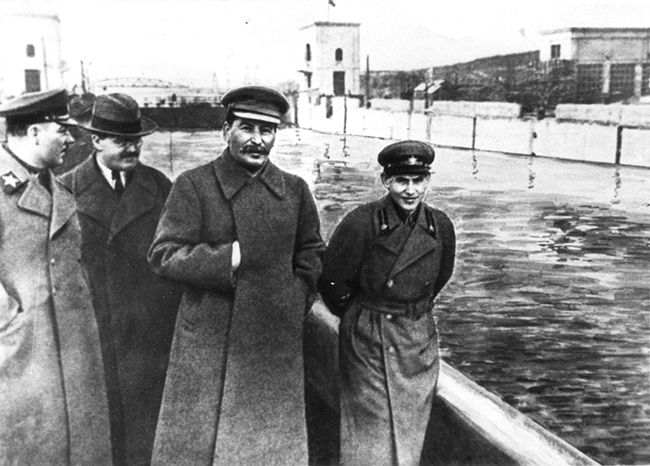
Despite the fact that in mid -1937 there was a sharp surge in state terror, preparatory work was carried out in previous years. The reference point is often called December 1, 1934 - on this day the head of the Leningrad party organization was killed, the secretary of the Central Committee Sergei Kirov (the role in this murder of Stalin himself has not yet been completely clarified). In subsequent years, not only the number of arrests increased, but the “open trials” in Moscow over the former party leaders, the “right-Trotskyist bloc” took place, and a large-scale renewal of personnel in state security took place (the People’s Commissar of Yagoda was replaced by the People’s Commissar of Yezhov), they wrote a lot in the press about the need to tighten the repression. There was preparations for the new wave of state terror: camps were opened, into which future “enemies” were supposed to go, special commissions were formed to consider their criminal cases.
There are many explanations of why the largest repressions began to unfold in 1937. In addition to the very internal logic of the development of events (Nikolai Yezhov headed the NKVD back in September 1936 and prepared his department for mass purges for almost a whole year), often rightly indicate a large role of the foreign policy situation - the course of the war in Spain, where the Communists suffered defeats from the Franco army, the strengthening of Nazi Germany and all the sensed approach of a new large world war. Against this background, spyingomania was activated in the USSR, the search for internal enemies, the first candidates in which were “former people” (“fists”, priests, Socialist -Revolutionaries) and all their environment - families, friends, work colleagues.
Another, no less important reason is the actual management system that has developed in the USSR for 20 years that have passed since the revolution. In the absence of any civil and political freedoms, in the absence of real elections to the authorities and freedom of speech, the main way to conduct any social transformations remained terror. Violence became familiar, the repressions, although scared, were taken for granted as part of everyday life. In this regard, the events of 1937 are unique only by their scale and intensity-red terror, and collectivization-genusing, and organized by the industrialization of hunger in Ukraine, Kazakhstan and the Volga region of the first half of 1930. The Grand Terror in this sense is just another unique event in the already existing series of others.
How many victims were there? Why often do they say that the scale of terror is exaggerated?
During the active period of large terror-from August 1937 to November 1938 (when Yezhov was removed)-more than 1 million 700 thousand people were arrested on political charges. Of these, more than 700 thousand were shot. And this is the lower statistical bar-in the same period, people were still sent and deported “in administrative order” (at least 200 thousand people), hundreds of thousands were convicted as “socio-found elements”. A lot of formally criminal articles of that time (for example, punishment for being late or “absenteeism”) can also be interpreted as political in their orientation. All this allows you to add at least several hundred thousand victims to the statistics of pre -war terror.
The allegations of the “exaggerated scale” of the terror of 1937-1938, as a rule, are associated with two ideas. Allegedly “falsified” statistics are subjected to doubt (although numerous regional “plans” for arrests, Stalin's lists for execution have already been published, in many regions, books based on archival data have been published in many regions), or-which is even more common-the essence of “political” accusations: many believed that if someone was arrested, then there was something for.
Well, not just arrested? Surely someone was guilty!
The main feature of the Soviet political terror of the late 1930s was its fundamental irrationality and unpredictability. By this, it differs, for example, from the Nazi terror often compared with it. Yes, belonging to any of the “wrong” categories of citizens could carry a threat-however, they arrested the janitors, the driver, and housewives, and athletes, and artists; In a word, anyone. Only a very small percentage of those arrested really engaged in some undesirable activity (whether any act that diverges with the party’s policy is a separate issue). Everyone else belonged to the usual law -abiding civil "majority." Since the investigation in cases was often carried out with the active use of torture - physical violence, threats of the families of the accused, “torture by sleep” (the ban on sleeping during the day and constant night interrogations) - the share of the “recognized” was close to 100 percent. The confessions remained the most important argument in favor of a person’s guilt - as well as the testimony of already arrested or executed acquaintances and colleagues.
Is it true that cleaning was primarily affected by the party leadership itself?
Of the 1.7 million politically repressed, only about 100 thousand were related to the Bolshevik party - they were either Komsomol members or ordinary party members, or (there were few of them) party chiefs. Of course, one of the tasks during the terror for Stalin was the destruction of the "old Bolsheviks" and revolutionaries, but in practice, many of them were already pushed to the second and third roles by that time and did not constitute any real opposition in the party. The idea of great terror as a terror against the party appeared in Khrushchev’s time, when Stalin sought to declare “faithful Leninists”, along the main victims of the crimes of Stalin, along the simultaneously, the indulgent overall scale of the repression itself.
Why is Stalin blame for repressions if citizens themselves report to each other?
Another very common myth of repressions is “three (sometimes two, sometimes four) a million denunciations”. The active spelling of denunciations was part of the general political hysteria - without doubt, they played a role in mass arrests, but much more people were arrested simply according to the lists, according to pre -compiled and certified “plans”, where all “unreliable” citizens of different levels appeared.
In addition, many denunciations were written under tremendous psychological pressure - already at the investigation stage, people stipulated their loved ones, very often in front of them was a choice between the possibility of (most often illusory) personal survival and the need to sign paper against another person. Democents are part of another, key question: about the civil liability of the whole society for state terror. The recognition of many people to conduct it is very important, but the repression of the pure “initiative from below” should also not be considered.
Stalin personally gave orders for executions or not?
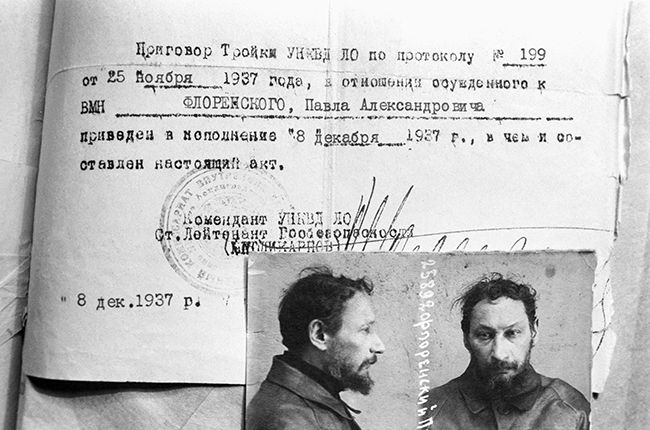
Of course, yes. Of the 383 lists compiled for personal vision to the members of the Politburo - the so -called “Stalinist lists” - Stalin personally signed 357. The total number of convicts on such a “list principle” is 44.5 thousand people. The vast majority of them are shot. In addition, the entire architecture of the terror was built by Stalin himself and his close circle, and repressions were carried out under his direct control: he received reports on the progress of arrest campaigns, he himself added the names of individuals to the lists, and also read the protocols of investigative interrogations.
How was the arrest and execution system records arranged?
Unlike many other earlier repressive campaigns (red terror, dispossession), large operations of large terror are quite well documented. In addition to the already mentioned “Stalinist lists”, numerous encryptions with places have been preserved with a request to clarify or increase “plans” for arrests that descended from the center. The number of arrests was recorded, according to the number of arrests, reported. Investigators led among themselves a “socialist competition” in the number of cases considered. Finally, in the archive and investigative affairs of the arrested in 1937-1938, the vulture “Store forever” is worth it: if they wish, everyone can go and read the details of the progress of most arrested (and rehabilitated) victims of large terror.
And it happened that they arrested a person, and then understood that they were mistaken and released?
Stories about the miraculous liberation and salvations of already arrested people, as a rule, dates back to the 1920s or the first half of the 1930s. The course of the investigation itself in 1937-1938 did not implied an excuse: the accused did not have the right to either a lawyer or a revision of the case (very often sentences were carried out on one day with a court decision or “triple”-an extra-court body for sentences).
Some of the people arrested at Yezhov were released in 1939-sometimes it is called "Beriyevsky amnesties." Those who, for some reason, were lucky not to get their sentence by November 1938, sometimes managed to get a revision of the case-this was especially often happening if the investigator was changed or the case was formally not finished. However, many of these hundreds of thousands were still arrested later-during the war or immediately after-in 1947-1948, when the victims of great terror survived re-arrested the camp.
How many people were punished for participating in executions? Was there any system of punishment of the Chekists?
According to the statistics known to us, over a thousand NKVD employees were arrested for the year after the removal of Yezhov. As at the most brutal moment of collectivization, the terror was written off to the “curds in the field”, and specific performers were accused of it. And still, not all Chekists were punished or at least removed from office. Many of the active performers of great terror continued to work during the war, received military awards for “political work in the army” and returned from the war heroes.
People, of course, are sorry, but the Gulag was at least effective?
We are talking about a gigantic and very multi-component system, formed not in 1937, but much earlier, at the turn of the 1920-1930s. The Gulag consisted not only of political prisoners, there were also criminals - as well as guards and camp authorities. This is both a grandiose labor exchange and a mass murder machine. The time of great terror in the camps is also associated with mass executions, with very difficult conditions for the survival of prisoners (it was worse in some places only in the war - when there was no food at all). Of course, you can start understanding when they built more, what was needed to be built and what turned out to be useless - but still the economic expediency of the Gulag remains an ethical question: what exactly is the coefficient of the spent slave labor and how much dead people seems “effective” to us in relation to the number of constructed factories or cities? At the same time, the Gulag economy itself is analyzed in detail by modern researchers and does not look “successful” to any extent - forced labor is generally extremely more effective than free.
Sergey Bondarenko