
Translated material
700 thousand unfastened dead
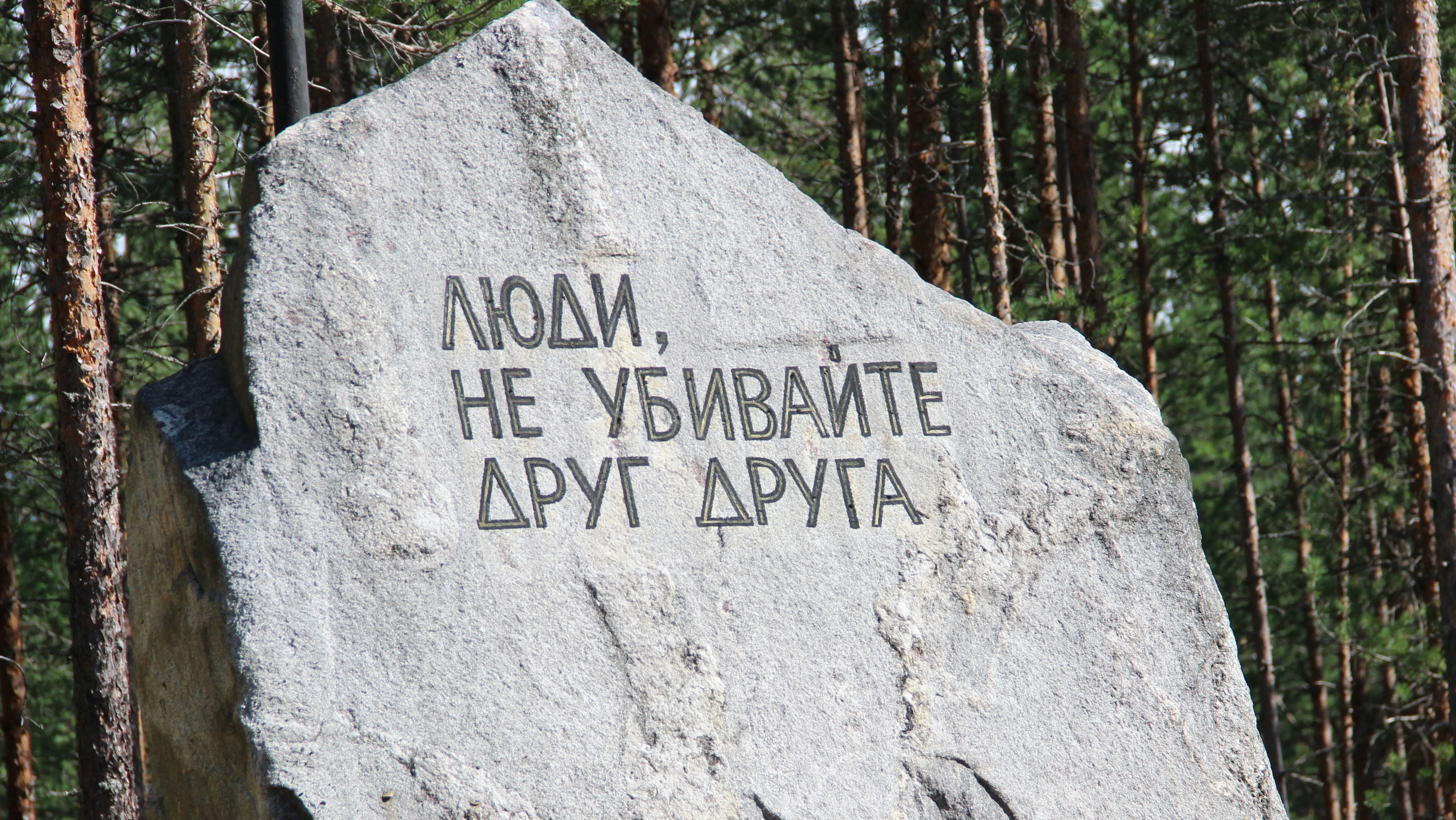
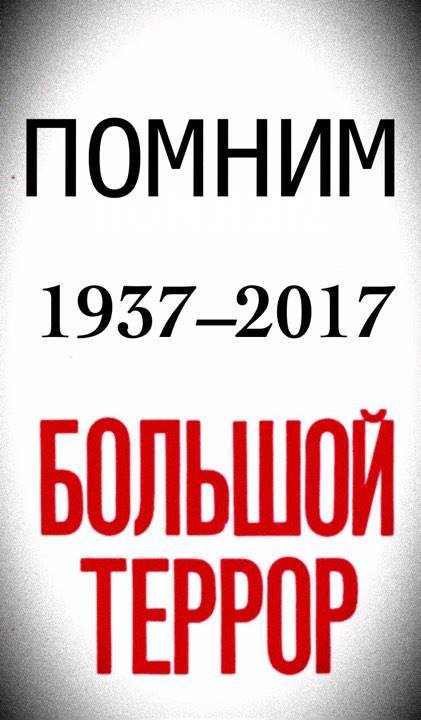
On July 30, the day of the Navy was celebrated in Russia with pomp . The 80th anniversary of the beginning of the Great Terror, the peak of the Stalinist repressions of 1937–38, was recalled on social networks, where the action #remembered #remembered the bibolschoiteruror , who came on the same date. There are no memorable events at the official level.
According to a recent VTsIOM survey , the Russians did not have an unambiguous opinion about the Stalinist repressions. The respondents are divided almost equally: 43% argue that without the then bloody purges “it was impossible to maintain order in the country”, 49% are sure that nothing to justify repressions of this scale. At the same time, only 16% of respondents consider the then decisions of the Stalinist courts and “triples”, while 68% said that they were not trusted.
The formal starting signal for the deployment of the most massive stage of repressions 80 years ago was the order of the People’s Commissar of Internal Affairs of the USSR Nikolai Yezhov, signed on July 30, 1937, at number 447 “On the operation to repress former fists, criminals and other anti -Soviet elements”. In it, in particular, it was said: “ The state security bodies faced the task of defeating all this gang of anti -Soviet elements in the most merciless way, protect the working Soviet people from their counter -revolutionary machinations and, finally, once and for all to end their vile subversive work against the foundations of the Soviet state . ” (Less than two years later, Yezhov himself will be arrested and shot at the beginning of 1940 on charges of the same “vile subversive work”).
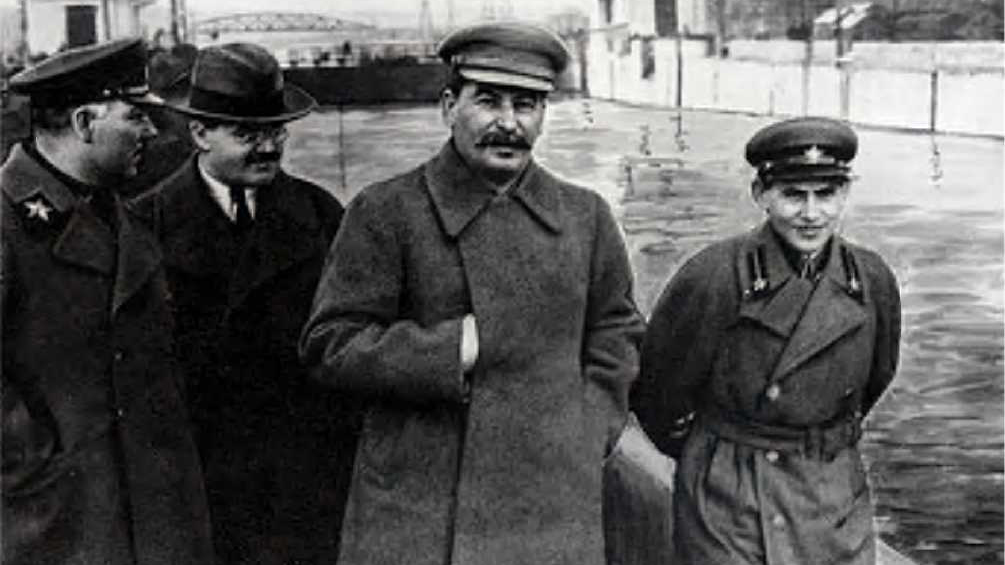
Here are some results of the efforts of the executors of order No. 447. These are the stories of repressed relatives laid out in social networks as part of the “Remember the Big Terror”.
For the family of my father, the 37th was the last year of life, albeit troubled. The campaign to search for enemies of the people among the National Menories (Finns) at the beginning was pointed, but in 38 it turned into full power.
All three shot in my family took place under the 58th article-counter-revolutionary activity.
Matti Savolineen, my great-grandfather was sent to Tomsk back in 1932, was repeatedly arrested in 1937, and sentenced to execution on charges of participating in the Finnish spy-sabotage organization. February 10, 1938 - shot.
Helena Savolineen, my great-grandmother, a peasant-unit, refused to join the collective farm, which caused the arrest in January 1938. shot in April 1938.
In my family, 9 people were killed and tortured
Simo (Semyon Matveevich) Savolineen, my grandfather, then he was 36 years old. A school teacher of geography and physical education, non-partisan, merrycam, was also accused of the 58th, arrested on July 9, sentenced by a three-year on October 25, and on November 1-shot.
The rest of the family came under the blockade, and in 1942 they were sent to Siberia, to Lena, where they died from hunger and illness, only Arvo, my father survived. In my family, 9 people were killed and tortured by Soviet power.
Lidia Konstantinovna Khlebutina-Storyevskaya. Father Konstantin Konstantinovich Strievsky was born in 1935, repressed and shot in 1938. Rehabilitated in 1955 posthumously. Uncle Alexander Konstantinovich Strievsky was arrested and shot in 1938. Rehabilitated in 1955 posthumously. Mom - Sofya Strievskaya was arrested in 1938 - 10 years of camps, as a member of the Family of the "enemy of the people" in the Algerian camp. Rehabilitated ... Brother Strievsky Leonid Konstantinovich at the age of 18 was arrested as a member of the Family "enemy of the people", 18 (eighteen) years of camps. Rehabilitated. May those who are trying to revive the Stalinist traditions of terror be cursed ...
Peter Rodionovich Burakov. My great -grandfather. 1887 born. He was famous in the North Caucasus and in the Stavropol Territory the minister of the Russian Baptist Church (Protestant branch of Christianity). The first time was repressed in 1928 as a fist - by the presence of two horses. He was evicted from Stavropol to the north of the Urals with six children. He left for the entire term, returned in 1936, having lost two children in exile. She was forced to take care of a consumption of the NKVD employee. I got infected, died in 1930. The second time, great -grandfather was arrested in 1939 for religious activities. He was released in 1943, along with other priests at the request of the USSR Sanitizers in the Great Patriotic War. Again arrested in 1947. According to eyewitnesses who survived the conclusion, he was very tormented, forced to sign the rejection of faith. He died of torture in 1948 in the prison of Nalchik, the grave is unknown to us. Neither he, nor spouse nor children appear in the lists of repressed. There are many victims of unknown.
One of its organizers, documentary, documentary Valery Balayan , spoke about the plan and goals of the network action of the victims of Radio Liberty.
This is a huge terrorist attack on their own population. Unprecedented in history
- We see that the official Russian media do not speak out on this subject, they want, probably, that this date is unnoticed. After the exit of the order of Yezhov, for 17 months, mass terror was deployed in the country, which was called large terror. This term belongs to Robert Conquest, the writer and historian who wrote the book of the same name . She was famous in Soviet times, albeit unofficially, of course. I read it-it was published in the West by the People’s Labor Union (NTS) , their publishing house “Sowing”. A gray book with such large red letters “Big Terror”. She made a completely indelible impression on me at one time, literally turned consciousness. In our history textbooks-Soviet, and in many ways subsequent Russian-the truly scale of this terror was not portrayed. But this is a really huge terrorist attack on their own population. It seems to me that unprecedented in history. Both intellectuals and the color of the peasantry, and so on, did not want to repeat all these banality were exterminated. Since then, it seems to me that Russia still cannot recover. This also applies to demography, because the imprint remained forever, and the bleeding memory of several generations. And the fact that the modern Russian state wants to shut up, get around, forget this date is a shameful event.
-Do you think a reminder at least on social networks for yourself and others about this date will still find some echo in society? After all, judging by reactions, by polls, by how Russian society is now perceiving the Soviet, Stalinist period, a very large number of people simply do not want to hear about it. Will anyone be able to arouse such shares?
It's not about statistics, we simply do not want this date to go unnoticed. Since the state does not do this, then we will do it ourselves
- Our business is reminded. This is our duty, those people who remember this, sane. Our group, I would like to mention one of the main organizers - is Pavel Matveev, a wonderful literary critic and editor from St. Petersburg, he specializes just in the history of the relationship between Russian literature and Soviet special services, and several more people, we prepared the text of the appeal. We called everyone who can, on July 30, under our short appeal with the logo, picture that we made, to place some kind of memory of our own about the drama that was in almost every family associated with great terror. I think that in fact, many people will respond. They do not want to remember the descendants of Vertukhaev. Someone said that half of Russia was sitting, and the other half guarded them. Perhaps the descendants of those who guarded do not want to know this. And the people who have touched it will never forget. You can call it a flash mob or a network project. I think that we will stir this folk memory a little, we will receive some evidence that the current government would like to forget and pretend that this was not, that Stalin is, in a well-known expression, an effective manager and a generally positive character. I am just ashamed to hear some modern Russian intellectuals who are terrifying Galicia on the air, repeating such things about Stalin and Lenin, as recently Dmitry Bykov, who called Lenin a “modernizer” . In general, we expect to get some effect. It's not about quantity, not in statistics, we simply do not want this date to go unnoticed. Since the state does not do this, then we will do it ourselves.
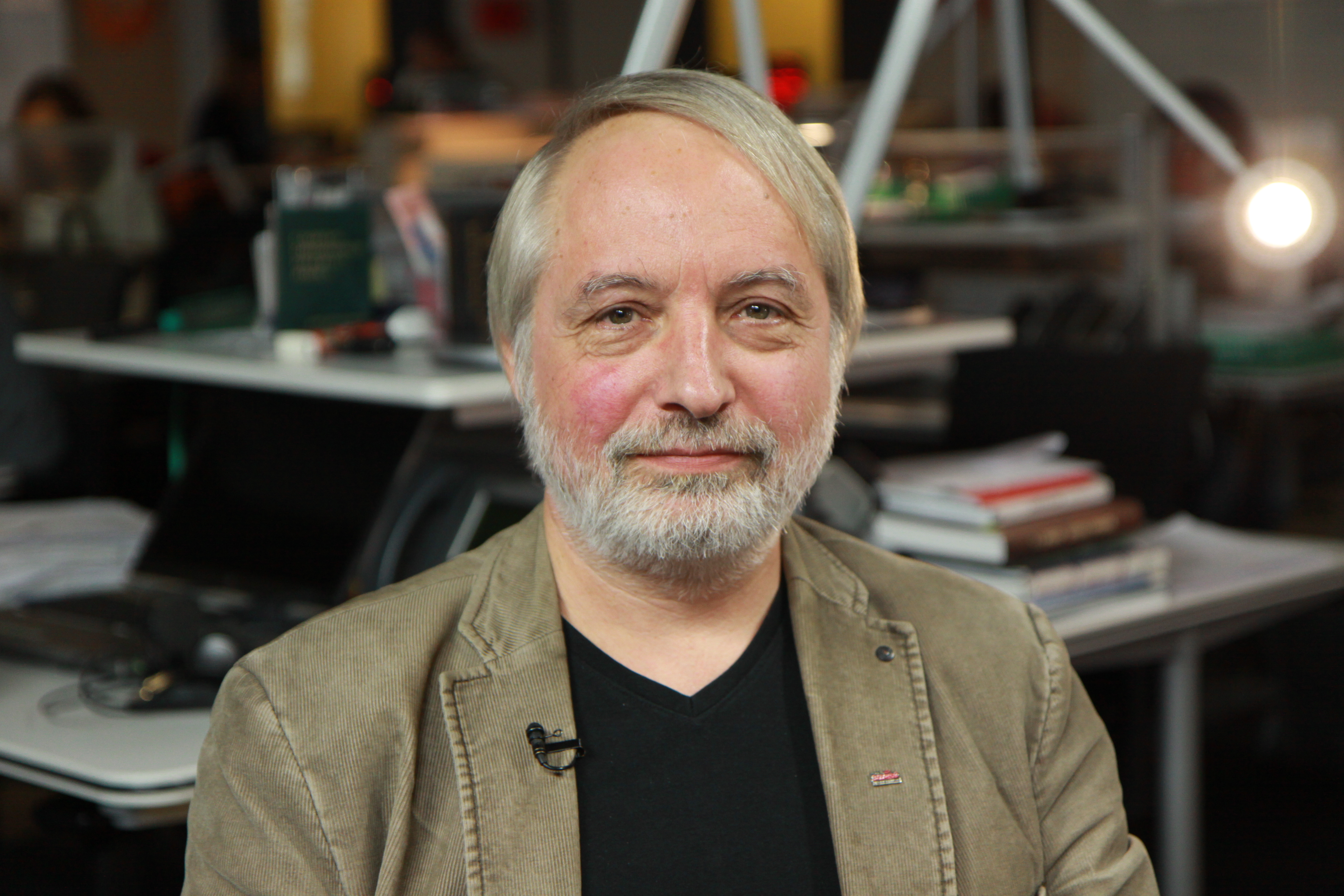
Why, from the point of view of historians, it was the summer of 1937 that was a turning point in the history of repression, and what is the determined the term “big terror”? Comments the historian, deputy head of the scientific, informational and educational center of the Memorial Society Nikita Petrov :
- Since 1936, political trials have been going on in the Stalinist USSR, large -scale repressions are unfolding. Is it possible to talk about a date as a date as the beginning of a large terror or are it all rather conditional things?
- Without a doubt, there are several dates that mean the turn of the terror to the level of not just all -Union, but the level of mass operations of the NKVD. It is clear that from the February-March Plenum of 1937, targeted work was carried out to create an appropriate situation in the country, propaganda noisy campaigns against the so-called enemies of the people. But it was precisely after the resolution of the Central Committee of the All -Union Communist Party of Bolsheviks (b), which was sent to places on July 2, 1937, that the preparations for the mass operation to repress former fists and the so -called anti -Soviet elements began. This is what was then executed as the order of the NKVD No. 447, the top secret, dated July 30, 1937. According to this order, the operation on mass repression, arrests and executions of quotas, on the so -called limits with consideration of cases on the three local bodies of the NKVD approved in the Politburo - this operation began on August 5, 1937. So there are several dates. The actual beginning of terror is August 5, in compliance with Yezhov’s order of July 30. But on the other hand, on July 25, 1937, the so-called order of the German operation was adopted-these are repressions that were carried out on a national basis or a sign of communication with any adjacent countries. On August 11, the so -called Polish order No. 485 appeared. So in the end we cannot talk, of course, about a single date, but August 1937 is the beginning of mass operations.
All Soviet power is terror, but terror is smaller than the one that began in 1937
- If so, then, according to how many people were injured at the peak of this mass terror, starting from August 1937, for example, to the end of the Ezhovschina?
-And we must take, in fact, until the end of the Ezhovshchina, because what we call a big terror, as Robert Conquest once determined, is from my point of view, this is a really successful term, because all Soviet power is a terror, but terror is smaller than the one that began in 1937. During the period of these mass operations, until November 17, 1938, when the terror was stopped as well as a command from the Kremlin as it began in the summer of 1937, one and a half million people were arrested, of which a little more than 700 thousand people were shot.
-There are documents, as I recall, this is a certificate, which already in the 1950s was prepared by state security for the top leadership of the USSR, which estimates at 600 thousand the number of dead for a longer period, starting in the 20s.
- The fact is that this certificate is inaccurate, it was prepared as hastily as many other intermediate certificates, for example, immediately after the end of a large terror, when receiving and transferring cases to the NKVD from Yezhov to Beria , there were also digital calculations. It said that only during the period 1937–38 681 thousand people were shot. In fact, according to the calculations of the source materials that acted as reporting from seats in the NKVD, it turns out that a little more than 700 thousand people were shot. Of course, the discrepancy seems to be not very large, but on the other hand, 40 thousand people are people, these are human lives. Of course, this does not add, as you know, a strong mass of terror, which, already for 1937–38, was such as it was neither before nor after all the years of Soviet power. But the certificate that was submitted in 1953 was submitted by Khrushchev, she certainly was inaccurate and was made on the basis of the initial layouts of 1938.
- How much terror of 1937–38 was larger and fiercely of post -war Stalin purges?
- Without a doubt, it stands out by its scale and significance. After the war, in terms of averaged, more than one hundred thousand people could arrest in a year. The executions, as you know, were not carried out from 1947 to January 1950, the death penalty was canceled, then it was introduced again. In a word, here the numbers are also quite significant and serious for the country, but nevertheless, this is not a comparison since 1937–38 years.
- Do historians have unequivocal conclusions about what political goals Stalin achieved, unleashing a large terror, and how much did he reach them?
Absolutely all categories of the population fell under the rink of large terror
- In order to answer this question, you need to say exactly what Stalin wanted. In this case, historians vary. From my point of view, the Great Terror was an inevitable continuation of the entire repressive line of the Soviet state, starting with the October Revolution of 1917, when they purposefully destroyed those who opposed the Soviet regime or could potentially oppose it. Destroyed entire classes. That is, this terror wore, on the one hand, the nature of measures to isolate the country from the rest of the world, I would say, the intimidation of everyone who could oppose, and on the other hand, it had a doctrinal-class basis-the destruction of all former representatives of the property classes, those who were called in the reporting documents of the OGPU, and then the NKVD “former people”. That is, it was for Stalin a kind of tool for building a classless society. In this case, when, from the point of view of Stalin, a new Soviet intelligentsia grew up, one could get rid of everything that he did not want to see in the future of a socialist society. Note that exactly the same events, mass cleansing and executions, were held in all countries where the Red Army came as a invader before the war - to the territory torn by Poland , to the Baltic countries, where evictions were held. And in the post -war period and in the countries of Eastern Europe, exactly the same mass cleaning went on the basis of class doctrines.
In the total number of victims of large terror, the share of party members does not exceed 10%
- The social structure, if we take the victims of a large terror, was approximately what? How much did it correspond to the general social structure of Soviet society at that time? Warled all over the spectrum or did anyone suffer more?
- Absolutely all categories of the population fell under the rink of large terror. Of course, we can say that under Khrushchev, when timid attempts at the teninization were ongoing, the theme of the injured Lenin Guard, communist personnel were especially pedalized, but if we look at statistics, in the total number of victims of the large terror of 1937–38, the proportion of party members does not exceed 10%. The rest of the mass is peasants, priests, nobles, former wealthy people - a variety of layers of the population. I'm not talking about those who were connected by family ties with other countries, for example with Poland, Germany, and fell under Polish, German, Latvian operations of the NKVD. That is, in this case, all segments of the population, all public groups were represented here.