
Translated material
The decay of Russia? This is definitely not what you should be afraid
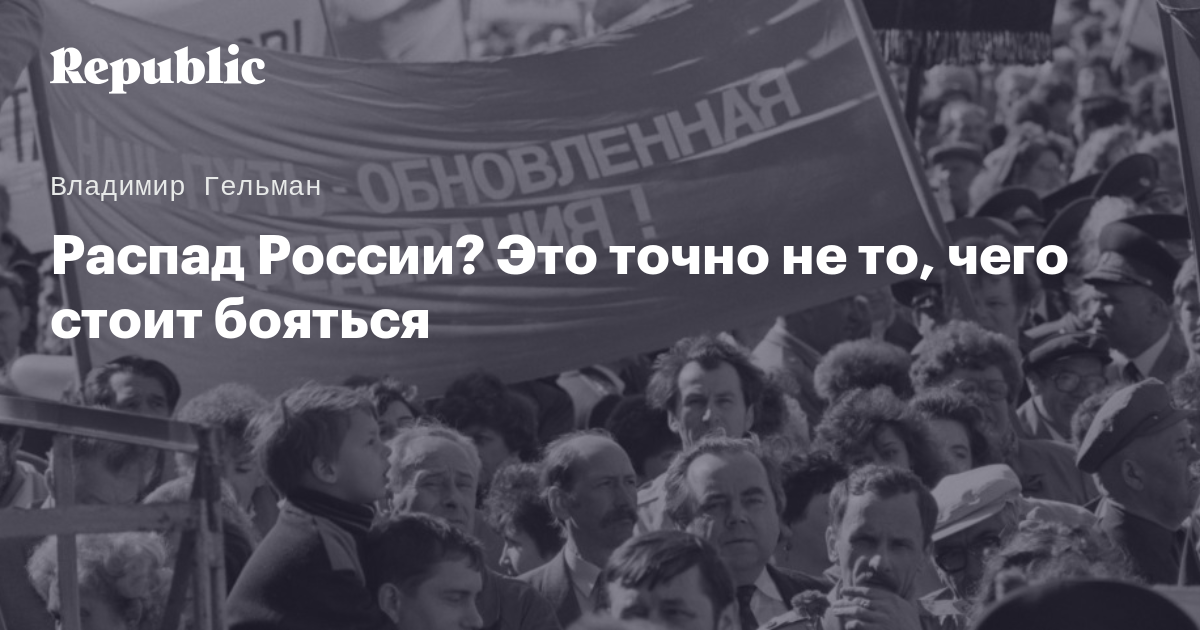
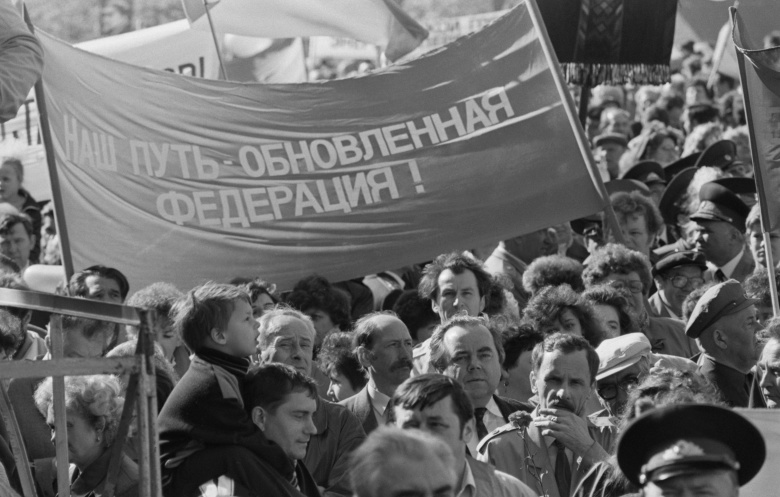
Photo: Maris Bersons, Boris Kolesnikov / Photokhronika TASS
Among the phobias of the domestic public in one of the first places is confidence in the inevitable territorial decay of Russia in the event that the country someday has radical political changes. These fears, as a rule, are caused by memories of the events of the early 1990s, when the change of political regime in the USSR was accompanied by painful territorial disintegration of the Union State against the backdrop of numerous ethnic conflicts. In combination with the spontaneous and deep decentralization of Russia, this experience that continued until the beginning of the 2000s had such a strong shocking effect that the part of the public interested in politics can even imagine any other future for our country, and the current vertical of power seems to be almost the only mechanism that impedes the inevitable decay.
In fact, the collapse of the USSR (just as the collapse of Yugoslavia) was a fairly specific and unique event in parallel with it, caused by a combination of the country's national-state structure and unsuccessful attempts to change it, which were made against the background of a deep economic and political crisis. The spontaneously arising coalitions of the republican elites and national movements in the Union republics were interested in the exit from the USSR, and the Union Center weakened before our eyes was not able to offer them other decisions. But already at the level of Russia this kind of development of events was not observed - with the exception of Chechnya, where, for a number of reasons, in 1991 the power was captured by representatives of the national movement.
Subscribe to read the whole
Make a subscription Redefine.media to read Republic
Subscribe [you can pay for a Russian or foreign card. The subscription is extended automatically. You can unsubscribe at any time.]
Where are the money subscribers going