
Translated material
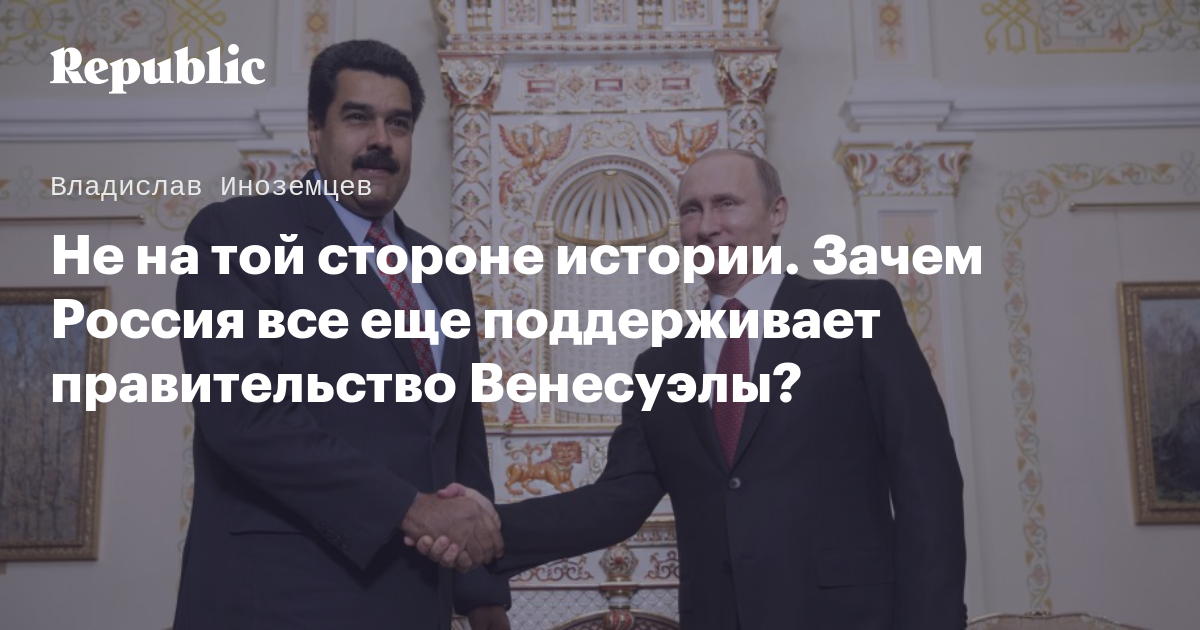
The wrong side of the story. Why does Russia still support the Venezuela government?
On Sunday, Venezuela was held elections to a certain organ called the National Constituent Assembly - it should now develop and accept changes to the Constitution, thereby withdrawing the country that is now the country that is now problematic in Latin America from a protracted crisis. It is worth saying right away: the plebiscite was organized and carried out so that Russian political technologists should immediately begin the study of advanced experience: two -thirds of the candidates who were to choose were previously selected by the government and regional authorities; a third represented professional groups and, in fact, approved by "public organizations"; The authorities secretly notified enterprise managers about the consequences if not all their employees take part in the vote; Almost the fifth of the voters were made up of security officials and officials; The official number of participating in the elections is 41.5% of the electorate, while independent observers counted only 12%; But, of course, all 545 members of the Assembly turned out to be members of the ruling party and union associations with it, despite the fact that the opponents of the creation of a new body in Venezuela acted, according to various surveys, from 72.7% to 82.1% of citizens.
The Constitutional Assembly will now replace the parliament and will work on the draft basic law until Nicholas Maduro wants it, a well -deserved bus driver, now the ruling country, it is possible that the process will be delayed, because before the adoption of the new constitution, there are no new elections - municipal, outlined for December 2018, and presidential, expected in October of the same year, - not will. The Russian Foreign Ministry, who recommended the governments in his statement, “intended not to recognize the results of the Venezuelan elections and strengthen pressure on Karakas,” “show restraint and abandon their destructive plans,” implicitly expressed wishes for those powers that could be unhappy, for example, by Russian elections, if they accepted just such a turn closer to 2024.
The consequences of socialism
If you return to Venezuela itself, then, apparently, yesterday the country crossed the line behind which the end of the Bolivarian Revolution will begin. Until July 30, the events developed even with an increasing bias in authoritarianism, but in some accordance with the 1999 Constitution (which was adopted in a similar way in less than a year after the coming to power of Hugo Chavez) - however, the authorities could not endure its own defeat in the parliamentary elections in December 2015 and now remained without opposition parliament, one on one with an unhappy people.
Subscribe to read the whole
Make a subscription Redefine.media to read Republic
Subscribe [you can pay for a Russian or foreign card. The subscription is extended automatically. You can unsubscribe at any time.]
Where are the money subscribers going