
Translated material
Homeland as a threat
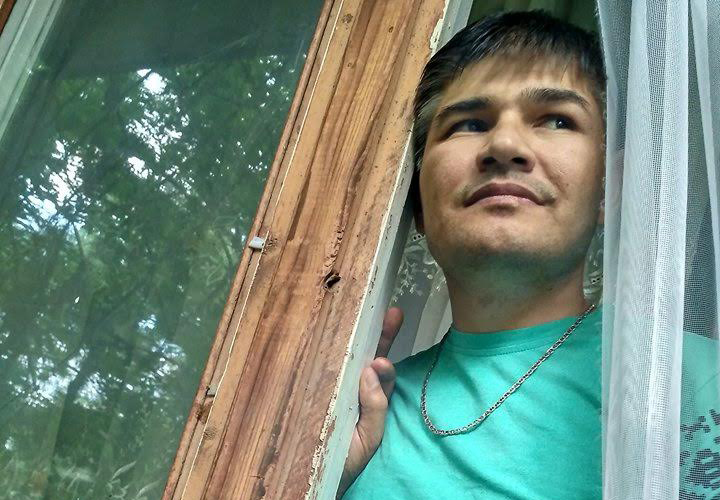
On August 1, in Moscow , a journalist of Novaya Gazeta Ali Feruz (the pseudonym, the pseudonym, Vecheberdi Nurmatov a ) was detained for “violation of migration legislation” . Already a couple of hours after the detention, the judge of the Basmanny Court, Arthur Karpov, stamped the decision on the forced expulsion of the journalist to Uzbekistan, where Feruza may expect imprisonment and torture. For the first time, Feruz was detained in March; Then the editor -in -chief of Novaya Dmitry Muratov informed Interfax that "the detention was made at the request of the Uzbek side, from where Nurmatov left several years ago when the local special services tried to recruit it."
We are not used to talking about Uzbekistan as a totalitarian state, which has already experienced several waves of mass repressions, largely comparable with the Stalinist. This country is associated at best with ancient architecture, medieval poetry, at worst-with pens fruits. Nevertheless, this place where all -powerful structures of state security have power, and thousands of activists and social activists sit in prisons without guilt. In the late nineties, Uzbek authoritarianism crushed and practically destroyed the local civil society, having driven those who disagree in a deep underground.
Once faced with the persecution of “organs”, people remain in the bases of the republican search according to ideological articles for many years. From time to time, materials on old developments are transferred to the international wanted list. So, a request for extradition and arrest can catch up with a fugitive in Russia after many years (after five, and sometimes ten years). The Russian internal affairs bodies, as a rule, do not make the difference and simply transport the caught oppositionists back.
The accusations are different: from “religious extremism” to the “attempt to overthrow the system”-both instrumentally plays the role of the 282nd article of the Russian Criminal Code. On charges of “religious extremism”, for example, can be wanted for a person not just a secular, but a convinced atheist.
Russia regularly refuses the shelter and sends political activists to their homeland, who fled from persecution from the former Soviet republics of Central Asia. Including Uzbeks. Together with them, our officials expel home of Syrian noncombans, who fled from the horrors of war, the North Korean "traitors" doomed at home to inevitable death, Afghan dissidents who recklessly sided with Soviet soldiers.
It is no secret that the law enforcement agencies of our country often participate in the abductions by the local intelligence services of political refugees that have been going through to Russia. Illegal expulsion, deportation is one of the methods of “fraternal care” that the Russian Ministry of Internal Affairs provides colleagues bypassing the complex and troublesome procedure of official extradition.
A year ago, Amnesty International has published a rating of “favorable” countries for refugees - Refugees Welcome Index. Russia with 18 points in it occupies the lower line. Above us - Kenya (38), authoritarian Türkiye (39) and Nigeria (41).
“In 2016, our country accepted four times less refugees than the smallest EU country - Malta,” the employees of the Civil Assistance committee, one of the few NPOs in Russia that help migrants.
Three years ago, Feruz asked for asylum in our country - the procedure was delayed. Now human rights activists and colleagues are trying to “pull” him from Suvsig in Sakharov - a special prison, where the police are placing migrants before sending. Recently, the news came that immediately after the trial and before being sent to Sakharov, Feruz tried to commit suicide in the court building .
What do Uzbek activists flee to Russia and what does the Northern Supreme Power meet them? Dmitry Rebrov recorded the story of the family who survived all the horrors from which human rights activists and journalists are now trying to save our colleague.
Without the right to asylum
“All evening I heard my brothers shouted under torture. They are courageous people, and if they shouted ... ”The brothers shouting under torture, because they could not stand it, is the nightmare of Baddyra Karimova, who has been pursuing him for many years. Actually, he could not stand it himself: 13 years ago he fled to Russia.
Now he is 34 years old, his wife Tatyana is a little less. Without letting go of the Russian foreign passport, it peers into the dark windows of a panel five -story building. Doomed to demolish Khrushchev, where we are talking, is a recent and short -lived refuge of the couple. Friends allowed to live here a couple of days.
More recently, in Sheremetyevo, Russian border guards took off Baddyra and Tatyana from a flight to Kyiv. In early July, desperate, they were going to try his luck in Ukraine: it is believed that it is easier to legalize. But the escape failed.
- Why did your brothers torture, what did they do in Uzbekistan?
- I was born in an intelligent provincial family, in the small Uzbek city of Altyaaryk in the Ferghana Valley. Mom is a teacher, father is an engineer. There were always many books at home - Russian literature, foreign. Until the arrests began, most brothers and sisters managed to finish medical universities: the older sister is a gynecologist, the average is an immunologist and an infectious disease specialist, another is a pediatrician, an older brother is a cardiologist, the other is a therapist. The family is big, we knew the whole city. There are two more twin brothers: before the arrest, one of them studied in a business school, the second worked. I am the youngest, I never entered the university: after the brothers were behind bars, someone had to feed the mother.
In Uzbekistan, since the Soviet era there is an idiotic tradition from the Soviet era: educated people are forcibly driven to clean cotton. This is hard work, in fact slave, for the money that they pay collectors, not even buy tea in a cafe. Every year, the police and local authorities are lowering lists who go to the fields. And the administration of the hospital, where my relatives worked, forcibly brought this to the attention of the staff.
My brothers and sisters inadvertently expressed dissatisfaction with this: why on earth should a qualified doctor do such things? Since 1997, they did not go to the field themselves and did not let their subordinates: nurses, nurse. So they were among the "unreliable."
In 1999, after the famous terrorist attacks in Tashkent, the president ordered “to tighten the nuts”, and terrible repressions swept around the country: they grabbed everyone-both guilty and innocent. Thousands, if not tens of thousands, people: civil activists, religious Muslims, all dissatisfied were in prisons.
- Was this the first mass stripping of this kind?
- This was the first mass strip. Before that, people were not shy about saying out loud what they were thinking. Now, if they say, then only in a whisper.
- And since your family was already on the lists of “unreliable”, came after them?
- Yes. Then, on March 25, 1999, we broke to our house under 20 security forces. Without presenting any documents, they took up the search, arrested three: my older brothers-the doctor Husanboy and Tokhir (he studied at the business school)-and me, a fifteen-year-old boy.
In the Central Internal Affairs Directorate, we were divided into different offices. I took up the SSENBASHNIKS (employees of the National Security Service (SNB) - the Uzbek analogue of the Russian FSB and the ED center. - Ed. ), Two men in black costumes and ties. One at forty, I don’t know what nationality he is, but he swore in Russian. The second under fifty, Uzbek. The first beat the thick book "Criminal Code". The second fist. They wanted me to sign an empty sheet. As soon as I refused, the one that beat his hands, put a gun to his head and said that he would shoot. For the first time in my life, I saw a real gun, before that only in films. I don’t know how long this interrogation lasted, as a result I was set to face the wall, they pressed the barrel to the back. But then another employee entered the room and said: “Enough, we found people who will give the right testimony.” I was handed over to the police and asked to "teach" well. They also beat, mercilessly and for a long time. A couple of times I lost consciousness. And when they were tired, they gave the prisoners, the neighbors in the cell, they said that they continued, but the criminals were decent people and did not scoff at the teenager. As soon as the overseers left, they whispered to me in the ear: "We will not touch you, but if these are returning, we will be fragmented slightly, and you scream, as if we were real." In the morning I was loaded into the car - I could not stand on my feet - and they threw it off at the door of our house.
- What happened then?
- The sisters rushed to the hospital, but by that time the orders were ordered for all clinics: not to accept those arrested. Doctors were afraid to get behind bars themselves, and even friends refused to help us. As a result, the sisters some looked after me, since they had education. For two months I lay a corpse, then got up, went to school to the third.
“What happened to your brothers?”
- They were imprisoned. For no reason, without a single evidence of their guilt. One as an Islamist, the second - for the "drugs". At first, they also wanted to sew “religious extremism”, but a puncture came out. Husanboy was not only a well -known doctor in the city, but also a famous atheist. In general, our people are religious, but the brother never hid their beliefs. Investigators had already retroactively to throw him some prohibited medicines to his workplace. He was given 6 years, Tokhir - 19. The third brother was arrested after a couple of months, gave 16.
- What happened to the family at this time?
- For us, real hell began: almost every day both the mother and the sister were dragged for interrogations. They were home, they constantly showed some photos, but no longer beat.
A year later, in the early spring, right from the school court, two SNB officers forcibly dragged me into the car. As it turned out, someone saw a person on a red bicycle that distributed leaflets. And I had a red bicycle. After a couple of minutes I was in the basement. I was 16, and they also beat in an adult way. Hurry was hung on the iron forged hook, so that the socks only touch the floor slightly. Divide the naked. They beaten for five days ... I begged to stop ...
-And yet you were released?
- The investigator already knew that another guy, older, admitted in the distribution of leaflets. Most likely, also under torture. A few days later in the morning I was thrown out in the snow before separation in some underpants. We have a mountain region, it is cold. Miraculously, a man passing by was allowing me into the car. He took me for the victim of some kind of robbery. As soon as I was at home, I wanted one thing: to fall asleep and not wake up.
- When was it?
- In 2000. Ninth grade. Already in the fall I entered college. He was the best student on the course. But they did not leave me there either. Periodically, the SSENBASHNIKS came right to the school. They built students on a ruler, brought me to the middle and said: "Here he is, his whole family is the enemies of the people."
Now repressions and cleansing in the country have happened regularly. Not so massive, but also on the lists that have absolutely random people. The security forces had a “plan”, the norm, for each area. And in 2005, Andijan happened. The military and the police shot the crowd.
- And the repressions intensified?
- A new wave swept around the country in Andijan in Andijan. If I had not escaped, I would definitely fall under her, but in the same year they released Husanboy, a brother who worked as a doctor, he took his mother in care, and asked me to leave.
So I ended up in Yekaterinburg. I was 22. At first I worked as a loader in the market. Later he got a job as a storekeeper, sales manager, mastered office labor. Over time, he moved to Samara. There is less racism, Yekaterinburg is still a tough city, and warmer in Samara.
- There you met Tatyana?
- Met in May 2013. In December he married, and in January 2014 he gathered to his parents-to introduce them to her daughter-in-law. I called my mother, but she said on the phone: in no case do not come, you are looking for SSENBASHNIO again. Realizing that the case took a serious turn, in February of the same year, we wrote a letter to the Samara branch of the FMS with a request to provide me with refugee status, but in March the department answered: “Calm down, no requests were received to our account. Make a temporary residence permit as a spouse of a Russian citizen and live calmly. ”
Three months later, I was detained right in the FMS building. It turns out that Uzbekistan submitted to the international wanted list in the winter under the 159th article of the Uzbek Criminal Code (“attempt on the constitutional system”) and one more (“religious extremism”).
- You tried to explain to the investigator that you have nothing to do with extremists?
- Russia does not recognize Uzbekistan as an “authoritarian state”, here no one knows either about mass repressions or about cleaning. Paper came - it is necessary to arrest, "they just do not put on the wanted list."
Later, we contacted human rights activists, and as a result, on January 19, 2015 I was released on a recognizance not to leave. The prosecutor handed it to his wife: "Take it right away, as he would leave prison, and take it in a safe place." By that time, she had already heard about how the Uzbek security forces abduct the opposition in Russia. A person simply “dissolves”, and six months later he is found in the dungeons “at home”.
- Did you really threaten such a danger?
- When I got out of the GRD, a car with three men was already on duty at the entrance. As soon as I appeared in the doorway, one of them pointed a finger at our side with his wife. We ran to the taxi driver, the driver, of course, did not believe in surveillance, we looped around the city for more than an hour. In the end, at a traffic light, like in a movie. We spent the night in a rented apartment. And in April 2015, the General Prosecutor's Office of Russia officially refused Uzbekistan in extradition.
- Have you been removed from the federal wanted list?
- Yes, it seemed that the orphanage was ended, but the FMS still refused asylum. Since then, they tried to kidnap me three more times. The last time - right from the Samara branch of the FMS. They called the police and asked to come, extend some kind of certificate. Tanya decided to go alone just in case.
The meeting was scheduled in unusual hours, while in the corridors it is empty. On the spot I was already waiting for Escort. The wife was pregnant as soon as she went there, from the threshold they asked: where is the husband? Tatyana showed a power of attorney, explained that I was ill. Obviously, they wanted to detain me in order to draw up a fictitious protocol on expulsion and give to the Uzbek authorities. This is a regular script. But then they said: "Since there is no husband, we will draw up a protocol on you." Then there were threats, they shouted at her, they saw that she was at a late date, but this did not hinder them. After a couple of hours, when she was already at home, we called an ambulance - a miscarriage. If I knew that everything could turn around ...
In the hospital, Tatyana lay 12 days, nine of them in intensive care, three days unconscious.
- What is your status now?
- According to the norms of international and Russian law, a person who believes that there is a threat to his life and security, has the right to apply for a refugee status to a migration department - this is a standard path.
In case of refusal, you can appeal the decision of officials in the district court and further in the regional. Before his entry into force. If the court confirms a negative decision, in parallel, you can request a temporary shelter in a separate procedure. We did so. And now we are waiting for the last answer.
If they refuse it, they can be sent to Suvsig directly from the courtroom. And deport to homeland, to a country of civil affiliation. The case is still being considered in the Samara Regional Court, but no one is experiencing illusions regarding the decision of the judge.
- Your wife is Russian, a citizen of Russia; She does not regret that she got involved in all this?
- He does not regret. We love each other and she supports me very much. If we are not given status, this is a dead end. I will honestly say: I was on the verge of suicide in these months, only one thing kept me - that I can’t leave her alone. And so, you know, live in this world, I'm tired.