
Translated material
Broken Hobsbawm
Not a very good book by a very good historian
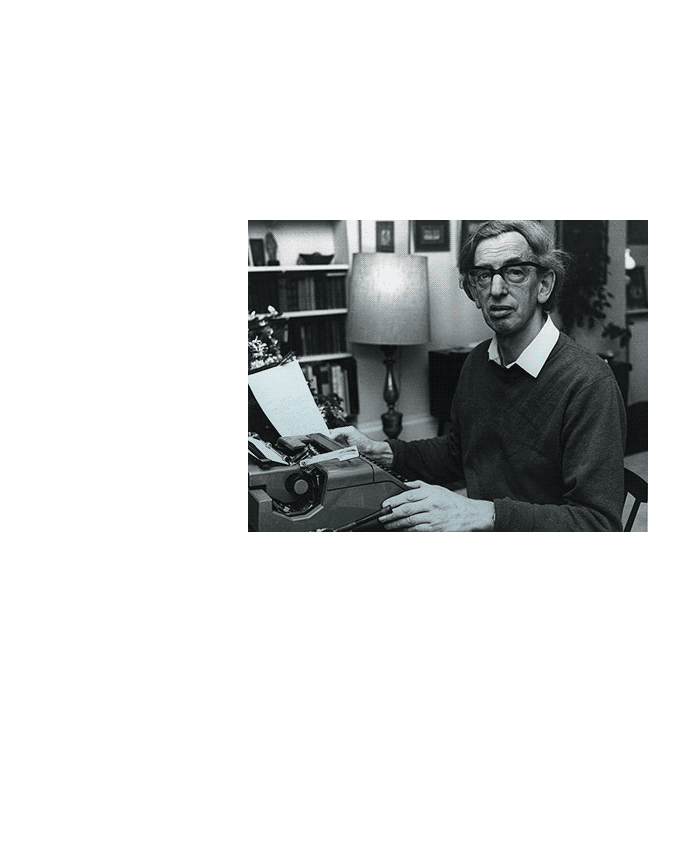
Eric Hobsbawm is one of the most important historians of the last century, the author of the concepts of the “long 19th century” (from the French Revolution to the First World War) and the “short 20th century” (from the First World War to the collapse of the Soviet Union). His latest book, “Broken Time,” about modern culture and art, was translated into Russian—together with translator Nikolai Okhotin, “Gorky” figured out why it was interesting and what was wrong with it.
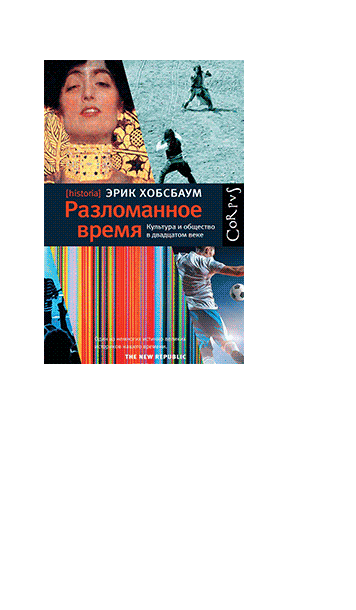
Eric Hobsbawm. Broken time. Culture and society in the twentieth century. M.: Corpus Publishing House, 2017. Translation by N. Okhotin
Culture in the era of technical reproducibility
“This book is about what happened to the art and culture of bourgeois society after, with the passing of the generation of 1914, this society itself ceased to exist forever. About one aspect of the global tectonic shift that befell humanity since the 1950s, when the Middle Ages suddenly ended for 80% of the world's population, about the 1960s, when the rules and conventions of human relations apparently became outdated at once and everywhere.
It is impossible to think of more suitable words (the book opens with them) to characterize Hobsbawm’s desire to draw a final line under the diverse culture of the last century and outline the first shoots of the culture of the 21st (I wonder how long a historian would measure our century if he spoke of the “long nineteenth” and “short twentieth” centuries?). From whom, if not from Hobsbawm, can one expect a simultaneously profound and lucid verdict on the contradictory cultural processes that he witnessed? His encyclopedic history of Europe from the French Revolution to the fall of the Soviet Union is The Century of Revolution. 1789–1848", "The Age of Capital. 1848–1874", "The Age of Empires. 1875–1914" and "A Century of Extremes. 1914–1991” - combines careful analysis and artistic skill, which are harmoniously combined in the works of professional historians not as often as we would like. And in view of the unsurpassed magnum opus about the two-century fate of European society, Hobsbawm automatically receives carte blanche in areas a little more modest - for example, in the art and culture of this society, which is dedicated to "Broken Time".
Growing up in interwar Vienna, one of Europe's cultural capitals (though at the end of its glory days), Hobsbawm absorbed both high and low culture in equal measure. Or, as they would say now, both highbrow and lowbrow - thereby becoming, perhaps, one of the first nobrow historians, long before journalist John Seabrook popularized the term in the late 1990s, breaking down hierarchies and mixing together elite and mass values. A connoisseur of classical music, opera, jazz (which he wrote about under a pseudonym for The New Statesman and other magazines in the 1950s), classical and avant-garde fine art, cinema, even, God forbid, football, Hobsbawm had tastes so broad that he could write a book about each of his interests. He did this in part - for example, in the works "The Jazz Scene" and "Behind Time: The Decline and Fall of the 20th Century Avant-Garde."
“Broken Time” includes reflections on everything else: academic music festivals, Art Nouveau, the Russian avant-garde, Parisian “statuemania,” totalitarian art, bourgeois German “Bildung,” the decline of cultural diversity of the Habsburg era, the revolutionary upheavals of Duchamp and Warhol, and much more. This thematic dispersion is explained by the fact that the art of the new millennium cannot be understood without the historical context of 19th-century Europe, “where not only the classical canons of music, opera, ballet and drama were laid, but also in a number of countries the foundations of the language of modern literature.” Therefore, general reflections on the computerization and digitalization of the cultural sphere (with the obligatory reference to Benjamin’s “The Work of Art in the Age of Its Technical Reproducibility”) sit side by side with capacious but detailed stories about the Belle Époque: for example, an analysis of the emancipation of women and Jews in the 19th century and their relationship to the culture of that time, or a brilliant essay on the main outsider of the Viennese avant-garde, Karl Krauss (“Only National Socialism could make him shut up. He stopped understanding his time after the Nazis came to power and died alone").
Untimely reflections
This motley inflorescence of plots is, alas, at the same time the main flaw of “Broken Time.” Unlike Hobsbawm's main works, this is a far from encyclopedic collection of extremely heterogeneous (both in form and quality) texts from different years from a variety of sources: be it a performance at a music festival or simply a fragment from his other book. Unfortunately, such a hodgepodge, no matter how much one wants, does not amount to at least a coherent picture of “what happened to the art and culture of bourgeois society” in the 20th century. Some articles look completely inappropriate: for example, the book ends with a lecture on how the myth of the American cowboy was born - not on such a note one would expect to part with the last creation of a great historian.
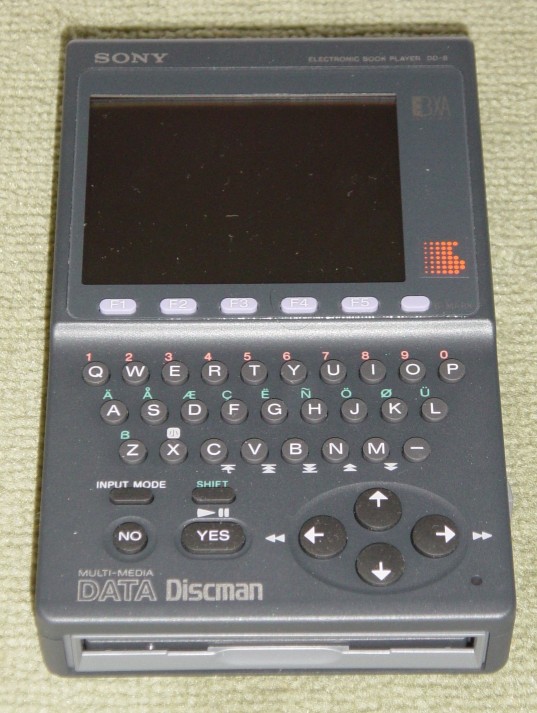
Texts about cultural mutations at the turn of the 20th and 21st centuries, which should give the book uniqueness, unfortunately, are significantly inferior to those where the author works with his usual subject. In his declining years, the historian stepped onto the very precarious ground of forecasts. Many of them miss the mark, not because Hobsbawm suddenly lacked insight and the ability for subtle analysis - he was just fine with this - but because the forecasts themselves were made at an impetuous, changeable and extremely inappropriate time for them. The creators of e-readers, writes Hobsbawm, defending a paper book from an electronic one, “do not even pretend to improve readability, but only increase memory capacity and are proud of the fact that there is no need to turn pages.” The problem is that this was said in 1996. Of course, looking at Data Discman , it was difficult to imagine a Kindle Paperwhite... Or: “Music has already been fundamentally changed thanks to electronics, it no longer depends almost on the ingenuity and technique of the creator. Music of the 21st century will become primarily a produced product.” Even if we assume that we are talking about the most rabid commercial pop, it is difficult to agree with such a strong generalization: throughout the 20th century, the figure of the producer also played an important role (Hobsbawm could recall the great jazz producer Theo Macero), and in the 21st century, the ingenuity and individuality of the creator is perhaps even more important - precisely against the background that new technologies and media have allowed many more people than twenty to become at least a little creator. more than fifty years ago.
Perhaps Hobsbawm's most important and disturbing prophecy concerns the role of the intellectual in twenty-first century politics and society. The “short twenties” have passed, the 93-year-old historian lamented in 2010, when the intellectual personified political protest, fighting against the last colonial wars of Europe and the first imperial wars of America, against nuclear weapons, state tyranny and the cruelties of the penitentiary system: “Where are the great activists and signers of manifestos? With a few exceptions, most famously Noam Chomsky, everyone is silent or dead. Where are the famous French maître à penser , followers of Sartre, Merleau-Ponty, Camus and Raymond Aron, Foucault, Althusser, Derrida and Bourdieu? <...> In a society of endless mass entertainment, intellectuals do not inspire good deeds as much as famous rock musicians or movie stars. A philosopher cannot compete with Bono or Eno, unless he transforms himself into a new figure in this universal show - into a “celebrity”. We live in a new era - at least as long as the universal noise of Facebook self-expression and the egalitarian ideas of the Internet rule the roost.”
On the one hand, Hobsbawm, an intellectual with half a century of experience, quite accurately captured the emerging rejection of his own kind by the new era. On Facebook, everyone is their own Sartre and Foucault rolled into one, and political mobilization today depends much more on the social media of participants than on their intellectual reference points. The cyber-pessimism of someone who has carefully studied revolutions and protest movements is worth listening to. On the other hand, his skepticism already partly contains the answer. Once upon a time, the same Foucault reproached Sartre for arrogance, lordly manners and a tendency to lecture the masses on behalf of abstract truths. The new intellectual, Foucault said, could come from among non-intellectuals - doctors, lawyers and other professionals - and must criticize the existing order where it intersects with his personal experience. It’s the same now: if an intellectual of the format of Sartre or Foucault has outlived his usefulness, why shouldn’t he really transform into a celebrity according to the new rules of the game? It’s not for nothing that Žižek is labeled a “philosophical rock star.” Finally, partly even these concerns of Hobsbawm can be bracketed, because the tradition of intellectual criticism may have been shredded, but it has not gone away: the public speech of the French anthropologist Bruno Latour in New York against the backdrop of the UN climate summit and his support for the then multi-thousand-strong march against climate change in the city is a private, but still iconic example of the synthesis of philosophy, politics and activism in the 21st century.
Nevertheless, even these outstanding articles, written with high journalistic and analytical skill, do not justify Hobsbawm’s apology to his wife at the very beginning: “I apologize to Marlene for paying more attention to the work on this book than I should have.” Even if time was broken, this is not a reason to make a book about it from the fragments.
“When the era waved its hand at us, he was that hand.”
At the request of “Gorky”, the ambiguous content of “Broken Time” was commented on by its translator Nikolai Okhotin :
“Eric Hobsbawm's collection of essays, at first glance, seemed extremely interesting to me, but during the translation process my interest waned. The reason for this is probably the genre itself: public lectures, speeches, texts to order or on occasion. Sometimes there are banal things, quite a lot of water. However, re-reading the book, you feel its important feature, which manifests itself gradually. This feature, no matter how trivial, turns out to be the author himself. Born in 1917, he lived in Vienna until the early 1930s, then in Berlin for several years before emigrating to Britain. Therefore, chapters 6, 7 and 8 about the emancipation of Jews in Germany, their exodus from Central Europe, and about Central Europe itself read almost like excursions into family history. Chapter 11 on “The Last Days of Humanity” by Karl Kraus is a hymn praising the marginalized genius Kraus against the backdrop of the crumbling and settling Habsburg Empire.
The personal essays are the second strong part of the book. Kraus, Bernal, Needham, Overy are a kind of drawing a line: their time has passed, there is no demand for such people, and the author himself is looking for the last place in the series of these bright portraits. This is, in a way, a farewell to the era, those lost times that Hobsbawm the historian carefully restored all his life, and is now leaving behind them. To paraphrase Brecht’s statement (it’s in the book), when the era waved its hand at us, he was that hand.”
___________________________