
Translated material
The landfill of one person
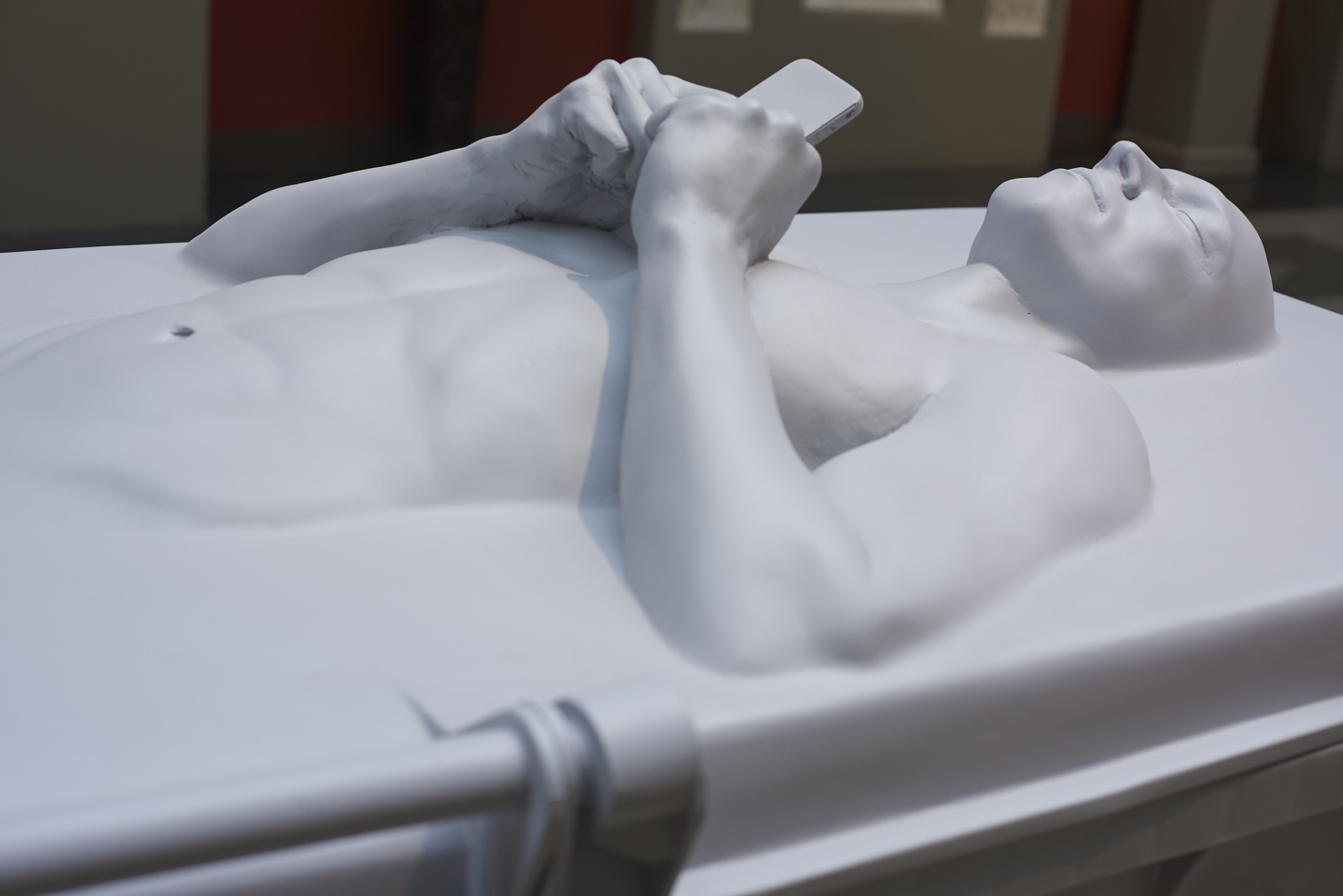
They are young and incredibly energetic. They amaze with their courage and productivity. They are from Krasnodar, not the most noticeable city on the art card of Russia. The Recycle group, which developed in 2008, became one of the most striking and promising phenomena on the Russian cultural advance. Although why only on Russian? Now they are exhibited around the world. Consisting of two artists, Andrei Blokhin and Georgy Kuznetsov, the group received the Kandinsky Prize in 2010 in the nomination “Young Artist” for the Reverse project, after which she shone more than once on the art sites of France, Great Britain, Italy, Belgium and the United States. In 2012, her large Paradise Network exhibition was held in the Moscow Mamma. She also participated in the programs of the Venetian Biennale in 2011 and 2013. This year, along with Grigory Bruskin and Sasha Pirogov, the Recycle group “Bloven Content” opened the Russian Pavilion of the Venetian Biennale. A little later, at the end of June, the opening of her personal exhibition Homo Virtualis at the Pushkin Pushkin Pushkin Pushkin Pushroom. The curator of the project of the Russian pavilion on Biennale is Ekaterina Shcherbakova.
- Let's start our conversation with the hottest events of this year for you - with the Venetian Biennale, where you represented the Russian pavilion. From his concept, with a rather unexpectedly neighborhood, the young art group Recycle and such a well-deserved classic as the artist Grisha Bruskin . How comfortable do you feel with him in the walls of one pavilion? How do you think that the curator, commissar of the Russian pavilion, Semen Mikhailovsky in this story, invested? How dramatic are you experiencing such a neighborhood?
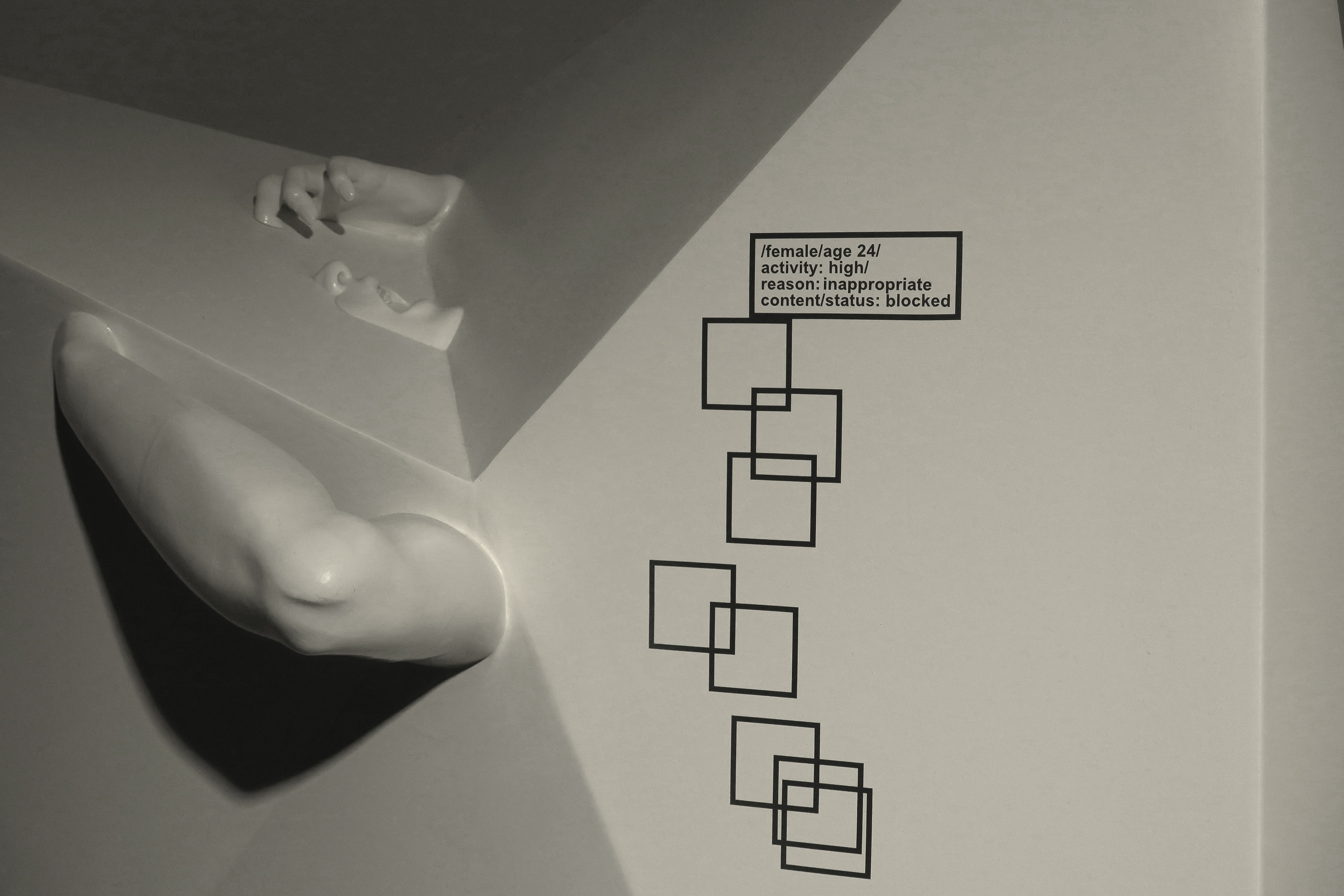
Andrei Blokhin: A similar neighborhood is by no means dramatic. The general concept of the pavilion is Teatrum Orbis, “Theater of Life and Death”. We got the part of it called Blocked Content, “blocked content”. It is dedicated to human life, his freedom inside modern media, what is the eternal life inside the Internet, because if you are on the same Facebook and other networks, your profile lives forever. The only way to kill you is to block. None of what was said, recorded, is not erased, everything is stored on servers. So our project on freedom of information, about human relationships within the whole process. Including about the new morality, which is formed in the conditions of our presence in the “third dimension” on the Internet.
Blocking is quite comparable to virtual hell
Georgy Kuznetsov : In this “third reality”, the virtual world, a person continues to invest various images from his spiritual and material world, in fact not understanding what this reality refers to. People stubbornly try to leave a trace there, putting the best photos, projects, thoughts in their profiles. They willingly share them with their friends or simply strangers. Having lost all these data, a person essentially plunges into oblivion. In other words, the lock is quite comparable to a certain virtual hell. In this project, we continue to study the similarity of the spiritual and virtual worlds.
-For the same Bruskin, the theme of life-death and conventions of all the intermediate, as well as the topic of the crowd that absorbing the person, were and remain key. How close are they to you and how do you build your dialogue with it inside the Russian pavilion?
AB: We learned about our participation in the pavilion relatively recently, so we did not have time for long thoughts.
-I know that it was partly force majeure ...
We do not even have personal accounts in social networks. Despite the fact that we work with this topic, we try to stay away from it
AB: Yes. What exactly would do in the Pavilion Bruskin, we could not fully understand. Although we had some thoughts on the basis of the works that he did before. Of course, for him a dominant topic is a person absorbed in the crowd. In our case, this idea is already the consciousness of another generation and, accordingly, into another dimension. Therefore, our connection with him, traced from top to bottom (Bruskin’s works are located on the top floor of the pavilion, the recycle group on the lower one) is quite interesting. It seems to me that the Pavilion project turned out to be quite whole, despite the difference of artists, they all talk about global human problems in one way or another.
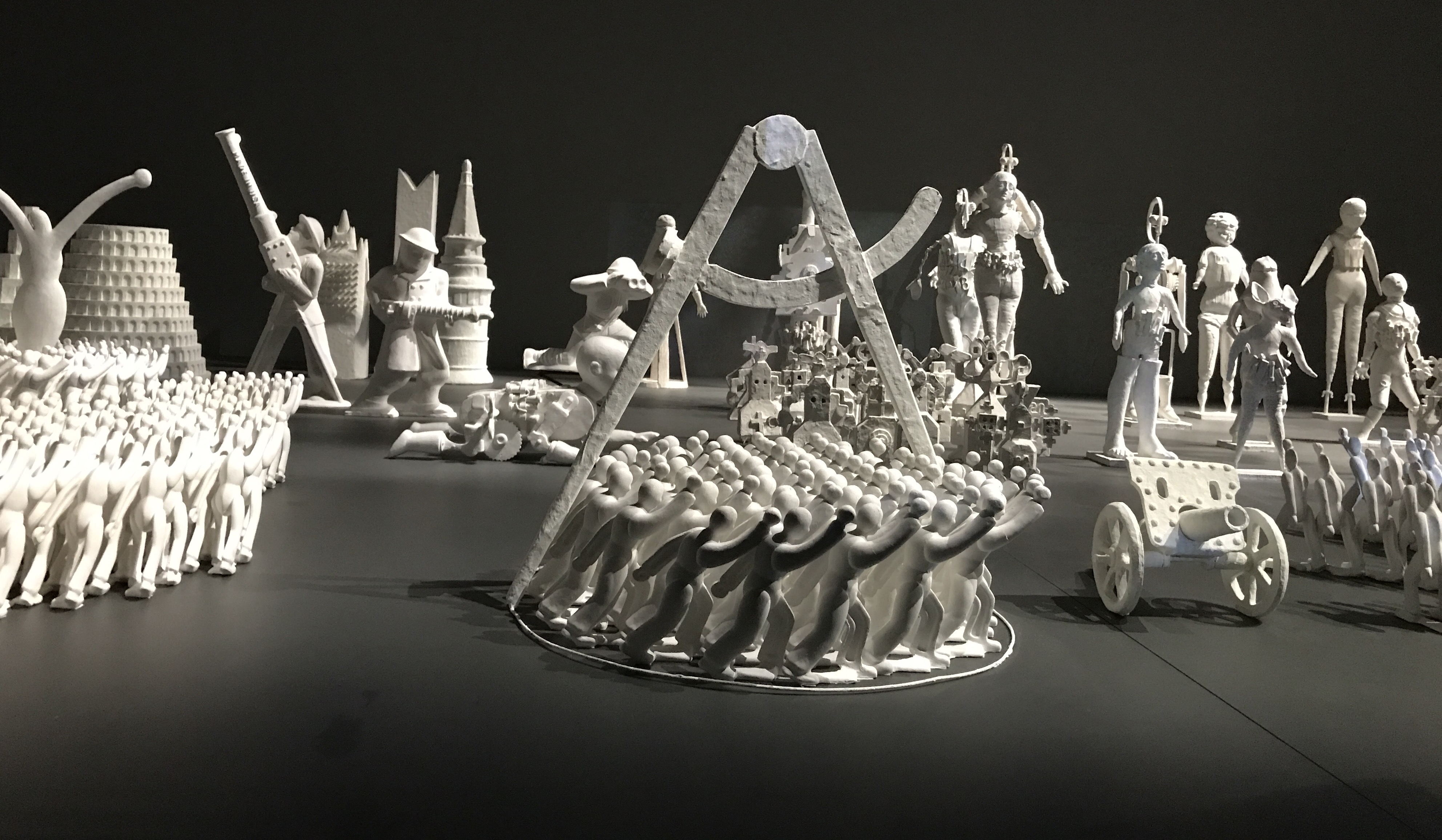
GK: We are exploring the same topic as Bruskin, but only in another space, a different dimension. And stylistically, our projects “lay down” nearby-black and white with black and white. So, it seems to me that the pavilion turned out to be cool.
- Bruskin, with all his author’s uniqueness, is still a person of a certain generation and artist circle. And he, in turn, is quite social. You are obviously others compared to him. How important for your generation is a similar circle of topics?
GK: Personal social identification is not very important for us, we do not even have personal accounts in social networks, there are only general, professional. Despite the fact that we work with this topic, we study it, we ourselves try to stay away from it a little aside, not to be absorbed in social processes. We always need to keep a look from the side in order to objectively understand reality.
AB: We try to keep incognito. Although this in itself does not exclude our participation in social life. Any of our exhibition is a manifestation of social responsibility.
- But, it seems to me, the older generation of artists is much more involved in the “relevance” boiling around. Yes, as artists they can maintain an emphasized distant position, but at the same time they listen to the news, read social networks, and publicly speak on these topics. In other words, they are dramatically “tied” into today's reality, although sometimes they pretend that they think exclusively “about eternity”. As for your distance, it is possible that it is connected with the fact that you have practically from birth on the Internet network, in some virtual space?
When we grew up, the Soviet Union has already collapsed, we did not have a background with red flags and the Lenin paths indicating the path
AB: Probably, although we also listen to the news and read social networks, but we deliberately move away from some momentary political or social topics, we are more interested in general issues. For example, the problems of the same people, regardless of the country of their residence and everything else. It is enough to look at our current project on the Venice Biennale. There are universal problems that do not depend on the same Soviet period in the life of our compatriots. When we grew up, the Soviet Union has already collapsed, we did not have the background with red flags and the Lenin’s path inherent in the memory of the older generation. So in itself this topic has never been close to us. Yes, we all live in Russia and have our own idea of Russian reality, but the thinking of the “Soviet man” is already atrophied in our country.
Ekaterina Shcherbakova : It seems to me that this is because you are more in the position of an observer than an active user.
- Is such a thing as a “Russian artist” preserved for you? How important is national self -identification important to you?
GK: We always tried to be cosmopolitan and look for topics close to any person. Search for what always remains unchanged in the perception of the viewer. Yes, we seemed to go far in technological progress and created this “third” Internet reality, but we still continue to fill it with the same garbage that our heads were filled before. We just study the question that is important to us - why humanity does this and whether it is possible to change the prevailing order of things.
- When you find yourself in a certain international context, work on Western venues, do you feel that you are treated as Russian artists?
AB: Absolutely not, because we do not use those visual codes that often use “Russian artists”. This is again explained by the lack of a direct connection with our Russian reality, the Soviet and post -Soviet context. I think we do not quite fit into all these stereotypes. We worked at a wide variety of western exhibition venues, in museums and galleries, but there was never such that others say: "These are Russians, everything is clear." On our work, it is difficult to determine the “manufacturer”.
E.Sh.: It is obvious that we are all Russian people, although the work of the team may not be read as works from Russia.
GK: Despite the rather wide geography of our exhibition activity, we are still pleased to have a studio in Krasnodar and some part of our time to be there. Still, this is a house.
“ Is there the concept of“ home ”for you? Or is it conditional, temporary?
GK: It is. Although temporary.
AB: It is leveled due to endless flights, movements. Recently, we have a studio in the south of France, and our parents also often go to other countries. For me, the house is the place where you spend the most time and where you feel good. Recently, France has also become a house for me. A person has several houses at the same time.
- Today, many of our compatriots, in connection with some circumstances of the current Russian life, prefer to leave Russia to places that they seem psychologically more comfortable. The atmosphere of today's Russia seems to them too tense. Do you somehow feel it?
It is more comfortable to live in countries where there are much fewer conventions, in an excess of those present in Russia
AB: Yes, a certain tension is felt in the country, but it now exists throughout the world as a whole. At times, we psychologically, technically or from the point of view of creative development are more comfortable to be abroad. In Russia, in fact, there is one center - Moscow, everything is happening there. In St. Petersburg, there are already much less events. In provincial cities, although some projects appear, sometimes even quite successful, their number is infinitely more modest. When you need some kind of development, you feel the need for something new, not tied exclusively to the “Russian codes”, it is more comfortable for you to live in countries where there are much fewer conventions, in an abundance of those present in Russia. But all this does not prevent us from living there and here. We have never used political topics, therefore, perhaps we have never “crushed” us from the outside.
Five years ago, I had to explain to officials in Krasnodar what “installation” is
GK: There is an even greater problem in a narrow professional specification. Small cities in Russia simply do not allow creatively developing. For example, I myself had to explain to officials in Krasnodar five years ago what “installation” is . And this is normal. Now the situation is changing there, already a lot of people are involved in the processes of contemporary art, its propaganda in the mass consciousness. But still, the problem of provincial cities in Russia exists. This makes people often go to where they can be realized more. But wherever we live, we always try to create a certain comfortable world around us, “dragging” our friends, habits, favorite objects into it. So in a sense, it is not so important where we are physically.
- In other words, radicalism in art like what the artist Pavlensky, who received political asylum in France, demonstrates us, is not close to you?
GK: No. We have one position: we are comfortable where we are. You create an atmosphere of comfort for yourself. In the same France where we spend a lot of time, there are also enough problems.
E.Sh.: We are now generally living in a world torn by global wars. There are no more places where you are guaranteed to feel safe.
-Catherine , and what made you start working with this art group?
This is a total installation created by a special atmosphere into which the viewer falls
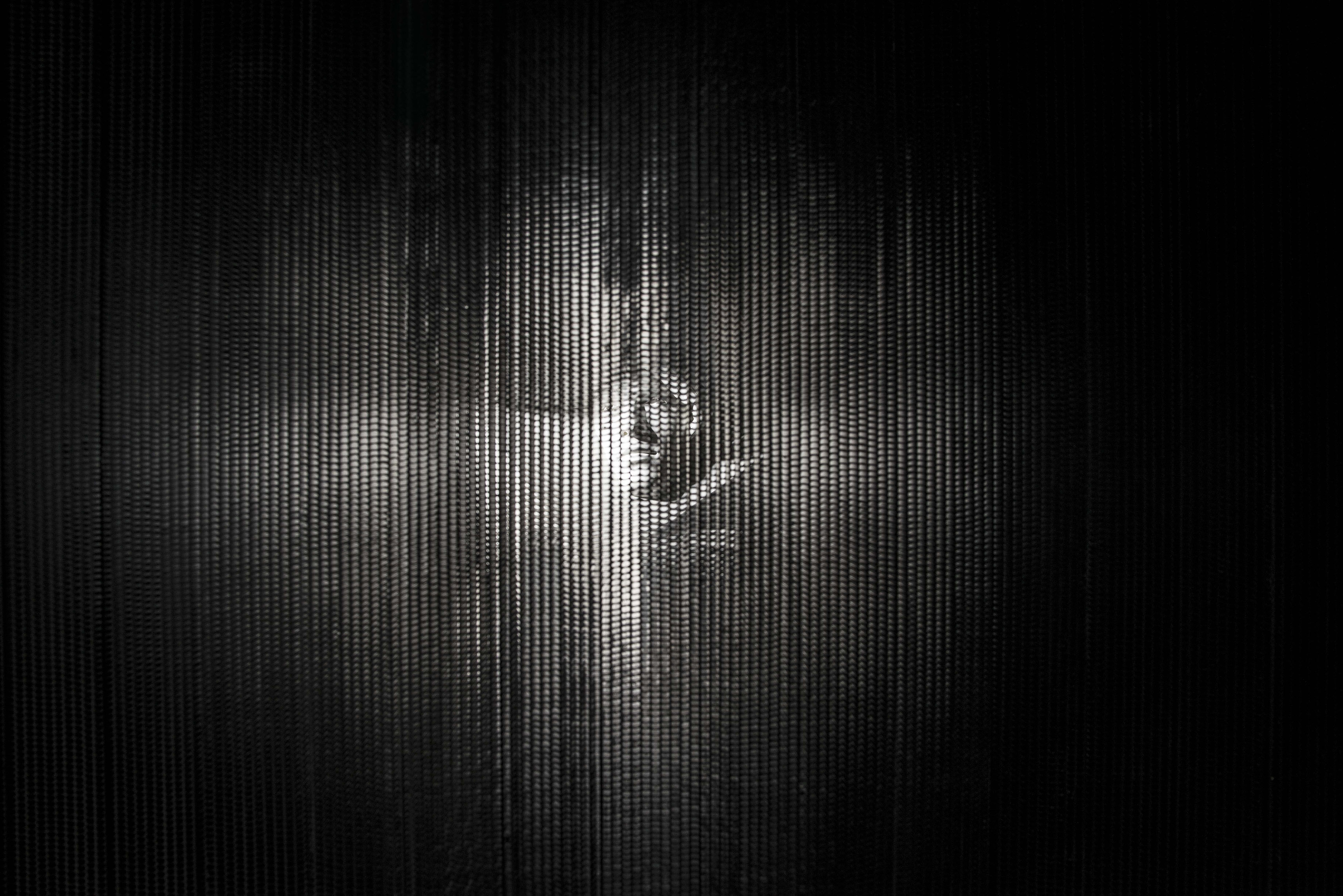
E.Sh.: We have been working together for a long time. It all began in 2012, when a project was done for the Moscow International Biennale of Young Art. Later they cooperated as part of various projects in France and other countries. I created texts for catalogs, art magazines. So we came to cooperation in the framework of the Venice Biennale and Pushkin Mlimee in the most natural way. For example, the Venetian project differs from other Recycle exhibitions because it is a total installation created by a special atmosphere that the viewer falls into. It was important for artists here to give the viewer to feel his own bodily advance in space, to feel the difference between the virtual body, which we begin to realize and feel through the out-of-youth Internet, which we receive every day. This is an open work where people with a variety of personal background can find different meanings for themselves. It seems to me that it turned out to be interesting, if you correlate the pavilion as a whole with the concept of curator Biennale Christine Masel, who said in one of his interviews that “art, probably cannot directly change the world, but sometimes can ask some uncomfortable questions that make the viewer think seriously.” And in the Russian pavilion, it seems to me that it happened. The exhibition was conceived as a kind of opera with three parts. At the same time, Teatrum Orbis is an atlas, that is, all the pictures of the world. Grisha Bruskin has such a thing as “time”, ceases to exist, we are simply in the general array of information and knowledge. Knowledge is not always encyclopedic. It can be different, including alternative forms. Even the body in his project exists as a shamanistic attribute, a kind of artifact. After Bruskin, we go down to the installation of Recycle, which is a maze, falling into which you inevitably ask the question “what is the body, if it is a code?”. And how can you see him then? Here we return to the issue of classical sculpture, to the “ideal body”, “ideal image”, which is now generated by the machine, and that begins to compete with the human mind. Today, after all, even an ordinary car is not just a technical means of transportation, but a certain intellectual object. He has his own morality, according to which he can kill a passenger or pedestrian. There is a moment of “switching” - what we are and what is the intellectual image that exists in the space of the virtual network.
- Could you comment on these figures themselves, growing or growing into stones in your installation?
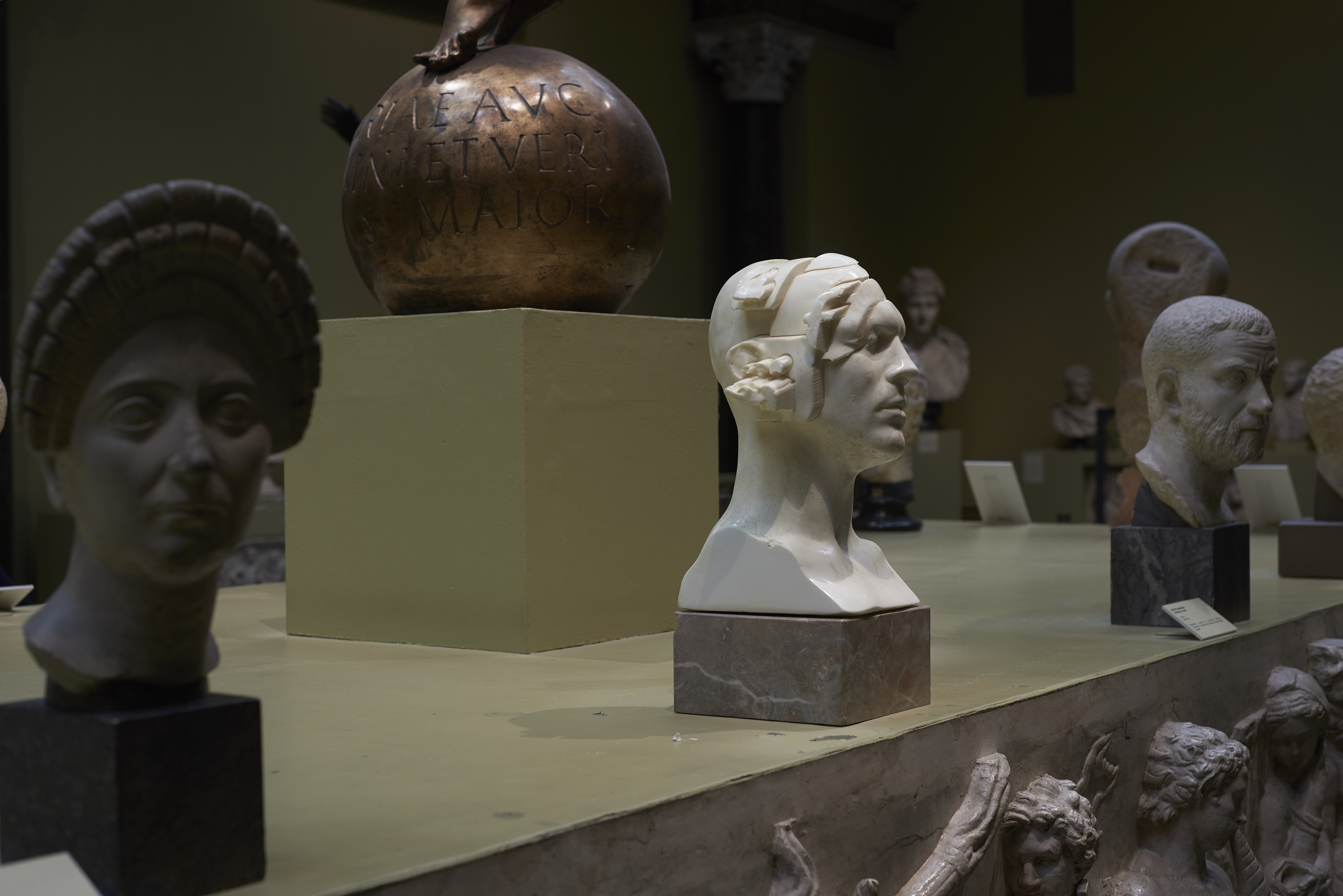
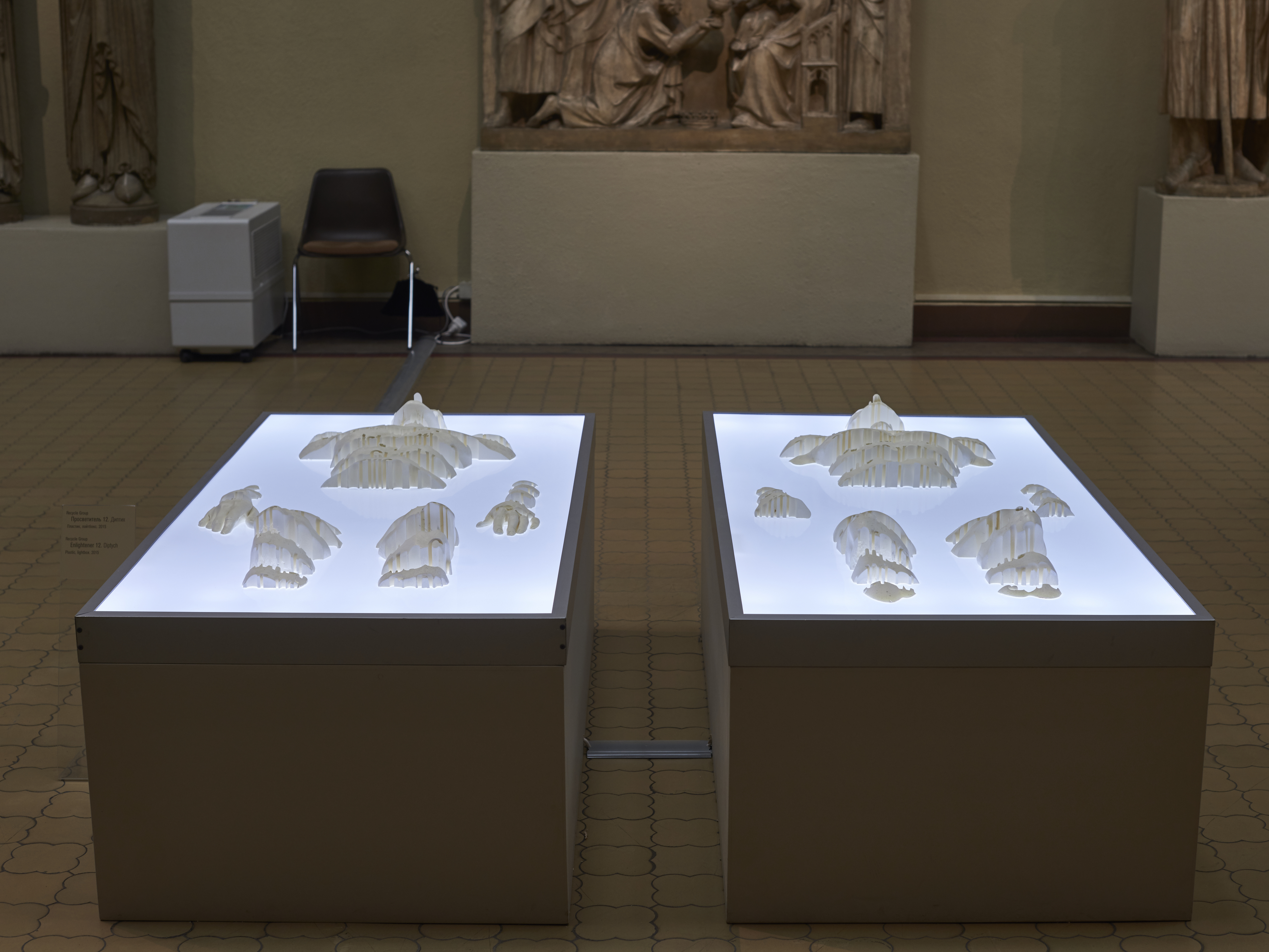
AB: This is not a very stone, but polygonal structures. If you scan the figure of a person with a car, a scanner, it will be broken into landfills, small geometric planes. When we take such a figure and begin to remove these planes and transform them to the state of the silhouette, it will turn into such “sculptures”. They are all formed due to the simplification of the human silhouette due to the analysis of the machine.
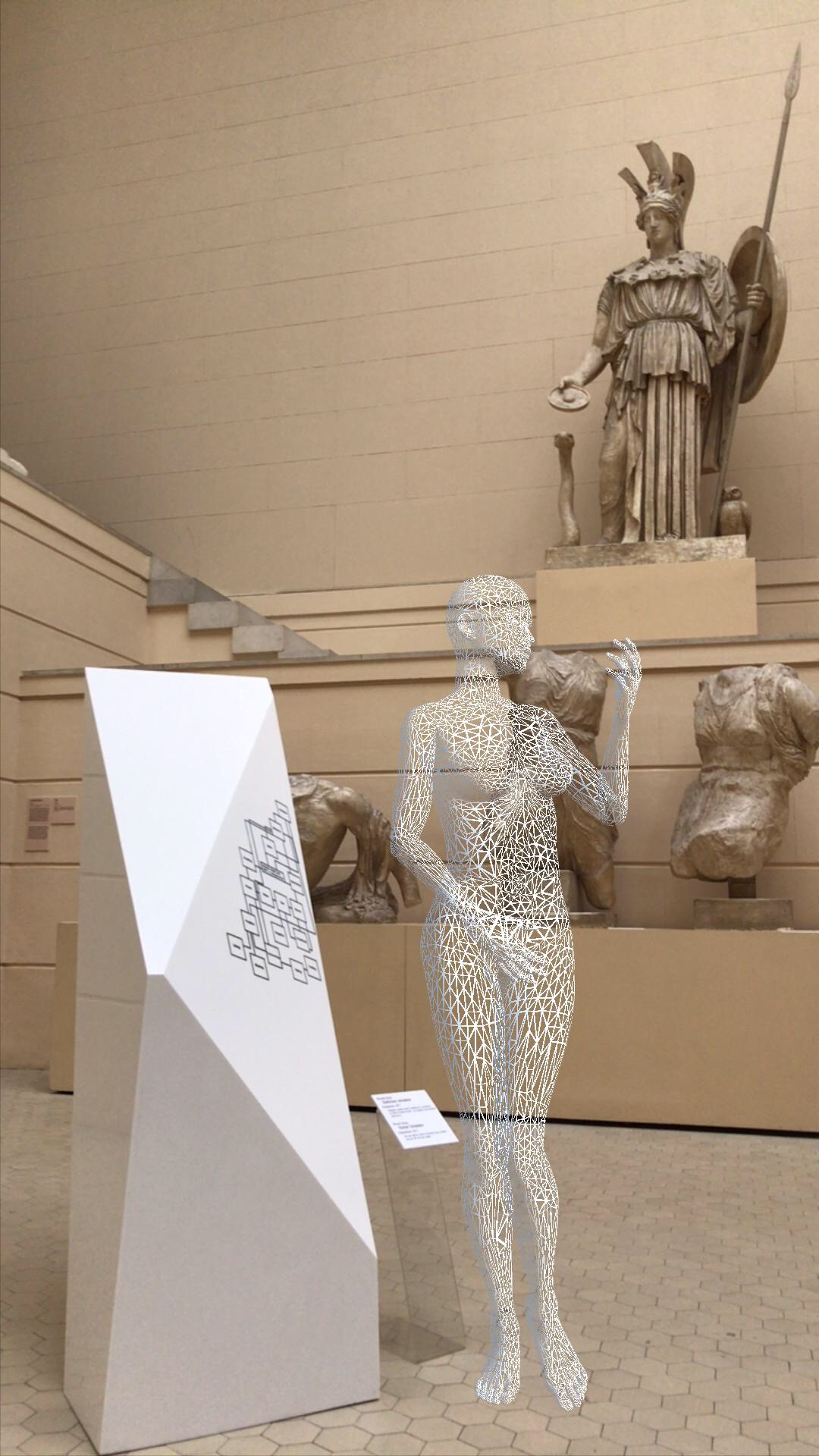
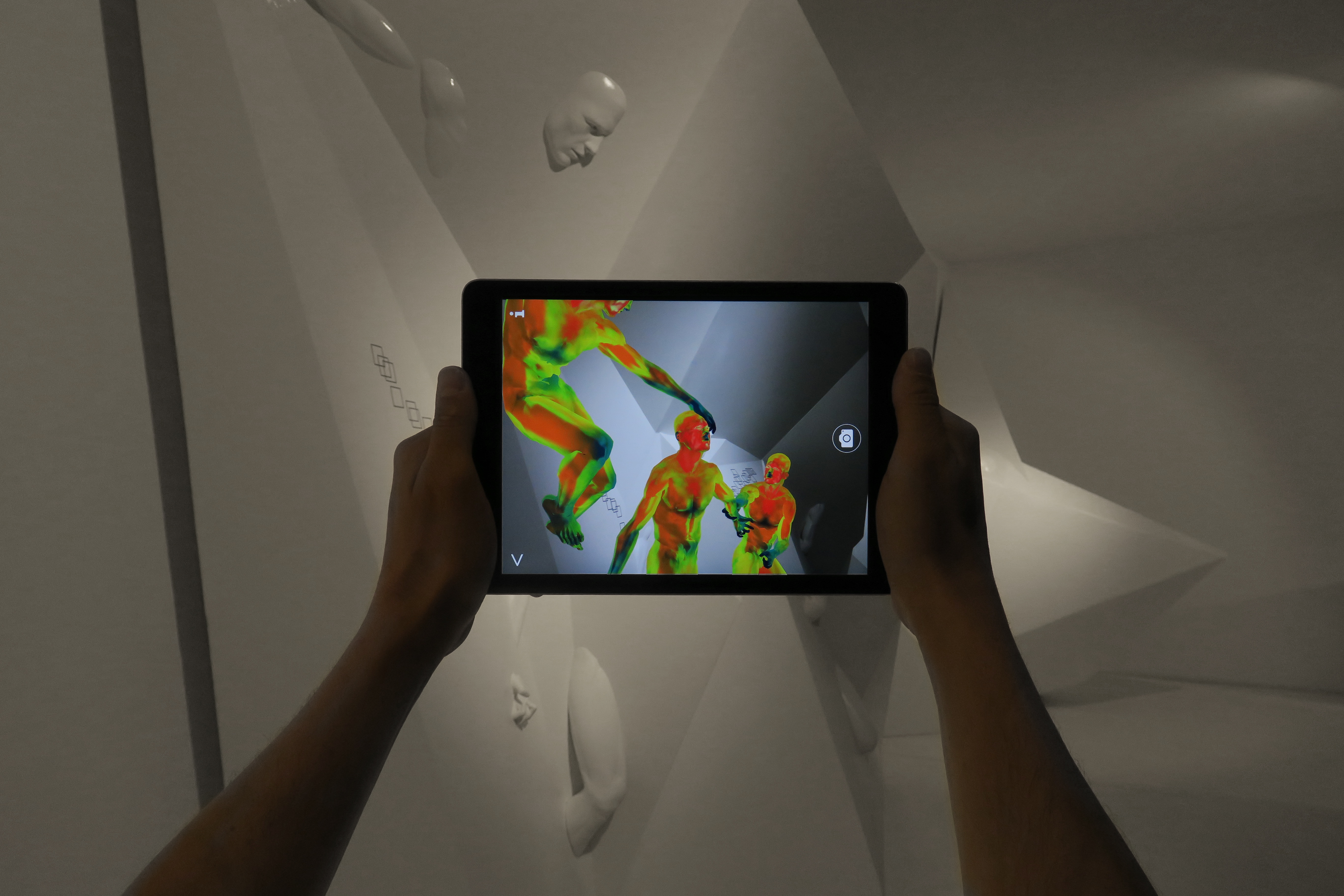
E.Sh.: Here, it seems to me, there is still one important point: in the last decade, we talked a lot about the post-stinter-envelope associated with the use of various computer functions. But this project is one of the first examples of the post-anti-sculpture. We can see these sculptures only thanks to computer OKU. Computer “blocking” becomes blocking physical, accessible to human vision, where the figures are really blocked in these polygonal structures.
Opening the application, we can create things anywhere, around the world
GK: I would add a special application for smartphones, thanks to which you can see these sculptures. A couple of years ago, we had a “virtual intervention” project. As a result, we found the developers and decided to “hack” the Venetian Biennale, creating an exhibition without any permits, consultations with the commission, placing various virtual works throughout Venice, which can only see through our application. And this is only the first step. Opening the application, we can create things anywhere, anywhere, around the world, and at the same time to be at one point. Thus, we find ourselves absolutely not tied to the laws of physics. Our only censor is the Apple Store or Google Play. I think that very soon, when the application is completely finalized, we will begin to open it for other artists. For them, in turn, this will be a unique chance to do cool projects, not attached to either place or official structures, bypassing everything.
E.Sh.: In fact, this is a new version of the street art.
- And a new degree of freedom of art.
GK: A new degree of freedom, but at the same time absolutely legal. And completely invisible. This is a fundamentally new direction in art.
E.Sh.: In the work on this installation, we collaborated with composer Dmitry Courland, who created the sound design of the project. One of the historical allusions is the image of hell in the “Divine Comedy” Dante, the 9th circle. Мы вместе обсуждали, как может звучать этот проект, поскольку нам было важно добавить сюда некий элемент театральности, и Дмитрий предложил озвучить его тающим льдом. Процесс таяния льда – аллегория, одновременно предполагающая и присутствие холода, льда, и наступившую оттепель. В итоге возникла композиция, в которой слышатся и звуки тающего льда, и каких-то голосов, что-то нам пытающихся сообщить, но мы не можем понять смысла этих слов.
– Расскажите о ваших планах на будущее.
Новая степень свободы, но при этом абсолютно легальная. И совершенно невидимая
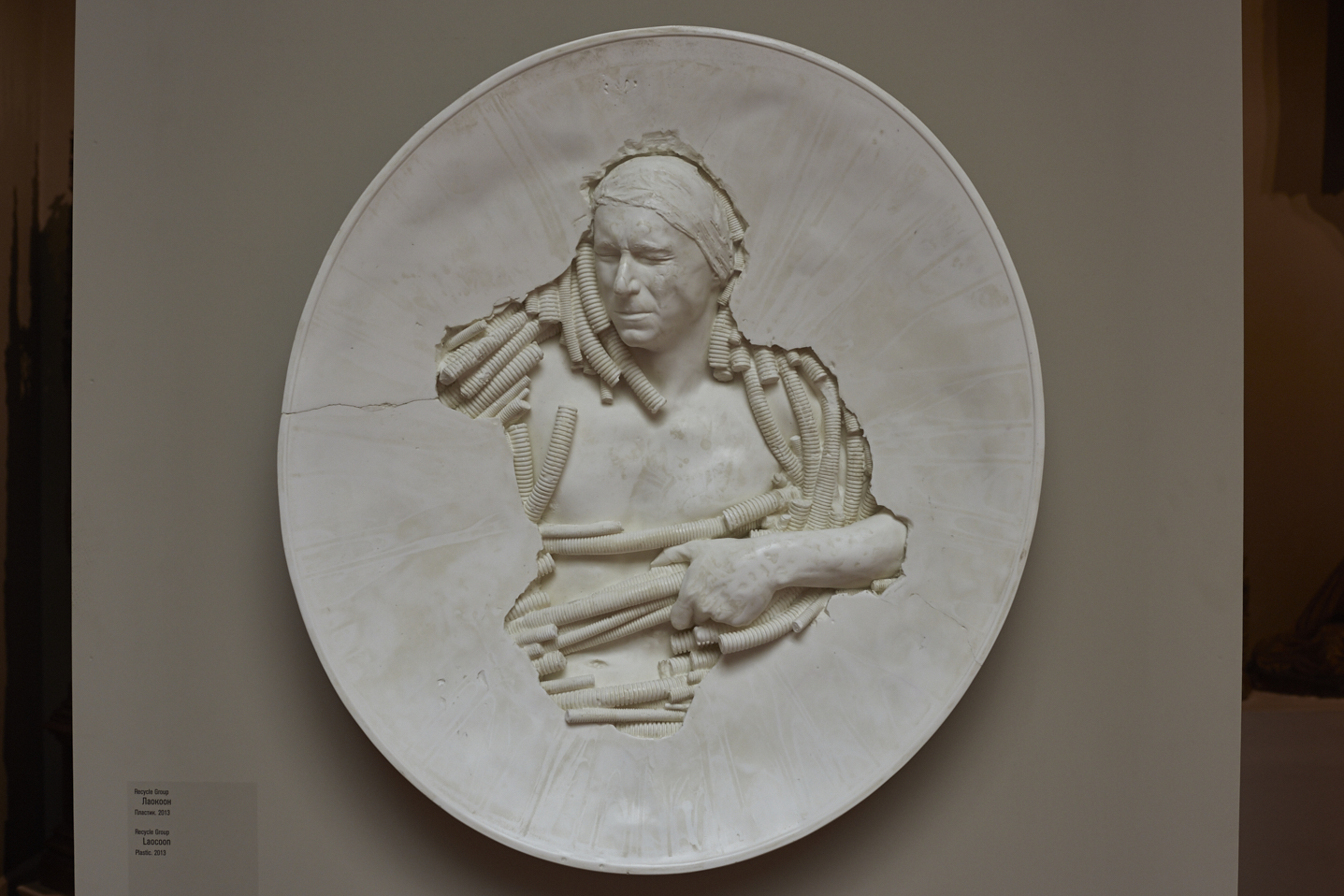
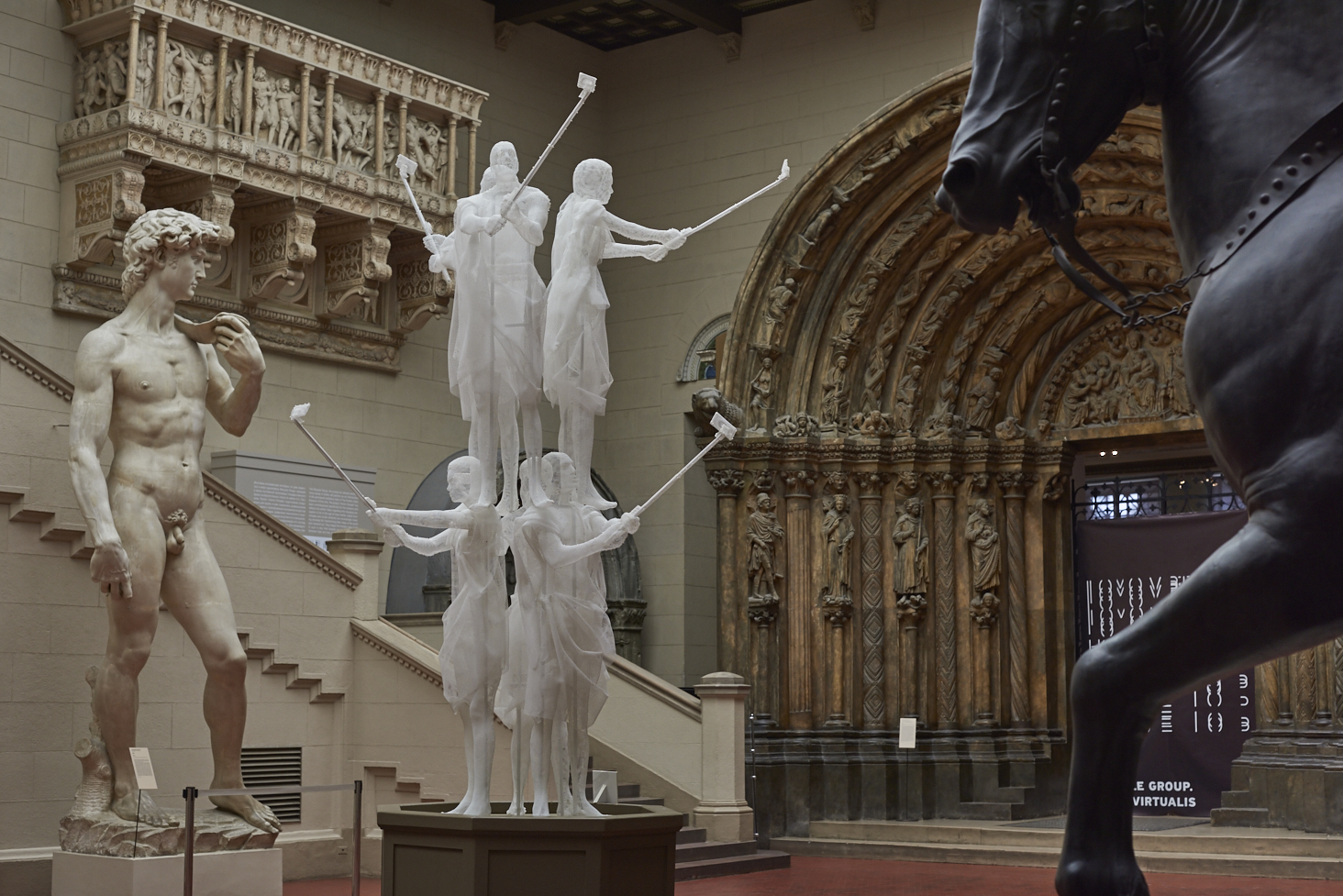
А.Б.: 20 июня открылась наша персональная выставка в музее имени Пушкина в Москве Homo Virtualis. В ней мы тоже используем приложение и различные виртуальные объекты. Работы все новые, за исключением нескольких вещей из прошлой нашей венецианской выставки 2015 года Conversion, в которой сравнивалось подключение к Глобальной сети с обрядом обращения в религию, где главное божество – сумма всей информации, находящейся в виртуальном пространстве. В Пушкинском музее мы спровоцировали интервенцию в постоянную коллекцию музея, поместив наши скульптуры в контекст классических музейных объектов. Нам интересно изучить эти диалоги, понять взаимодействие классики и не-классики. Ход это достаточно старый, но каждый раз он работает по-новому в зависимости от того, что именно ты туда помещаешь. А осенью планируем делать проект для Московской международной биеннале. Кроме того, у нас в планах Лионская биеннале, выставка во Франции в регионе Атэш, несколько мероприятий в Лондоне и выставка в Москве на Винзаводе.