
Translated material
"He will just disappear"
Why Ali Feruz cannot be given to Uzbekistan
Uzbek melons, cotton fields, migrant workers, poverty - this is about all the average associations of the Russian with this country. Few of us recall that Uzbekistan is a totalitarian state, which has passed through several waves of political repression, with powerful security services, the complete lack of civil freedoms and the intimidated population to the limit.
For more than 20 years, Amnesty International has been documenting a violation of human rights and torture in Uzbek prisons. Human Rights Watch writes about thousands arrested for political reasons, from Muslims to civil activists, from journalists to any critics of the regime.
Bad news: Russia is actively participating in the expulsion and abduction of Uzbek political activists, opponents of the regime and random victims - such as our author Ali Feruz. The political matter, once in charge of Uzbekistan, can overtake the refugee after many years in any country of the post -Soviet space.
To understand why our colleague Ali Feruz was sentenced to extradition and what awaits him in his homeland, we talked with human rights activists and the man who himself spent several years in the Uzbek prison.
Nadezhda Ataeva
President of the Association "Human Rights in Central Asia", France
-Ali addressed us in 2010, when the detention of Uzbeks, representatives of the Muslim community of Alma-Ata, where he lived then began. Kazakhstan granted him the right to permanent residence on humanitarian grounds for a year, but Ali moved to Russia, began to work as a journalist. He left on time: after his departure, 32 applicants for refugee status were issued to Uzbekistan at an extradition request. All of them received large prison terms - from 5 to 20 years - for contact with the Islamic movement of Uzbekistan forbidden organization. Only two were released. It was a tragedy, human rights activists have collected a lot of evidence of torture in Uzbekistan, among the extraordified those who once went through Uzbek dungeons and torture were. The courts of the testimony of torture did not take into account.
In 2011, Human Rights Watch, the French organization Acat-France, Amnesty International, our association and International Federal Human Rights turned to the Kazakhstan Prosecutor General and said that the UN convention against the torture would cause an improving the UN Convention.
In Uzbekistan, in families where at least one person is convicted under articles on crimes against the state, all adult relatives are registered with the police, this prevents them from entering universities, getting up to work at state institutions, and traveling abroad.
Everyone who has been convicted in this case, is now serving a second time in a row. The new arrested previously attributed participation in the Islamic underground, now - in ISIS, like Ali, although ISIS ( prohibited in Russia . - Ed. ) In general, appeared several years later.
Ali cannot be returned to Uzbekistan. There he will go in a steam locomotive for those 32 extradited from Kazakhstan. Most likely, there is an article 159 (“an encroachment on the constitutional system”) for contact with convicted members of an informal religious community threatens there. Naturally, Ali is not guilty of anything.
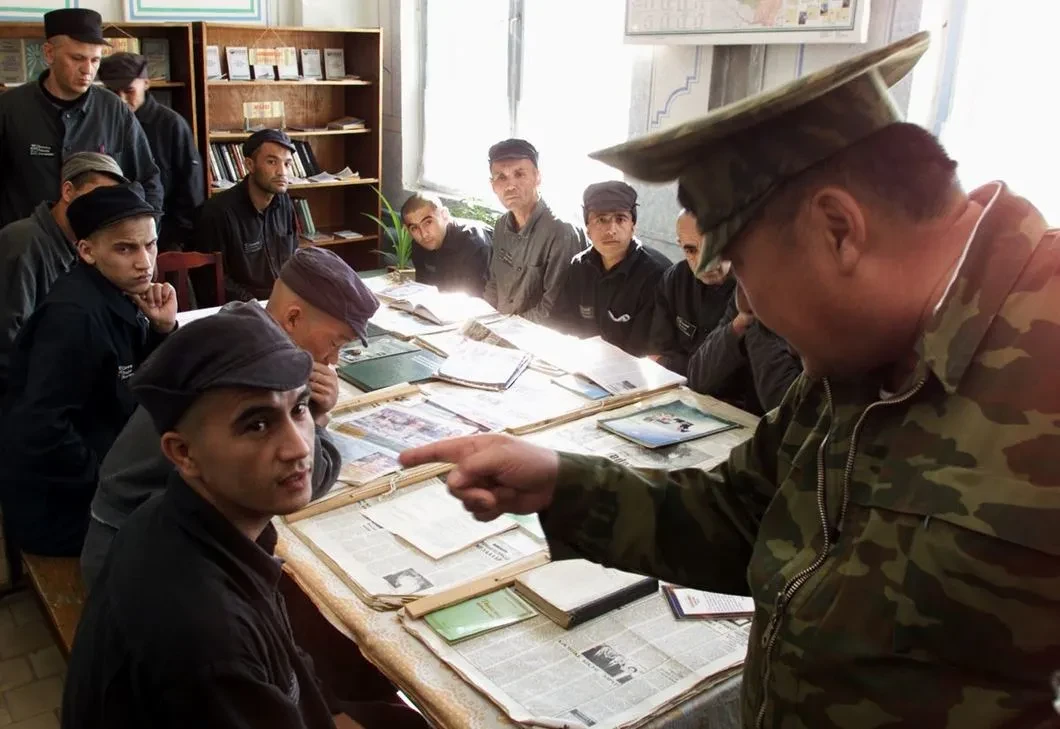
Russia extradits hundreds of people to Uzbekistan. The current President Mirziyoyev pursues pro -Russian policy, so Russia supports it and the cooperation of special services is strengthened with such extraditions. If the Uzbek authorities know that their citizen is in another country, they make a request, come there on a business trip. In Egypt, Turkey, Tajikistan, Kyrgyzstan, Kazakhstan and Russia, Uzbek intelligence services behave at home. As part of the agreements of the Shanghai Cooperation Organization (SCO), they have no legal obstacles to this. We have a secret document, which is signed by the former first deputy chairman of the SNB. It refers to the use of psychotropic drugs during special operations to return to Uzbekistan “separatists and extremists” - they are usually called people who are pursued for political reasons.
Typically, citizens of Uzbekistan are taken away from the country quickly and quietly, so their relatives do not know where they are. We were doing the Davron Komoliddinov. He disappeared in Russia, later relatives found him in a pre -trial detention center in Uzbekistan. When we conducted an investigation, it turned out that he was detained at the request of Uzbekistan in Krasnoyarsk, sent to a pre -trial detention center in Moscow and, when a refusal to appeal in his case came, they were quietly extradited, without saying either his relatives or a lawyer. For everyone, he just disappeared. In Uzbekistan, Komoliddinov was bypassing passport control, so that he was not in the database of those who entered the country, and quickly sentenced to seven years in prison for an “encroachment on the constitutional system” and “participation in the activities of a religious and extremist organization”. We have every reason to think that in order to get recognition, Komoliddinov was tortured.
This is a typical situation. If a person is extracted from Russia, he is delivered to the airport as a bag. While relatives are looking for him unsuccessfully, in prisons of Uzbekistan he passes through torture, gives evidence against himself and other people. Then the victims at a meeting with loved ones argue: “Here everyone is sitting for a long time, up to 25 years old, and they gave me only 5, and I can fall under an amnesty, but I passed everyone.” Political prisoners are sentenced for the largest terms, and Uzbek prisons are tuberculosis, hepatitis, monstrous working conditions and simply slavery. We do not know details: since March 2013, the mission of the International Committee of the Red Cross cannot visit them.
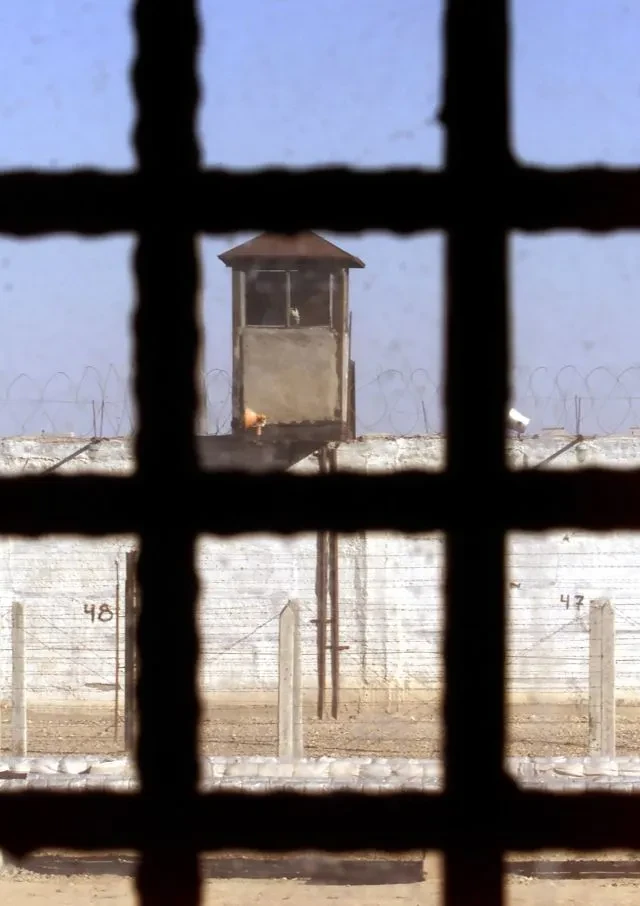
The entire trial is a formality, the decision is made in a short time and on the basis of recognition. We know cases when in 10 minutes people were sentenced for long terms for especially grave articles. The state provides lawyers only for investigation and in court, lawyers from the state most often support the prosecution, and relatives still do not often have money to defend. In 2005, Sunnat Talasov was convicted of Karimov, sentenced to ten years in prison. And he is completely, one hundred percent blind. The judge supported the side of the prosecution, did not fall under the amnesty of Talasov.
Another loud episode is the process of Norwegian Uzbeks in December 2014. The Uzbeks massively went to earn money to Norway, it is easy to find work there and pay well. Many filed refugee status, not having the goal of staying, just to get the opportunity to live and work legally, and then return home. Most of them stated that they are representatives of LGBT, in Uzbekistan, sodisting still falls under the 120th article of the Criminal Code. The Uzbeks accepted a statement for refugee status, but the employees of the migration service realized that they had lied and deported them. All the "Norwegian Uzbeks" extradited to Tashkent, arrested, on television showed their interrogations that were shot with a hidden camera. In the first interrogations, they cried and said that it was not gay - what is true - but after a few interrogations they already recognized everything in everything. They were sentenced to 12–13 years in prison for sodist, an encroachment on the constitutional system and the spread of illegal literature. Moreover, the 120th article is the worst, it is used by the authorities as political against opponents, even if they are not gays. It means a shame on the native and discriminatory attitude in the colony. Moreover, now, if Uzbek went to earn money in Norway, he is considered gay, and in society he becomes an outcast. The authorities hung such a label.
Citizens of Uzbekistan are monstrously afraid of extradition. In 2012, Abdusamat Fasletdinov, a guy who was accused of Khizb Ut-Tahrir, committed suicide in the Moscow pre-trial detention center-4. Only so as not to get into the Uzbek prison.
Daniel Andersen
former prisoner of the Uzbek prison
- Since 2003, I have been living in Norway, I received political asylum there. In 2014, my mother was sick, I wanted to go home, but they did not give me a visa, and my mother was not allowed to go to me. I went to Kyrgyzstan, there there is such a place on the border - controversial. I rented an apartment there, my mother was brought to me. And the next day I was arrested, saying that I was in Uzbekistan.
They did not ask about the crossing of the border in interrogations, only about the democratic party - they believe, this is a terrorist organization, I was its member. And they asked about familiar European human rights activists, I worked with them then. But I told them that I did not know anyone, I did not work with anyone. They say: "Your sister is standing outside the door, waiting for you, if you do not write a recognition, we will take your sister and rape all four before your eyes." I did not believe. And then my sister calls: "I came for you, I'm waiting for you here." I said: "Do not come in, leave." And he wrote everything as they dictated: that he was a member of the Democratic Party, he worked with human rights activists, that we wanted to take power by force, arrange terrorist attacks that I was gay ... Then they took me special services and took me to Tashkent to the Guards, to the SNB pre -trial detention center - this is a special service, like in Russia of the FSB. This is very serious. Every minute on the Guards is a real hell. I was tormented there for nine months.
They wanted to give the 159th article (“an encroachment on the constitutional system of the Republic of Uzbekistan”) and the 120th (“Sodium”). The 120th is hanged by all political, so that they simply mock, so that they are offended ( *omitted.- *er ) were in prison and did not survive. It is very difficult to sit on it: separate dishes, you can’t talk with men, the most difficult work. Before me, six people were planted from Norway, all of both the 159th and 120th. But my family paid the SNB, and they gave me only the 223rd (illegal crossing of the border), but to the maximum-9 years.
I have not seen a lawyer at all. The Norwegians wrote for me, asked. So they were told that in Uzbekistan there is no Daniel Andersen. I am so called Norwegian documents, and in prison I was under the Uzbek surname. The investigator because of this thought I was a spy.
Your Ali give a political article. 159th, 155th (“terrorism”), 157th (“treason”), 244th (“mass riots”) are political articles, in Uzbekistan they are called the “Red Code”. The “red” prisoners are not kept in ordinary areas, they are sent to prison for especially dangerous ones - Jaslyk, where Aral ( *Zhaslyk colony 64/71. - *E.R. ). There, many tuberculosis are sick, die. There is no weekend, they work for 12, 16 hours, at a brick factory. You can’t do it. If the political in the usual zone, criminals cannot be communicated with it. When the political was sick, I could not give them the medicines openly, I threw it quietly at night, and the guards shouted to me: "What are you helping the enemies of the people?" They are enemies of the people, as under Stalin.
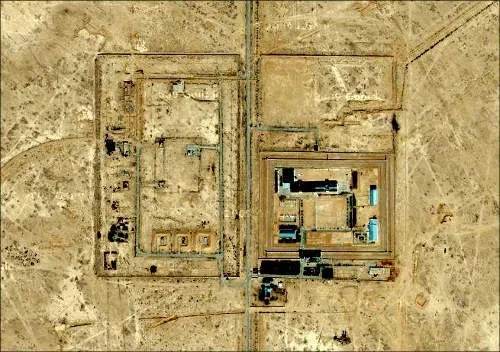
Also, according to political "promotion," add deadlines. How to go out to political time, they will write to him that he in prison violated the laws, and under the 221st article (“Disocation by the legal requirements of the administration of the institution for the execution of punishment”) will be added 3.5 years. All political ones know that they will not come out, live in prison, do not wait for anything. I was political with a man in the zone. When he was tortured, they beat him on the spine, so that his legs were paralyzed. He was sitting lying. So he was added to the deadline: they gave 11 in court, and he had served 18 by that time already.
Try very much. There are “shaggy” zones - criminals who beat and take evidence. For this they are given individual cameras, cigarettes, TV. "Lokhmachi" took me once at night. They wanted to open a new business in the zone and plant for espionage. Until the morning I was tortured, beaten. I can’t talk about it to you now, it’s bad for me. In the morning, they gave the papers: "You will write what you did not say in the investigation." But I did not write.
I did not believe a gram that I would go out. But on the amnesty, they released. First, in the colony-settlement, then, when 4 years remained, for forced labor: live at home and work for free. From under the supervision, I ran away. I got to Norway. In Uzbekistan and Russia, they put me on the wanted list, gave me another five years of strict regime. If I come to Russia, I will also take me away.
Now I get sick, do not work, I am mainly treated. I try to be silent about the prison. There, in Uzbekistan, my relatives tortured them: they come, take them away, terrorize them ...
If the Russian authorities hear, let not send your boyfriend to Uzbekistan. He will not survive. He will be taken from the airport, one hundred percent. A direct road to his guards.
Evgeny Zhovtis
Head of the Kazakhstan International Human Rights Bureau
- Russia does not guarantee security refugees. In addition to legal decisions on extradition, we faced a number of abductions of citizens of Uzbekistan from Russia. The Russian courts made decisions on the refusal of extradition, people were issued - but at the exit from the court they disappeared and surfaced in the pre -trial detention center of the National Security and Defense of Uzbekistan. These are not individual cases, but a large-scale practice that has been continuing since the 1990s.
Uzbek, so to call, justice far from international standards. Firstly, torture is used there, they are evidenced by a number of reports of the UN Committee against torture and international organizations. Secondly, there is no independent justice, the accused is not guaranteed a free lawsuit. People illegally remain in prisons for years and decades. Any extradition to Uzbekistan calls into question not only health, but also human life. Therefore, Western countries practically do not give out citizens of Uzbekistan to their homeland.
Why is Russia participating in extradition? It’s just that the political agency is the same for her and Uzbekistan. These are the same modes, the difference is only in the degree of authoritarianism: a clear prevalence of power structures over civilian, politicians over the right. Employees of the special services of both countries most often finished the same academies, know each other. And they work in the mode of preventing threats to themselves.
Denis Jivaga
Deputy Director of the Kazakhstan Human Rights Bureau (has been engaged in the case of Feruz since 2010)
-When Ali fled from Uzbekistan, he was accused under the 159th article (“an encroachment on the constitutional system of the Republic of Uzbekistan”). They blamed it unreasonably, the case was fabricated by Uzbek special services. Since the article is extremist, our countries prefer to quickly get rid of the accused on it, especially now, when everyone is scared by Islamism.
Ali does not expect anything good. And then, and now he was threatened with a long prison term. The courts that in Kazakhstan, that in Russia almost never take into account what may threaten the deported in their homeland. The saddest thing is that lawyers have few options to help a person. In such cases, our authorities immediately forget about all international conventions and put national legislation at the forefront. The close ties of the Russian, Uzbek and Kazakh special services, and their mutual assistance to each other, work in favor of extradition.
Unfortunately, if Ali Feruz is in Uzbekistan, it will be almost impossible to pull it out of there.