
Translated material
Unequal triangle. Can sanctions against Moscow quarrel Washington with Brussels
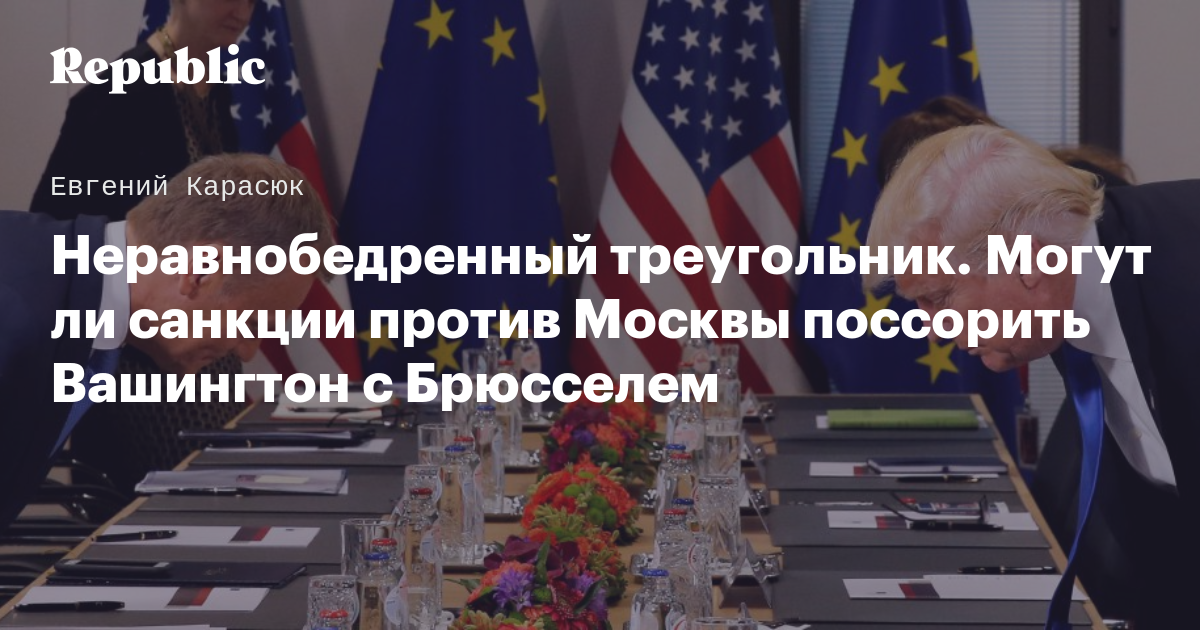
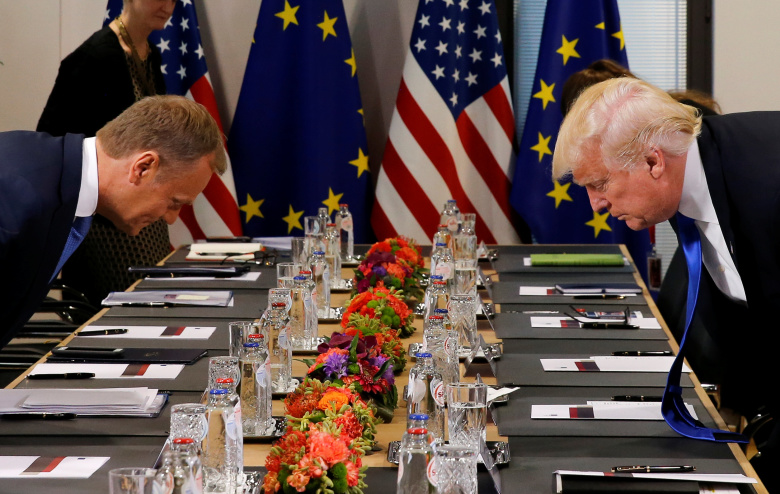
Donald Trump and Donald Tusk before the meeting of EU leaders - the USA in Brussels. Photo: Jonathan Ernst / Reuters
The new package of sanctions against Russia, adopted by the American Congress and signed this week by President Trump, caused a live discussion on both sides of the Atlantic. The European Commission responded about new restrictions with emphasized disapproval, calling the United States to consistency and coordination in such actions. The American magazine The National Interest, having published an article by Angel Stent - Professor Georgetown University and former teacher of MGIMO, author of the book “Why America and Russia Not Hearing each other?” Steit considered that the adoption of anti -Russian sanctions in the form in which they were adopted will affect the relations of the United States with Europe, since Washington politicians clearly did not calculate all the consequences for the European economy.
There was no doubt that Russia would like this point of view - any crack in the foundation of the transatlantic partnership causes enthusiasm in the country's power elites. “When it comes to a real economy, it becomes not up to the notorious Realpolitik, read - transatlantic solidarity,” said Konstantin Kosachev, the head of the International Committee of the Federation Council. The split between Brussels and Washington, which is dreamed of in Moscow, nevertheless has not yet led to noticeable failures in the work of the sanctions machine. Each time, “when it comes to a real economy,” Europeans as a whole take the position of the United States - despite the multi -billion dollar damage from the sanctions wars for Europe itself, which the Kremlin likes to resemble. Why is this so? It is better to understand the logic and priorities of the EU with the following few graphs.
Subscribe to read the whole
Make a subscription Redefine.media to read Republic
Subscribe [you can pay for a Russian or foreign card. The subscription is extended automatically. You can unsubscribe at any time.]
Where are the money subscribers going