
Translated material
Look at Ali
Is there enough “unpleasant differences” in order to destroy a person who did not cause evil to anyone?
Ali Feruz helps “new” to do important work - to deal with the dehumanization of labor migrants. This is not a task for one newspaper, of course, and in general, there may be a key moral question that is now facing Russian society. How to learn to see people in those who do not look like us, and who are we used to not notice?
We live in cities whose infrastructure is supported by workers from Central Asia. Our offices, entrances and university audiences are cleaned with inconspicuous Kyrgyz and Uzbek women. No one knows their names, few of the duty politeness may say hello to them. And when they still greet, the migrants themselves freeze for a second in amazement: it turns out that they can be seen.
The history of labor migration in Russia is already long, and this means that the cultural processes are ordinary in such cases - visitors are embedded in a large society, assimilated. They learn Russian, change jobs at construction sites for work in a cafe, their children are born and study in schools here. But we still communicate little, we know little what our neighbors think about, and what books they read.
Even before the story with the first detention of Ali Feruz and the attempt to deport his deportation, I partly joke, and partly and seriously said that this is our most promising journalist, because he can write not only about migrant problems, but also for themselves - for this growing public group, new readers in Russian.
Attitude to migrants - a test of adulthood for a post -Soviet society. It will be difficult to pass this exam. And Ali Feruz’s deportation case, the attitude of people to him becomes iconic here. What will the Russians say: is it necessary to send such a person to torture and possible death to the hands of the special services of Uzbekistan? Or will society be enough for adults to understand: you need to protect even those who may not like it?
Ali Feruz is my good friend, but I know that he can be seen in a completely different light. Firstly, “very smart”, he wears glasses, argues on the topics of gender equality, speaks in several languages. Secondly, Ali Feruz Gay and does not consider it necessary to be shy. Once he worked in a men's team prone to hussarism, where they loved to brag about their love affairs, listed familiar women. Our colleague supported this rhetoric, and also told several of his stories. So the team learned restraint and, possibly, even respect for women. Thirdly, Ali Feruz Migrant, who was not Russian, who was in the fact that for many, we are already a synonym for the most black atrocities. Finally, Russian propagandists - having no documentary grounds for this - are distributed by rumors about Ali Feruz's connections with extremist groups. The tattoo on his neck is really packed with Arabic scurvy, but it was written there "Born free."
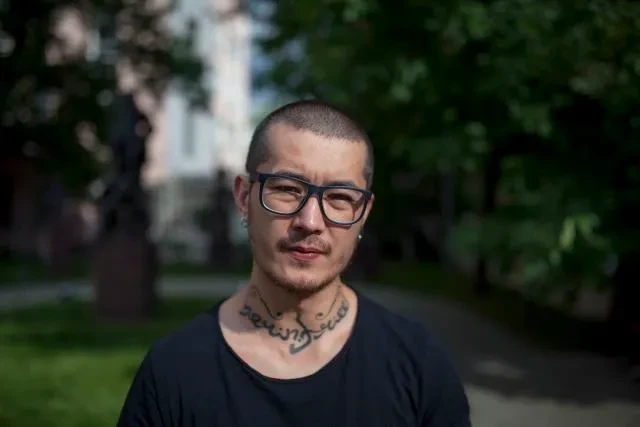
Botanik, gay, migrant, “extremist”, liberal - before us the embodied nightmare of the stereotypical Russian, as the Russian TV represents him.
But is these “unpleasant differences” enough to destroy a person who has not committed any crimes and generally did not cause evil to anyone? The cry of “cut it” from the Internet is now almost not heard against the backdrop of votes in support of our journalist. And so I want to be an optimist. Perhaps the TV is lying, and in Russia we are capable of compassion not only in relation to the heterosexual conservatives of “Slavic nationality”.