
Translated material
"Now I can beat you"
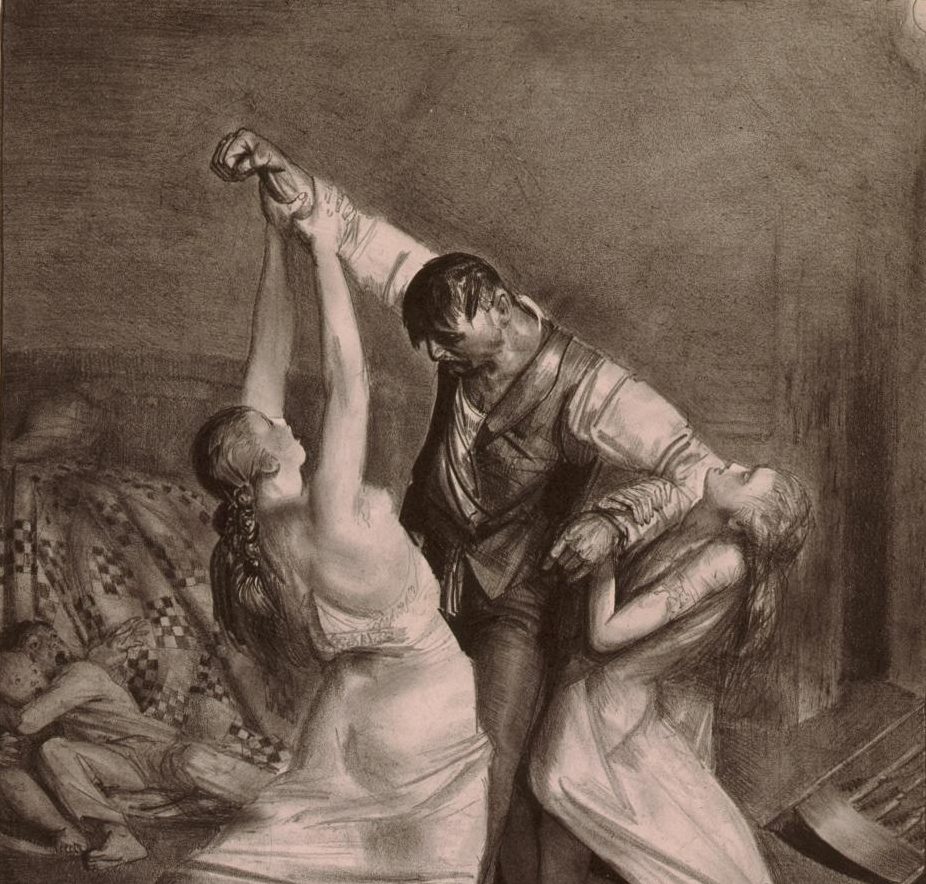
Six months ago, the beatings were decriminalized in Russia. How did this really affect the situation?
Six months ago in Russia entered into force The law on decriminalizing beatings in a family , which provides for administrative liability instead of criminal for damage caused by "close persons" (spouses, parents, relatives). Before decriminalization, cases when a person for beatings received a real term was a rarity. The law signed by Russian President Vladimir Putin on February 7 completely excluded the possibility of criminal liability.
The other day in Perm, the court sentenced to ten years in prison a 38-year-old man who scored his mother to his death. The pensioner has repeatedly contacted the police about beatings. According to the results of one audit, a criminal case of beatings was instituted, but it was terminated due to the entry into force of the law on decriminalization of beatings in the family. Local media accused the police of negligence . The press service of the Ministry of Internal Affairs in the Perm Territory on August 3 published a release justifying the police: they say, they just acted in accordance with the law and therefore could not save the pensioner.
About why this situation is indicative, “such things” talked with experts.
Anna Rivina
Ph.D.
The law on decriminalization confirmed all the fears of experts: the situation worsens. Initially, we did not have the opportunity to understand how really things to do with violence. Protection mechanisms were ineffective, we faced the police unwillingness to participate in such matters, but “close persons” could at least be threatened with criminal liability. It was about the fact that the law on the prevention of domestic violence was needed, but instead the beatings were decriminalized against “close faces”.
Victimbling arises due to the lack of a real exit from the situation of violenceOfficial statistics that would show how the situation has changed is not yet. We can operate with numbers for 2015: more than 50 thousand victims of domestic violence turned to the police. The real figure, of course, is more. Of this number, 36 thousand are women, 11 thousand are children, more than 2 thousand are men. Immediately after the decriminalization of Roizman (Evgeny Roizman, the head of Yekaterinburg. - Approx. TD) stated that the number of calls from the victims of domestic violence increased. According to our data, in Buryatia, in just the first month, more than fifty “kitchen boxers” avoided criminal liability. The courts after the decriminalization of beatings in most cases assign fines that are reflected on the family budget. We are addressed by victims who tell us how they say: "Now I can beat you." And one more: after the decriminalization of beatings, at least four KVN teams in the prime time of the Channel One showed miniatures that fit into the formula: "Thanks to the State Duma, you can now beat." And they heard this message.
Anastasia Khodyreva
Sociologist and feminist
Both before the decriminalization of beatings and the last six months, a huge number of crimes related to the family violence have been committed. This law mainly complicated previously limited access to justice for the victims. That “special path” of Russia, which is expressed primarily in the refusal to observe voluntarily adopted international obligations in the field of protecting the rights of citizens, is already too expensive. To resolve this situation, it is necessary to accept the national plan to prevent violence in close relationships. The recognition of the problem of gender violence at the state level and the emergence of effective measures of prevention, reaction and rehabilitation will also contribute to the fact that the victims of violence will cease to be accused everywhere that they themselves provoked it. After all, Victimbling arises due to the lack of a real exit from the situation of violence. This clearly shows the case in Perm: the police saw everything, conducted checks, but could not do anything, because she acted in accordance with the law. Now, due to the new law on decriminalization, the victims of the system are not only victims, but also the police themselves, and those who adopted the law on decriminalization are still invulnerable.
Marie Davtyan
A lawyer and human rights activist who assisted women affected by sexual and domestic violence
From the very beginning, I said that decriminalization of beatings would not solve the issue of domestic violence. The main problems in this area were immediately visible: the bureaucratized administrative part and a slight punishment for beatings, and because of this it is extremely difficult to prove repeated beatings that should be criminally punishable. We now have a lot of things, similar to the story from Perm. At first, people who received real punishment for beating, fell under an amnesty, and then for decriminalization. It is important to understand that home violence is a system, and people need several years to get out of it. Since 2015, we really do not have time to bring to justice for beatings, because the defendants in these cases fall under an amnesty or decriminalization. The decriminalization of beatings, in particular, led to the fact that the participation of the victim himself in the case was minimized. He cannot force the policeman to draw up a protocol, he generally has a very small volume of rights in the proceedings in the administrative offense case, and there are no measures to protect the victims during the production period. In the consortium of female non -governmental associations, we give lectures on domestic violence for police officers who are undergoing advanced training courses at the Ministry of Internal Affairs of the Ministry of Internal Affairs (the All -Russian Institute for Advanced Studies of the Ministry of Internal Affairs. - approx. TD ). For six months that the beatings decriminalized, we gave four such lectures. Each time, about 30 district police officers from all over Russia come to them.
Accordingly, in six months we managed to talk with almost 120 police officers. And they all have the same problems in connection with the decriminalization of beatings. Firstly, most often the district courts that should consider administrative cases refuse to do this, finding any technical reason. The district courts are littered with consideration of serious crimes, they do not have time for administrative cases.
The system simply does not have the police to work efficientlyThis all leads to the fact that administrative cases under the 116th article are much less starting than criminal. The concept of “close persons” was introduced into the 116th article of the Criminal Code, which provides for criminal liability for beatings, only in July 2016. Close relatives, guardians, trustees and cohabitants are considered relatives. With the introduction of the term “close faces”, many police officers told us that it became easier for them to work. They themselves conducted investigations and sent them to the courts, all this went to statistics. Already in February 2017, beatings regarding "close persons" were decriminalized. This led to a decrease in motivation among police officers considering such cases. The volume of work done simply does not correspond to real consequences. The police, for example, asks the court as a measure of punishment to impose an arrest, and the court appoints a fine. It is impossible to oblige the person involved to appear for consideration of the case, and forcibly deliver the police to the court. The court refuses such cases without participation. It turns out a vicious circle, and the materials are repeatedly wandered from the police to court, from the court to the police, but there is no result. That is, the system that has been established along with decriminalization simply does not have to ensure that the police work efficiently. Even if the police wanted to work efficiently, they could not.
Decriminalization of beatings Justice Courts