
Translated material
Binbank gets in touch
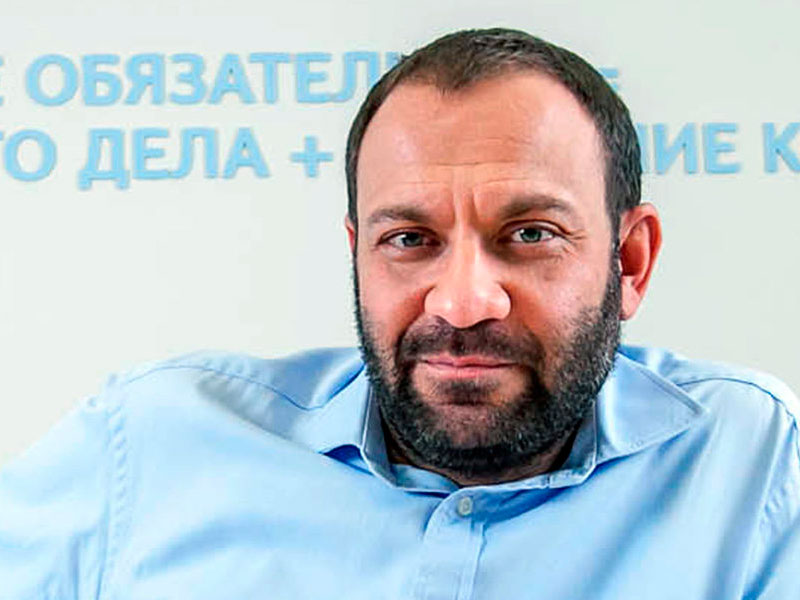
Evgeny Davydovich, who previously headed the Svyaznoy Bank and the Reteiler of the Svyaznoy, is now going to take the post of chairman of the board of Binbank. As stated in the official press release of the bank, "the appointment of Yevgeny Davydovich will be held by the chairman of the board of Binbank after the coordination of his candidacy with the Bank of Russia."
“The priority tasks of the new leader will be the formation of a bank management system in accordance with the best international practices, improving the balance of balance and raising ratings,” the bank said.
Indeed, the organization’s problems are very serious, no matter how they try to cover this in Binbank. It is only worth saying that at the end of May the post of chairman of the bank of the bank left Mikail Shishkhanov, who headed Binbank since 1996 and is the nephew of Mikhail Gutseriev, the owner of Binbank and all the associated group of companies.
Formally, Shishkhanov’s resignation was furnished as honorable, it was reported that he would “focus on the management of strategically important areas of activity” of the Safmar industrial and financial group, which controls the assets of the Gutseriev family. But, according to Vedomosti, immediately before the dismissal of Shishkhanov, Gutseriev met with the first deputy chairman of the Central Bank Dmitry Tulin, they talked about the state of Binbank and his last checks. It is Tulin who oversees banking regulation in the Central Bank, is responsible for reducing system banking risks and banking supervision.
 Mikail Shishkhanov, former director of Binbank / Vnnews.ru
So it is not surprising that Binbank emphasizes so that Davydovich’s candidacy should be approved in the Central Bank - it is likely that the previous head of the bank was resigned precisely at the insistence of the Bank of Russia.
The interest of the Central Bank in Binbank is understandable. According to the results of the first half of the year, it takes 12th place in assets (1.1 trillion rubles) and seventh place in terms of the volume of deposits attracted (553 billion rubles). The Ugra bank attracted deposits for 184 billion rubles and its bankruptcy with a large margin became the largest in the history of the deposit insurance system. From where the DIA will take, if necessary, a half trillion rubles is a big question.
Meanwhile, judging by the reporting of Binbank, his balance is reduced with big problems. So far, the largest headache of the bank is the “Bank Growth”, which since 2014 has been under the sanitation of Binbank. To save the Bank Growth from bankruptcy, Binbank provides him with funding in the form of interbank loans, as of March 31, 2017, the amount of loans was already more than 562 billion rubles.
But even if you exclude the “Bank growth”, the Binbank loan portfolio looks bad enough. Recently, the S&P agency confirmed the long -term and short -term ratings of Binbank at the B/B level, leaving the forecast stable. The level b level of S&P is “largely speculative rating”. S&P analysts explained their decision by the fact that the “share of loans issued by Binbank” to the enterprises of the construction and real estate sector exposed to significant risks was 18.4% of the total loan portfolio at the end of 2016, ”which“ represents a significant risk of concentration ”.
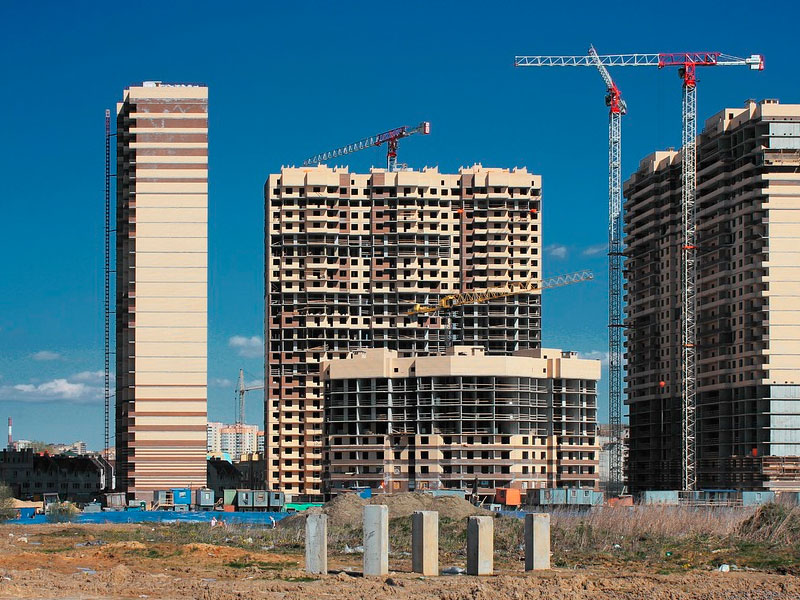 Stopped construction of the residential complex / pixabay.com
And if we take into account that the Safmar group, which includes Binbank, also includes several large construction and development companies (Mospromstroy, Inteko, Patriot, A101), whose clients have been complaining of slow pace of construction of even almost finished facilities, then everything may be very bad. According to the standards of the Central Bank, commercial banks are prohibited from investing too much of their loan portfolio in one company and even one industry.
However, according to S&P analysts, taking into account the market share of Binbank in the banking sector in terms of assets (1.6%) and retail deposits (2.6%), it has “moderate systemic significance” for the Russian banking sector and, if necessary, can receive support from the government. It is possible that in the central now they only think about whether Binbank is suitable for the definition of the Big to Fail or not.