
Translated material
"We will not leave anywhere from there"
Rosneft issued $ 6 billion to the Venezuelan regime, but they will not pay off in either political or economic sense
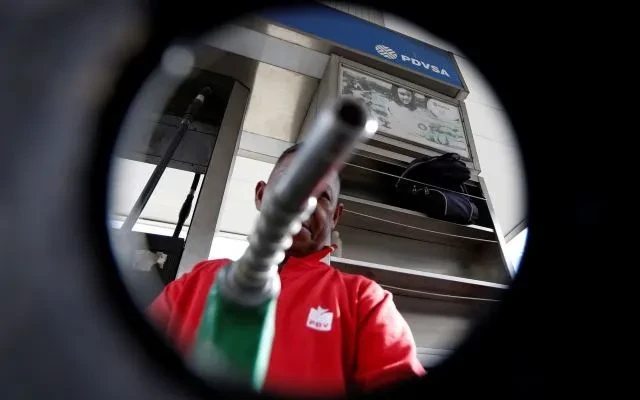
Rosneft's advance on the state oil and gas company of Venezuela PDVSA for future oil supplies has reached $ 6 billion. Rosneft expects a full repayment of the prepayment in 2019, but this script does not look very realistic.
Venezuela is on the verge of default: GDP falls with a two -digit pace, inflation last year amounted to 900%. $ 10 billion of gold and foreign exchange reserves accounts for $ 150 billion of external debt. The economic collapse in the country occurs against the backdrop of an acute conflict between the opposition parliament and the President of Venezuela Nicolas Maduro - more than a hundred people have already died during street clashes.
Despite the threat of bankruptcy and the civil war, the Rosneft leadership continues to sign more new cooperation agreements with Venezuela. “As I repeatedly repeated, we will never leave there and no one can drive us out of there,” Igor Sechin said on August 3.
Venezuela authorities are satisfied with this alignment: the United States will soon impose sanctions on Venezuelan oil imports, and then PDVSA will need to quickly redirect export flows to other markets. But Rosneft's motivation is difficult to understand. “New” learned from the experts that she holds the state -owned company at a hot point and how the Venezuelan project could end.
Mikhail Krutikhin
Partner of Rusenergy
- Part of the Venezuelan project was designed to supply raw oil to India purchased in Venezuela, where Rosneft acquired a powerful oil refinery. Rosneft has already laid the majority of Russian oil to the Chinese, therefore it was planned to process Venezuelan. But Venezuelan oil is very thick and does not even load into the tanker - for deliveries to India, you need to pre -mix it with light oil varieties, which also need to be purchased. This is a technical problem. Another problem is that Venezuela now reduces oil production for political reasons - the country is on the verge of civil war. All foreign companies have left the market that can give at least something in terms of technology, investment and experience. The oil industry will further degrade.
Therefore, Rosneft has now encountered colossal problems. There were already supplies to Russia from Venezuela, but then they began to tear them off, although the money had long been paid. The fact that Rosneft is now pouring additional money in Venezuela is absolutely crazy behavior. This money will never be able to return, and even more so return with profit. Other Russian companies that entered Venezuela along with Rosneft, in time, realized the unreality of making commercial profit there. This is Lukoil, Surgutneftegaz - companies that follow the laws of the economy. They quickly understood everything about the Venezuelan regime, and about the oil industry. I would not look in the illogical behavior of Rosneft the theory of conspiracy or a deep policy.
Everything is explained by stupidity or greed-a poor calculation of risks and, possibly, some schemes with Venezuelan officials.
The political factor is not so strong here - in any case, the money will not save the Venezuelan dictator, which more than half of the country hates.
Alexander Pasechnik
Head of the Analytical Department of the National Energy Security Fund
-This region was not initially distinguished by political stability, so to some extent the risks were taken into account immediately. It is clear that now Rosneft's investments are at risk, projects are postponed. I think that not only because of political turbulence - Venezuelan oil is supervised to transport it, a certain training is needed.
To minimize possible losses, projects are better to freeze until better times. Moreover, in the perimeter of Russia there are much more interesting oil provinces in which you can invest with good return. It should be understood that Venezuela has huge resources ( first place in the world in terms of hydrocarbons - about 300 billion barrels. - A. Kh. ) - if we do not cooperate with them, then our competitors come there or another.
Now Rosneft actually remained in Venezuela alone.