
Translated material
Mother and music
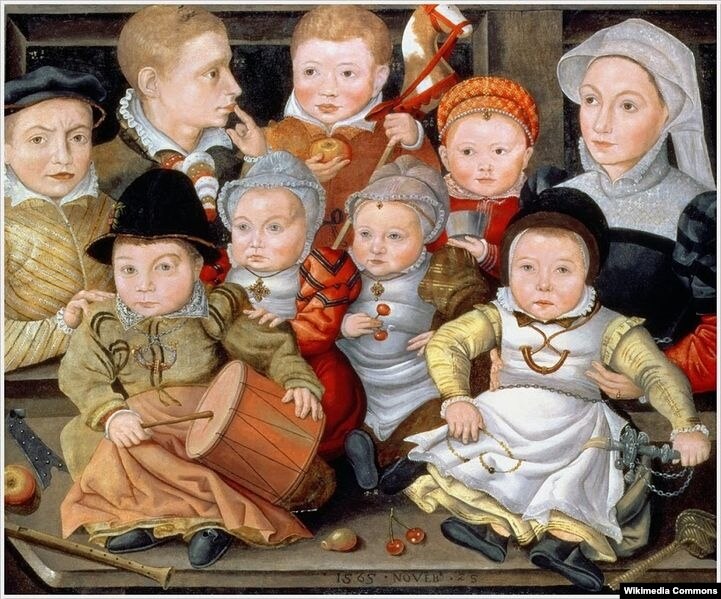
Maternal love in American songs
Archival project "Radio Liberty this week 20 years ago." The most interesting and significant from the Archive of the Radio Freedom of twenty years ago. Incomplete story. Still living hopes. Could Russia go the other way?
Spirichuels and not only - dedicated to the mother and relations with her are told: Charles Kennedy - a popularizer of Negro music, Katherine Mayers - an employee of the family, Alexander Genis - writer, Mel Gordon - musicologist. Songs sound in the program. For the first time on May 10, 1997.
(Song)
Marina Efimova : This lullaby, in fact, is a parable about maternal love:
Hush, Baby, mom will buy you a mash bird.
If the bird does not sing, mom will buy you a diamond ring.
If the ring is copper, mom will buy you a mirror.
But even if the mirror breaks, you will still be the best baby in the city.
I heard at least three options for this lullaby. For the first time, her students of the University of Michigan sang to me. They sang a lullaby not without irony - the way the singer Carly Simon remade her:
If the ring does not sparkle, my mother will buy me peace of mind.
This song was more than a hundred years and sang in America when, in fact, there were no American songs, but there were English, Dutch, German. Here is what the composer and priest Charles Kennedy, the popularizer of Negro music, with whom Raya Vile, is talking.
Charles Kennedy : At the beginning of the century, sentimental Irish ballads were very popular in America. Many of them were dedicated to mothers. Harry Berley, an American of Irish origin, then wrote the words and music for the lovely song "My little mother", and the famous Irish tenor John McCormic made this song a national hit.
Berley was the grandson of the slave, and he died in glory, honor and wealth thanks to the songs
Moreover, she was known and performed in many countries of the world, it was a classic model of the ballad - not very serious and extremely sentimental. Berley was the grandson of the slave, and he died in glory, honor and wealth thanks to songs.
Raya Vile : And what was the image of the mother in music at the dawn of the occurrence of jazz and rock?
Charles Kennedy : The mother was erected to the pedestal, and this is not a formal attitude, then they felt so, and this was reflected, in particular, in music, especially in Negro songs. Mother was one of the main heroines of many Spirichuels and blues. They were performed in churches and houses, under the guitar and the breast accordion, in the parks during free concerts.
Raya Vile : Yes, as Nenny Latcher sang:
I see my mother’s eyes when I act well, and when - bad.
Charles Kennedy : In our time, the attitude towards mother and in life and in music has become formal, especially in classical music. True, there is a wonderful symphony of the American of Polish origin Henry Goretsky and the lovely melody in it is the theme of the mother who has lost her child. Here, perhaps, is everything that can be given an example from modern classical music in America.
Marina Efimova : Well, maybe in the classic. But in popular music, the mother’s image is present. Another thing is the attitude towards her. They began to make complaints about mothers. In general, the attitude with them in songs became more complicated, as, say, in John Lennon's song "Mother".
Mom, I didn't need it so
How I needed you.
Therefore, I say: Hood Bai!
Relations with parents, especially with a mother, an extremely important part of the life of even an adult American. The complexity of these relations was described not only in literature, almost all outstanding Americans left their notes about the relationship with children: Eleanor Roosevelt, writer, Nobel laureate Perl Bak, who, incidentally, adopted eight children, dramatic actresses Helen Harris, Bett Davis, Deborah Kerre ... and they all wrote about their own about their mistakes, disappointments, failures and victories on the way to the main goal - to become friends of their children. This is not so easy. Maybe that's why Simon’s song “Mother and Child Reunion” was such a popular Song of Simon: one step, one movement of the soul and the child reunite with his mother. How has the role and image of the mother in an American family changed over the past decades? About this is an employee of the Institute of Family Katherine Mayers.
Katherine Mayers : I think that American mothers tried to change their attitude to themselves somewhere since the 1920s. Our society taught for a very long time, and by inertia you can find such an attitude in some families even today that homework and raising children cost nothing. Neither money nor respect was worth it, and the women themselves felt that they were performing not very necessary and important work. Although, according to the estimates, on average, if homework were performed, say, through agencies, cleaners, cooks, nannies, tutors, then the family would have to pay for the fact that mothers are performed for free, more than 40 thousand a year - the average salary of a computer scientist.
Marina Efimova : But in the family, her husband’s salary shares, and often it even happens that his wife disposes of money, and gives her husband, so to speak, for pocket expenses?
Katherine Mayers : Understand, there is a difference when you yourself earn and when someone shares with you - you feel like a petitioner. Maybe that's why the attitude to housewives has always been quite contemptuous. Let's look at advertising, for example, the 30s. Women's work looks like a clean vacation. No labor and time for cooking - this is done by a gas or electric stove, you do not need to wash linen - for this there is cars, dust wipes the vacuum cleaner. There was an image of a wife, who was simply obliged by the end of the day to dress, make a hairstyle, because she is now full of time, and with a hot dinner to wait for her husband from work.
The life of our mothers was much harder than in advertising pictures
She always smiles, surrounded by happy children and a loving husband. Was it really? It’s over, no. The life of our mothers was much harder than in advertising pictures. Was the respect in the children that the mother was engaged in labor not recognized by society? Of course, no. Mothers loved, but not respected. Only in the 80s this picture began to change. In the end, our society began to understand that the task of a woman, the task of the mother, is not only in preparing dinner and cleaning, but also to create a house as a physical and spiritual center of the family.
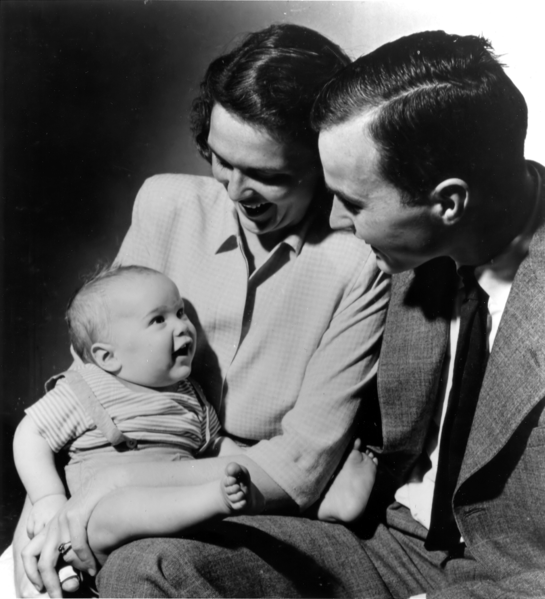
Marina Efimova : The microphone is Alexander Genis.
Alexander Genis : Before you celebrate my mother’s day, I consider it necessary to delve into the history of the issue. If not science, then the art of an American woman is known in two varieties that are called archetypes for importance. The first, we will assign him the code name of the Amazon, has been known since the time of pioneers and has nothing to do with motherhood. This is a woman-coming woman, and a comrade in a stubborn struggle. The weapons of such women were not weakness, but power, so it was better not to turn their back to them. However, such ladies basically conquered men, but a wild West. These fearless creatures fluttered with a gallop from one western to another, until they immortalized Hemingway in the image of Bretes Ashley from Fiesta. If the first archetype is rooted in the history of America, then the second is simply in history. This eternal image migrated from the Old World to the new one. He is familiar to everyone. A delicate, caring old woman with glasses and gray -haired, continuous apron, knitting needles, embroidery, pies, piety, pretense, sensitive soul, good, all understanding smile. Such specimens in abundance were found in calendars, in the paintings of Norman Rockwell and in old television series. In the literature, Mark Twain’s best examples: Tete Polly from Tom Soyer and the widow of Douglas from Huck Finn. The most interesting thing is that this archetype to motherhood is indirect, in essence, this is not a mother, but a grandmother.
The weapons of such women were not weakness, but power, so it was better not to turn their back to them
To make the image of a modern American mother, we will have to grow two hypostasis described above in one indescribable. On mother’s day, this long -legged, tanned hypostasis looks at me with every magazine and newspaper advertising. These young, moderately muscular (not otherwise, in memory of their pioneer past), the beauties, along with their rosy babies, represent motherhood in his most fashionable version. Advertising guessed to remake the old patriarchal image for a new matriarchal taste. For 15 years I have been following this witchcraft. Every year, mothers are young not by the day, but by the clock. And leafing through today's newspaper I bit bitterly that I had already finally overtook them on the way to old age. In fact, earlier the advertisement persuaded to give a frying pan, a miracle pitch, a cozy penny chair to our cute old women. And now? Caribbean cruise, tickets for rock opera, bikini swimsuit ... So two archetypes of an American woman connected to produce a new hybrid - the Amazons discovered the joy of motherhood.
Marina Efimova : In general, irony, exactingness, or even direct splendering to mothers have recently become fashionable. It is enough to recall the films nominated, or even received Oscar this year. In the Czech film “Kolya”, a Russian mother without any warning throws a child into the hands of an elderly bachelor-chech who does not know a word in Russian, and the English mother from the wonderful film “Secrets and Deceptions” completely forgot that she had a child and the scene in which she recalls it is one of the most ridiculous in the film. However, do not think that in relation to the mother our time is unique. This is what the musicologist says, a connoisseur of the American musical theater, Professor Mel Gordon.
Mel Gordon : Our musical is a specific and very American genre, and one of his oddities is the figure of his mother. Before the First World War in America, respect for Mother was respect. She was considered the basis of the family. But in 1919, after the war, everything changed sharply and a new trend came to the musical - it became a manifestation, a symbol of the struggle for freedom from conventions, including sexual freedom. Since then, the image of the mother, which intervenes in the life of growing children, has become negative, in any case, in the vast majority of successful musicals. And the best example of this is the post -war musical "BYE -BYE, Birdie" or "So far, bird!", Where the mother always complains and does not allow her son to marry.
What kind of children went! You do not value anything!
I work like a slave, I cook, remove,
I live with your father, finally
And no gratitude!
What kind of children went!
Marina Efimova : The role of her mother in this musical was played by the young Steplon young even then. But back to our interview.
Mel Gordon : The trend that began after the First World War was preserved in 1920-30, continued in the 50s. In all musicals of the porter stake, for example, there is either a mother at all, or she is a tyrant. Funny, of course, mainly. This attitude can be explained by American history.
Mother symbolizes the old light, Europe, tradition, old way of thinking, and America is a free world without traditions and without prohibitions
The mother symbolizes the old light, Europe, tradition, the old way of thinking, and America is a free world without traditions and without prohibitions. Love, like the temptation, always goes hand in hand with the desire to break with the prohibitive and protective bonds of the family and find a wife or husband not from those who were approved or even sung by the parents. If you look at the list of songs from the musicals for the word "mother", "mother", they are all satirical, ironic or even antagonistic. Take the poems of Stephen Sondheim:
Mother is a person who creates the main problems for her children,
This is her profession
And the musical "Company" of the 70s, and in "Suini Todd" - most often these are comic characters. But not always.
Marina Efimova : I want to remind you that in American popular music there are softer expressions of freedom, not tender, for example, in the song "Mom, do not hold me locked up."
Well, well, we all begin to truly appreciate our parents only when we ourselves become middle-aged. As one American writer who lost her parents said: "There is no one in inconsolable than a 50-year-old orphan." True, Elvis Presley was not thirty when he performed the song “Mom loved roses”, but, as many biographers believe, the death of his mother accelerated his own death.
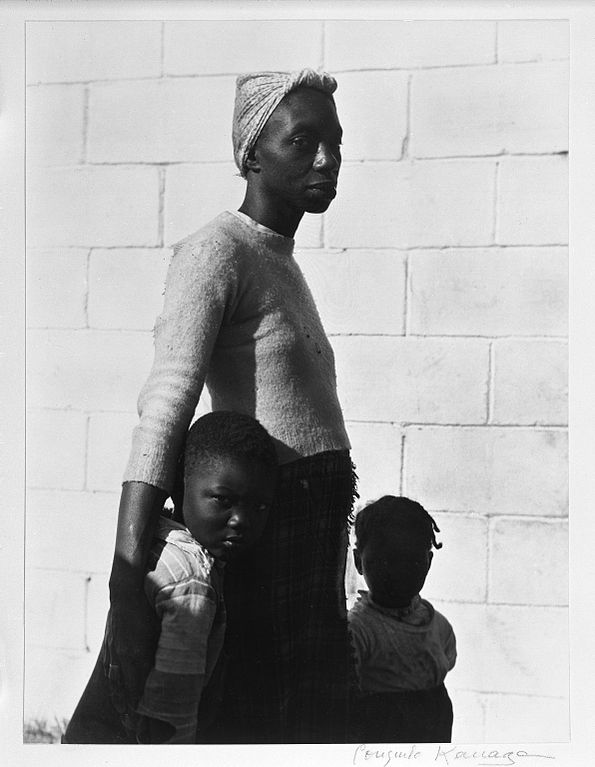
In English, in addition to the word "mammy" - "mommy", there is still a close in sound the word "maMIM", it means "nurse", "mother". Basically, these were black women - they fed and packed a myriad of white Americans, especially in the south. One of them, singer Roger Viteker, devoted a song to his nurse:
(Song)
On May 9, 1906, Miss Anna Jarvis from Philadelphia died, and Miss Jarvis ensured that this day was dedicated to all mothers once and for all. No one remembers who this Miss Jarvis was, moreover, no one knows how she managed to turn her mother's day into a nationwide holiday. Unless by the power of subsidiary. One way or another, since 1913, every second Sunday of May, Americans celebrate Mother's Day. Happy Mother's Day!