
Translated material
Did not join the agents
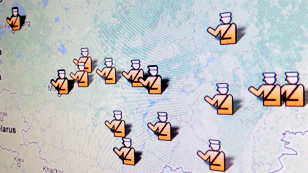
On the first of August, the human rights fund "So-Tak-Tak" from Novosibirsk lost in court of appeal, trying to appeal the decision of the Ministry of Justice to include " foreign agents " in the register . And this means that the organization will have to pay a fine of 200 thousand rubles - for not wanting to register voluntarily. Viktor Yukechev, the director of the fund, for the same reason owes the state 50 thousand. Now the NPOs have to either borrow money to pay a fine, or its employees will invest personal funds.
The Social Human Rights Network "So-So" has been working since 2009-this is a site where any visitor can get legal support for free. In addition, over 8 years, the project has become one of the centers of investigative journalism in Russia. Each member of the "so-so-so" can offer his own topic of a public or journalistic investigation and conduct it with the help of experts. Typically, the objects of attention are corruption problems and violations of human rights throughout the country. In particular, last year, journalists wrote about the abuse and incompetence of officials when the emergency houses are resettled in three regions. Another topic concerned violation of women's rights with children in places of temporary detention of migrants. Several investigations were devoted to environmental problems: captures and pollution of water bodies, concealment of damage from harmful emissions in Krasnoyarsk and a number of other similar topics.
The TTT network is an unpredictable resource: today on our website someone spoke out against the mayor-communist elbow, and what will happen tomorrow, to what level of criticism will visitors to the site reach is unknown. Well, first of all, they are alarmed by investigations that citizens conduct with journalists
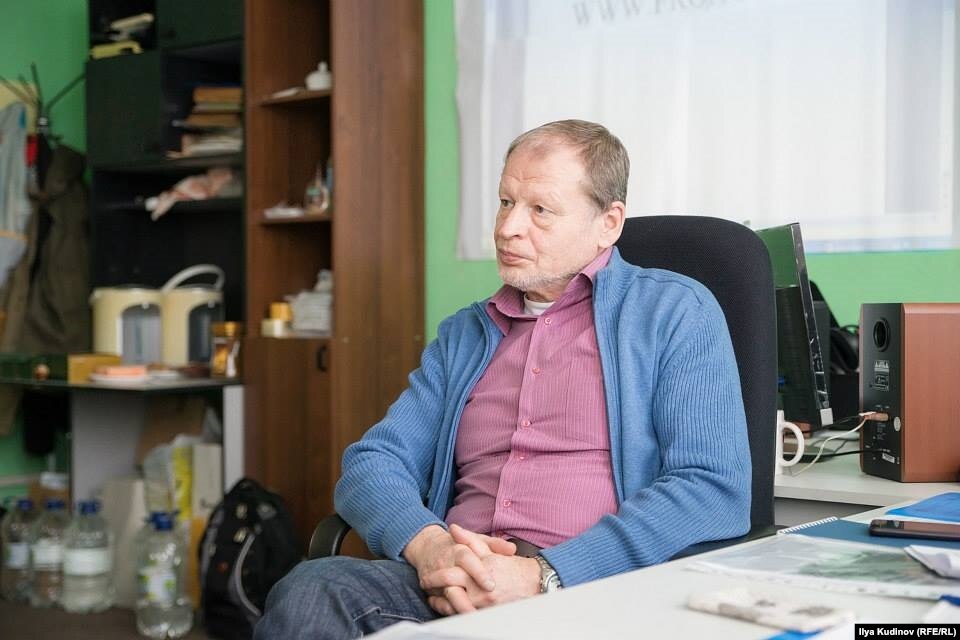
“This is ( the status of a foreign agent and fines. - RS ), of course, pressure is a consistent restriction of our activity,” the director of the Foundation Viktor Yukechev is sure. -The TTT network is an unpredictable resource: today, on our website, someone spoke out against the mayor-communist the elbow, and what will happen tomorrow, to what level the site visitors will reach is unknown. Well, and, above all, their [authorities] are alarming the investigations that citizens conduct with journalists: they are also unpredictable, for the same reason. By the way, already two authors of "negative" blog posts have stopped writing on a blog so as not to "harm us." In fact, it turns out that this is the most direct restriction of freedom of speech and opinions.
The organization of the "foreign agent" organization of Novosibirsk human rights activists received as a result of the audit, which in winter conducted the regional department of the Ministry of Justice. Officials came to the conclusion that the fund is engaged in political activities and receives foreign financing.
The Ministry of Justice saw in eight publications, the authors of which allowed themselves critical statements to the Government of the Russian Federation and individual ministries, as well as other state authorities. Signs of political activity were found, for example, inthe material "Internet: total control of the Ministry of Communications of the Russian Federation. New", as well as in the text about the use of an administrative resource in the elections "Prepare elections in the summer. The authorities will teach to vote correctly".
Neither these nor other publications have anything to do with foreign financing. Money from abroad was aimed at organizing seminars and other projects. In particular, the French Embassy in Moscow allocated to the fund about 350 thousand rubles for a seminar about digital security, and the Institute of Law and Public Policy transferred about 1.7 million rubles to a project related to the protection of citizens in the Constitutional Court.
“With us, even if the publication was four years ago, and the money received only now, these two facts are in some surprising way to be connected with each other,” Viktor Yukechev wonders. - And the argument of representatives of the Ministry of Justice and our courts is as follows: "The law does not say that we must connect financing and specific publications specified in the audit act!" And everyone agrees. The Moscow lawyer who helps us says: "I am amazed at how this act was compiled, literally on the knee. I read your blog - there are much more sharp publications! Why did they choose these?"
Until recently, the site was the project of the "Institute for the Development of the Press-Siberia", also recognized as a foreign agent, and then, in 2013, the same team created a separate "So-Tak-Tak" fund, which gained fame far beyond the boundaries of the Novosibirsk region.
“There are several schools in Russia in which experts teach journalists the skills of investigative activity,” says Svetlana Kuzevanova, media, the media, the Voronezh Media Protection Center. - I seemed to be the opportunity to observe the work of several of them. The school, which was invented and implemented by "so-so-so," in my opinion, differs from the rest of the multifaceted approach. Journalists are told not only how to extract information, but also how to receive it legally, how to transmit the reader, how to visualize. And, what is the main thing for me as a lawyer, how to act exclusively within the framework of the law.
The fund sued the whole spring, and then in the summer. In total, six vessels in relation to the fund as a whole, Yukechev personally, as well as about the very fact of the inclusion of the organization in the register of foreign agents, took place during this time. All courts of the district instance, and then appeals in the regional court were lost.
By the way, during their audit, the employees of the Ministry of Justice Office found another "foreign" source of financing. They considered such a transfer of 4,000 rubles, which the director of the Foundation Viktor Yukechev personally put on the organization’s account in order to pay for Internet services. But the Leninsky District Court did not agree with this statement of the Ministry of Justice.
According to a number of human rights defenders, the actions of the authorities and judicial authorities aimed at expanding the register of foreign agents are stringing a tangible blow to anti -corruption investigations.
There is a feeling that the task is set instead of a human rights cluster in Siberia to form either caricature organizations, loyal authorities, or leave the scorched land
“The“ So-Tak-Tak ”Foundation has remained one of the few non-profit organizations that specialize in supporting civil and journalistic anti-corruption investigations for the Urals,” says Ilya Shumanov , deputy director of Transperentsi International-Russia. - Given the fact that the fund is recognized as a foreign agent and fines are imposed on him, there is a feeling that the task is set instead of a human rights cluster in Siberia to form either caricature organizations, loyal authorities, or leave scorched land.
The decision of the court concerning the activities of Novosibirsk social activists says that the introduction of foreign agents in the register does not infringe on the rights of NGOs: "The inclusion of the organization in the corresponding register is aimed only at the additional support of the transparency of the activity of such an organization <...> which indicates the absence of violations of the rights of the administrative person." In addition, at the end of July it became known that in the next competition of presidential grants among the winners there were three “foreign agents”. But the representatives of NPOs themselves consider the introduction of foreign agents to the register of the law and the infringement of their own rights.
International law and practice of other states do not allow restriction of financing of civil society organizations with reference to the protection of sovereignty. The danger is that from world exception, Russian law can turn into a rule
“The access of NPOs to resources, including financial, is part of the right to freedom of unification,” says Grigory Weipan, head of the judicial practice of the Institute of Law and Public Policy. - This is often forgotten. It is believed that the human rights activities of NPOs are like volunteering. But this is not so. A strong civil society is impossible without infrastructure and without highly professional personnel. The law actually limits the free access of NGOs to resources, as it encourages NGOs to refuse foreign financing using the term “foreign agent”, imposing additional expenses on NPOs - recipients of foreign financing, requiring additional reporting from them, etc. The law justifies these restrictions with the interests of “transparency”, but in fact the authors of the law never hid that they were not interested in transparency as such, not transparency, as such And the transparency of foreign money and the restriction of "foreign influence" on Russian society. This is an unprecedented justification, since international law and practice of other states do not allow restriction of financing of civil society organizations with reference to the protection of sovereignty. The danger is that from world exception, Russian law can turn into a rule.
The Institute of Law and Public Policy today acts as a third party in the proceedings of the ECHR on complaints of 61 of the Russian NPO about the application of the Law on foreign agents.
As a result of the assignment by public organizations the status of a foreign agent, many inter-regional useful initiatives that are trying to launch, including the “so-so-so” may be ruined.
The state wants to choose whom to write down in corrupt officials, and whom - to the victims of Western sanctions
“The team of professionals of the“ So-Tak-Tak ”Foundation did and does an important thing,” Gleb Yarova , journalist of the Karelian Internet publication, is sure, “they help not only working journalists and students of journalisms, but also active citizens who are not indifferent to what is happening in their“ backyard ”in their country, their region, their city or settlement. The state considers this sphere of activity exclusively its own competence, wants to choose whom to write down in corrupt officials, and whom - to the sacrifices of Western sanctions. It is not surprising, therefore, although it is sad that pressure is on the fund.
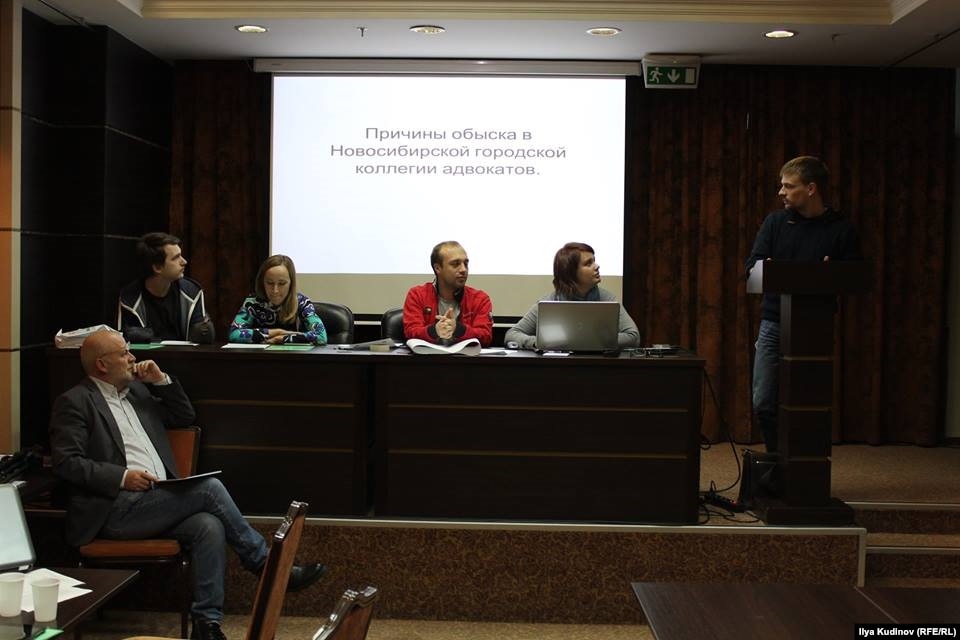
The opinion of a journalist from Karelia is shared by Victoria Mushnik , a journalist of the News Agency TV-2 from Tomsk:
We are united by general ideas about the essence of journalism, about the current state of Russian society and the state and about the desirable ways of changes
-"TV-2" has long been cooperating with "so-so-so." We are united by general ideas about the essence of journalism, the current state of Russian society and the state, and about the desirable ways of changes. During the 2015-16th year, I participated more than once in seminars on investigation journalism, which were always interesting and almost useful. Together with the "so-so-so" we created a special project "how we closed the TV-2." On the example of our television company, the mechanism of destruction by the state of an independent media was shown.
The news of the inclusion of the fund in the register of foreign agents caused a wide resonance, including among colleagues - journalists and human rights activists. Upon learning that the “so-so” will be forced to pay a considerable amount, representatives of the Russian media on the initiative of Romanovsky’s novel from “Transpenser Internet-Russia” launched a campaign to raise funds to pay a fine. The fund's team plans to fight further.
- Will we dispute these decisions? Of course, we will, right up to the Constitutional Court of the Russian Federation and the European Court of Human Rights, ”says Viktor Yukechev, director of“ So-Tak-Tak-Take. - But we will also pay a fine - in order to avoid further sanctions: and this is either a recovery in a two -time amount of the amount of unpaid fine, or administrative arrest for up to 15 days.
So far, of the necessary 200 thousand, the fund has been collected to pay for a fine of 21,750 rubles.