
Translated material
Native rifle
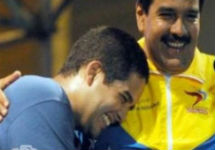
Nicholas Maduro Jr., the son of the President of Venezuela Nicolas Maduro, threatened to reach the country in the event of an American invasion of New York and Washington. “In that unlikely case, if our homeland is desecrated, there will be rifles in New York. Mr. Trump, we will come and capture the White House,” the CNN quoted the son of the Venezuelan leader.
On August 12, US President Donald Trump said that he did not exclude resolution of the crisis in Venezuela by military means . "People suffer, and they die. We have many options for Venezuela, including a military option, if necessary," Trump said. At the same time, he refused to clarify whether this option means sending the American military to Venezuela.
Trump's words caused a sharp reaction of Venezuela. The Minister of Defense of the country Vladimir Padrino called them "an act of madness." Maduro sent a request for a telephone conversation with Trump to the US administration, but he was refused. "Trump will gladly talk with the leader of Venezuela, when democracy is restored in the country," the White House said.
Since April, Venezuela has been held in protest against the Maduro regime, which are brutally suppressed by the army, security forces and president supporting the president. The number of victims among protesters has already exceeded a hundred people, thousands were illegally detained.
On July 31, the United States imposed sanctions against Maduro. On August 12, sanctions were expanded. Venezuelan officials fell under them, including the brother of the former leader of the country Hugo Chavez Adan.
Venezuela's economy largely depends on oil revenues. In 2003, the left government introduced state regulation of prices for main food. As a result, now up to 40 percent of subsidized products is exported to neighboring Colombia for resale. The country has a shortage of food, medicines and essential goods. Inflation in Venezuela in 2016 exceeded 700 percent.
Following the results of the elections held in December 2015 , the qualified majority in the parliament received the opposition . However, the government and the country's Supreme Court, which are still fully controlled by Maduro supporters, successfully break any legislative initiatives of the parliament. There is no impeachment in the Venezuela constitution.
In January, the National Assembly approved the resolution according to which Maduro was recognized as "leaving his post." During the vote on this issue, 106 deputies out of 167 spoke out "for". The opposition majority accused the president of "non -fulfillment of official duties."
However, the Venezuela Supreme Court recognized the decision to resign as the president’s resignation. The court also confirmed its decision from November 2016, requiring the members of the parliament to refrain from declaring the "political responsibility" of the current president.
In May, Maduro announced the convocation of the Constituent Assembly, designed to change the country's constitution. The opposition regarded this as a military coup. On August 4, the Prosecutor General of Venezuela Luis Ortega appealed to the court with the submission of the suspension of the Constituent Assembly due to violations during the election. On August 5, on the first day of his work, the Constituent Assembly shifted Ortega from his post and decided to put it on trial.