
Translated material
"To get rid of borders, we must die"
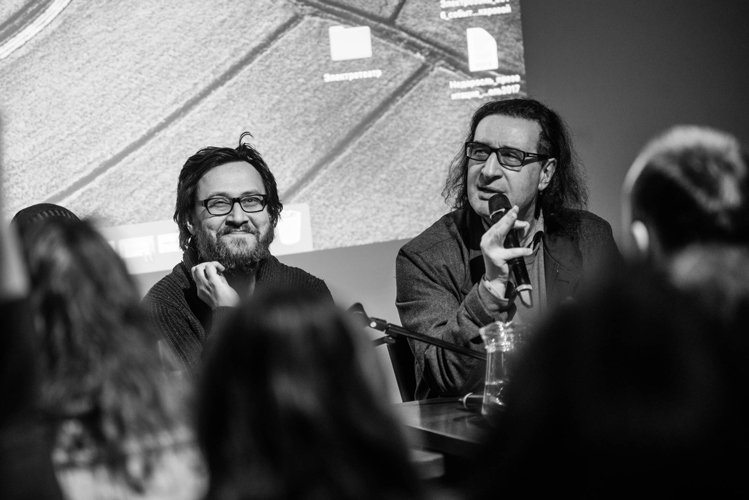
Colta.ru continues a series of publications based on the events of the spring session of the “ Institute of Theater” - the educational project of the Golden Mask festival aimed at preparing young theater professionals, the study and critical analysis of new forms of theater and new theater practices. Today we publish the materials of the discussion “ The boundaries of the performance. Where is the performance today? " , held in April in the "Electro Stanislavsky".
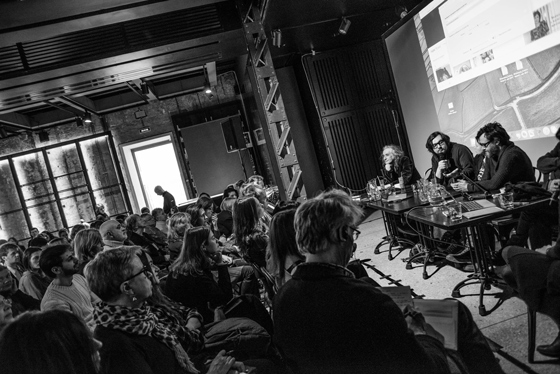
Alena Karas: We planned this discussion as an intra -the aesthetic conversation about aesthetics. Perhaps he will concern the boundaries of politics - because aesthetics and politics are adjacent to each other. We wanted to gather at the same table people of different views involved in the theater of various types, in order to try to understand: is there such a phenomenon, such an image, such a definition as the “boundaries of the play”? And if it exists, then how it functions today, what happened to the awareness of these same borders in recent years. This topic seemed very important to us - we all understand and feel that radical changes are taking place in today's theater. The theater is increasingly found with itself in the territories of other arts: what happens on these borders? Is the concept itself, the very phenomenon of the theater, or is it transformed into something? Or, conversely, the theater becomes a global “sponge” (this idea is very vividly formulated by Marina Davydova), absorbing everything around her? Like it or not, all the main power lines and stress of art processes are today perfectly described by the word “theater” and pass through the theater.
Klim, having proposed in the center of dramaturgy and directing your project called “Service of the Word” , you compared this service with church, temple service. How much is this “transition” for you after three years of difficult, intense, deep experience in working with the actor, in the service of a classic Russian word, poetry-Pushkin, Blok, Bryusov? How important is this border for the theater to go to the temple for you today?
 © Olympia Orlova / Stanislavsky Electrotheater
Klim: Probably, it’s bad to start with me - an old, meaningless insanity that has nothing to do with a modern theater, who does not understand what a modern theater is and even more so - what modern art is. My idea is insanely simple. Man is a language. As long as there is a language, we exist. As Aigi says, “that homeland - the language / be buried - in that homeland ...” I do not know anything else.
I am interested in the classic theater. I have always been engaged in a classic theater. Sometimes it is convenient to blame someone for vanguardism-but now, on the contrary, it is more likely to dignity. I recently read that the bourgeois art was invented by the capitalists - and at the same time [the text is illustrated] Malevich’s “black square”. Very interesting things actually happen to us with everyone.
Probably, if you put me, this is how Boris [Yukhananova], to manage the theater and force me to talk with the troupe - I will put classical performances. But God allowed me now, for the last five years, to be mad. And this madness is that I want us to hear the language.
If we talk about the boundaries of [the performance], then first you need to understand that the first border is material: how much money I have, where I am - there is no getting away from this. The second border is acting. And in this sense we are in a terrible ass. Because we cannot now name a single actor capable of ... I watched the film with Meryl Streep and I think: "Well, what kind of Russian actor is able to surrender to the process of creativity?"
What I will say now will sound, perhaps tough, but I deliberately focus. One person wrote a book that the modern theater, you see, became such a postdramatic , recognizing the fact that the theater lost a certain deep internal content. But Russia is a style country. Once they said that now the theater is post -dramatic, - we, having lifted our pants, ran after the Komsomol. What is postdrama - no one knows, including, although they say to me that "you answer all the criteria of the post -dramatic theater." But I really do not like it when all this crap justifies the lack of a dramatic theater.
 © Olympia Orlova / Stanislavsky Electrotheater
Vsevolod Lisovsky: What is important to understand by pronouncing the word "border"? That the border is an extremely conditional thing. It does not exist physically. Gengis Khan said the best phrase about the borders: “Where is my border? And my border is where the Mongolian horse will give. ” As a matter of fact, this applies to the theater and the performance in the same way. In order to say now: “This is the theater, this is a performance,” two idiots need the maximum configuration. One idiot, such as an actor, says: "This is a performance." And the second, such as the viewer, agrees with this idiot. Although, in principle, this package can be recognized as excessive - it is possible that one idiot is enough for this or you can do without one idiot and do without smart ones too.
It is important to understand when you are talking about the border that there are two strategies for its attitude to it - defensive and offensive. The defensive attitude towards the border is completely counterproductive. Any border that is guarded for a long time from the inside is eventually hacking, and someone else is approved by the interior. There is an offensive strategy - and here we must understand that now of all arts contemporary art is the most influential. What is the influence in relation to any art? There is industrial logic, when success is, for example, the opportunity to fill the auditorium. And there is post -industrial logic, when it does not matter where the phone is produced, the main thing is where software is produced, where communication models are produced.
So, contemporary art - I don’t know what kind of occupancy of halls or other quantitative [indicators] is extremely influential, because it is a model of communication. Both media and politics are all continuous contemporary art. If we consider the field of art as a map of some medieval world, then contemporary art is the Roman Empire: large, influential, loose, amorphous. And the theater is such a small principality of Attila. That is, in my opinion, there are all opportunities to conduct an expansion.
Now about the word. I have the nearest analogy of the word - this is money. What are the flaws? There are too many of them, and they take up too much space in consciousness. When there are too many of them - this is called “uncontrolled emission,” a devaluation occurs, money becomes cheaper. And when they occupy a lot of space in consciousness, consumerism and other unpleasant phenomena occur.
Minerly art is the Roman Empire. And the theater is such a small principality of Attila. That is, there are all opportunities to conduct an expansion.
I have such an idea that any person who uses abstract thinking as a mechanism is forced (wants or does not want to) to assume the existence of a world of ideas. In addition, as a physical, biological object, a person still assumes, proceeds from the fact that there is a bodily world, the world is sensual. Words are theoretically mechanism of communication between these two worlds. It’s just that during the crazy emission of this substance it turned into a certain third continent - that is, where the bridge between the two mountains was supposed to be, a new mountain grew. And all my modest attempts are connected with the fact that I somehow want to try to get around this third mountain. Despite the fact that I have nothing against the word as such.
Boris Yukhananov: The world, as we know, is beautiful precisely because he is permeated by an incredible variety - including the variety of borders. Today we can observe total overcoming the boundaries or their change; Perhaps new boundaries arise that we do not have time to realize.
For example, we are talking about a word. In the early 80s, we studied with Klim with Klim with two beautiful masters, from Efros and Vasiliev. First of all, they were engaged in a dialogue with us - how to turn a dialogue into a game. In those days, everything that I did often did not fit into this framework, but I still returned to the craft every day: the author written by him, a director who should unravel and summarize the author’s plan, an actor who will play all this. It seemed that the theater was completely fading into a simple communicative scheme.
 © Olympia Orlova / Stanislavsky Electrotheater
Time has passed. And it turned out that this is not entirely so that neither the theater nor the perception of the world are exhausted by this formula. Leaving GITIS, we did not know a lot - about the sacrament of the creation of scenography, about the possibilities of working with fabric, with texture, with a suit, about what is hidden behind the light, the organization of light score, and how rapidly all this is no less rapidly than the film industry, is developing. And I suddenly felt incredible longing for technology. But I could not study them, I could not meet them in real practice - I had neither money nor opportunities. And I felt in some new slavery. I felt (not for the first time, I must admit) thereby the ancient Jew, who in the next act of his life should again experience sticks of restrictions, sticks of borders.
Of course, Moiseev’s impulse of the underground soul made me step on this unsteady sand. I walked for almost forty years in this desert (does this not remind you of anything?), Until I died completely. To get rid of borders, we must die, Moses also explained this to us. It is necessary that your inner people are completely dead - only then this disdain to Jerusalem of the theater universe will reveal to you. So the electric theater arose.
But while I was versed in all this difficult knowledge of theatrical technology, the theater dismissively went outside, said that all this is crap, and began to live on the same wastelands where I once started. This is an amazing feeling, a paradoxical loop - "Isn't I in vain I lived my life?"
To get rid of borders, we must die, Moses also explained this to us.
No, it seems that not in vain. Now those who are on these wastelands, I am like a native. I can send them a signal - but not denial, not neglect, but kinship. And this signal of kinship, it seems to me, fills the theater today. Nowadays, the borders have expanded so much that the signal of kinship takes place into the most distant corners of the world and man. And if we go through kinship, we can find how amazingly the theater is amazingly diverse and how kind of it is in all of its seemingly opposites.
When Guy Debor in the late 50s sighed about the society of the performance, filled with left-wing energies, he could not even imagine how right he was. Only its minus should be crossed out again - and see a plus in it.
Dmitry Volkostrelov: I am deeply convinced that the boundaries need to be destroyed - despite the fact that today, as we see, the boundaries, on the contrary, are multiplying, and some even plan to build the walls on the boundaries. Our task is to slowly and slowly wash any boundaries with an eraser.
However, in the case of art, which, as you know, does not have borders, it seems to me more appropriate to talk more about the frame-allowing us to look at life somehow differently.
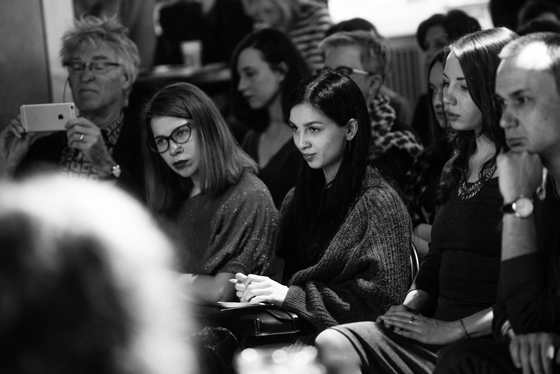 © Olympia Orlova / Stanislavsky Electrotheater
As for the classical and traditional, here I, in fact, do not see any special conflict. I do not feel the slightest inner contradiction with the school that I passed - more precisely, with the experience I received during the years of study with Lev Abramovich Dodin. If there was some kind of internal war, then it has long ceased-we parted with the world in a situation where there can be neither winners nor losers. The painful internal dialogue with Leo Abramovich, who continued for me for a very long time after graduation, ended at some point-and that’s all.
We very often talk about the theater, about what he is today, what to do with it today, about its borders or about their absence. It seems to me more important to think about the future. We exist in a world where right -wing populism conquers desperately, and I as an artist (I apologize for this loud word) is scary to watch this. But I hope this is only a temporary rollback. Yes, globalization did not win, yes, the global economy did not work, and nothing came of it - therefore, right -wing populism is so active now, so Britain leaves the EU. All this is understandable. But I sincerely believe that this is a temporary phenomenon. It’s just that humanity is sometimes mistaken.
Karas: We touched on a very important topic on the boundaries of aesthetics and politics: the defeat of globalism restores the boundaries - ethnic, national, religious. Is there a certain challenge for the artist in this situation? Should his strategy in the era change when the boundaries are not destroyed, but only stronger?
Volkostrelov: The fact that globalism failed is, in essence, nothing bad. The global economy, as you know, destroys many very important things: for example, network coffee houses destroy small private coffee houses that we all love so much. For example, I’m deeply experiencing the closure of one such coffee shop in St. Petersburg, in which I spent a lot of time - large fish devour small ones. But I hope that sooner or later humanity will come up with something else that the conventional fish will find some other way to satisfy their hunger and will not devour their similarities-this, it seems to me, should do art.
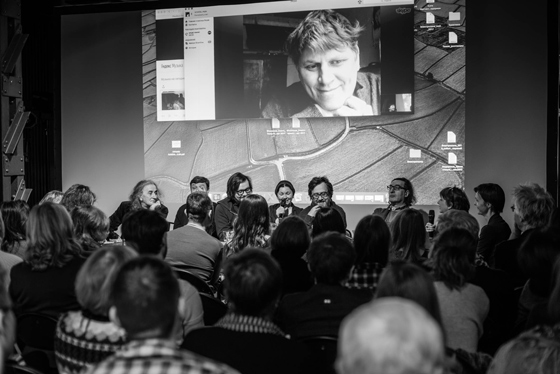 © Olympia Orlova / Stanislavsky Electrotheater
Ksenia Peretrukhina: I am extremely close to the thought of the “kinship signal”, expressed by Boris [Yuhananov]. Everything that I do is imprisoned with the viewer, for work with his perception. From this, in fact, some kind of violation of the boundaries stems, their revision: how to make the theater alive, so that a person starts to start, at what distance should he come close to him so that speech sounds true? Therefore, I am engaged in a bodily-oriented, tactile theater. Today the word is with all the gigantic respect for it - a zone very difficult to work. It is incredibly difficult to establish communication with the word, the viewer has blocks - since the word, then, advertising, propaganda machine, a means of pressure. As an artist, I grew out of polemic with a verbal culture.
But, returning to a conversation about the borders, I must say that for me, recently, an uninocked attitude towards all other types of theater has become more and more important - I try to respect them. For a young artist, it seems that the exact opposite strategy is natural - “the artist’s artist should hate,” as they say in contemporary art: you are formed through denial. And for me now, especially in a situation of fragmentation of the community, the idea that we are all a single, enriching each other field is fundamentally important. And even if I do something radically different from what my colleagues are doing, we are all dependent on each other, we feed each other and are in a much more intense dialogue than it seems to us.
The first in the list of issues proposed to us was the thesis about drawing borders in relation to the existing types of theater. Thinking about the audience perception, I am always in a polemic with a certain theater Theater - that is, I assume that a person comes to the theater with certain expectations. And for me it was very important at some point to understand that I would not polemize with any specific bad type of theater, but with different theater, which is not necessarily bad.
Concluding the conversation about the borders, it seems important to recall the key in modern art criteria - the criteria of novelty. Strange as it may seem, I always programmatically oppose him: the criterion of novelty does not allow us to live some significant things that we seem to cannot repeat, because we must come up with a new one, because we must constantly update. In this situation, it is appropriate to recall Tatlin: "Not to the new, not to the old, but to the necessary."
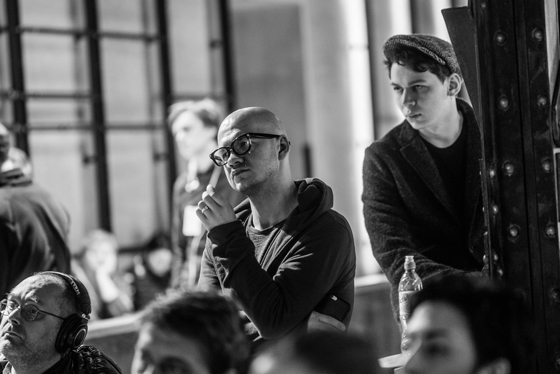 © Olympia Orlova / Stanislavsky Electrotheater
Klim: I want to express one thought based on the results of the discussion. “The boundaries of the performance” and “The Borders of the theater” are, it seems to me, two different topics and two different spaces. The theater is an endless thing. And the performance is limited, because it has a form. Therefore, when we talk about the infinitely theater, I agree, because for me the church is the form of the theater, only very developed and perfect. This is generally the basis of human communication. And when we talk about the border of the performance, a huge number of questions arise. What we do should be somehow understood or understood. If you remember, Lenin had a phrase that sounded like this in the original: the art "should be understood by the people." After 1925, it sounded like this: the art "should be clear to the people." “Clear” and “understandable” is the border that, in fact, is held between all of us, these are two different categories of art. Art is an awl in the ass. And culture is an ass, it always drops. And we can’t do anything about it.