
Translated material
Inadmissible sweetness
Why were everyone outraged by the transfer of Lake Sweet to Kazakhstan, which actually was not?
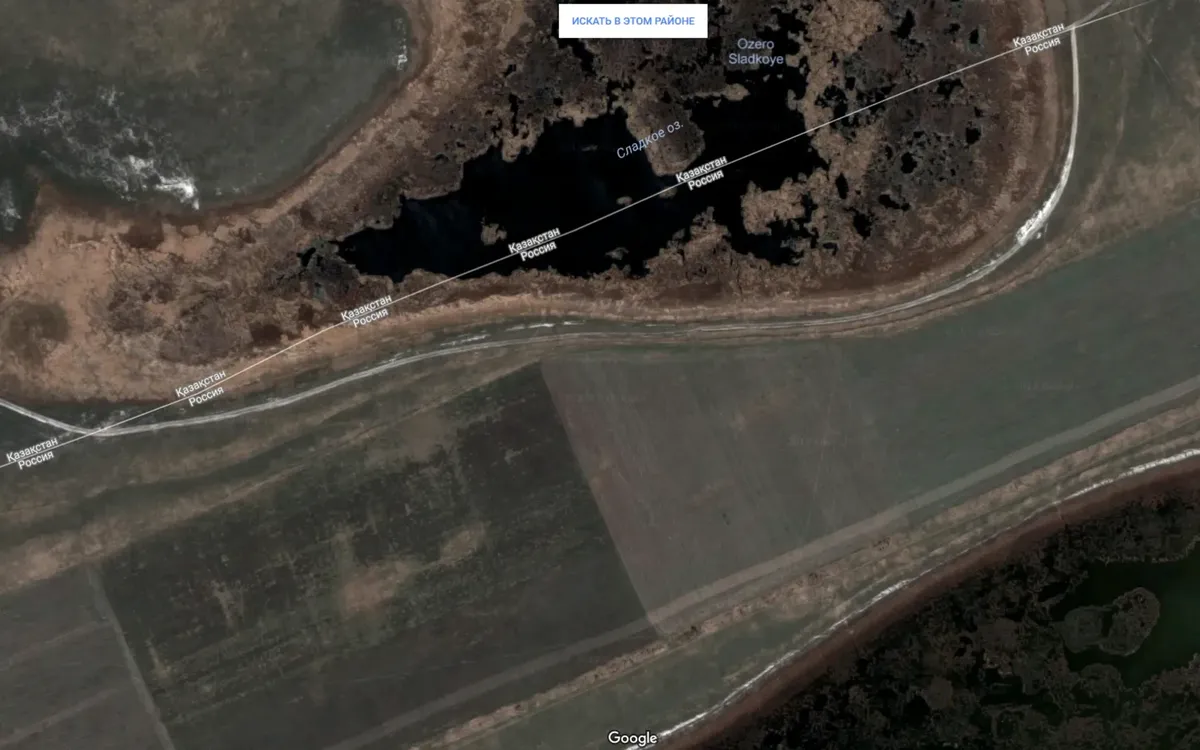
All week in Russia and Kazakhstan they discuss the news about the transfer of Lake Sweet in the Novosibirsk region from one country another. On August 10, a message appeared on the website of the Kupinsky district administration (already deleted, but was available in the Google cache) that after the border demarcation, Russia gave the lake to friendly Kazakhstan. The head of the local administration, Vladimir Shubnikov , said that the lake itself is a “Penosero-half-worn, completely useless,” although it was noted on the website of his department that the reservoir is still popular with lovers of hunting and rest in nature.
On August 15, the news was replicated in large numbers of the Russian media, and the very next day, in hail, refutations rained down. In an interview with the newspaper Kommersant, the deputy head of the Legislative Assembly of the Novosibirsk Region Andrei Parfyonov said that this is all “leisure conversations”, residents and vacationers simply advised “to refrain” from trips to the lake, while there are activities to demarcate the border. And the lake by 30% remains Russian - and in general it is good.
In Kazakhstan, Mid had to answer for the situation. “It is incorrect to say that Russia“ presented ”the lake to Kazakhstan, since part of the lake is originally located in the Republic of Kazakhstan,” said the press secretary of the department Anouur Zhainakov. - The border line was established in accordance with the contract on the division of the border between Kazakhstan and Russia of January 18, 2005. This section of the border is already indicated by border signs coordinated by the Russian and Kazakhstani sides. There was no exchange on this site. ”
Then it turned out that the lake de jure was 30%-Russian, but in fact it is all in Kazakhstan, since it was “died down”: such an exotic formulation officially voiced the FSB. It turned out that the coastline passed just along the border set in 2005. Even the head of the Ministry of Natural Resources and Ecology, Sergei Donskoy, joined the discussion. He wrote on Facebook that “the lake will return to its shores with an autumn rain cycle. In the fall, the lake of the lake, not the shore, will again separate the border between the countries. ”
It would calm down here, but the story acquired a slightly different shade because of the public mood "as you can give out a native land." In this sense, the commentary of the local resident Kristina Matantseva, which she gave the Rain TV channel after all the official explanations is indicative:
“If we will give out the territories at such a pace, then only Moscow and St. Petersburg will remain from Russia.”
This situation can be considered as symptomatic, said the head of the department of medical psychology of the Scientific Center for Mental Health of the RAMS, psychologist Sergei Yenikolopov . “Somewhat annoys the readiness of the population to believe any negative rumors,” he says. - There is a common feeling that we are always foolish. The worldview is simplified: what is reported - it must be checked on lies, but no one really checks. Taking a map and see if the lake has really dried up is too difficult. It is easier to divide into white and black, so the same liberal media will give information that we have such a power, sells lands, and patriotic will begin to look for a rational explanation for this. Although this is not about power, but about our reluctance to strain the brains. ”
According to Yenikolopov, the whole story can be considered as a kind of amorphous fear of Asia's offensive on Russia: China or Kazakhstan - here the country's name is secondary.
And this may also be a result of a kind of post -Persian injury, says Alexander Poddyakov, a professor at the faculty of social sciences of the Higher School of Economics . “There is a common background on which a message that a piece of one country was given another can easily excite citizens. But this is also imposed on a certain “postimpersky syndrome”: issues of joining and non -alignment [of the country's parts] are discussed very strongly and are used by different, including political forces. Therefore, such messages are now perceived especially emotionally and are in different ways. ”
It might not have been all this story if the officials initially explained everything normally, and not through a stump-column. But much still depends on the media, adds suborders who brought this topic to one of the main positions, which is why even those who were not interested in Lake Sweet, began to consider this important part of the information agenda.