
Translated material
Wakes up over Sobibor
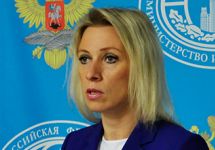
Israel support for the decision not to include Russia in the project to update the museum in the Nazi concentration camp by Sobibor "borders on historical betrayal." This was stated by the official representative of the Russian Foreign Ministry, Maria Zakharova, speaking in the program "60 minutes" on the Russia 1 TV channel, TASS reports .
“I can’t say that I understand the position of a number of European countries. I can take into account those moods, those political battles that are held around historical memory and so on, but I categorically refuse to understand the position of Israel,” Zakharova said. “For me, the position of this state on this issue is absolutely unacceptable and, I believe, borders on historical betrayal.”
At the same time, Zakharova emphasized that we are talking about her personal position.
In 2013, Russia was invited to connect to the museum update project. The plan, the initiators of which was Poland, Israel, the Netherlands and Slovakia, involves the construction of a new memorial, the equipment of the museum, the creation of the appropriate infrastructure. However, in July, in Warsaw they said that at a meeting of the International Management Committee of the project, it was decided to refuse to cooperate with Moscow. At the same time, the Russians were not revoked to the Russians to the solemn event to open the museum.
On Thursday, the Russian Foreign Ministry called the ambassadors of three countries, including Israeli, who supported the decision to continue working on the museum renewal project in the Sobibor camp without Russia.
The concentration camp Sobibor operated from May 1942 to October 1943. During this time, in gas chambers, disguised as shower blocks, it was destroyed, according to various sources, from 150 to 250 thousand Jews from Poland and other European countries.
On October 14, 1943, in Sobbor, the prisoners raised an uprising. They were led by the Red Army officer Alexander Pechersky (died in 1990). The uprising in Sobibor was the only successful for all the years of World War II. Immediately after the escape of the prisoners, the camp was closed, all buildings were destroyed. The earth was plowed in its place and planted cabbage and potatoes.