
Translated material
Without status, work and hope
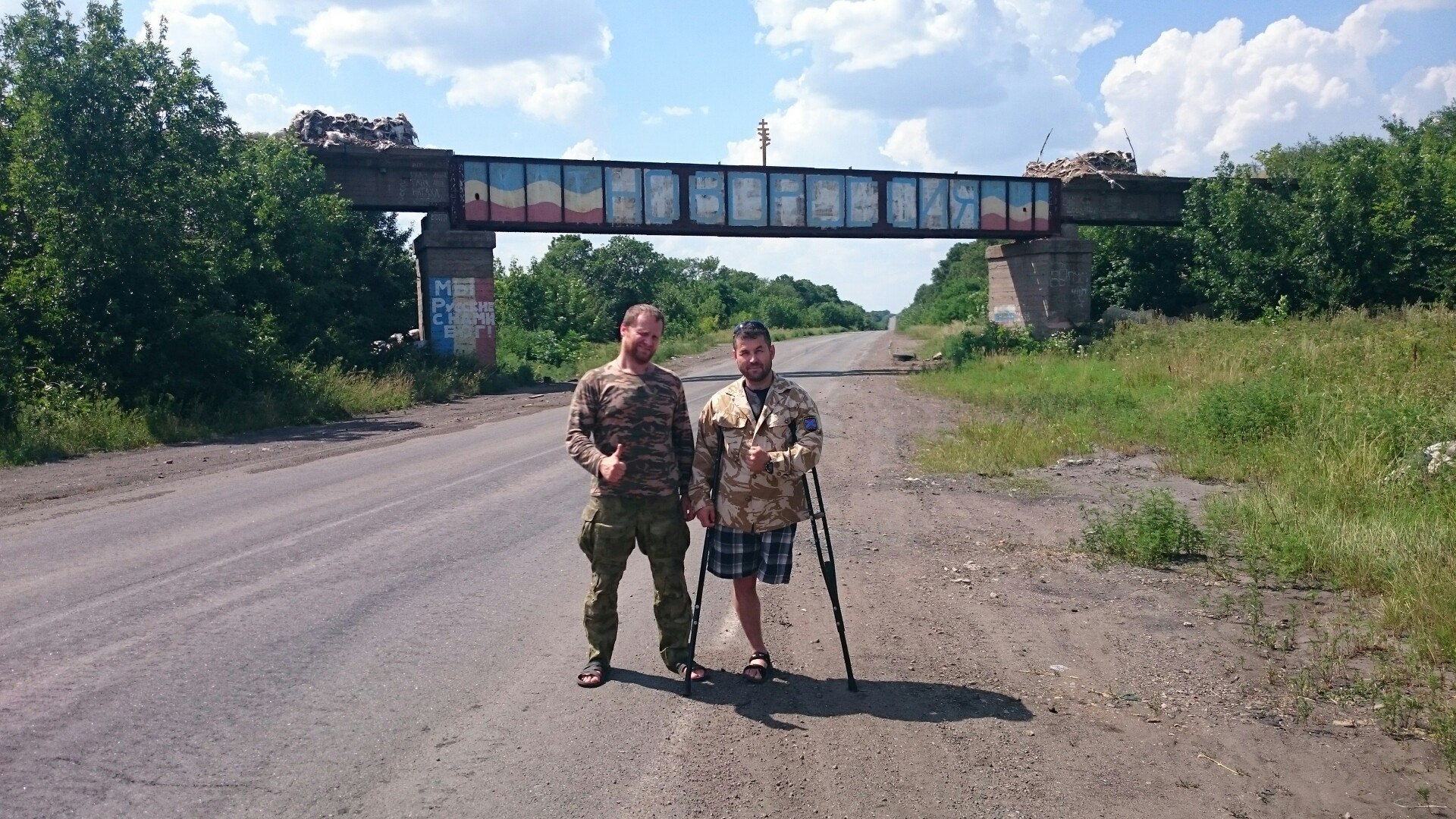
Russian volunteer Andrei Kamaev arrived in the Ukrainian front -line city at the end of September 2014. He was full of patriotic bravado and believed that, fighting against the "fascists and the Nazis", he was in the footsteps of his grandfather - the Soviet intelligence officer of the Second World War.
The Ukrainian government, which is opposed by pro-Russian militants, 49-year-old Andrei Kamaev describes with the words that the Kremlin spreads. The Russian admits that he wanted to help restore the "Russian world" and prevent NATO not to strengthen his position.
However, his dream of military glory crashed on February 1, 2015. Then Kamaev followed the column of tanks that attacked the territory, near the strategic (at that time controlled by Ukraine) city of Debaltseve. Behind him, a mine exploded, crushing part of his left leg. He was taken to a neighboring hospital, but without the necessary medicines, Kamaev developed gangrene. Doctors were forced to amputate the remaining leg to his hip.
Andrei Kamaev managed to survive, unlike many Russian volunteers who came to fight in the Donbass. Returning to St. Petersburg, he moves on crutches, trying to get used to it. For him and thousands of the same conflict of the conflict, there was still hope.
Without official recognition
These Russian "veterans" returned not by heroes. Moreover, they received scars for life - physical and psychological. They have no benefits, they do not have enough jobs - many barely make ends meet. Moreover, they are divided by ideology, a vision of strategy and heritage. Therefore, they cannot unite to hear them.
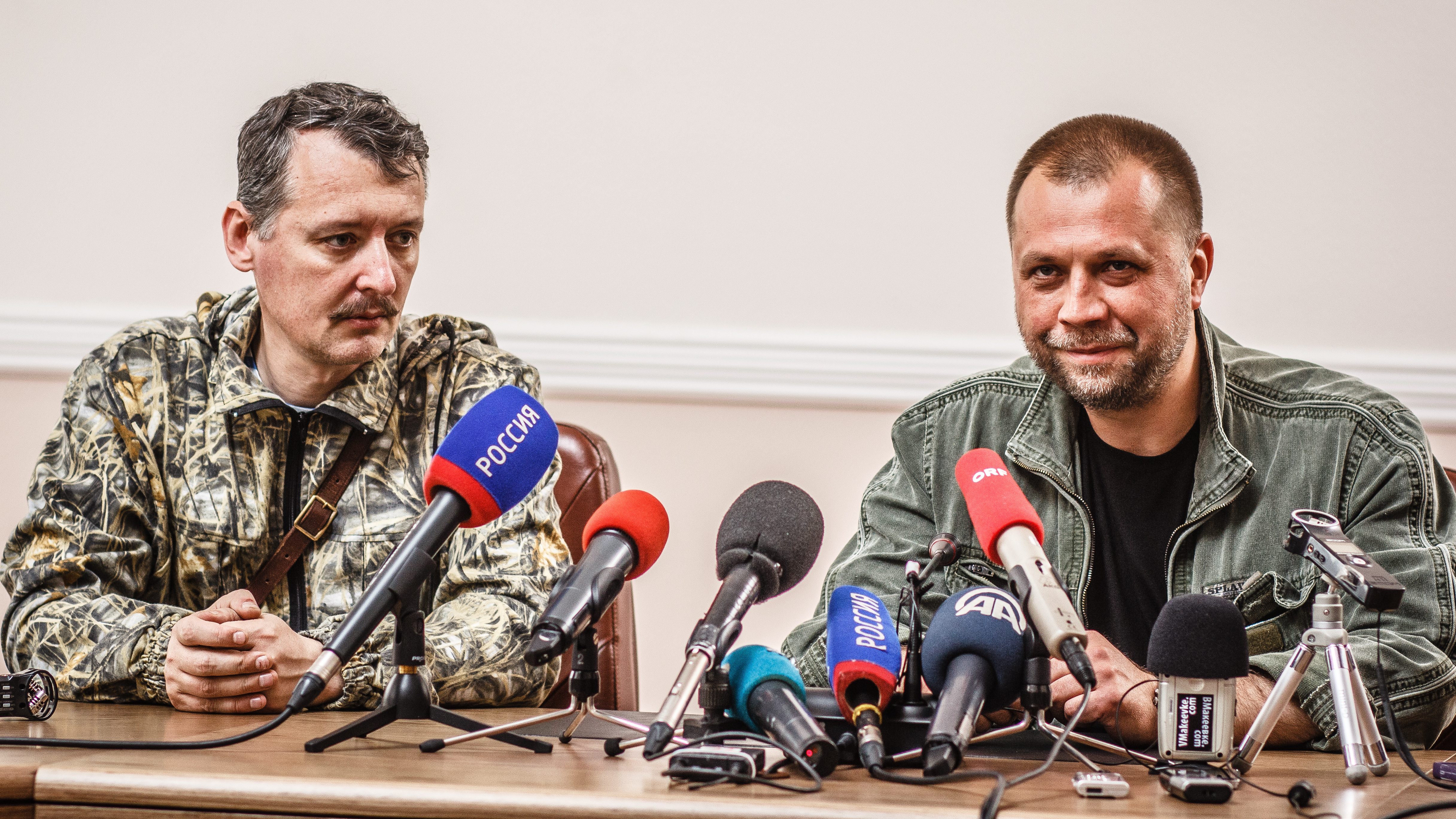
Some of them are part of the "Union of Volunteers of Donbass", which is headed by the former separatist leader Alexander Borodai . This group is closely connected with the Kremlin thanks to Vladislav Surkov, who is called the curator of this conflict.
There is another organization - the "movement of New Russia", it is headed by the Russian Colonel Igor Girkin (Strelkov) , who commanded the militants in the first months of the war. However, many Russian volunteers perceive him as a traitor due to the fact that he retreated and did not led them to Kyiv.
Andrei Kamaev says: he does everything possible to help develop the St. Petersburg organization "Veterans of New Russia". Members of this organization help other volunteers who fought or still fight - often these are disappointed and confused people, Kamaev explains.
Radio Liberty talked with a dozen such "veterans" in Moscow, St. Petersburg and Kaluga. They share the opinion of Kamaev that thousands of Russians are difficult to return and adapt to life without war. Such people are often supplanted on the periphery of society. They do not receive state support. Kamaev lives on a miserable state pension, which he receives not for military service, but in disability.
“This is the same as if I fell under the trolleybus,” he says.
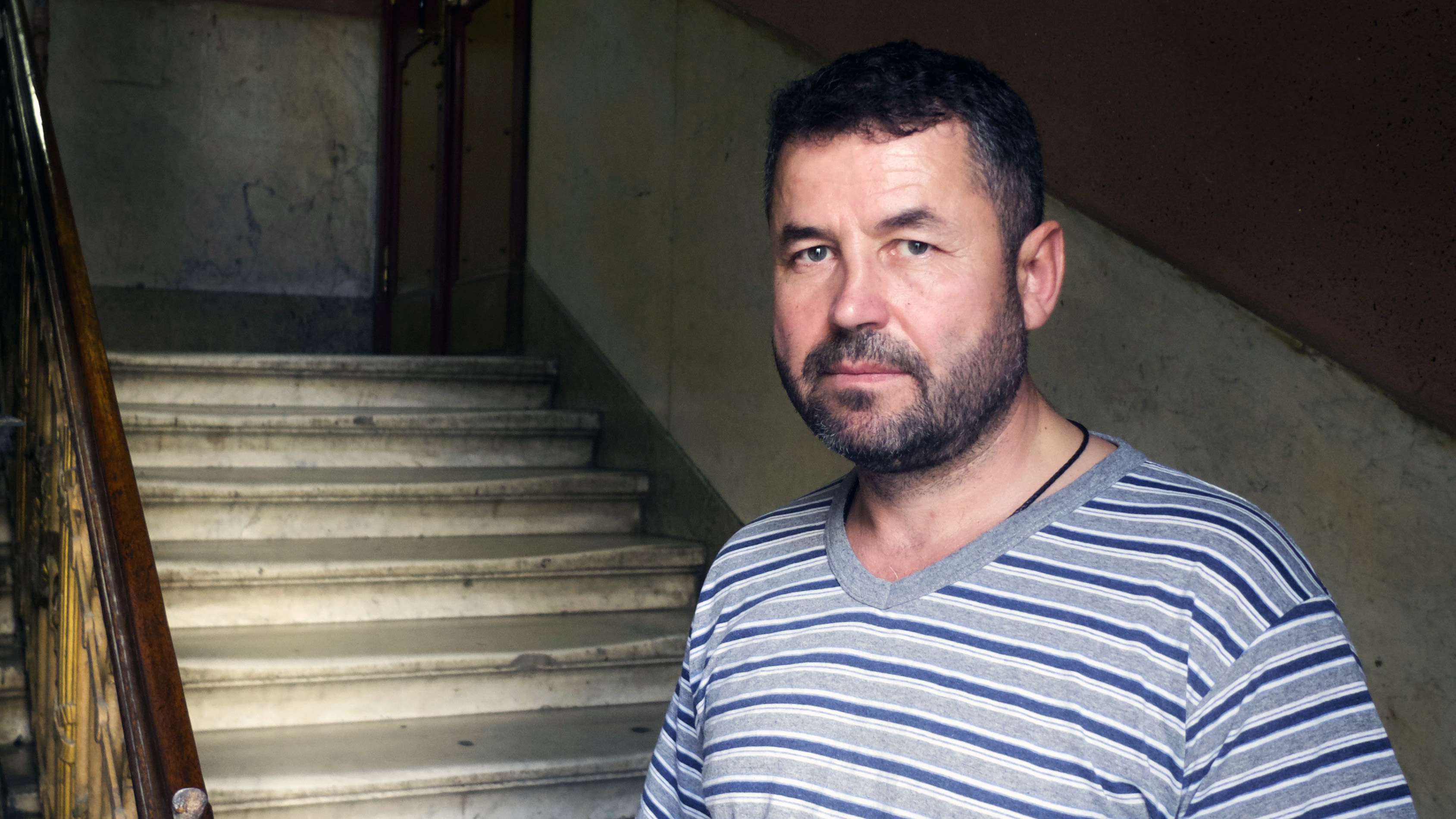
He is convinced that those who returned from the Ukrainian front must continue to fight in peaceful life. Volunteers feel abandoned in Russia. Perhaps because they were initially not recognized. Although President Vladimir Putin did not exclude that Russians can, at their own request, fight for the Donbass, the Kremlin has not yet recognized its role in the conflict.
In fact, Russia formed a large and powerful intermediary army from volunteers. This allows Putin to find “plausible” arguments, assuring that the regular army of the Russian Federation does not participate in the conflict in the territory of a foreign state. Meanwhile, volunteers do not actually receive anything from this.
Fighting for the "Russian world"
Andrei Kamaev counted three thousand members of the "veterans of Novorossia", but the total number of volunteer Russians is unknown. If you believe the Kremlin, who does not recognize participation at all, they are not. Kyiv states that there are tens of thousands of them.
Groups supported by Russia have 39.3 thousand active fighters, of which 36.4 are an intermediary army, which is formed by volunteers from Russia, Ukraine, and other post-Soviet countries. Such data on August 7 were brought by the Main Directorate of Intelligence of the Ministry of Defense of Ukraine. The remaining 2.9 thousand soldiers, according to the report of the Ukrainian department, are representatives of the Armed Forces of Russia. This contradicts the position of the Kremlin, which rejects numerous evidence of its participation in the conflict.
Most of the Russian volunteers with whom Radio Freedom Journalists communicated are ordinary citizens with a low level of military training, but ready to take up arms. The reasons for this are different, from patriotism to adventurism. Many of our interlocutors ask not to call their names and other personal data: they are afraid that the family and future employers will learn about what they are doing.
Many call their inspiration in this war the idea to restore the "Russian world". Another reason why the volunteers went to Donbass is the rejection of the Ukrainian Revolution of 2014, which deprived Viktor Yanukovych’s power. They call the power that came after the Maidan, "illegal" and "fascist" - this is the definition that the Russian state media spread to warm up emotions around what they call a "revolution." Some say that they went to fight due to a fire in Odessa in May 2014, who claimed the life of 48 pro-Russian activists. Others remember NATO.
NATO is getting closer to us ... We had a large and strong Soviet Union, and now Andrei Kamaev was surrounded by Russia
“NATO is getting closer to us, despite the promises of the Alliance, not to expand east. We had a large and strong Soviet Union, and now Russia was surrounded,” Kamaev repeats the slogans that official Moscow uses.
There are also those who explain their departure to Ukraine by how the “famously” Russia annexed the Ukrainian Crimea. Like, with their help it will be possible to annex in the same way the East of Ukraine, where the number of those killed in the war already reaches 10 thousand people.
Russia made a lot of efforts to integrate the so -called "DPR" and "LPR" economically, and also recognizes their diplomas and certificates about graduation. However, it does not show a desire to make these territories officially.
There are other categories of volunteers - seekers of military adventures. These include the 37-year-old Russian photographer Emil . He did not want to give his last name and almost did not answer questions about his origin and family. But he said that he studied directing and worked as a photographer in the field of fashion. Emil says that he felt the taste of the war when he photographed the Russian-Georgian conflict in 2008 in Abkhazia. He traveled to the Donbass when the fighting was hot, in 2014 and 2015, replacing the camera with a weapon when his friend shot. According to him, he also went to Syria many times when the conflict in eastern Ukraine began to subside.
"Shoot and run"
Andrei Kamaev was born and raised in a small town near Yekaterinburg. Therefore, he willingly left behind the familiar life to fight in the Donbass. He spent his 7,000 rubles of savings For camouflage, which I bought at the Barakholka, just before flying to Rostov-on-Don. From there he reached the Russian-Ukrainian border. Further - to the eastern part of the Donetsk region. Russian border guards, he says, did not ask questions.
When you are on the border, you don’t say that you are going to fight. If the documents are in order, they calmly pass Andrey Kamaev
“When you are on the border, you don’t say that you are going to fight. You say that the business is or humanitarian reasons ... either on vacation, or visit your relatives. If the documents are in order, they pass it calmly,” says Kamaev.
Like many volunteers, Kamaev after arrival was given the old Kalashnikov and 10 rounds. This is just enough to "shoot and run," the man says. He was enrolled in the 1st Slavic battalion in Nikishin-to the front line. This village is 15 kilometers from Debaltsev for five months fired abundantly. In the Ukrainian media, he was called the "gates of hell." More than 90% of houses were destroyed there.
Kamaev says, realized all the risks. When he began to fight, the number of dead already exceeded 3 thousand, the Donetsk airport was destroyed, the Boeing MH17 disaster occurred, and more than a thousand people on both sides took a large -scale battle of Ilovaisky.
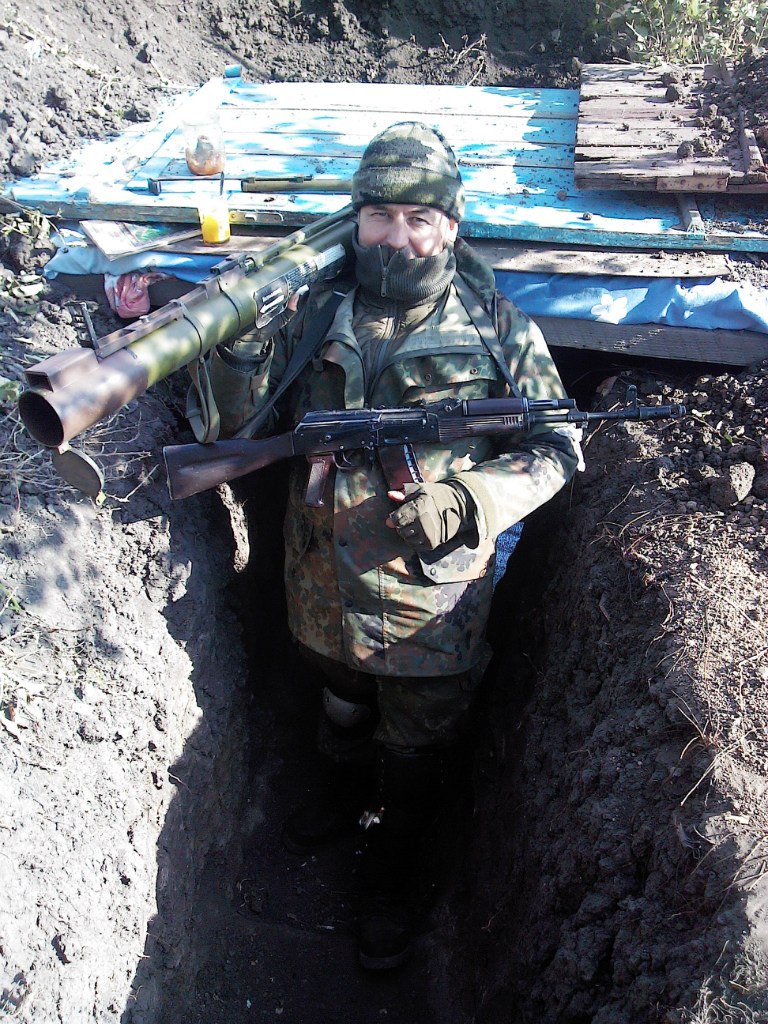
He says that he was amazed at the "chaos" that he encountered. But, according to him, he was happy and continuously fought for several months. Kamaev says, only once he paid 15 thousand rubles for battles in October 2014. Other volunteers say that they did not receive anything or significantly smaller amounts at all. Kamaev recalls that there was no clear command structure. By the way Kamaev described the battles, it looked like volunteers used as live shields in battle. Kamaev explains that their task was to exhaust the enemy and, if possible, profit from something. They fought, says, 2-hour shifts, so that there was the opportunity to relax.
“You learn to find happiness in such trifles. You rejoice that you survived, that you ate, that you sleeped,” Kamaev recalls that time.
But happiness turned out to be a short sensation. Three of the ten fighters with whom he fought together returned home in the tombs. Only two, he said, remained physically unharmed.
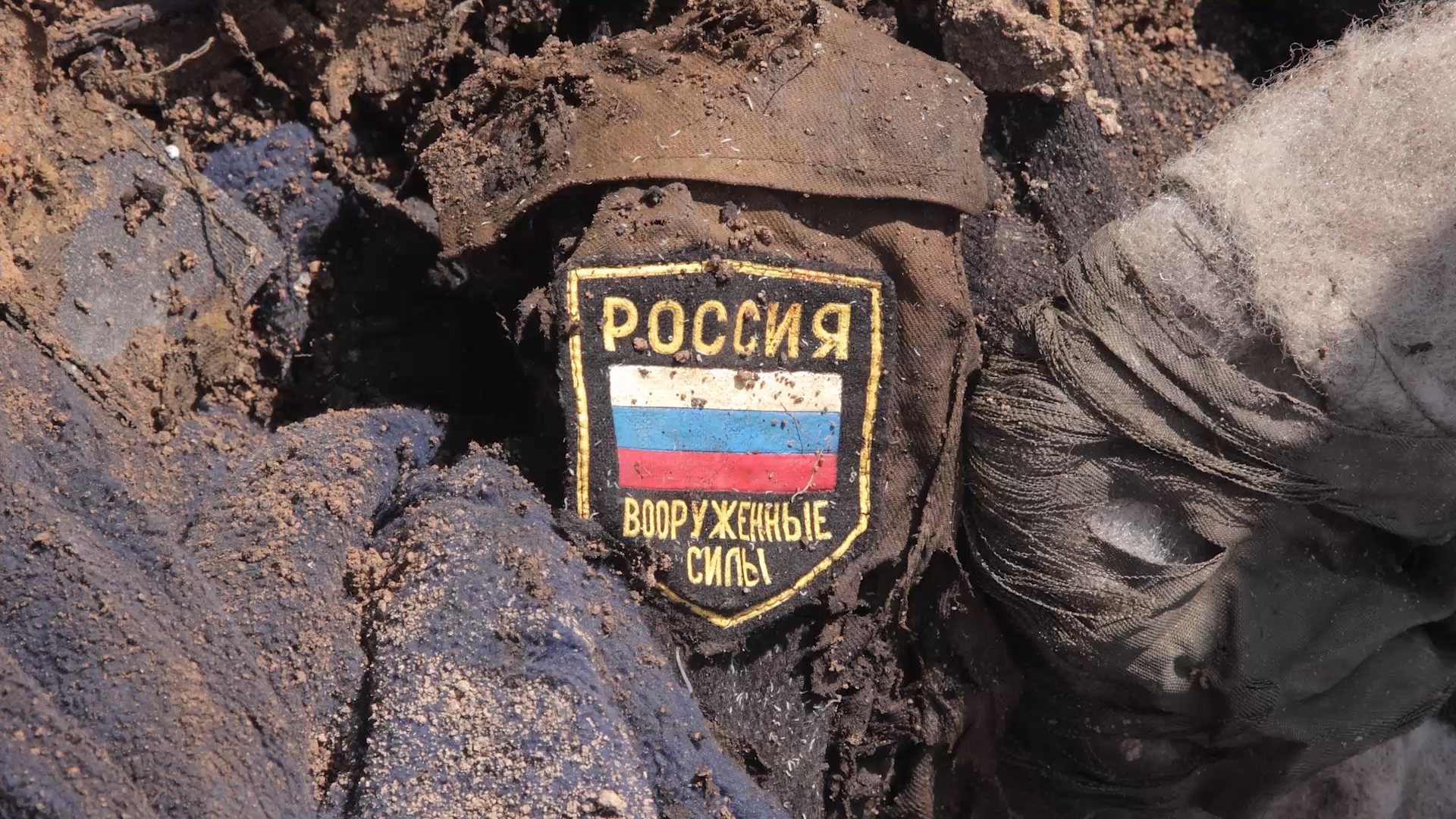
Nobody meets Russian volunteers. In their honor, flags are not posted, they are not given medals for valor. Their only rewards hang on the inner wall of the dark basement in St. Petersburg. This is the "Museum of Military Valor of Donbass", as it is called. It is filled with military artifacts that volunteers brought. Bullets and artillery shells, collections of badges with emblems of various combat groups, photographs of pro -Russian propagandists, as well as portraits of the notorious commander who died in battle - their photos under the glass hang on the walls.
Here is the 26-year-old "academician", whom friends called so for the ability to understand the cards. He is dressed in camouflage, on the right sleeve of which there is an inscription "We will teach you to conduct a dialogue."
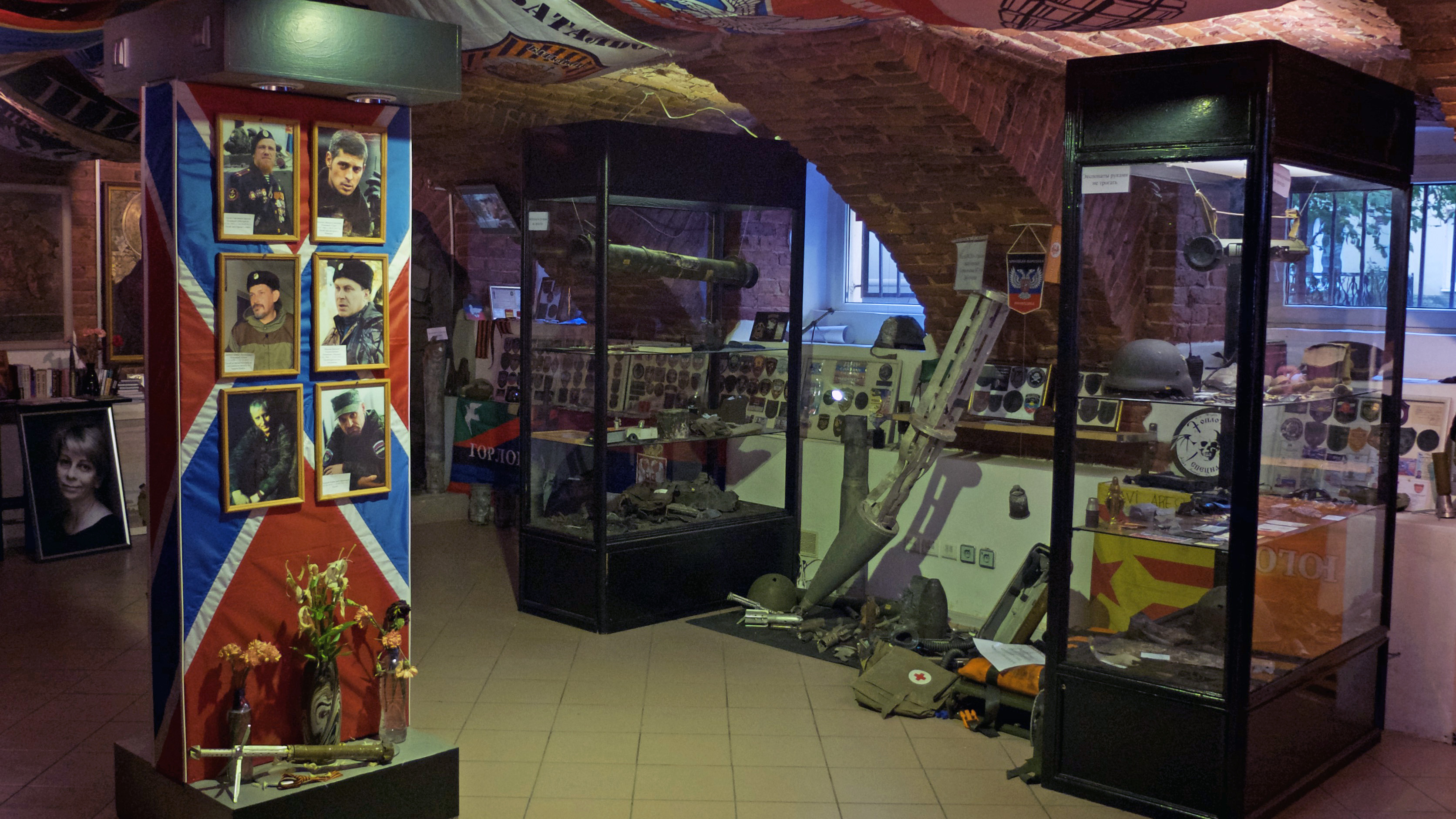
"Academician" points to a helmet that calls "special." “Parts of the brain of the Ukrainian Nazis remained in this,” he smiles.
"Academician": in the electronic base - three thousand Russians who died in the Donbass
The Academician says the museum is maintaining an electronic database of fighters who died in the Donbass. He did not allow her to see her, but said: "There are more than three thousand names of Russians."
According to Deputy Andrei Kamaev, 41-year-old Denis Shincorenko , most volunteers who come to the "veterans of New Russia" complain about serious psychological problems and the feeling that the war has changed them.
To a certain extent, we stay there, in the war Andrei Kamaev
“To a certain extent, we stay there, in the war. And I try to understand whether this postponed syndrome really exists, or this is a person being transformed,” says Kamaev.
He recalls a fighter who committed suicide: “He lived lonely after returning home. Most likely, he did not tell anyone that he was in the Donbass, and no one told him about it,” he says.
"Veterans of New Russia" remain "afloat at the expense of the pension of Kamaev and income from the small business of Shincorenko. They pay for a place where they can meet and discuss the opportunity to find a job.
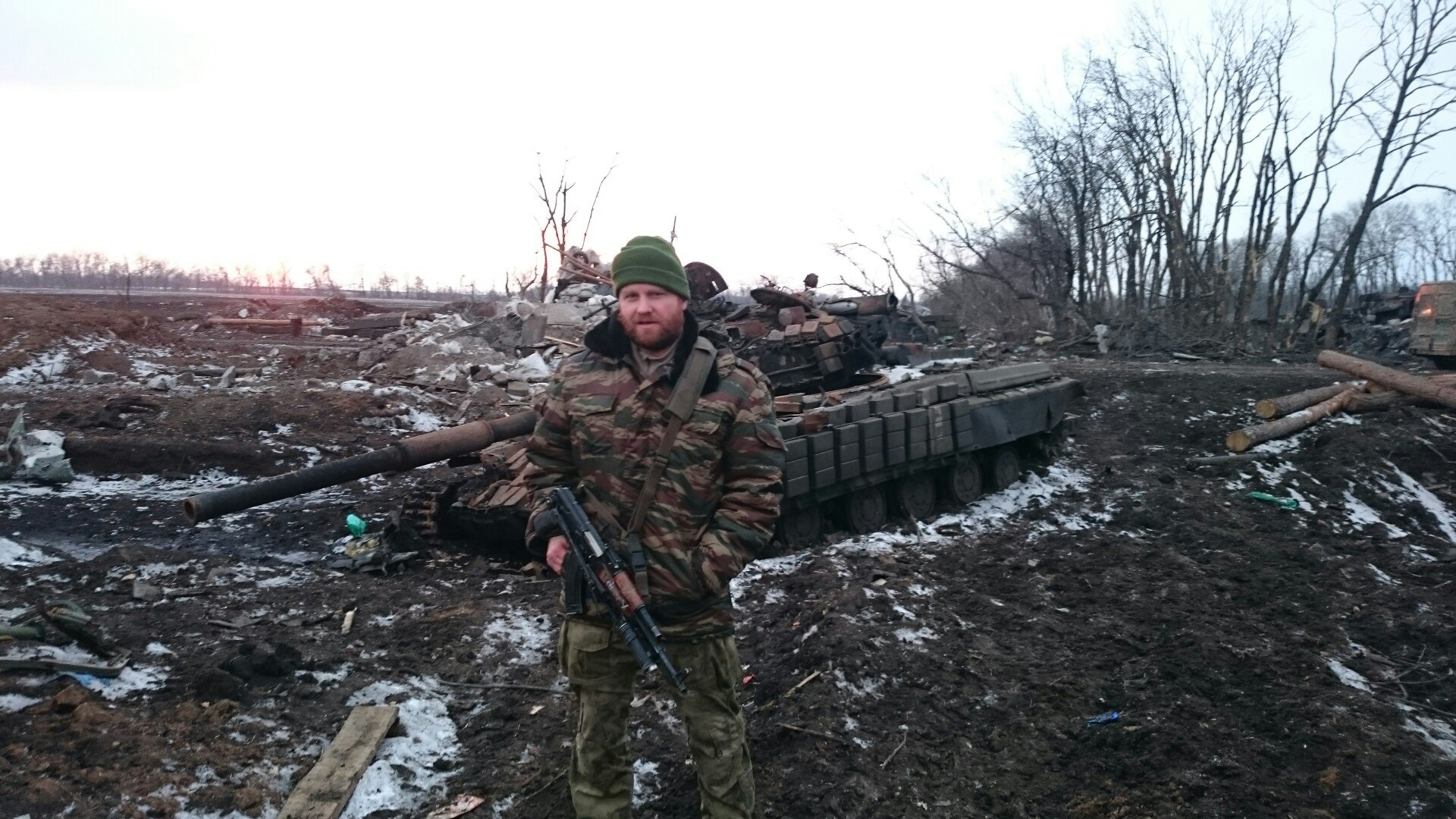
Many admit that they are forced to look for work in the shadow sector, because they do not find other options. Some add that the only possible option to survive is to leave a mercenary to other hot spots, such as Syria.
On the day when Radio Liberty visited the "veterans of New Russia", Vitaly also came there. He refused to give his last name, but said that for three years he fought as a volunteer in the east of Ukraine before he returned home with his wife from Donetsk. He was also interested in the prospects of work.
According to Vitaly, there are many who are trying to get in Moscow for construction or are looking for prospects in the annexed Crimea. There, Russia is building a bridge that must connect it to the peninsula.
And there are those who return to Ukraine in despair.
A symbol saturated with blood
Kamaev says that now people who want to go to fight in the Donbass are much less than before. Support for society and collecting money for such initiatives is much less than three years ago. Among the promising volunteers, information spread that the risk of it is not worth it, and those who returned are disappointed with their achievements in search of New Russia.
Novorossia is a symbol saturated with the blood of our close friends Denis Shincorenko
"Novorossia is a symbol saturated with the blood of our close friends," says Shincorenko.
The fact that the war went into the "frozen stage" and became much less intense, repelled the desire to go to the front from those who are looking for military adventures. Although the number of those killed in the first half of 2017 was twice as much as in the same period 2016, according to the Ukrainian military and the OSCE.
Answering the question of official military support from Russia, Kamaev strains and suggests that yes, it has become less.
New Battle
"Veterans of Novorossiya" aimed to force the government to give official status to those Russians who fought in Ukraine. This is a goal for the future, but this would give them a stable status.
We are good guys. It all depends on who will be in power, and who will write textbooks on the history of Denis Shincorenko
So far, this fails. Kamaev admits that it would even be harmful to crush in this area - this would mean the official recognition of Russia to participate in this war.
“The less we ask ourselves, the more, perhaps, the state will respect us,” he says.
And even without recognition at the official level, Deputy Kamaev Shinkorenko believes that, in the end, Russian volunteers who fought in the Ukrainian East recognize the heroes: "We are good guys. It all depends on who will be in power and who will write history textbooks."
Original publication - on the RFE/RL website