
Translated material
Love is in the palm of your hand

Online dating in a big city. Can dating sites save a traditional marriage or, conversely, destroy it?
Sergey Medvedev: In the 19th century, Charles Baudler represented the modern world in the form of a passage. He described Paris as the capital of the 19th century in the form of an endless series of reflections of the windows, the stream of human faces. In more than 100 years, his compatriot Michelle Welbek introduced the world as a supermarket - endless regiments of goods, endless ranks of choice. And now, maybe you can imagine the world as a smartphone. This endless choice has shifted to us on the screen of a smartphone, including the choice of a partner, a life partner. Online dating in the 21st century became the norm. About this in the plot of our correspondent Anastasia Tishchenko .
Anastasia Tishchenko: Many years ago, parents picked up the bride or groom to their children. Today, the Internet has taken this function, where dozens of dating sites work. So, even at the beginning of the zero in Runet, Mamba and Love Planet appeared. Millions of people around the world visit them daily. In the questionnaire, you can indicate the purpose of dating: serious relationship, flirting, sex. The latter often criticized the Mamba website, so in 2012 the management decided to remove this goal from the list. The audience of the site decreased markedly, and soon the function was restored.
Repeat of the Program of May 14, 2017
Many years ago, the bride or groom picked up their parents to their children. Today the Internet has taken this function
Today on the Internet you can find a partner to create a family, sexual relations, same -sex relationships. Some sites offer to evaluate a person from photographs of his pets and travels (this is how the Photostran service is arranged), for example, Tinder , attract users in that they guarantee mutual sympathy.
According to statistics, 16% of Russians are looking for partners for marriage on the Internet, the same amount for flirting and entertainment. 12% are in search of sex partners. At the same time, a quarter of the respondents use sites, although they already have a permanent relationship.
While some get acquainted, others earn money on this
While some get acquainted, others earn money on this. On many sites, the number of outgoing messages and profiles that can be viewed per day is limited. For a certain amount, this can be fixed. There are premium accounts with which you can communicate only if you have a premium access. In general, acquaintances bring some companies an income of more than half a billion rubles a year.
Sergey Medvedev: About love in the palm of your hand, about how much our daily lives are changing, how much the institution of marriage is changing, the institution of relations in the modern city, in the world of social networks we speak with our guests from the Higher School of Economics. This is Olga Logunova , Associate Professor of the Department of Sociology of the Higher School, and Konstantin Glazkov , a teacher of the same department.
The project that you conduct is called - "Love is in the palm of your hand."
Konstantin Glazkov: Yes.
Sergey Medvedev: Now it has become the norm-to admit that you met online, in some application? I think, five or seven years ago, it was somehow not comme il faut to talk about it.
Olga Logunova: All Western studies, which at the moment are quite a few, say that this stigmatization of dating in an online environment is slowly leaving, and acquaintances online as a result of despair still fade into the background.
It was previously believed that losers are sitting and getting to know on the Internet
Sergey Medvedev: But it was - it was believed that losers were sitting and getting acquainted on the Internet.
Olga Logunova: Yes. On the one hand, it was the result of despair, losers. On the other hand, it was the lack of any serious intentions, so it was the online environment. And there is still a lack of communication, the inability to communicate, imagine yourself in real life - and therefore it was easier to fill the questionnaire, construct yourself, based on your wishes and thus appear before the partner. Now the focus is still shifting (and the research results are actively telling us about this), and the online applications become a tool, including for finding a partner.
Sergey Medvedev: A completely standard situation: a person uses Facebook and VKontakte and, standing in line, leafing through his faces to Tinder. Is it also normatively?
Konstantin Glazkov: It seems to me that the issue of marginality, which is still present in the perception of these instruments as instruments of acquaintance, is completely not appropriate here. After all, we understand that the technology of geolocation, the technology for the search for partners here and now is gradually integrated into the majority of the services we use. In fact, interaction with people in public space (no matter what purposes) is gradually turning into an indirect technological network of interaction, when your device guarantees you primary contacts with other people who are next to you here and now.
Sergey Medvedev: You are more interested in the problem of geotaging, what your smartphone gives a signal: am I here? If there are some interested potential partners around ...
Konstantin Glazkov: Yes. This allows you to root the whole problem of dating, including romantic purposes, in how public life develops, public interaction. All these pretty, interesting cases are just about how our repertoire changes, how we position ourselves, how we establish primary contacts, from which, perhaps, “love in the palm” or something else grows.
Dating become part of a much wider existence of a person on the network
Sergey Medvedev: And Tinder is the only service that works with geolocation?
Olga Logunova: No, in many applications now there is such a function when we establish, on the one hand, our location, and on the other hand, we denote the radius in which we would like to get to know. And here the variety of paid functions and applications that we can use just begin.
Still, in addition to the technological component, we are still talking about the features that the online environment gives us. In this case, when we talk here and now with potential partners, with banks, with lovers and so on, this is precisely the introduction of those principles that gradually enter our everyday life.
Sergey Medvedev: Dating become part of a much wider existence of a person on the network. In fact, we live through the smartphone screen. We can sit on a banking operation or get acquainted with a person.
Do you have some statistics, how many percent of the Internet audience use online dating services?
Olga Logunova: In Russia, we have only VTsIOM data for 2012. There, 25% said that they use various tools. In the USA there is more fresh data-2015-2016, and there is about 40-50%there.
Sergey Medvedev: This is about every second user.
Olga Logunova: But, again, of those who are on the Internet.
In fact, we live through a smartphone screen
Sergey Medvedev: If you take large megacities, then this is close to one hundred percent penetration. But the goals are probably different. After all, many are sitting there just for entertainment - to see people, see their social significance, their status. This is not that active units in search of marriage.
Olga Logunova: Motivation is one of the main fields of the study that is going on now. And there, just one of the motivations is a pastime, time, time -wrapping. On the other hand, we are already talking about some serious relationship. Here, of course, there are a lot of stroking myself that I am like that, nine out of ten people are invited to further acquaintance and communication. This, of course, also stands in a row.
Konstantin Glazkov: If the application worked only to introduce people, it would be a self-cap. The ideal application, which has established searches, establishing contacts and communications, will serve in such a way that a person will quickly find a partner and make a “suicide” - will leave the audience of its users. There is such a gesture of goodwill: when a person is in a relationship, he removes Tinder out of fidelity. But this is very strong and, most likely, not the only move. He has many alternatives where the presence of Tinder in relations is a completely normal situation.
If the application worked only in order to introduce people, it would be a self-cap.
The first thing to ask about, analyzing any application: why do developers need it and why users need it? This set of motivations and goals is very different. Some applications are positioned so that it is just to lay a route around the city, and this is only to find a partner, but this is absolutely not so.
Sergey Medvedev: In this sense, if the husband suddenly finds his wife’s profile in Tinder, is this not such a scandal? You can say: yes, I collect likes, it is professionally important to me.
Olga Logunova: We did not say another motivation - professional. There is a certain group of people who consider this as such a notebook, including professional contacts. We see what is written there, for example: "I am looking for heroes for the program." The situations are also voiced in the same way when we ended up in an unfamiliar city and we need a company to go to a restaurant, an exhibition or do something else.
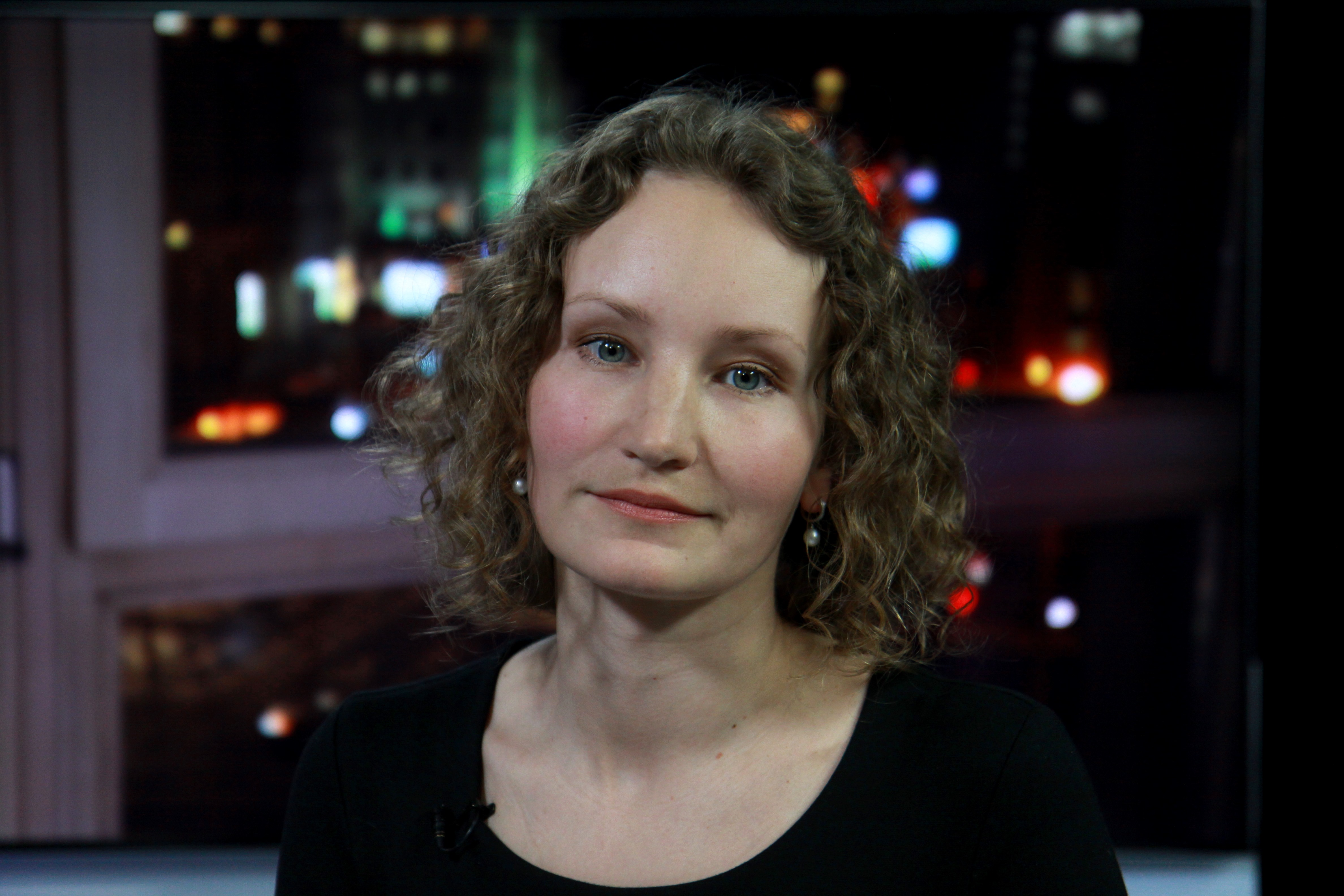
In fact, any goals are now increasingly indicated in order not to spend your own and other people's time. Most often, we have some kind of tips, markers that help us understand: here the goal is. Accordingly, everyone opens and makes a choice.
Sergey Medvedev: And you watched what the percentage of men and women on dating sites?
Olga Logunova: Here, probably, you can contact a study that in Russian Tinder conducted Social Data Hub in 2015. It suggests that 55% are women, and 45% are men.
Sergey Medvedev: This is due to the fact that women are generally more socially active?
Olga Logunova: There are no explanatory models there.
Girls in the presentation often have symbols of power: Red Square, the Cathedral of Christ the Savior, the Kremlin towers
Sergey Medvedev: And there is no such thing that there are a lot of divorced women with children who are looking for further arrangement of their fate?
Olga Logunova: The study that we now conduct with my colleague is devoted to self -presentation. And we look at the capabilities of Tinder. There is a visual component - these are six photos. And somewhere there are profiles in which there is one photo, and somewhere there is a whole mini-series of six photos, from which we add a picture of a potential partner.
Sergey Medvedev: There is also a binding to Instagram: you can weigh pieces of 30 Instagram photo.
Olga Logunova: Yes, plus everything - and many use this - there are links to their VKontakte, Facebook and so on. The second tool is text messages - 500 characters that we can use in a variety of.
Sergey Medvedev: The presentation models are so standard, including male (here are fishing, here I am and my car, I and my vacation, so I am engaged in active sports)? Or all this is female ... A lot of photos with food. Here, psychologists have a large space for thought.
Olga Logunova: And another curious topic is photographs in the context of other people, and you sometimes try to guess, and who is the same prince? .. And I wonder what kind of instrument a person uses, how he constructs all this.
Sergey Medvedev: This is one of the social networks that I use. I look at it as a sociologist. Insanely interesting: the girls in the presentation often have symbols of power: Red Square, the Cathedral of Christ the Savior, the Kremlin towers. A person somehow positions himself in relation to the Russian system of power. The second is a symbol of food: a person sits behind the full plate, prepares to eat. And the third is a man driving a car, this is almost 90%.
Olga Logunova: Moreover, this is the male and female version of the presentation.
Someone will build an open strategy aimed at communication, and someone will play "hard to get"
Sergey Medvedev: You can understand that this is a desire for prosperity, for power, a demonstration that a person is socially active.
Olga Logunova: I would also celebrate the story of how we are talking about it. We called this "positive and negative presentation." One story when we say that we love sport or something else, and the other-that we do not love something.
Sergey Medvedev: For example, "I hate a healthy lifestyle."
Olga Logunova: By the way, it is very common, like the topic of sports, various hobbies. The spectrum is quite wide. We can meet lovers of fishing and some games. By the way, it seems to me that they are looking for partners for a joint game.
Sergey Medvedev: Many strategies come from repulsion. Say, the girl builds herself an image of such a short -term that will not go on a date. Someone will build an open strategy aimed at communication, and someone will play "hard to get".
Konstantin Glazkov: There is the so -called virtual curator. This technique of presentation of ourselves, which we possess ... The same techniques are migrated to technologists, where we have many virtual "I" that we must somehow comb. You can publish six photos. If you publish only three photos, then you are most likely a suspicious type.
You can publish six photos. If you publish only three photos, then you are most likely a suspicious type
You must correctly build a description of your text. This question is what the user puts in this, what winning strategies are about what curatic cultures are developing, that is, that you need to invest in order for your exhibition called “I” to take place, attract attention and work.
Sergey Medvedev: What are people looking for on dating sites? This is evidenced by the active user of Tinder Anna Gorodetskaya in the plot of our correspondent Anton Smirnova .
Anna Gorodetskaya: I began to use Tinder in February this year in Moscow to get acquainted with new people from my usual social circle. I myself work in the field of technology, but there are people who are engaged in them very deeply and tightly, know a lot of interesting things about some things. But these people do not go to bars, they go to technological Meetup in order to do business. And I go to the bars mainly to chat with friends, and I do not always want to be distracted by some strangers.
In general, acquaintance on the Internet is no different from dating in offline.
Anton Smirnov: Is this just a tool?
Anna Gorodetskaya: Exactly! This is just an opportunity not to go to bars. You form yourself a questionnaire, set the settings, look for something, and a feeling of an endless number of contacts is created that require nothing from you. As soon as you did not like a person, you can remove him from steam and find another. In life, this is all a little more complicated. My life was reformatted in such a way that situations have disappeared from it in which you can get acquainted with offline people. I started to work a lot. I have my own circle of friends. I have many close friends with whom I am interested in talking just about themselves.
Anton Smirnov: It turns out that acquaintance in Tinder is such an Entertainment?
Acquaintance on the Internet is no different from dating in offline
Anna Gorodetskaya: Yes, this is better than any online game.
Sergey Medvedev: Did you have a presentation on offline dates?
Konstantin Glazkov: I would not say that.
Sergey Medvedev: By geoposition?
Konstantin Glazkov: Yes. What is geoproption? It just involves such technologies that allow us to understand that we are in contact somewhere here with others. The simple task that the eyes used to solve: to look around where and with whom you are - now most often mediates the phone. Very often, the phone gives us such tips that force us to look around. My favorite example is sometimes an interesting way of the Yandex.Miresport service. For example, he tells me that a bus passes past my stop now. I look around - there is no bus. And vice versa, there are disadvantages that the user accustoms to solve.
Sergey Medvedev: By the way, in Yandex.PRIKS they very often get acquainted, for example: "Girl in the yellow" Handai ", look to the left."
Konstantin Glazkov: Yes. People like to contact, but they are not ready to take risks and use the old -fashioned format "face to face."
Sergey Medvedev: Maybe this is a dissociation? A person loses normal communicative skills, because the smartphone mediates our communication and our ability to get acquainted, and we are already losing the ability to get acquainted in real life.
Olga Logunova: It seems to me that here is still about some additional, second screen. Indeed, on the one hand, we have a real acquaintance, and on the other, the second, additional screen that allows us to expand our usual field, perhaps expanding it not only geographically, but from the point of view of some kind of professional history.
But here the most interesting things begin. Например, Анна говорит о том, что у нее появилось много работы, и ей некогда этим заниматься. Иногда в данной ситуации появляется еще третий экран, некий такой фильтр. Со стороны мужчины это часто проявляется: после того как девушка свайпила и сказала, что он ей нравится, ей пишет помощник, секретарь или еще кто-то: "Я от Михаила, но у него очень много работы, поэтому давайте мы договоримся и организуем первую встречу". Это все преломляется еще раз.
Сергей Медведев: А какие-то девушки на это ведутся? Человек важный…
Ольга Логунова: Мне кажется, это такая стратегия – повышение статуса. Это границы – вот мы общаемся таким образом.
Людям нравится соприсутствовать, но они не готовы рисковать и использовать старомодный формат "лицом к лицу"
Константин Глазков: Интересно, что экран, с одной стороны, – это инструмент подачи информации, а с другой – это еще и фильтр. И в этом смысле горожане (это было описано еще в конце XIX века Георгом Зиммелем ) всегда обладали функцией фильтрации. Он это называл "блазированным взглядом" – это функция незамечания других от перегруженности, от нежелательных контактов, в том числе чтобы просто сохранить нормальное равновесие нервной системы.
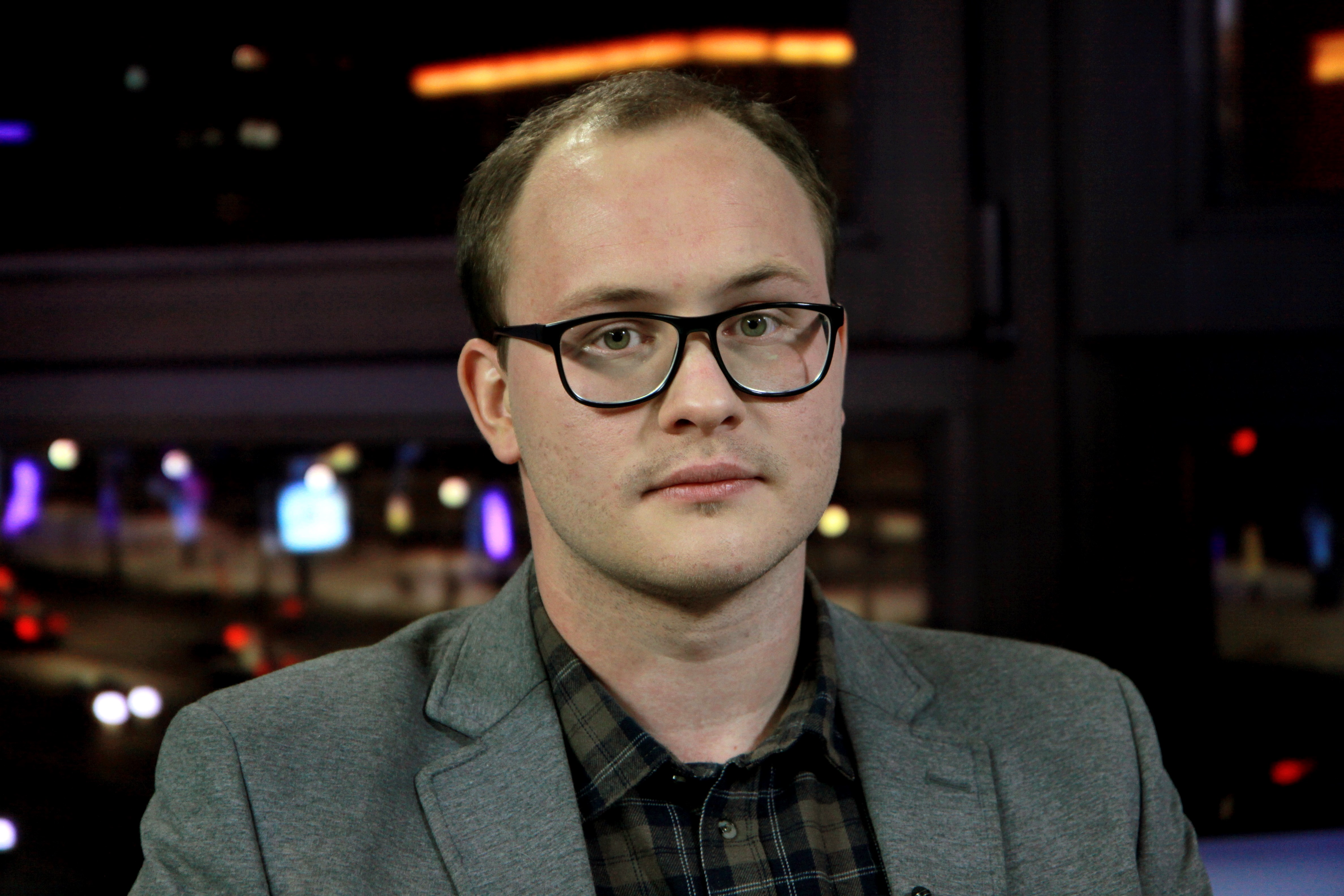
И в этом смысле вряд ли можно говорить о том, что благодаря дополнительным новым экранам мы разучились что-то делать или стали плохо это делать. Нет, это просто очередные дополнительные возможности, где можно тоньше настраивать какие-то экранные фильтры.
Сергей Медведев: Скажем, Tinder интересен тем, что он привязан к "Фейсбуку". А если есть возможность посмотреть профиль "Фейсбука", то там видна вообще вся история человека.
Наверное, изначально профиль человека на сайте знакомств – это такая замануха, мормышка, на которую должна клюнуть рыба. Ты понимаешь, что сталкиваешься не с человеком, а с какой-то невероятно сильной выставочной витриной. И нужно попытаться проникнуть за эту витрину и понять, что есть за ней. Это очень непростая задача.
Ольга Логунова: Да. Это, как правило, видно на фотографиях, особенно на женских.
Сергей Медведев: Это называется "в образе".
Ольга Логунова: Да, развевающиеся волосы, красивые размытые задние планы… Но отдельно я бы еще поставила селфи. Здесь еще больше накапливаются эти экраны, когда мы сами конструируем эту приватность в какой-то среде, меняемся местами с тем, кто нас фотографирует… Если проследовать за Роланом Бартом , то у нас происходит наложение всех образов, которые могут быть при фотографировании. И потом мы, собственно, выкладываем и показываем то, как мы себя сконструировали. А у мужчин это, как правило, деловые фотографии.
Изначально профиль человека на сайте знакомств – это такая замануха, мормышка, на которую должна клюнуть рыба
Сергей Медведев: Но интересно, что человек в профиле знакомств одновременно занимается и саморефлексией. В итоге он сам конструирует свой образ. Может быть, итогом будет даже не то, что ты с кем-то познакомишься, а ты станешь как бы другой версией себя самого, отрефлексируешь и сконструируешь собственный образ.
Константин Глазков: С помощью этих сервисов мы становимся доступны не только для тех, кто находится рядом с нами, но и для тех, кто находится в другом полушарии. Мы многое сообщаем о себе. Тут еще добавляется такая очень интересная информация, как "где ты находишься", и часто это говорит о тебе лучше, чем ты сам. Вот эта информация становится доступной. По ней можно сконструировать маршруты перемещения, придумать потребительские портреты, корзины и так далее. И, в то же время, люди обожают решать эту проблему сами, обожают собирать цифровые следы других и складывать этот пазл. У меня было исследование про игру. Я спрашивал игроков: "Любите ли вы выслеживать других людей, собирать о них информацию?" Они говорят: "Да, очень любим!" А потом я спросил: "А хотели бы вы, чтобы вас так выслеживали?" – "Нет, мы так не хотим".
Сергей Медведев: Казалось бы, должно быть обратное. Если ты хочешь выстраивать пазл другого человека, то и сам выложись в сети, оставь свои цифровые следы, давай другим какие-то знаки, и пусть тебя тоже собирают.
Все любят играть в эту игру, просто в какой-то момент она выходит из-под контроля
Константин Глазков: Я боюсь, проблема тут в том, что знаков слишком много, и контроль за этими распоясавшимися знаками, которых ты слишком много за собой оставляешь, заставляет тебя… Никто не против того, чтобы выкладывать информацию. Все любят играть в эту игру, просто в какой-то момент она выходит из-под контроля.
Сергей Медведев: Да, и потом какие-нибудь западные исследователи отслеживают перемещение российских солдат по территории Украины, потому что они фотографируются на фоне танков.
В какой степени страсть знакомиться, отстраивать профили других людей может быть монетизирована? Об этом говорит Андрей Бурин , сооснователь сервиса Teamo .
Андрей Бурин: Я довольно давно занимаюсь знакомствами – наверное, больше десяти лет. Было ощущение, что пришло время заняться чем-то в интернете. Мне показалось, что есть свободная ниша в онлайн-знакомствах. Я сделал свой сайт знакомств.
Знакомства – это то, что люди не готовы выставлять напоказ, потому что это не всегда успешно. Это всегда проверка себя, уверенности в себе. Когда ты знакомишься и что-то не складывается, не всегда хочется, чтобы твои друзья об этом знали. Поэтому социальные сети близко подходят к этому вопросу, но, за исключением "Одноклассников", никто всерьез не добавил знакомства к своему функционалу.
Знакомства – это то, что люди не готовы выставлять напоказ, потому что это не всегда успешно
К онлайн-знакомствам относятся с настороженностью. Есть мнение, что там достаточно большое количество странных и не вполне нормальных людей, что правда. В любом месте, где много людей, какая-то часть из них будет не вполне нормальной. На сайте знакомств обычно собирается огромное количество желающих познакомиться. Там есть и так называемые фрики. Это просто надо иметь в виду.
Начинать надо с осторожностью – сначала пообщаться, побольше узнать о человеке. Потом договориться о встрече в каком-нибудь людном месте и ни в коем случае не соглашаться на то, чтобы поехать к человеку домой в первый же день.
Иногда люди не склонны начинать сразу с серьезных знакомств, несмотря на то что, в принципе, цель у большинства людей все-таки примерно одна – найти себе пару. Но какая-то часть предпочитает начать с чего-то более легкого, а там посмотреть, как пойдет, поэтому они говорят: "Да, я пришел сюда не за серьезными знакомствами. Я хочу просто потусить, посмотреть на девочек (или на мальчиков)". На улице невозможно встретить тысячу девушек, желающих познакомиться, в течение одного вечера. Эту возможность дают сайты знакомств.
Сергей Медведев: Раньше у нас в студии был Сергей Сигитов , директор по развитию сайта Mamba, он также организовал сайт исламских знакомств под названием "Моя диаспора". И он привел такое сравнение: когда ты едешь на эскалаторе, тебе навстречу движется нескончаемый поток лиц. У тебя есть секунда контакта, и в эту секунду ты принимаешь решение – мой человек или не мой, но эскалатор все равно неумолимо уносит этого человека.
А может быть, эта возможность свайпить направо или налево каким-то радикальным образом меняет нашу суть отношения к другому человеку? Это, в конце концов, может разрушить и брак, если человек всегда будет знать, что есть какой-то более хороший вариант.
Ольга Логунова: На данный момент мы говорим о том, что существует рынок онлайн-знакомств. У нас есть много инструментов, есть какие-то типичные практики, которые мы используем. Есть некая витрина, на которую мы выставляем какие-то парадные фотографии, факты из своей жизни.
Если говорить о рынке, то появляются дополнительные услуги. В частности, новозеландка Эмили Маклин сделала уже целый бизнес на том, чтобы провести ребрендинг вашего профиля в Tinder. У нее есть несколько пакетов. Самый низший пакет включает в себя выбор определенных фотографий, корректировку тех фактов, которые вы о себе пишете. Есть премиум-пакеты, которые не предполагают придумывать вам биографию, но они предлагают правильно создать профиль, что очень важно.
Что такое резюме? Это такой лифт, который привезет или не привезет, а дальше многое зависит оттого, что мы будем из себя представлять на очной встрече. Так же и здесь. У нас есть одна секунда в тот момент, когда на нас смотрят. Правильно отобранные фотографии формируют образ, выбранные факты из биографии подтверждают его. И в результате – нарядная глянцевая обложка, которую мы имеем.
Сергей Медведев: А что будет с браком? Что будет с демографией? Кто будет защищать родину с автоматом Калашникова в руках? Этот сервис модифицирует институт брака, или он постепенно ведет нас к какому-то постбрачному состоянию? Или институт брака сохранится, и онлайн-знакомства – только еще один интерфейс, еще одно окошко, через которое люди могут реализовать свое биологическое предназначение?
Сам Tinder или какие-то другие сервисы не разрушают институт брака, а, скорее, расширяют, дополняют его
Константин Глазков: Я бы сказал, что сам Tinder или какие-то другие сервисы не разрушают институт брака. Они, скорее, расширяют, дополняют его.
Ольга Логунова: Не редки случаи свадьбы после знакомства в Tinder.
Сергей Медведев: У меня есть цифры – 2% в 2000 году в США и 35% сейчас. Конвертация онлайна в офлайн, в брак, – это 35%!
Ольга Логунова: Это, скорее, какой-то дополнительный инструмент, который заменяет личные встречи. Но в итоге пока мы наблюдаем, что браки заключаются и по результатам знакомства через Tinder.
Константин Глазков: У нас в России Tinder – это, в том числе, инструмент успешного брака, то есть он позиционируется в рекламных продуктах, как некий такой рычаг, который ты потянул на себя и – опа! – брак, счастье.
Ольга Логунова: Я бы уточнила – инструмент для серьезных отношений с последующим браком.
Константин Глазков: А в США это очень легкомысленная штука, с которой лучше не связываться. Она, скорее всего, связана с какими-то маргинальностями, болезнями, и это высмеивается в различных культурных продуктах и материалах.
Не нужно бояться виртуальных отношений
Сергей Медведев: С другой стороны, в России, например, "Фейсбук" – очень серьезный интерфейс, а на Западе люди совершенно запросто пишут в "Фейсбуке" незнакомому человеку: "Давай познакомимся, давай встретимся".
Константин Глазков: Для нас это немыслимо. Это очередной фильтр. У нас есть как бы несерьезные соцсети, а это серьезная.
Сергей Медведев: Наверное, главный вывод, который я могу сделать: не нужно бояться виртуальных отношений. Они не являются порочными. Они в результате все равно привязывают нас к месту, к другим людям и расширяют наши социальные навыки. И, может быть, кому-то они позволят построить собственную жизнь, собственную карьеру, собственное счастье. Пожелаем всем нам удачи в нелегком поиске себя и другого, что, видимо, является одним из главных смыслов нашего бытия.