
Translated material
Vera Vasilieva: August
Over two and a half decades, many options for interpretation of the events of August 1991 appeared, questions remain, to which society is still looking for answers. Was that putting-agony of the Soviet authoritarian system, or a performance carefully directed by someone? Was Mikhail Gorbachev really blocked at his dacha in Foros, or was it simply beneficial for him to imagine the state of things that way? And so on, and the like ... However, for the people who went to the barricades, in those days, in fact, the issue of civil choice between the right to independently determine their future and subordination of the state car was decided.
In August 1991, I was 15, I studied at school. I spent the summer holidays with my grandparents, in the small town of the Volgograd region. On the early morning of August 20, tickets to Moscow were taken ahead of time. I was not particularly interested in politics, but I had a rather skeptical attitude to the Soviet system, probably under the influence of a trip to the United States - the first abroad in my life. It appeared with what to compare Soviet reality. After six months in the “rotting West” - and I returned in February, when Moscow streets were covered with melting and black snow from dirt - life in the fatherland seemed extremely gray and dull.
Apparently, for this reason, I was in absolute confidence that no shocks in the USSR could happen, and the council of the GKChP has become a real shock for me. Before leaving for the train, we called home on the phone and found out that there were tanks in Moscow. In my heated imagination, the teenager for some reason draws columns of armored vehicles at the Paveletsky station, where we had to arrive. Our train was not fast, but passenger, so the return to Moscow stretched for almost two days, which became truly painful. And by no means because of the heat in a car hot in the sun, but because of the feeling of complete impossibility to do anything.
Brave Soviet marches, interspersed with "news" sounded from the radio; The announcers with intonations from the deaf Soviet times read the decisions of the State Emergency Committee. Decree No. 1 suspended the activities of political parties and public organizations, forbade rallies and street processions. Decree No. 2 prohibited the release of all newspapers, except for nine: “labor”, “working tribune”, “Izvestia”, “Pravda”, “Red Star”, “Soviet Russia”, “Moscow Pravda”, “Lenin Banner”, “rural life”.
The current Kryuchkovs have long shut their mouths to both independent journalists and their political opponents, pretending to enjoy popular support, drowning Russia in lies
Where in full information blockade, without the Internet and mobile phones, in moving along the steppes, forests and urban outskirts, the railway composition became known about the defenders of the White House, about three dead? I don’t know, I don’t remember. However, the passengers of our car with fervor discussed what was happening. We arrived in Moscow in the early morning of August 21, when everything was essentially successfully completed. But we did not know about the fact that the coup failed, and I surprised my mother a lot, when in a categorical form I demanded that we immediately go to the walls of the White House.
Further-a huge, inconspicuous number of people, the universal joy of victory, but a drop of regret was mixed to this feeling somewhere deep down-that I did not have a chance to take part in the real struggle on the barricades. Then I still did not know that the barricades were not always visible and tangible. It seemed that one universal effort was enough - and Russia in an instant would turn into prosperous Europe. It did not happen. Neither then, and a quarter of a century later.
The current Kryuchkovs have long shut their mouths to both independent journalists and their political opponents, pretending to enjoy popular support, drowning Russia in lies. Almost monthly, the list of Russian political prisoners is wide . Some judicial sentences (fortunately, not by mass, but in the spirit of unlawfulness and cruelty) are quite comparable to sentences of the Stalin era. It became normal to say things that are inconceivable before. For example, that Stalin was not a criminal, but the most effective of managers who won the war. The people are traditionally silent for the mass. Someone lives on the principles "if only it was not even worse" and "my hut from the edge." Some people crookedly grinned at the 1991 romantics who were ready to put life so that the country broke through to freedom and democracy.
We ourselves left those days, from our then infinitely far - not only in time, but also in spirit. Probably, if then we had the opportunity to look at today's today, then we would not recognize ourselves. A short historical memory must have played a cruel joke with Russia.
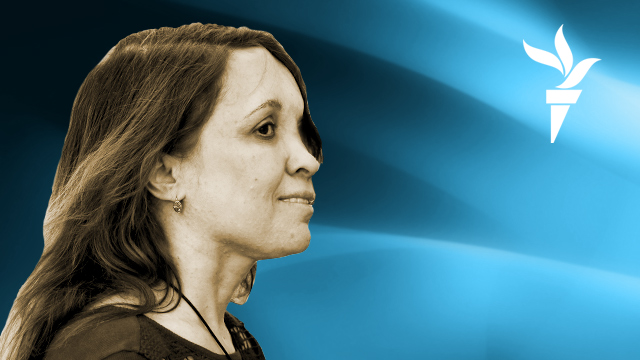
Vera Vasilieva is an independent journalist leading the Radio Liberty project "Freedom and Memorial"
Opinions expressed under the section may not reflect the point of view of the editorial office