
Translated material
Video for NGOs: trends, tips, successful projects
The audience today prefers video content to any other and consumes it in huge volumes. The measure of popularity of the video can be considered social networks. From 2015 to 2016, the volumes of video on Facebookincreased by 49 percent , on Instagram - by 71 percent, on Twitter - by 176 percent.
Over the past few years, marketers persistently recommend business to make a video and share it online to attract and hold clientele. So, the word "video" in the topic of information ballot increases the number of open letters by 19 percent, and clicks - by 65 percent. In addition, Animoto survey showed that those who prefer a video presentation of the product are four times more than those who are ready to read a text description, and each fourth client loses interest in the company if she has nothing to offer a video in terms of video.
Non-profit organizations around the world are also actively mastering video format online, and sometimes they are at the forefront of new trends.
360-degree video
Modern video content aims not only to state information or convey the idea, but to immerse the viewer, to make his experience close to real conditions. One of the popular techniques is a 360-degree video called immersion.
360 shooting is carried out using special cameras : from two to six. The video they recorded is then mounted in a single panorama, which gives a complete overview of space. The first format was supported by YouTube in March 2015, in September, downloading and watching immersion videos became possible on Facebook. This year, the Vimeo service joined the club.
Such a video allows the audience to feel the effect of the presence more fully: to feel the three -dimensionality of the shooting site, to discern it in details, “turn your head”, set up the angle of view and viewing angle.
In 2016, Magnifyre conducted an experiment with a 360-degree and ordinary video . The 360-degree video turned out to be an absolute winner. It was watched almost 30 percent more often than ordinary videos. It was also taken twice as often to be taken to the end.
NPOs resort to 360-degree shooting to transfer its audience to where the organization is the main work. Charity: Water in her film The Source told the story of a 13-year-old girl to villages from Ethiopia and her village, whose inhabitants first gained access to pure water.
The Action Contre La Faim , confriving hunger in African countries, took a video about her work in a Banga Hospital in the Central African Republic.
The Discovery Channel presented the film Proting Pandas , and National Geographic shot The Protectors documentary - about Rangeers in the Garamba National Reserve in the Congo. The famous director Katherine Bigelou worked on this film.
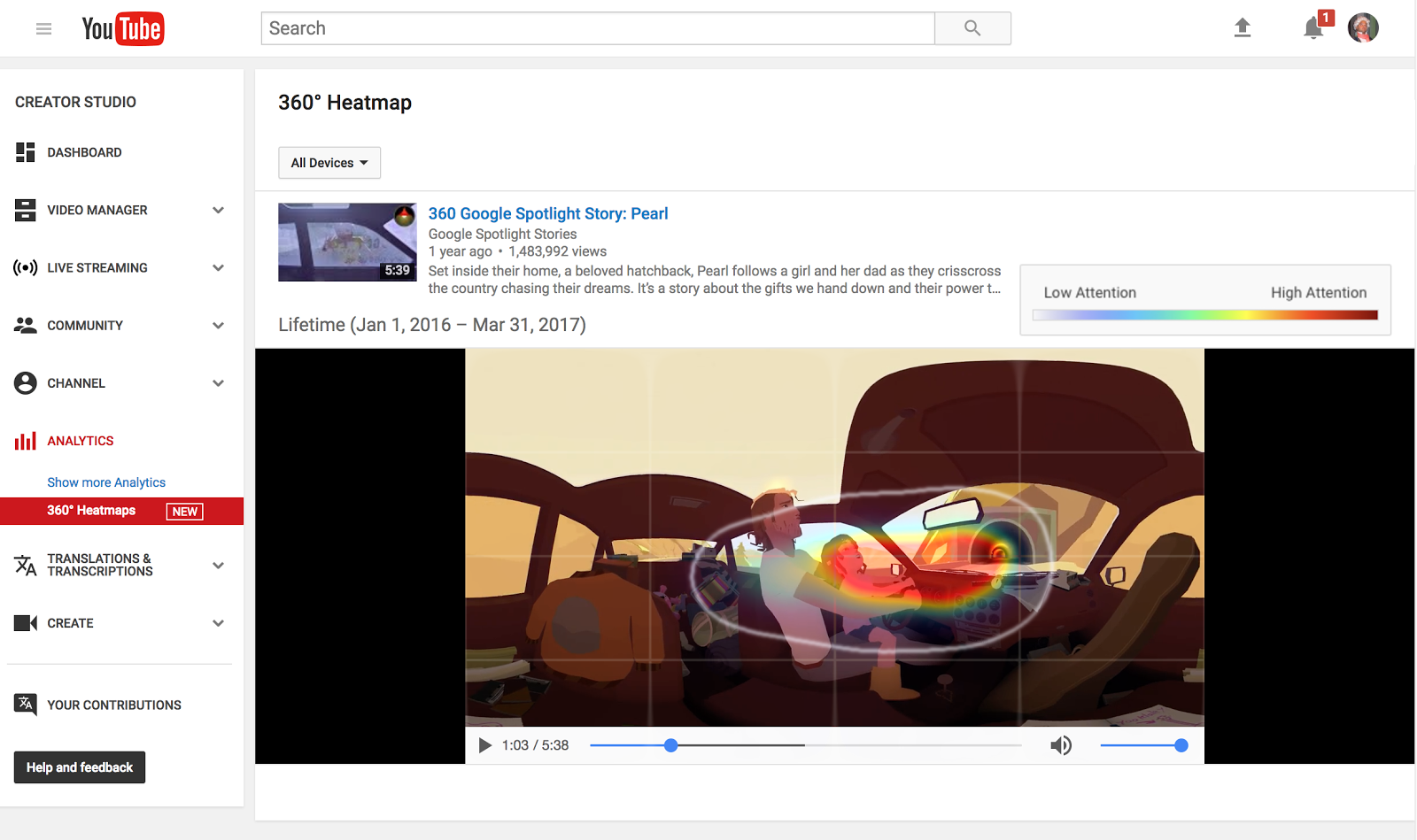
More recently, YouTube , which collected the largest collection of 360-degree videos today, launched “thermal cards” for this content. With their help, the authors of the videos, who gained at least 1000 views, will be able to find out how exactly the audience interacts with their product.
Advice
The production of a 360-degree video is a technically complex and expensive process. Moreover, according to Google , viewers spend 75 percent of time, watching a video at a very narrow and directed angle.
Take a closer look at the VR180 format. Since June 2017, YouTube has been testing this format for a 180-degree video . It can be shot with one single camera. At the same time, the picture becomes much more voluminous than for a “flat” video.
Interactive videos
Interactive videos are not a new, but tightly standing reception for a more complete immersion of the audience in the world of the video. Such videos, for example, convey partial control over the development of the plot, as in Choose a Different Ending (choose the other end) - an interactive film for the social campaign Drop the Weapons .
The German NPO MISEREOR received a prize of the international advertising festival “Cannes Lions” in the Street Advertising category for the PLACARD campaign, which included interactive video on street stands, triggered when passers -by used their credit cards to make a donation.
Here and here you can find video tutorials on how to make an interactive video.
Live broadcast
A live broadcast online is a very popular trend in marketing and communications since it has been simplified and has become technically possible in the largest social networks. Direct inclusions allow you to make Facebook Live, Snapchat and Persicope Twitter. Together, these three resources generate about 22 billion views per day.
According to Facebook , direct broadcasts are watched three times longer than ordinary videos and comment 10 times more often. 50 percent of marketer surveyed Social Media Examiner last year said they intended to use direct inclusions.
There are many topics and formats that are close to any NGOs, to which live broadcast is applicable:
- Interviews with experts or a “question-answer” session with an audience in real time;
- Strailing videos: they allow you to show their office, studio, people working in the organization’s rearguard.
- Demonstrations and leadership: talk about a new achievement or initiative, share a useful skill, give advice, hold a mini-well.
- Inclusions from events: speakers, reports about what is happening in the hall or behind the scenes.
- Announcements of preparing measures, as well as statements or urgent messages.
Here the greenhouse talks about the technical points of direct broadcasts on Facebook and on YouTube.
Video for any occasion
The video can serve as an effective tool for almost any needs of the organization.
It allows:
Cloth, clearly and fascinatingly tell about yourself
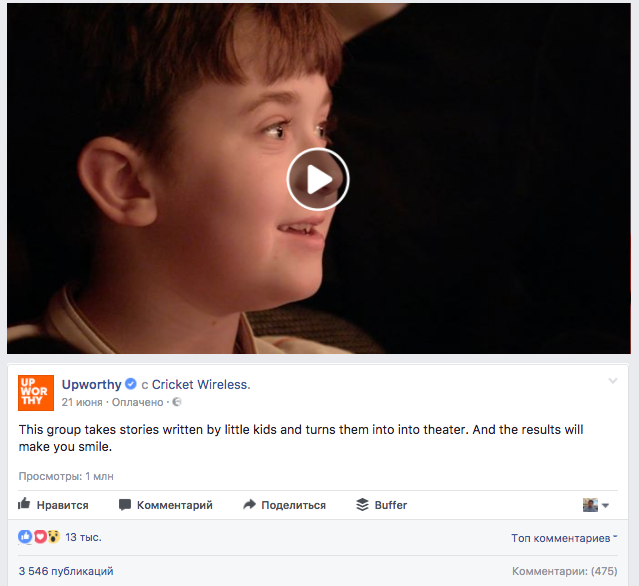
A short video can replace a long text in the section of the site "About us." As, for example, the video of the New York organization Story Pirates , which helps to make the educational process in elementary grades more exciting for children.
Another example is NPO Witness . It helps human rights activists around the world "safely, ethically and effectively use videos to combat human rights violations."
Talk about the problem
Violence is violence - a social experiment shot by hidden cameras, telling about violence against men. Thus, The Mankind Initatating decided to draw attention to the fact that 40 percent of the acts of violence in the UK are directed against men.
This strong and very short video within the Right by You campaign is devoted to the problem of suicides among adolescents.
Another example is the #itcanwait viral video about the danger of sending text messages driving.
Call to action
This video My Friend is Dolphin Project calls to act against the content of dolphins in captivity.
To communicate with the fundraysers
City of Hope made a video to motivate and help volunteers engaged in fundraising for this NGO
Tell the stories of those for whom or with whom the organization works
Here, Loveyourbrain program participants tell how their life has changed, thanks to this organization. Her mission is to help people who have experienced brain injuries.
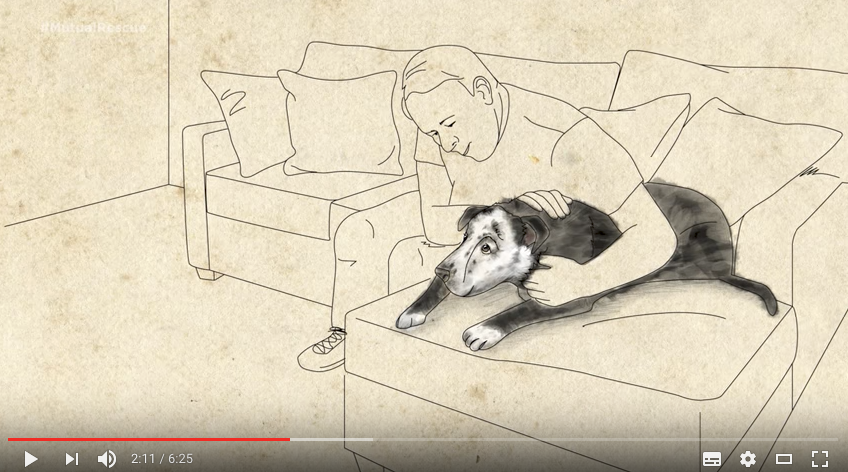
Here is the Mutual Rescue video, which has become viral. This is an emotional recognition of a person whose life radically changed the dog taken from the shelter.
In this video of More than ME, ambulance officers talk about their work during the outbreak of the Ebola virus in Liberia.
Organizations often resort to the video to allow their founders to tell why they chose this mission. For example, the story of the head of Generosity.org
Video clarification: decompose into the components of the concept, methods and methods of solving the problem
The Follow The Frog video explains how, with simple actions, any viewer can help save tropical forests.
You can also follow the example of the greenhouse and make your video tutorials.