
Translated material
British in space
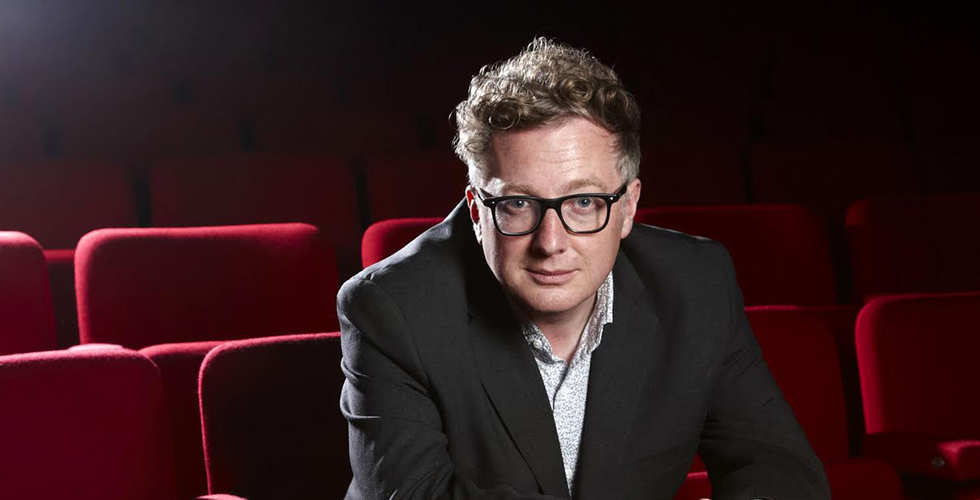
In addition to the expanded music program at the Synthposium festival, which will be held in Moscow from August 24 to 27, the educational and lecture parts are announced. With the support of the British Council, a writer, historian and philosopher, author of two Bratseller books, leading podcasts about cinema and philosophy at BBC Radio Matthew Suit will make the “British in space” about the composers who used the music as a tool for describing other worlds, such as Arthur Bliss, Daphne Oram, Delia Deribishir, Tristram Carey, Elizabeth Lutiens. For COLTA.RU, Matthew Suite prepared a small prelude to his lecture and compiled a playlist of works recommended for listening to it.
At school, I was not taught to play the instrument. The choice of tools was small, and we were invited to fill out the questionnaire to identify our musical tastes. When asked about my favorite music, I answered: "Radio -pional." It seems that the teachers did not understand what I am talking about, so they did not take me to the musical class.
I began to write about music after I started writing about cinema. This is an extremely important part of the movie. Especially music in dumb films. So this topic captured me - not only the music that sounds in films, but also the music that sounds on the set in order to set up the actors to the correct emotional state. As a journalist, I was sometimes lucky - I was entrusted with great musical stories: for example, a trip to Mosfilm was extremely interesting, where the British electronic group Hybrid wrote the track “Finished Symphony” with the Russian National Orchestra. It was delightful to hear them at work and go through the turnstile, through which Eisenstein and Tarkovsky passed. Recently, I am conducting the BBC show “Sound of Cinema” about the music in the cinema, so writing about music is part of my weekly ritual. I study a lot thanks to this work.
British Council invited me to give a lecture “British in space” after they heard my program “Sound of Cinema” on BBC . I really liked the idea. I often put the soundtrack of Eduard Artemyev to Solyaris in my programs, and I was always interested in the parallels between electronic music in the Soviet Union and in the West. It seems to me that Russian listeners will be curious to find out about figures like Daphne Oram and Delia Derbishir , who were real pioneers, but their names are relatively unknown even in Britain.
I go to musical topics as a historian and as a big fan. I like the worlds to which electronic musiclers - utopian or anti -utopian, the future that has already become part of the past - but I am also fascinated by the circumstances in which it arose. The most amazing electronic music always has a story. It was made by pioneers forced to conduct a real struggle for their work. For example, Daphne Oram created a car that could translate graphic images into sounds. She built it and wrote her music, working on BBC at night, when all employees left televisiontudia. If I had to choose one composer of those who would be discussed in “British in space”, I would choose Daphne Oram: she imagined unimaginable sounds and then managed to put them into life.
Choosing heroes for my lecture, I wanted to turn on the best and most desperate composers-experimenters, concentrating on films music. I start with the composer Arthur Bliss, representing the tradition of the British classics. He wrote music for the famous British science fiction film "The appearance of the coming" Alexander Corda, based on the work of Herbert Wells. Bliss was very proud that part of the film was mounted under his music. So he is a great example of a composer who moved to a movie from concert halls, dealing with a science fiction theme, terribly relevant in the 1930s. The film predicts a world war, a nuclear explosion and an uprising from the ashes of the world government, headed by the highest caste of aviators. This is a terrible film, half in love with the picture of the authoritarian future. Arthur Bliss wrote a very memorable march to him.
Then I will lead a conversation about electronic pioneers of the 50s, 60s and 70s-Daphne Oram, Delia Derbishir and Tristrama Carey-and finish modern composers who connect acoustic and electronic instruments in their music-this is Mika Levy and Stephen Price. If I had more time, I would add to this list of Malcolm Clark , which, like Daphne Oram and Delia Derbishir, was associated with the BBC Radiophonic Workshop . He wrote one of the most difficult musical works that have ever sounded on British television. They are so radical that they still explode the brain.
I always loved electronic music - especially one that describes other worlds or other states of being. I found it with the help of cinema and television. I am a child of an analog era. I grew up, listening to the short -wave radio - stumbled upon strange interference on the air, atmospheric howls and mysterious stations that transmitted the ranks of numbers and were probably used by intelligence services. I loved science fiction television programs on BBC . They were a popular entertainment, remaining bizarre avant -garde. I was always amazed at how experimental music became part of British life. This is what unites the heroes of my lecture - they made alien music part of our daily experience.
What to listen to the lecture "British in space": the choice of Matthew Suit
1. Arthur Bliss. March from the film "The appearance of the coming"
The taste of warlike English modernism. It seems that Bliss treated some enthusiasm to the upcoming cataclysm.
2. Tristram Carey. The soundtrack for the film "Cuotterms and the well" ( "Quatermass and the Pit" )
The film tells about the mysterious alien artifact discovered under the London metro station-something demonic is straightened out of the ground. And the same thing is done by the disgracely atonal soundtrack Carey, composed in the same year when he opened the first electronic studio in Royal College of Music .
3. Delia Derbishir. "Ziwzih ziwzih oo-oo-oo"
The play composed for the BBC series “Out of the Unknown” is the patriotic anthem of our mud.
4. Mika Levy. The soundtrack for the film "Stay in my skin" ( "Under the Skin" )
The most strange sai-fi-Soundtrack in recent years: rolling, sliding strings and rhythm as a fading pulse. Unreasonably unwell music.
5. Elizabeth Lutiens
Elizabeth Lutiens is unlikely to once reprint for commercial purposes for inimitably dissonant serialist music. Her music to the cheap children's sai-film “The Terrornauts” is surprisingly experimental and uncompromising. Her soundtrack for the horror film “The Skull” is easier to find, so you can start with it to make an idea of her style.
6. Daphne Oram. "Electronic Sound Patterns"
The album "Electronic Sound Patterns" is an unkind electronics. If we once have to communicate with the aliens, perhaps these sounds will be useful.
7. Stephen Price. Soundtrack for the film "Gravity"
Stephen Price operates with the usual musical instruments as Delia Derbishir controlled with noise, and creates sound landscapes, as endless as the cosmic abyss in which Sandra Bullock was drifted.
Translation by Denis Boyarinov
The Lecture of the British in Cosmos will be held on August 26 at the Winzavod (the Workshop Gallery Hall, beginning at 12:00).