
Translated material
Chemical bond
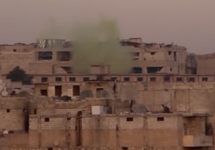
Over the past six months, two North Korean cargoes intended for the scientific center in Syria, responsible for the state program of chemical weapons, have been intercepted. It is reported by Reuters with reference to the UN confidential report.
The document was prepared by a group of independent UN experts, which is investigating reports about prohibited chemical, ballistic missiles and cooperation in the field of weapons between Syria and the DPRK. The 37-page study also contains data on the cooperation of Damascus and Pyongyan under the Syrian missile program Scud, as well as for the maintenance and repair of air defense systems.
As one of the UN member states reported to the experts, there is reason to believe that the intercepted cargo was supplied to Syria as part of a contract with Komid, a North Korean mining company. In 2009, it was included in the UN sanctions list as a key for Pyongyan, a weapon supplier and an exporter of equipment related to ballistic missiles and conventional weapons. In March 2016, two representatives of Komid in Syria fell under sanctions.
It was possible to intercept the North Korean cargo, as its recipients were fake companies controlled by European and American intelligence services. The companies were supposed to transfer the cargo to the Syrian research center. This structure, which since the 1970s has controlled the chemical weapon program in Syria, has previously been convicted of cooperation with Komid in "transmission of prohibited goods."
In 2013, Syria agreed to destroy all the arsenals of its chemical weapons, as well as components and capacities for its production. The guarantors of the agreement were Russia and the USA.
On June 30, the US State Department said that the regime of the Syrian President Bashar Assad did not fulfill the obligations to destroy chemical weapons and continues to use it . "The facts indicate an unworthy and extremely dangerous use of chemical weapons by the Assad regime. It continues to use chemical weapons and has not fulfilled the program to destroy it in full, which is a violation of its legal obligations in accordance with the Convention on the prohibition of chemical weapons and a resolution of 2118 Security Councils," the document emphasizes.
The statement of the State Department was based on the organization’s report on the prohibition of chemical weapons (OPCO), which confirms the fact of the use of Zarina on April 4 in the Syrian Khan-Sheikhun or a similar “poisoning matter to it. Ozkhu came to this conclusion on the basis of a “wide range of information”, an analysis of samples taken from the victims and in the environment, as well as evidence of eyewitnesses. The report was transferred to the joint investigation mechanism (FFM), formed by the OPCHU and the UN, "to establish who is responsible for the attack" in Khan-Sheikhun.