
Translated material
Investigators in the Boeing crash of Donbass received radar data from the Russian Federation in international format
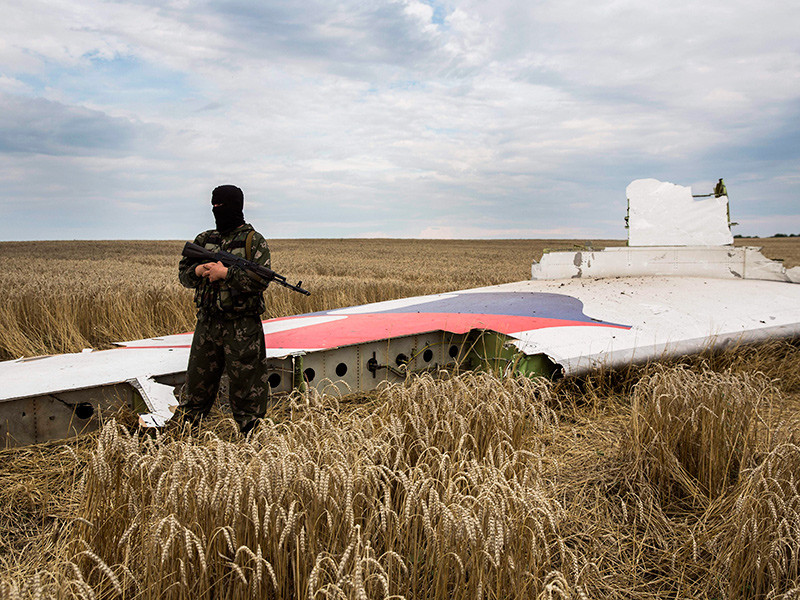
The International United Investigative Group (JIT), investigating the death of the Malaysian Boeing 777 in the Donbass in July 2014, received data from the radar from Russia at the time of the aircraft crash, this time in the required Asterix format, according to the website of the Dutch prosecutor's office, which is participating in the investigation.
"This week, the Russian Federation provided additional radar data for the Joan Investigative Group (JIT), which studies the flight of MH17," the report said.
The agency clarifies that the data was received in response to a request for legal assistance from the Netherlands. "The previously obtained radar data were not presented in the Asterix format developed by Eurocontrol (the European Air Navigation Security Organization), which was adopted at the international level," the prosecutor’s office noted.
"Now additional information should be in Asterix format. The information received will be translated and analyzed in detail in the near future," the statement said.
Data from the radar demanded to take into account in the Kremlin. The Federal Air Transport Agency insisted that their format was better
From the report published by the International Investigative Group in September 2016, the report followed that the plane was shot down from the Buk air defense system delivered from the territory of Russia. The launch was carried out from the agricultural field near the village of Pervomaisky, who was under the control of the separatists of the Donetsk People’s Republic.
Earlier, in October 2015, the Netherlands Security Council (SBN), who said that Boeing 777 was shot down from the Bukta 9M38 missile 9N314M, was shot down by the Boeing 777 Council. It was indicated that the "Earth - Air" missile exploded in less than one meter to the left of the cockpit.
In the Russian Foreign Ministry, the report was criticized as "biased." The Kremlin stated that the conclusions of investigators cannot be considered “final truth”, and they also emphasized that “one cannot draw some conclusions, not taking into account the latest information that was published by our military, namely, the primary data of the radar, which recorded all aircraft or objects that could start or be in the air in the territory controlled at that time by the militias.”
The Ministry of Defense said that "presented the world public in the Russian radar in the air situation on the day of the disaster on July 17, 2014," and added: "It is impossible to refute these data - only confirm the similar data of the air situation from Ukrainian radars."
Meanwhile, in October 2016, the Netherlands Prosecutor General said that investigators did not receive primary radar data on the disaster. In May, the department reported that it sent the Russian Federation a new request for the provision of these data.
Investigators complained that the data received earlier from the Russian Federation was not in the Asterix format and investigators needed time to translate and verify the software provided by the Russian side, which took a lot of time - for more than three months.
In the Federal Air Transport Agency, they insisted on the advantage of the format used by the Russian side, and offered their help in decoding. "The Asterix format, which the Netherlands declare, involves the transmission of data already in a processed form, which, in fact, makes them secondary information, which does not allow even 25% of what demonstrates primary information inside the locator," the Federal Air Transport Agency said.
The Boeing 777 Malaysian plane, which flew out of Amsterdam to Kuala Lumpur, crashed in the Donetsk region of Ukraine on July 17, 2014. The victims of the crash were all 283 passengers and 15 crew members. Among the dead were citizens of ten states, most of them are subjects of the Netherlands.