
Translated material
Spanish police admitted that she missed the Catalan terrorists when they were preparing an explosion
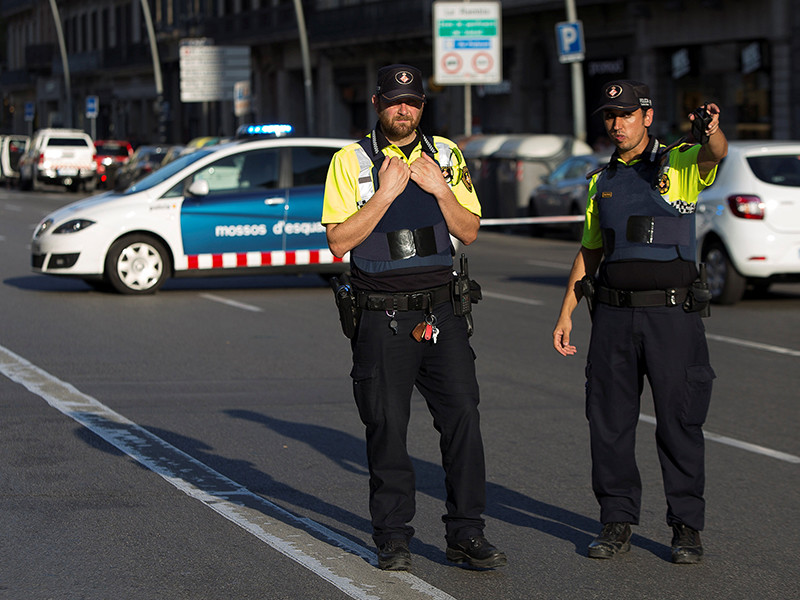
The jihadist cell, which committed a double terrorist attack in Catalonia, as a result of which 16 people were killed , in early August managed to avoid control, specially intended to detect potential terrorist threats. This was reported by Reuters with reference to the Minister of Internal Affairs of Spain Juan Ignacio Soido.
On August 16, an explosion that destroyed the building occurred in the city of Alcanar, where terrorists prepared explosives. At the same time, two terrorists were killed, including imam, suspected of radicalizing others. After that, the terrorists decided to use cars. The Catalan police said that at first she suspected gas leak or drug production laboratory.
To the question of the COPE radio station that the authorities should have noticed suspicious activity in the house in Alcanar, where explosives and potentially dangerous material for the manufacture of bombs were stored, the minister replied: "Indeed, the control tools exist. Perhaps some checks were carried out in this case, and we will have to determine how we can avoid this again." It was the “lack of control”, which allowed to buy explosives that made it possible to change the originally intended target, writes Diario Critico .
A team of sappers was sent to the scene 10 hours after the explosion, but it did not transmit information about this to the anti -terrorism department of the National Police, sources in court and the police told Reuters.
The minister assured that the police will conduct a thorough analysis of errors. According to him, not one of the attackers caused suspicion before.
The authorities continued to monitor the imam of Abdelbaki al-Sati after he spent two years in prison for drug trafficking, but did not find evidence of his connection with the terrorist attack.
In Barcelona, they began to remove spontaneous memorials at the site of the tragedy
The authorities of Catalonia will begin to remove spontaneous memorials on Rambla Street, dedicated to the victims of terrorist attacks on August 28 in the evening to restore the bandwidth of the street and the functioning of retail outlets, the Spanish edition of La Vanguardia reports.
The number of such memorials reached 130. According to the deputy mayor of Barcelona Herardo Pisarelo, before they are dismantled, the memorials will be documented and perpetuated in memory, at the beginning of the street they will leave a zone where mournful flowers and candles can bring. The mayor of Barcelona Ada Kolau spoke earlier about the possibility of establishing a memorial in memory of the tragedy.
On the afternoon of August 17, the autofurgon drove into the crowd of people in the area of the Rambla pedestrian Street in Barcelona. Responsibility for the attack took the Islamic State terrorist group*. Later on the same day, the second incident occurred in Cambrils 120 kilometers from Barcelona. More than 130 people were injured.
According to law enforcement officers, 12 people included 12 people. Four of them were arrested, five were destroyed after a terrorist attack in Cambrils.
Two more, including the Imam of Abdelbaki Es-Sati, died on the eve of the attacks during an explosion in a house in Alcanar, where terrorists prepared bombs. The driver of the van, who hit the crowd in Barcelona, the 22-year-old Moroccan of Junius Abuyakub was liquidated during a special operation in Sibramits on August 21.
*"Islamic State" (IG, ISIS, Daish) - a terrorist group prohibited in the Russian Federation.