
Translated material
Poetry as an appeal to another
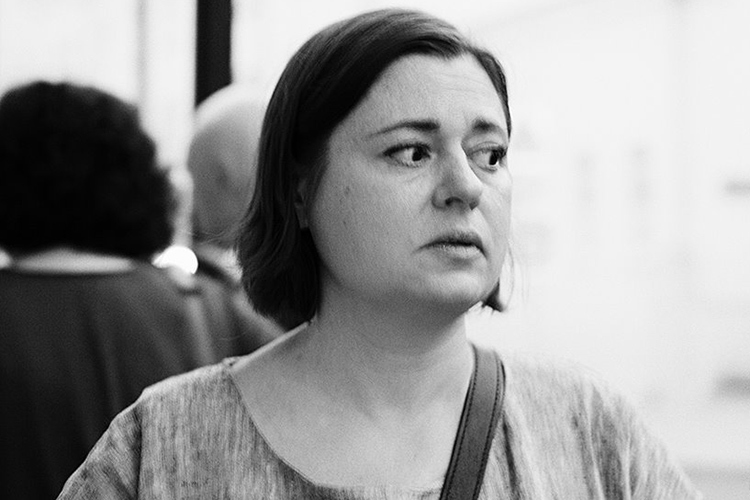
Colta.ru publishes the text of Anna Glazova "Poetry as an appeal to another." His preliminary version was read out as a report at the poetic festival "Slovwwo" , held in Kaliningrad on August 26-27, 2017. For the fifteenth time, the festival is organized by the art group of the RTSI with the support of Boris Bartfeld, the Kaliningrad libraries, as well as the Cults of the Catharsis.
In the European culture of the last decades, one of the most important tricks has become the concept of another. This concept has penetrated almost all areas of humanitarian knowledge, from philosophy, political science and sociology to cultural studies and literary criticism. An appeal to another as a driving principle organizes many poetic texts and poetics. In Russian -speaking poetry, the appeal to another has become an urgent practice relatively recently, but this practice immediately seized authors with a variety of aesthetic tasks and programs, so today it seems necessary to trace the path that the thought of something else in the philosophical and poetic space has come to the present moment, because it is impossible to continue and transform this idea in the current world, but only have to stomp and turn it into the place and turn it into it. Clish, as often happens.
The most significant of the texts of the New Age was and still remains the section of the “phenomenology of the spirit” of Hegel [1] , in which he speaks of the determining role of another for self -awareness: in order to realize himself, it is necessary to be recognized by another; Without this recognition, there can be no recognition of oneself.
“The independence and non -self -consciousness of self -awareness; Dominance and slavery
Self -consciousness is in itself and for itself because it is that it is in itself and for itself for some other [self -awareness], i.e. It is only as something recognized. <...> There is another self -awareness for self -awareness, it turned out to be outside itself. This has a double meaning: firstly, it has lost itself, for it acquires itself as some other essence; Secondly, it thereby removed this different, for it does not see another as an essence, but sees itself in another. ”
Hegel further explains that in order to come to existence for himself, consciousness enters into the fight against another not to life, but to death - it exists in the negative of another. Here, Hegel distinguishes two opposite types of consciousness: “Independent consciousness, for which for which there is an essence for the being-being, another is non-self-state, for which life or being for some other is an essence; The first is Mr., the second is a slave ” [2] . The gentleman considers himself free, but is deceived, because he depends on the slave and his work; And the slave considers himself not free, but he is also deceived, because, unlike the master, he has self -realization through his work. Hegel uses the figures of the master and a slave to explain the work of self -awareness: only when the slave and the gentleman recognize each other as another, will they achieve freedom of complete self -awareness. Awareness of unity in the reflection of himself-Gospodin and self-collar-this is the highest work of self-awareness.
After two centuries, Hegel's considerations, no matter how fundamental they may not cause questions related to specific life contexts. Who is this other and if he is part of my self -awareness, can I rely on the fact that for his self -awareness I am the same that I am generally within his limits of it and ? Researchers in the field of post-colonialism recently tried to tie Hegel’s parable about the slave and the master to the real events of the revolution on Haiti (1791–1804), pointing this problem: the distinction between others and their own in historical and political coordinates [3] .
The dialectics of the master and slave is the most famous passage from the “phenomenology of the spirit”, he is still rethought by philosophers, but he was especially important for Karl Marx, who translated this idea into the terms of the class struggle. Hegel has a slave and a gentleman - these are agents in the development of the world spirit, and in Marx in the evolution of productive forces. The gentleman uses production products, thereby depending on the slave and being in production in slavery, and the slave, although not free against the master, is actively acting in the world, embodying human freedom to a greater extent than the master.
Production, according to Marx, expresses the active action of man into nature, and thereby he translates Hegel's thought into the environment of man. An interesting (and little -known) fact - that about mutual opposition of slavery and dominance in the natural environment long before the publication of "phenomenology" The poet Friedrich Gölderlin, a classmate and friend of Hegel, wrote in the novel Hyperion:
“We all move in eccentric orbit, and there is no other way from childhood to achieve maturity.
Blessed unity, being in the only sense, is lost to us, and we must lose it, if we want to get it, conquer it. We tear ourselves from serene all -unity [ἓν καὶ πᾶν] of the world in order to restore it again with the help of ourselves. We are in striking with nature, and what, how can be thought, was unity, now repulses, and domination and slavery replace each other on both sides ” [4] .
In the Gölderlinovsky version, the very development of nature is for the world to others. A person must break away from his own nature, get away from the human in order to regain human as a result of his labor. This is the work of education that humanity constantly performs on itself, leaving from under the oppression of the dominant culture and modifying this culture, subordinating it to itself. It directly follows that for working on your own you need to first go as far as possible in studying someone else's, and Gölderlin will formulate this idea later, speaking of relations between European culture and ancient Greek:
“... You need to study your own no less than a stranger. Therefore, we can’t do without the Greeks ... There is nothing more complicated than fluent in our own ” [5] .
If you follow this thought, the conversation with another is productive when, studying someone else's language, you come across the boundary that runs between your own and strangers. Everyone who taught a foreign language knows from experience that someone else's language, its logic, grammar and etymology aggravate susceptibility to the native language with its different laws. The essence and meaning of the conversation with a foreign language and culture is not so much in gaining someone else's influence and appropriate someone else's knowledge, but to learn his own with that without innate, but acquired attention with which a person begins to study an unknown subject. From this it is clear that it is precisely these two mistakes that anyone who decides on slavery and the dominance of the other risks the risk of making a mistake to blindly fall under the influence, abandoning all his own, and the mistake to absorb someone else's without realization of his own publicity.
In the latest European history, such a conversation of two cultures, having survived the heyday, led to a catastrophe, having come across a crisis of the distinction between another and his own, we are talking about German Jews and their mass destruction. In an atmosphere of all the aggravated anti-Semitism, the German-Jewish philosopher Martin Buber made an attempt to build an ethical system of dialogism, the philosophy “I and you” (1923), in which the border between the two cultures ran through the difference in Judaism and Christianity. The coexistence of Jews and Germans, according to Buber, was to become a new expression of these two religions. But this coexistence did not lead to symbiosis, but to collapse, putting post -war Europe before the question: how to solve the problem of antagonism between strangers and his own? If we cancel this difference and consider everyone with their own, this will lead to a distinction crisis, and the ability to distinguish is one of the constants built into the human consciousness, which will not work. Attempts to erase the differences, as the experience of the twentieth century showed, lead to totalitarianism, even more destructive than any conflicts between non -centralized groups. The opposite solution would be to find such a difference, which is impossible to destroy and which is therefore a guarantee of the preservation of the border between others and oneself. In the post -war philosophy, the rethinking of the dialogue with another was engaged in Emmanuel Levinas [6] , and in poetry - Paul Tselan with his search for “completely different” as an interlocutor. While the memory of the disaster is alive in collective memory, it should be the sentry, which stands on the border between another and himself:
“But the poem says! It minds about dates, but it says. Of course, it always speaks for itself, for itself.
But I think <...> that the hopes of the poem from ancient times belong to the hope of saying just in this way - no, I have no right to use this word-just in this way to speak for another- and who knows, maybe for someone completely different ” [7] .
Tselan was the starting point of many reasoning and texts of Jacques Derrida, a philosopher who, primarily, the issues of differences and distinction (Différance) . He wrote one of the most important books for the interpreters of books - “Shibblet”. In it, Derrida writes about the need and at the same time the dangers of distinguishing between his own and belonging to another, and in the word, the emblem of this distinction is the name of the book-“Shibblet”, a word from the Old Testament, simultaneously based on the community and condemning a stranger, from the community excluded. Derrida writes with the thought of the fate of those who died in Shoa, but he proceeds from the understanding that the language always has a double function: to separate the power and the power to unite. In a later text, also dedicated to Tselan, Derrida, interpreting the Meridian essay, speaks not only about the communities of people organized by the language, but also about the double function of poetry and art in general: the ability to turn life into its dead, artificial likeness, like the head of a jellyfish, and the ability to update the mechanisms of language and history of the mechanisms of language and history [8] .
Thinking through the boundaries imposed by speech, today more than ever in Russian -speaking poetry. The borders discussed only partly in the languages of minorities within the Russian language, although on them, too - in this sense, it should be noted the recent exhibition“House of Voices” dedicated to the dying languages of small ethnic groups (Vodsk, Izhora, Uyltinsky, Nivkh). Another border between national languages, now traumatically laid, runs between Russian and Ukrainian. The war, which goes on geographical boundaries, cannot but affect the poetic space - for example, in the texts of the Ukrainian Sergei Zhadan or Muscovite Elena Fanailova.
Still, maybe more acute the question of the boundaries of their own and strangers faces modern authors, looking for the definitions of differences originating from the difference in biological sexes - by the authors problematizing the gender of the language. The French philosopher Luc Irigarea believes that understanding the difference in sexes gives hope for the development of culture, in which there will be more space for ethics and love than in the present. One of the philosophers of the past, to which the Irigary constantly addresses from a critical position, is no accidentally Hegel - his concept of another, she rethinks in her concept of male and female as a couple of her or two. She writes that culture needs to gain female in the language and verbalize the difference in sex - in order to ensure that this difference could be overcome. Her books are sometimes criticized, accusing her ideas of essentialism (i.e., simplifying the gender difference to deterministic biological), but her goal is still not to limit gender identification, but to set some linguistic coordinates in which such identifications would find expression and clarity. In the passage from the book “Paul and Genealogy” (1987), the Hegelian formulation of the question of appeal to another is clearly read:
“If the sexual difference should be overcome, are we obliged to the first thing to establish sexual ethics? If one day we should become one, should there be two first? Otherwise, our unity will remain an empty (male) formality, we will roll everything to the same long -familiar hierarchies or to nostalgia for a house in the womb, in which another was just a comprehensive source of food and shelter ” [9] .
Let many people write in Russian not agree with the need to create a female language, as the Irigary sees it, but it is obvious that it is from the difference in sexes that many of the most striking poetic texts of the authorship of Dina Gatina, Polina Andrukovich, Evgenia Suslova, Asi Engel and many others.
In this context, it is interesting to read Polina Barskova’s poems: this is not only female speech, but also to clear the other in his body, and the matter is not only and not so much in handling the living as in addressing the traumatic bodily experience experienced through reading. Barskova is engaged in literature from the time of the blockade of Leningrad, and well -known (and less known) people of those times from whom literary texts, diaries, and letters often have survived in her verses. Reading these survival documents at Barskova takes a form that I would like to call text stigmata - a bodily experience, which is expressed in her verses, indicating fear, shame, attraction, disgust. Another Barskova is a dead man who left a written certificate of himself, and her poems are close to the border that lies between the living and the dead, turning the text into a meeting place with death.
The search for an indestructible border with another language, the search for an interlocutor, a conversation with which cannot lead to a mixture of his own and a stranger, naturally leads a person to a meeting with the animal. The moment of the meeting is clearly recorded by both humans and animals, they are able to enter into communication: birds and animals respond with a look at the look, and even some plants are able, for example, to turn the leaves from touch. There is no replica exchange as such in such communication, but the cleaner the very intention to appeal to the interlocutor. An animal as another also requires special ethics of treating him, and this problem is now being studied by modern thinkers; In Russia, Oksana Timofeeva , a philosophy specialist, is engaged in her - again not by chance - Hegel.
Maria Stepanova uses the figure of the animal in the poem “War of animals and animals” , written under the influence of the events of the Russian-Ukrainian war of 2014-2015. The name clearly refers to the “Batrachomyomachia” (“War of Mice and Frogs”), but, unlike the ancient Greek parody, the war of animals and animals in Stepanova is not a farce, but a farce inside which the frogs and mouse are absurd and ridiculous, but the war itself as a way of resolving conflicts between people. The war casts a person from the sphere of linguistic communication to the sphere of immediate existence (the sphere of natural vulnerability, which Georgio Agamben calls “naked life”). The language itself from the ability to speak is turned into a piece of living meat, into a handful of the earth from which the body was once made: "The earth lies with a duffel bag / imperfect language." A person without covering culture and linguistic communication is deprived of the ability to turn to another and recognize his freedom and separateness. This violent deprivation of the language is expressed in the name of the poem, and funny and terrible: the beast and the animal are one and the same, I myself - the same as the other, but the war takes the ability to recognize this from a person. The use of animal figures is a long -standing technique, as a rule, as a rule, to Aesop’s fables (and it will be worthless to recall once again that Aesop was a slave for which his language was his only freedom). The animal is easy to endow with one characteristic property (“cowardly hare” or “cunning fox”), and in Russian literature, the tongue was often a way to hide from censorship. Stepanova remembers this, but people in her poem refuse to turn into animals, they remain women and men who resist the farce:
An alien word, like a shoe,
Without the choice of shoes -
And, having forgotten his old step,
It will go with you
It refers to the lips,
When to say
like frog naked corpse
Under the sun in the way
Among the recent poetic texts, in which the animal is the image of another, I would like to especially note the last year’s book Evgenia Suslova “Animal” and especially the cycle of “Ideas, vision” in it. Here, a border common with a person passes through the body: a living body allows me to see an animal as a creature like me, but another:
Any breath, replaced by form: here the body could take out the body of another,
But the angel of the differences, brought to the ground, twists desire.
<...>
Small is sintering linguistic casts,
but the body of the "animal" taken on the bodies of the remaining forms,
It is so hard that it loses oblivion on the border with its reflection.
What a person shares with other living bodies of existence in the world also makes the bodies itself as such a potential place of a meeting with another, whether he is an animal, a person or something else. In a very new poem, Galina Rymbu bodies, as in the “animal” in Suslova, is felt, first of all, like breathing:
ORBIT
memory rushes out, but the breath of others is busy,
внутрь перемалывая среду, а тело —
другого едва держит за кончики пальцев,
<...>
и вдруг я думаю, может быть, мы давно уже на орбите
какой-то другой планеты живем, и весь Октябрьский район
переместился туда
вместе с грудами мусора и пыльным золотом степного ветра,
вместе с Космическим проспектом и людьми в спецодежде,
которых поэтому особо и не видно, что они
в капсулах маленьких комнат, в общагах своих сидят,
как в каютах, и новое пространство, исследуя, шьют,
поэтому здесь больше нет никаких земных гаджетов и книг,
а есть только немного уцелевшей еды, выпивки
и временных странных денег,
и «хозяев» нет, наверное, они остались в том районе, что на земле —
отдыхают там, делают что хотят,
читают или смотрят — «Чевенгур» или «Твин Пикс»...
Место действия — существовавший при СССР книжный магазин «Орбита», на месте которого теперь продуктовый магазин. Но у этой «Орбиты» есть Другой — орбита другой планеты. Язык здесь (как самосознание у Гегеля) обнаруживает существование Другого внутри самого себя. В этом внутреннем расщеплении язык поворачивается в сторону роста в «новом пространстве», его двойственность — это одновременно и омертвляющая голова Медузы, и оживляющее дыхание, то, что Целан в «Меридиане» называет «поворотом дыхания» (Atemwende) . Космический проспект в стихотворении превращается в путь, на который поэта выводит его эксцентрическая орбита, долой от Земли и на другую Землю. По той же эксцентрической орбите смещается вместе с Октябрьским районом и Октябрьская революция. Утопический коммунизм платоновского «Чевенгура» в этом стихотворении перемещается в пределы другой планеты Земля, где, может быть, работают и другие исторические механизмы тоже. В теперешнем мире постиндустриальности и глобализма, в котором надежды Маркса на пролетариат как мессианский класс-освободитель растворились в жизни на краю и ненадежной занятости прекариата, люди Другого Октябрьского района в стихотворении Рымбу — это люди, ищущие инопланетянина в самих себе, того Другого, который, обнаружив на Земле «хозяев», обнаружит в себе самом и «жильца», который сможет по-новому обжить свою планету, все ту же — но уже другую — Землю.
Логика и этика обращения к Другому в сегодняшнем мире особенно необходимы. В ситуации, когда война, терроризм, насильственное разрешение конфликтов все чаще становятся оружием, заменяющим долгий путь поиска диалога, человеку нужно уметь отойти от себя, чтобы, отразившись от Другого, зафиксировать свое от него отличие и завоевать собственную человечность. Видеть в Другом не врага и не источник для удовлетворения своих нужд — умение, которому приходится учиться в собственных же интересах.
[1] Публикация «Феноменологии духа» подготавливалась в 1805—1806 годах.
[2] Перевод Густава Шпета, впервые опубликован в 1956 году .
[3] См. в особенности книгу С. Бак-Морс «Гегель и Гаити» .
[4] Из вступления к предпоследней (прозаической) версии (1796—1797), перевод мой по изданию: Hölderlin, F. Sämtliche Werke und Briefe in drei Bänden. — München: Carl Hanser Verlag , 1992.
[5] Из письма К. Бёлендорфу от 4 декабря 1801 года .
[6] См. Левинас, Э. Путь к Другому / Пер. Е. Бахтиной. — СПб.: Изд-во Санкт-Петербургского университета, 2007; Ямпольская А.В. Эмманюэль Левинас. Философия и биография. — К.: Дух і літера, 2011 .
[7] Перевод мой по изданию: Celan, P. Der Meridian. Endfassung, Vorstufen, Materialien. / Tübinger Ausgabe . — Frankfurt am Main: Suhrkamp , 1999.
[8] Текст семинара «Majesties» в книге: Derrida, J. Sovereignties in Question: The Poetics of Paul Celan. — New York: Fordham UP , 2005.
[9] Перевод мой по изданию: Irigaray L. Sexes and genealogies / Trans. G. Gill. — New York : Columbia UP , 1993.